
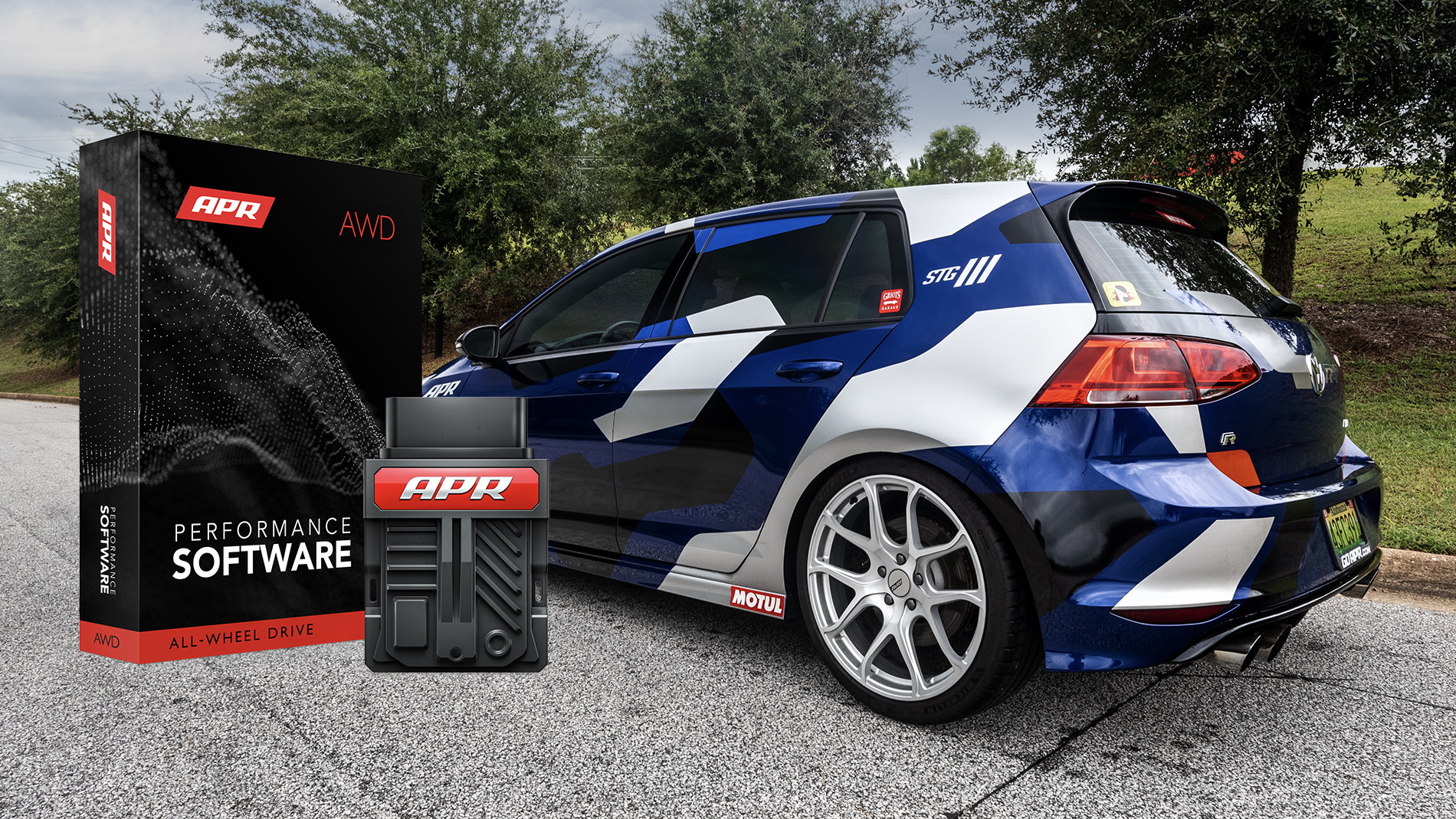
APR, a well-established Volkswagen and Audi tuner located in Alabama, has introduced new software that enhances the functionality of Haldex AWD systems for improved speed and performance. While APR has created numerous engine and transmission upgrades, this marks the first instance of a dedicated AWD system calibration from them.
The aptly named APR AWD Upgrade for Haldex is “a performance software recalibration with optional supporting hardware crafted to optimize torque distribution, enhance traction, and provide quicker all-wheel-drive engagement for compatible Volkswagen Group models fitted with Haldex systems.” This upgrade aims to assist in delivering power to the ground “through improved clutch pressure management during high-load and launch scenarios,” according to the tuner. The calibration is mainly tailored for the Mk7 Golf R, 8V RS3, S3, and TTS.
Haldex AWD is typically linked to transverse, front-drive-based platforms, and VW/Audi have been significant users (though this technology has been seen in an extensive variety of vehicles, ranging from Volvos to Bugattis). In VW or Audi applications, Haldex operates using two primary components: a power takeoff/angle drive positioned at the rear of the transmission, and the Active On-demand Coupling (AOC) located at the front of the rear differential.
The simplest explanation is that these vehicles are primarily front-drive during normal cruising, but the system can proactively engage the rear axle based on throttle input, wheel speed, steering angle, and traction conditions. The AOC’s hydraulic clutch gets involved and adjusts how much torque is directed to the rear axle. It has progressed over time, but the fundamental concept allows a vehicle to have AWD when required yet remain FWD otherwise to conserve fuel. FCP Euro has a more detailed overview on it if you’re interested in learning more.
Although today’s Haldex systems are superior to those introduced in the late ’90s, APR maintains that factory systems “can restrict clutch pressure, delay rear torque transfer, and lessen driver control during assertive driving, particularly on modified vehicles.”
The new APR AWD Upgrade adjusts settings for “quicker, more decisive clutch engagement, improved rear torque distribution, and heightened overall driveline responsiveness.” It also allows for immediate switching between AWD Mode and a FWD Burnout Mode. The latter essentially replaces the old enthusiast method of pulling a fuse or disconnecting the rear coupling to enforce front-wheel-drive operation.
“AWD Mode raises clutch pressure and enhances responsiveness to throttle input and wheel slip, allowing for faster rear torque transfer and more assured launches. FWD Burnout Mode, engaged in Race Mode, temporarily decouples the rear axle for front-wheel-drive operation, perfect for burnouts, drag racing preparation, and dyno usage, while maintaining OEM-style functionality,” the tuner explains.
APR has also upgraded some other engine and transmission tuning products to enhance compatibility with this newly released Haldex tune.
The anticipated advantages of this modification are “more consistent launch performance, improved traction, and a more dynamic driving experience without the complexities of standalone controllers.” As for how rapidly it could increase wear on your driveline, it’s challenging to quantify. APR is a reputable tuning establishment, and there’s no indication this calibration is inherently unsafe when used as intended. That said, the flame that shines the brightest also extinguishes the fastest. Any modification that amplifies driveline load or traction tends to hasten wear; it’s an unavoidable fact.
I drove a Golf R equipped with an APR Stage 3 Plus tune nearly a decade ago, and it remains memorable for its outstanding performance. Being able to transfer power down more efficiently would be a significant advantage for Audis and VWs if executed properly.
This new tune is priced at $449.95 for a Stage 1 system (improves clutch engagement within the factory hardware’s operating thresholds) and $549.95 for Stage 2 (incorporates APR’s enhanced pressure relief valve assembly, permitting the system to safely command considerably higher clutch pressure during launches and high-load scenarios). You can upgrade from Stage 1 to 2 later for $99.95 if desired.
Core applications for the APR AWD Upgrade for Haldex comprise:
- 2013-19 VW Mk7 Golf R (global model years)
- 2015-20 Audi RS3 8V (global model years)
- 2016-23 Audi TTS 8S (global model years)
- 2017-22 Audi TT RS 8S (global model years)
Got a tip? Send us an email at [email protected].
**VW and Audi Drivers Gain Access to Transmission Tuning for Front-Wheel Drive Burnouts**
In a noteworthy advancement for car enthusiasts, Volkswagen (VW) and Audi drivers can now enhance their driving experience through specialized transmission tuning specifically designed for front-wheel drive (FWD) vehicles. This new tuning capability enables drivers to execute controlled burnouts, a well-liked maneuver among car aficionados that emphasizes power and performance.
### Grasping Transmission Tuning
Transmission tuning pertains to the modification of a vehicle’s transmission settings to enhance performance traits. This can entail adjustments to shift points, throttle response, and torque delivery. For FWD vehicles, which commonly face challenges with traction during high-power scenarios, tuning can aid in managing wheel spin and boosting acceleration.
### The Allure of Burnouts
Burnouts serve not only as a display of power; they also act as a means of showcasing a vehicle’s abilities. For many motorists, performing a burnout is a rite of passage that demonstrates the performance enhancements made to their cars. In the realm of VW and Audi vehicles, known for their engineering and performance prowess, the capacity to execute controlled burnouts introduces an exhilarating facet to the driving experience.
### Characteristics of the New Tuning
1. **Improved Torque Management**: The new tuning facilitates enhanced management of torque delivery to the front wheels, empowering drivers to achieve the desired degree of wheel spin without sacrificing control.
2. **Customizable Shift Points**: Drivers can modify shift points to keep gears engaged longer, which is vital for sustaining power during a burnout.
3. **Throttle Response Enhancement**: The tuning boosts throttle response, allowing for swifter acceleration and more immediate power delivery when required.
4. **Intuitive Interface**: Many tuning solutions come equipped with user-friendly interfaces that enable drivers to effortlessly adjust settings based on their preferences and driving conditions.
### Advantages for VW and Audi Owners
– **Boosted Performance**: With appropriate tuning, drivers can unlock additional capabilities from their vehicles, making them more exciting to operate.
– **Customization**: Owners can tailor their driving experience to reflect their style, whether preferring a more aggressive configuration for track days or a smoother experience for daily driving.
– **Community Involvement**: The ability to perform burnouts can enhance engagement in car gatherings and events, nurturing a sense of community among VW and Audi fans.
### Considerations and Best Practices
While transmission tuning for burnouts can amplify performance, drivers should approach this modification judiciously. It is vital to take into account the following:
– **Tire Wear**: Frequent burnouts may lead to accelerated tire wear, so drivers should be ready for the additional expenses related to tire replacement.
– **Vehicle Strain**: Executing burnouts exerts significant stress on the drivetrain and suspension components. Regular maintenance and evaluations are essential for ensuring the longevity of the vehicle.
– **Legal Considerations**: In certain regions, conducting burnouts on public roads may be prohibited. Drivers should acquaint themselves with local laws and regulations concerning street performance.
### Conclusion
The emergence of transmission tuning for VW and Audi drivers represents an exhilarating development in the realm of performance tuning. With the ability to conduct controlled front-wheel drive burnouts, enthusiasts can relish a more dynamic driving experience while highlighting their vehicles’ capabilities. As with any performance enhancement, responsible utilization and upkeep are crucial to reaping the full benefits of this tuning innovation.