
A number of us have grown weary of screens in vehicles, and it’s easy to see why: they can be overwhelming, hazardous, and transform simple tasks into frustrating experiences. Additionally, they’ve supplanted the intricate craftsmanship of a finely designed analog instrument cluster. However, a half-century ago, traditional dials fused with progressive technology in a very gratifying manner—though that synergy was short-lived.
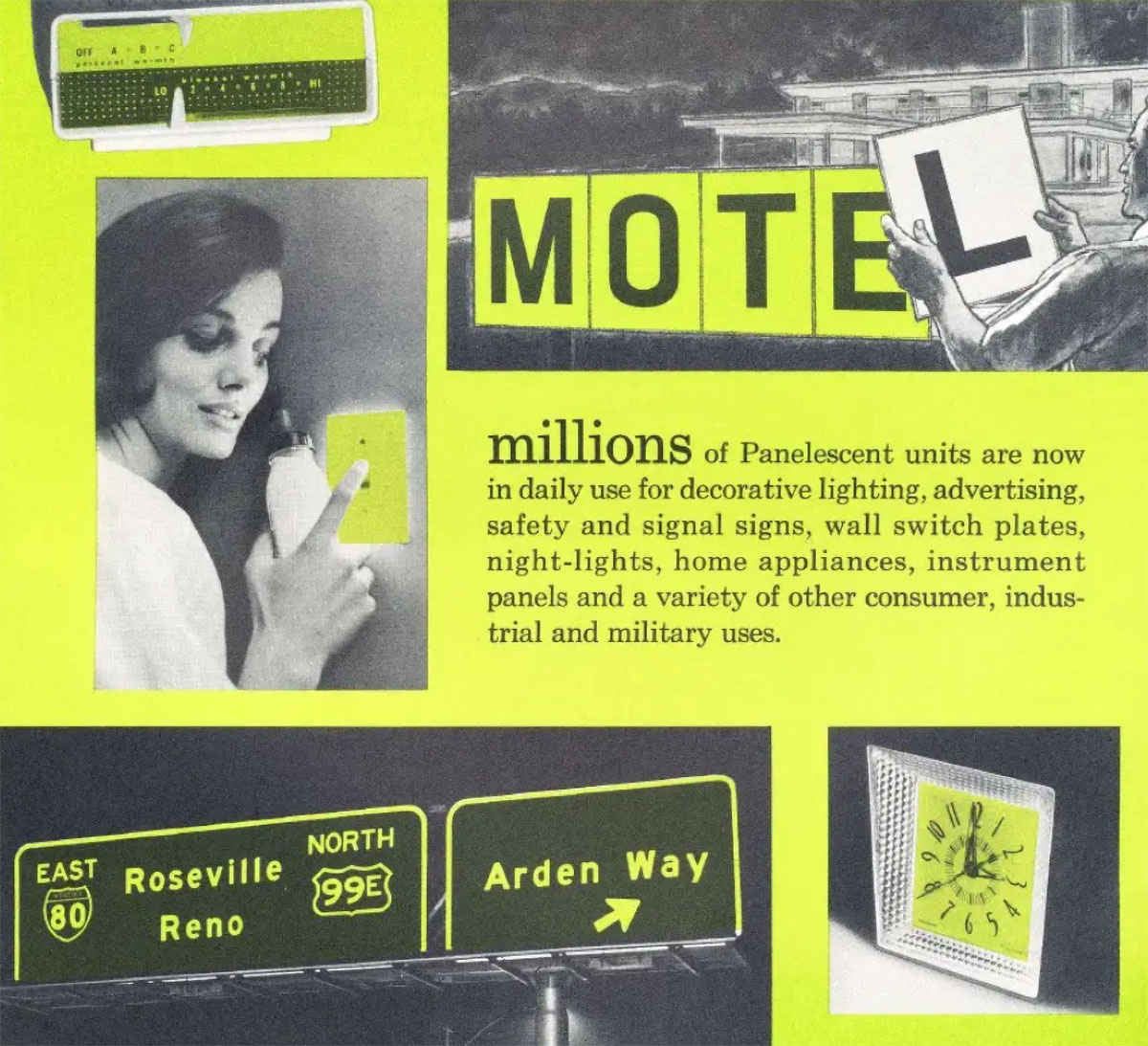
Enthusiasts of classic Mopar vehicles might be familiar with “Panelescent” indicators. Throughout the 1960s, certain Chrysler models, like the Windsor, Saratoga, New Yorker, and Newport, along with the Dodge Charger later on, featured a lighting technology you might better recognize from that old Timex watch you wore in the ’90s.
These elaborate, gem-like instrument panels showcased backlit displays, but the backlighting wasn’t created by small incandescent bulbs lurking behind the dashboard. Instead, they employed a groundbreaking electroluminescent system initiated by Sylvania. “Panelescent” was one of Sylvania’s marketing names for this technology, while the “Indiglo” technology in Timex watches, as noted by The Verge’s Sean Hollister, worked in a comparable way.
Electroluminescence is the phenomenon of passing an electrical current through a phosphor, causing the phosphor to emit light. An electroluminescent array is composed of three essential components, according to this informative explanation from the Edison Tech Center YouTube channel: an opaque metallic electrode, the phosphor, and a “clear overlay” that is also conductive but lets light pass through. The upper and lower layers connect to an AC power source, with the current directly exciting the electrons within the phosphor, producing light as they release energy.
This was a monumental advancement 60 years ago, and Sylvania’s promotional materials from that period accurately outline why. The method is energy efficient, generates minimal heat, and illuminates with a consistently smooth glow viewable from any angle. That final aspect is notable, as even contemporary display technologies often sacrifice brightness and color accuracy from side perspectives.
Illuminated Electroluminescent instrument panel! 1961 Chrysler Newport
The appearance in a vintage instrument panel is stunning in real life, and even captivating in photos. You wouldn’t have encountered anything similar, particularly when gauges were front-lit, resulting in bothersome reflections and shadows. The effect was remarkable, but the implementation, especially during the initial stages, posed difficulties. The inverter needed to change the vehicle’s DC power into high-voltage AC was often a point of failure. Moreover, the phosphor’s capacity to glow would also fade over time.
Yet the technology matured. Those initial Panelescent displays used a powder for the phosphor; by the 1980s, companies like Sharp succeeded in popularizing a thin-film design, leading to electroluminescent panels being integrated into many more products, such as timepieces and personal organizers. Interestingly, the Indiglo branding has nothing to do with the science that created the light being blue or green; those colors simply offer optimal human visibility at the least energy expense.
It’s unfortunate that Chrysler introduced electroluminescent indicators to vehicles before they were fully refined because, by the time they reached maturity, few manufacturers seemed to care. Toyota was an exception, utilizing them in the cluster of the first-generation Lexus LS. However, the effect was subtler, as Toyota undoubtedly chose not to pursue that flashy, mid-century art-deco aesthetic, with chrome and glass bending light in attention-grabbing fashions. The LS’s gauges appeared to hover in an infinite black environment, aided by additional mirrors reflecting warning lights seemingly positioned behind them.
Considering both examples, one could contend that now that we can produce any image we desire on a flat surface, the creativity and indeed the enchantment of those ingenious solutions has diminished. At least, for those of us without extra funds for a Bugatti Tourbillon.
Do you have an old Chrysler fitted with Panelescent gauges? Share a photo below in the comments!
**Electroluminescent Gauges Enhance Instrument Clusters**
In automotive design and technology, instrument clusters are vital for supplying drivers with crucial insights about their vehicles’ operation and status. Among various improvements in the sector, electroluminescent gauges have surfaced as a notable upgrade, offering both visual charm and practical advantages.
**What are Electroluminescent Gauges?**
Electroluminescent (EL) gauges deploy a technology that produces light when an electric current flows through a phosphorescent substance. This method creates a consistent and brilliant lighting effect applicable to diverse elements of an instrument cluster, such as speedometers, tachometers, fuel indicators, and warning lights. The emitted light is not only vivid but also energy-efficient, making it an appealing choice for contemporary automobiles.
**Advantages of Electroluminescent Gauges**
1. **Visibility and Readability**: A key advantage of electroluminescent gauges is their exceptional visibility. The uniform light distribution guarantees that information is easily legible across different lighting scenarios, whether in bright daylight or at night. This boosts driver safety by enabling prompt and precise readings without straining the eyes.
2. **Design Flexibility**: Electroluminescent technology offers enhanced design flexibility compared to standard gauges. Manufacturers can craft intricate designs and integrate various colors, facilitating a more personalized and visually attractive instrument cluster. This versatility assists automotive brands in distinguishing their vehicles in a competitive field.
3. **Durability and Longevity**: EL gauges are recognized for their robustness. Unlike conventional incandescent bulbs, which can burn out and necessitate replacement, electroluminescent materials boast an extended lifetime. This minimizes maintenance expenses and enhances the instrument cluster’s overall dependability.
4. **Low Power Consumption**: Electroluminescent gauges draw less power than traditional lighting systems. This energy efficiency is particularly advantageous for electric and hybrid vehicles, where preserving battery life is critical for maximizing range.
5. **Temperature Resistance**: EL technology maintains performance across temperature changes, making it suitable for diverse environments. This resilience ensures that the gauges preserve their functionality and aesthetics over time, regardless of external factors.
**Applications in Modern Vehicles**
The usage of electroluminescent gauges is becoming increasingly prevalent in today’s vehicles. High-end models frequently include these gauges as part of their premium instrument clusters, enhancing the driving experience overall. Additionally, as automotive technology evolves, the blend of digital displays with electroluminescent gauges delivers drivers immediate feedback and customizable interfaces.
**Challenges and Considerations**
Despite their benefits, electroluminescent gauges face challenges. Production costs can be higher than standard gauges, potentially deterring some manufacturers. Furthermore, while the technology is durable, it may be susceptible to physical damage and demands careful handling during installation.
**Conclusion**
Electroluminescent gauges signify a substantial advancement in the aesthetics and functionality of automotive instrument clusters. With their superior visibility, design adaptability, durability, and energy efficiency, they enrich the driving experience while providing vital data appealingly. As the automotive sector progresses, the uptake of electroluminescent technology is expected to rise, leading to even more advanced and user-friendly instrument clusters in the future.