
By this point, millions have viewed our account of how a series of missteps between Flock Safety and law enforcement resulted in police tracking me for days using automated license plate cameras, culminating in a coordinated ambush. Millions more have watched the body camera footage of the incident that we obtained and shared. It has sparked an even broader and more intense discussion about privacy in America, and one week later, I’ve gained further insights into how and why it transpired—including information from Flock itself.
I discovered that the clear mix of human mistakes, the constraints of Flock’s AI-driven system, and a general absence of guidelines that led to my detention on suspicions of grand theft auto was not just a rare occurrence. This is a situation that has, can, and will continue to affect anyone until substantial changes are implemented by both Flock and law enforcement, neither of which appear to know how to effectively collaborate to avert it. In fact, it has just occurred again.
Meanwhile, our narrative has already prompted the city council of Plymouth, MN, where I reside and where the stop occurred, to initiate discussions regarding the use of Flock cameras within the city. The Plymouth Police Department has a transparency portal as part of its Flock configuration, noting that there are currently 18 cameras in the city, having scanned over 580,000 license plates in the past 30 days, yielding over 14,800 hotlist matches, including mine, and 45 manual user inquiries.
The Sequence of Events
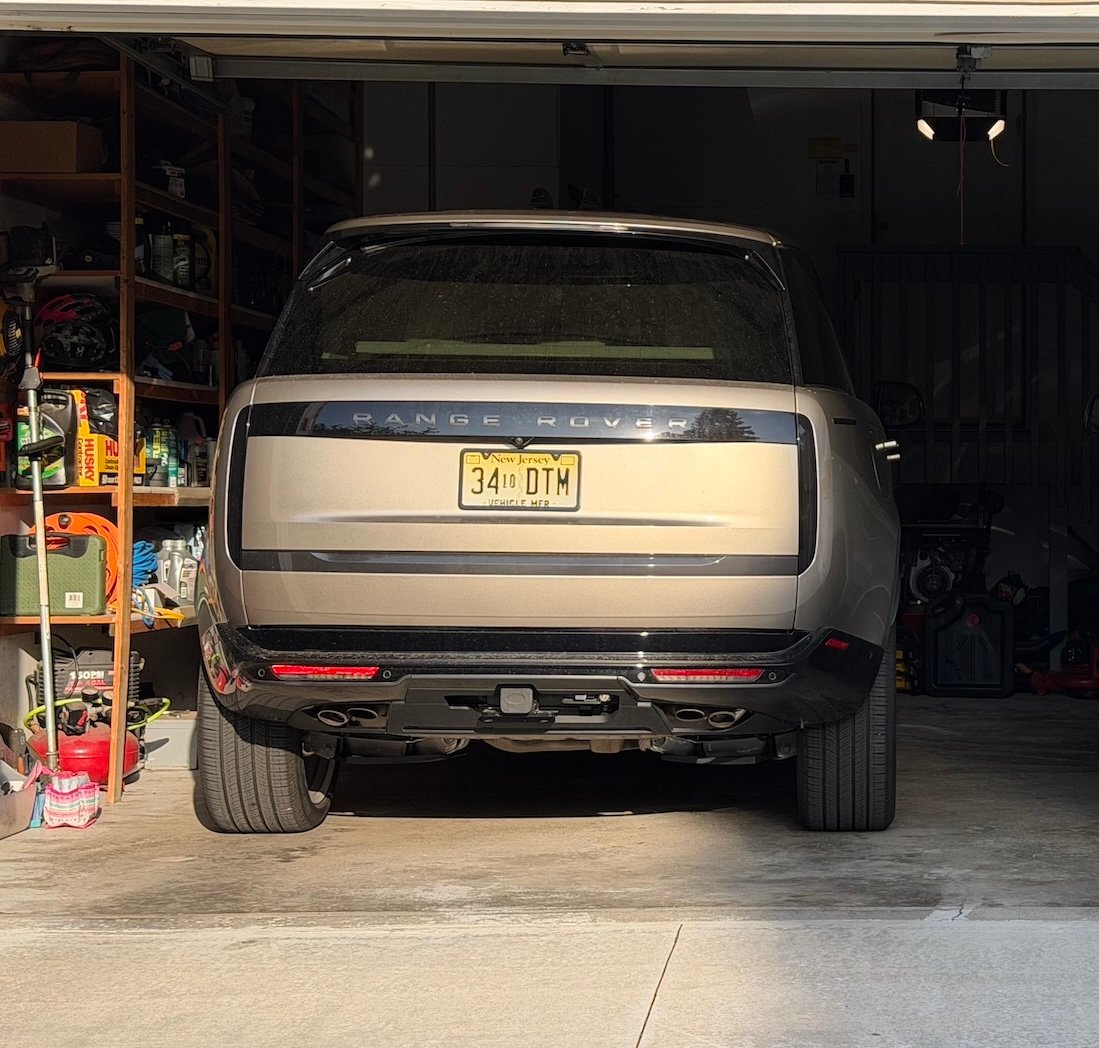
To recap briefly: a few weeks ago, I took the $155,000 Range Rover I was testing to run some errands with my wife in Plymouth, Minnesota. While backing out of a parking space at my local Kohl’s, four police vehicles rushed in and “initiated a box and pin on the car,” as per the police report. With their hands on their firearms, the officers commanded us to exit the vehicle, conducted pat-downs, and ultimately informed us that the Range Rover’s license plate—New Jersey 34 10 DTM—was reported stolen, leading them to suspect that the vehicle itself was also stolen, having tracked me over the last two days using Flock cameras.
It would indeed be quite unusual for Jaguar Land Rover to provide a car with stolen plates to a journalist for a review, so I knew that claim couldn’t be accurate, yet the officers were adamant. It required several phone calls to JLR and JLR’s fleet management as they detained us at the scene, along with a follow-up discussion with the Plymouth police chief to uncover what had transpired.
A similar New Jersey manufacturer’s license plate—34 03 DTM—had been flagged as stolen in California (which I later learned was actually misplaced by Land Rover during a photo shoot). That “stolen” plate had been entered into the National Crime Information Center (NCIC) database omitting the middle two digits, which are smaller than the other characters on the actual plate. Just 34 DTM.
Flock uses NCIC data to identify suspicious plates, and when it detected mine, its AI vision system disregarded the “10” in the center of my plate, alerting police of a match. Furthermore, when the police received that alert and viewed the photograph Flock had captured of my plate, where the “10” is clearly visible, they failed to input the complete 34 10 DTM sequence into their system for verification. Both the humans and the machines fixated on 34 DTM. Target fixation, perhaps. Oops.
The entire situation was so ludicrous that I at first described it as an edge case within an edge case that Flock’s AI camera network couldn’t process, yet it just happened again.
On Wednesday, fellow auto journalist Tim Esterdahl, publisher of Pickup Truck + SUV Talk, was stopped by two officers in Scotts Bluff, Nebraska while driving his 14-year-old son in a $105,000 Range Rover Sport that JLR had lent him for a review. The plates on it? Of course: New Jersey 34 08 DTM.
The leading officer informed him that the plates on the vehicle were reported as stolen. Having seen our story, Esterdahl showed it to the officers in hopes of demonstrating that he wasn’t a master thief. He states that the officer maintained a calm demeanor, no pat-downs occurred, and no weapons were drawn, and after about an hour he was also released. However, it’s notable that the officers who detained me anticipated this situation—any car with a New Jersey plate displaying the 34 ## DTM format would continue to be flagged by Flock, as that’s what it was programmed to seek.
Jaguar Land Rover has multiple vehicles displaying a 34 ## DTM plate sequence circulating the country as loaners for journalists, dealers, or corporate purposes. For its part, a spokesperson informed me that it has been trying to replace those plates and rectify the original police report in California. Unfortunately, that didn’t occur in time for Esterdahl.
Flock’s Response
I did not contact Flock before publishing the initial story because it wasn’t necessary to share my firsthand experience—the officers literally displayed the Flock app on their device and explained how they utilized it. However, following our publication, I learned from an insider that Flock was quite worried about the attention it was attracting, and eventually, I engaged in multiple discussions with Flock’s Chief Communications Officer, Joshua Thomas.
Thomas stated, “I’m just letting you know that my aim was not to seek coverage or defend the system or anything like that; it was sincerely to comprehend someone who’s undergone what you experienced. I’d appreciate hearing your perspective. You seem very reasonable regarding the entire matter.”
The pressing question was why Flock cameras were on the lookout for 34 DTM, while the plate on the vehicle I was driving was 34 10 DTM. How was that flagged as a match?
“The manner in which the ML [machine learning] functions is it accurately read what it was intended to read. It was given those characters you mentioned, 34 DTM, and it produced [a result] with the characters, 34 DTM,” Thomas explained. “It was prompted to find this? So it did find that. It simply didn’t indicate that if there’s more here, then don’t do it. It merely said, is it there? And the response was yes.”
He clarified that even if the “10” had been fully sized, Flock would have still flagged it as a match, due to the way they had structured it per law enforcement’s requests. Sometimes, partial plates are all law enforcement has initially.
“The way law enforcement wishes to utilize these instruments is, if any of the characters they’ve placed into these hot lists are read, they want to receive those alerts,” he told me. “Now, we aim to train officers to do what you suggested, which is to validate that 34 DTM is what I’m seeking, and what I’m observing is 34 10 DTM.”
Clearly, that verification did not occur in my situation. However, it is accurate that if the officers had taken that precaution, they likely wouldn’t have pursued me so aggressively, or possibly not at all, thus potentially averting the entire incident. Yet, the primary question remains why Flock’s system lacks a method to differentiate partial reads from complete reads and notify police accordingly.
“I think you’re correct. I believe there’s a substantial point to what you mentioned regarding any automated alert that isn’t recorded as a custom alert by an individual agency, rather, it goes to the NCIC, our machine learning should assess: Is it a perfect match as opposed to merely, is it present?” Thomas acknowledged. “I mean, that’s reasonable feedback that I should relay to our team to explore what we can modify about that.”
Thomas outlined some of the measures Flock is taking in light of this, including efforts to amend the original police report and meetings with FBI officials who oversee the NCIC database to create a system for quickly and visibly labeling erroneous or incomplete data for officers in the field who are just seeing automated alerts on their screens. Concurrently, Thomas repeatedly referenced that Flock’s system relies on both accurate data inputs and human intervention to double-check the outputs.
“A human inputted this into a system. And a human failed to furnish adequate information into the system,” he stated. “The system generated a read. And the outcome was an issue. However, the path to get there was fraught with human errors.”
While we initially reported that the incorrect or incomplete plate number entered into the NCIC originated from the Los Angeles Police Department, LAPD subsequently informed us it was actually someone with the Los Angeles Sheriff’s Department who did so, and LASD has not responded to our request for a statement. This underscores how chaotic and challenging it is to guarantee the data will always be accurate entering a system like Flock—what is needed is more robust guardrails within it.
The incident involving my wife and me is just one among many similar occurrences. Thomas pointed out that the system is currently 99% accurate, but it’s conducting 20 billion reads monthly. That 1% error margin, which I was part of in June, translates to two hundred million misreads each month. How many of those lead to aggressive stops that place civilians and officers in perilous situations? We cannot say.
However, Thomas was explicit that Flock’s stance is that an alert from one of its cameras “does not equal probable cause. It’s akin to an alarm sounding. It doesn’t necessarily indicate that there’s anything there.” They are confident they’ve created a valuable tool for law enforcement that can enhance community safety. However, it is the responsibility of law enforcement to utilize it properly. This sentiment mirrors the position of companies like ChatGPT or Anthropic concerning AI safety; they proudly developed LLMs they assert are capable of altering the world, yet it is our responsibility to avoid using them destructively. They merely constructed the system.
The Police’s Perspective
My final stop—for the moment—was a candid discussion with Plymouth Chief of Police Erik Fadden, who acknowledged that his officers did not execute their responsibilities correctly, yet being 100% accurate is an unrealistic expectation for any system, whether human or otherwise.
“Ultimately, it all boils down to the fact that people can occasionally err. This is a human factor we’ll never eliminate entirely,” he remarked. “In this case, we also have a rather unique and uncommon license plate [format].”
Chief Fadden highlighted that there are over 8,000 distinct license plate formats nationwide, and a single police officer cannot be expected to know them all. Had an officer encountered the Range Rover’s plate, skimmed past the “10,” and simply entered “34 DTM” into their computer at a traffic light, it would have returned as stolen due to the initial mistake made in California, and the outcome would have likely been the same, regardless of Flock’s system.
“Regrettably, due to human errors, these types of situations occur quite frequently where officers come across a vehicle reported as stolen or where a person is wanted. When an officer interacts with a stolen plate, it’s essential for us to verify them. We must check with the agency that inputted the data to confirm that, indeed, the vehicle is sought after or the plates are stolen,” Chief Fadden explained.
This time, the plates were not stolen. The Range Rover was not stolen. My wife and I were not “persons of interest.” The same narrative holds for Esterdahl, and who knows how many more individuals are getting caught up in the 200 million misreads each month by Flock’s cameras alongside the police making errors. The technology is advancing rapidly without sufficient guardrails in place, amplifying human mistakes, and humans are failing to catch errors at any stage of the process, at least in this instance, which could have put someone at risk of harm or even death.
Thomas concurred and expressed to me, “What happened to you was truly unfortunate. I’m genuinely grateful your kids weren’t in the car. I appreciate that.” I bet he does.
Have a story tip? Reach out to us at [email protected]