
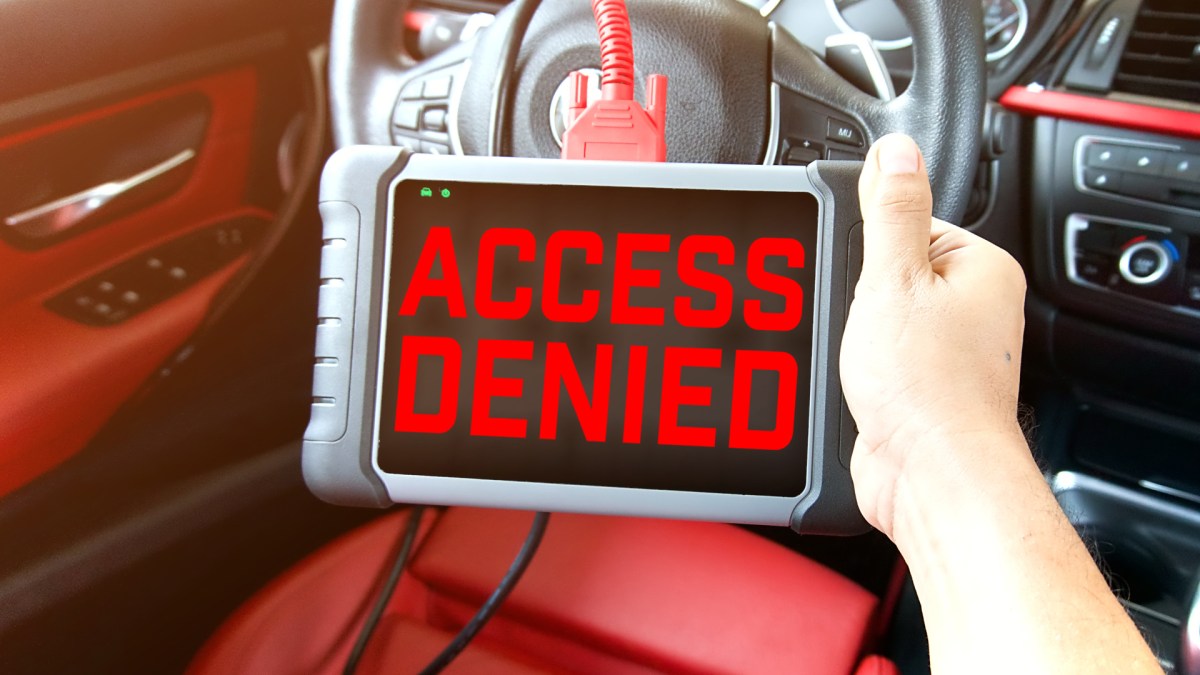
- Consumer empowerment via right to repair. It guarantees car owners access to maintenance information and the ability to select repair services, rather than being restricted to dealerships.
- Technological advancements challenge existing agreements. The proprietary software and data collection of modern vehicles are not included in earlier right-to-repair agreements.
- Legislative gaps persist. Current proposals do not tackle essential points such as telematics and software accessibility, leaving manufacturers in control.
- Bipartisan backing focused on consumer interests. This initiative appeals to a wide political audience, highlighting consumer rights and support for small enterprises.
AI assisted, editor reviewed
When you purchase an item, ownership should be yours. As a car owner, you shouldn’t require consent to make repairs. If DIY isn’t your approach, you ought to have the freedom to select where to get service—preferably your local independent garage instead of only a corporate dealership. This encapsulates the core consumer dilemma of the right to repair movement. It’s not merely about enthusiasts like me working on vintage trucks in our yards; it’s about preventing automakers from turning your vehicle into an enigma that only they can interpret. This impacts every car owner across the U.S.
Quick Overview on Right to Repair in 2026
Here’s a contextual overview for anyone curious about the recurring news regarding the “right to repair”—and its significance even for those not inclined to get hands-on with tools.
- Definition: Right to repair refers to the principle that a company selling a complex item must make the requisite information, tools, and parts available for its repair to consumers and independent shops—not just their authorized dealers. In simple terms, you should be able to fix your car without needing the manufacturer’s approval.
- Reason for resurgence: A truce was reached between automakers and the aftermarket in 2014, but that agreement is outdated in the age of data-collecting, always-connected vehicles. Manufacturers have found new leverage that the old arrangement did not address: proprietary software and the wireless “telematics” data generated by your car.
- Current situation: A diluted form of right-to-repair legislation has progressed in the House, yet it merely formalizes the previous handshake agreement while ignoring the contemporary issues of telematics and software accessibility.
- Misleading initiatives: In June 2026, the Trump administration released a memo labeled “freedom to fix,” focused only on emissions-related components—a narrow, deregulation-oriented aspect of the issue that overlooks the primary concern of automakers restricting access to your vehicle’s diagnostic data.
- Importance to you: Whether you work on your car at home or visit a garage, remember that both you and your mechanic share the same interests. Neither party desires to have your car’s diagnostics locked behind the manufacturer’s barriers, turning routine maintenance into dealer-exclusive tasks at premium prices.
Understanding ‘Right to Repair’
The right to repair indicates that manufacturers of intricate products (like cars) must make the maintenance data for those products accessible to the public. In other terms, you should be able to repair your vehicle without direct consent from the automaker.
This was somewhat resolved around 12 years ago. Car manufacturers essentially made a promise to allow independent mechanics and aftermarket part suppliers to operate, provided those parties refrained from seeking regulatory protections for their business. That agreement is now under strain due to advancements in technology that it was never designed to address.
Why Is It in the News Currently?
The discussion around right-to-repair is revisiting the spotlight because, believe it or not, automobile technology has drastically changed since 2014. Today’s auto manufacturers have found new loopholes to evade the previously established agreement with the aftermarket: proprietary technology and using consumer data privacy against the consumer.
The 2014 agreement did not discuss telemetry and data collection from a vehicle—it simply wasn’t a significant factor then. At that time, even Tesla was a budding company. Nowadays, manufacturers have discovered they can effectively conceal diagnostic capabilities behind a veil of proprietary information, keeping independent mechanics and DIYers from crucial data.
Modern vehicles are highly computerized, collecting vast amounts of data, and are intricately interconnected—where a malfunctioning taillight could disrupt cruise control functionality. This isn’t necessarily a flaw in design, but it sets the stage for manufacturers to say, “Sorry, you can’t replace your wiper blades without access to wiper logs, which are confidential. Hence, you must visit the dealership and present your monthly wiper blade subscription at the kiosk.”
I reject that vision, as it’s unfavorable. Independent mechanics oppose it since it threatens their businesses. Automakers embrace it since it could unlock a new revenue stream from the most coveted aspect of capitalism: recurring income.
How We Arrived at This Point
The Massachusetts Automotive Right to Repair Act was the original significant legislation formed around this concept in the United States, essentially marking the beginning of the right-to-repair narrative as we know it. Massachusetts mandated that vehicle manufacturers provide independent garages and car owners with the same diagnostic tools and repair information available to authorized dealerships. This didn’t imply it had to be accessible—a dealer-grade scanner could cost as much as a good used vehicle—but the central idea is, it is purchasable.
In 2014, a coalition of automakers responded with a voluntary, non-binding agreement—the R2R Memorandum of Understanding—that took the essence of the Massachusetts legislation and applied it nationwide. In exchange, the aftermarket consented to cease pursuing right-to-repair laws in other states and at the federal level. It was explicitly positioned as a definitive end to the industry’s prolonged right-to-repair dispute. Yet, as with technology and policy, nothing remains static forever.
It’s important to note: this was purely a commercial agreement between entities—voters and consumers were not consulted. On the manufacturing side were the Alliance of Automobile Manufacturers and the Association of Global Automakers (now merged into the Alliance for Automotive Innovation). On the aftermarket side were the Automotive Aftermarket Industry Association (now the Auto Care Association) and the Coalition for Automotive Repair Equality, which encompasses entities like AutoZone, Advance Auto Parts, and NAPA. The same two factions stand opposed today. If you’re not a vehicle manufacturing executive, it’s evident that the aftermarket aligns with your interests as a vehicle owner.
Supporters and Opponents of Right to Repair
Arguments Supporting Right to Repair: The Aftermarket and Consumer Perspective
- Your car is yours, so you should control its data and repairs. The fundamental argument revolves around ownership. If the vehicle is yours, the information needed to repair it—and the data it generates—should not beheld by the manufacturer.
- Healthy competition reduces repair expenses. When independent shops have access to the same resources as dealers, owners can seek alternate options. Deny that access, and you give automakers a repair monopoly, leading directly to inflated costs.
- Concerns about cybersecurity don’t withstand scrutiny. A bipartisan group of senators, referencing FTC findings and independent cybersecurity experts, has indicated that the industry’s security objections largely serve as a façade—particularly since automakers profit from selling extensive vehicle data to insurers and third parties, often without clear consent from consumers.
- Contemporary repairs are centered on information, not tools. The real barrier has shifted from physical access to software authorization. Repairing today’s vehicles increasingly demands telematics data, calibration protocols, and manufacturer software—the very components omitted from the current bill.
- This issue transcends niche enthusiasts. Right to repair receives broad support across political lines; surveys show significant public backing for the requirement that manufacturers make repair information and parts more available. Most people intuitively recognize that they should have the choice of who repairs their car.
Arguments Against Right to Repair: The OEM’s Perspective
- Unrestricted data access poses a cybersecurity threat. Automakers claim that granting access to telematics and vehicle systems to any third party expands the attack vector for malicious entities, and that a connected vehicle is a crucial safety system, not a smartphone. Ford CEO Jim Farley has publicly argued that consumers shouldn’t repair their vehicles for these safety and security reasons.
- Repair processes are proprietary intellectual property. OEMs maintain that their proprietary diagnostic software and repair techniques are valuable intellectual property deserving protection, not information they should provide to competitors.
- Modern safety mechanisms require precision. Misaligned ADAS components—the sensors, cameras, and radar that support automated braking and lane keeping—can fail dangerously. Automakers assert that procedures under dealer control ensure these critical safety systems are maintained properly.
- Consumer data requires safeguarding. The industry portrays strict control over vehicle data as part of data stewardship, arguing that loosening access could unveil sensitive personal data—a concern that regulators are increasingly evaluating across the industry.
However, critics promptly highlight that each of these concerns, despite being seemingly valid, aligns neatly with outcomes that funnel more repair work back to dealerships.
Current Status
As of summer 2026, here’s the real situation. The standalone REPAIR Act (H.R. 1566)—the bill the aftermarket and independent repair organizations actually desired—has been stalled in the House Energy and Commerce Committee since early 2025. Then, on May 21, 2026, that committee conducted an extensive markup and integrated a limited version of right-to-repair provisions into a larger legislation: the Motor Vehicle Modernization Act of 2026 (H.R. 7389), which passed the committee on a 48-1 roll call vote.
However, what was passed is toothless. Committee members removed the broader provisions related to telematics and direct wireless access to vehicle data. The legislation does not mandate that manufacturers must provide vehicle owners or independent repairers access to wirelessly transmitted vehicle data. Instead, it essentially enshrines the 2014 memorandum—applying it to vehicles below 14,000 pounds (all passenger vehicles and SUVs, even the electric Hummers) and authorizing the FTC to impose civil penalties for violations. Transforming an old handshake into something enforceable isn’t trivial. But it’s a decade-old handshake.
Justin Rzepka, executive director of the CAR Coalition, bluntly stated that codifying a 2014 MOU fails to broaden consumer choices and merely grants manufacturers an expensive repair monopoly. His argument is that the previous agreement does not encompass ADAS sensors, cameras, radar, calibration, telematics, or wireless data—all vital to maintaining a contemporary automobile. Notably, even Rep. Neal Dunn (R-FL), the sponsor of the REPAIR Act, has stated that the committee’s iteration does not capture the original intention and that he intends to advocate for modifications on the House floor. When the individual whose name is on the bill indicates that it misses the target, that’s significant.
Next Steps
H.R. 7389 is set to move to the full House—all 435 members—but not as a separate piece of legislation. The intention is to attach it to the BUILD America 250 Act (H.R. 8870), the five-year, $580 billion surface transportation reauthorization known as “the highway bill.” The crucial deadline motivating this entire process is September 30, 2026, when current highway and transit measures will expire. Leaders from both parties are eager to reach the president before that deadline, meaning we’re likely looking at a House vote this summer, followed by the Senate (which is working on its own version, complicated by upcoming midterms), then reconciliation before the September 30 deadline. No specific date for the vote has been established yet; committee chair Brett Guthrie has committed to ongoing discussions regarding the right-to-repair language prior to any vote.
The Political Landscape of Right to Repair
The right to repair has a distinct bipartisan appeal as it benefits both constituents and small businesses. It presents a particularly intriguing issue for the Trump administration to navigate. As both the president’s critics and supporters would acknowledge, the Trump brand emphasizes business and profit but also strongly endorses the working class and self-reliance. Right to repair creates a noticeable divide between these two concepts.
After a meeting with automobile industry leaders, President Trump expressed support for DIYers, referencing a pardon for someone who “served seven years for fixing a car.” This framing was never substantiated; the probable individual is Troy Lake, who was pardoned after seven months—not seven years—of a 366-day term for illegal modifications that increased emissions on diesel trucks.
Then, on June 29, 2026, the president issued a memo—not legislation or even an executive order—titled “Lowering the Cost of Living by Promoting the Freedom to Fix.” This does not enact any changes. It instructs EPA administrator Lee Zeldin to simplify the process for car owners to utilize aftermarket emissions components and repairs. The sleight of hand here is that this pertains to emissions components right to repair, rather than information, tools, and software right to repair. The fundamental conflict—concerning manufacturers restricting access to your car’s diagnostic data—relates to that information, along with the manufacturer’s software, tools, and telematics. The memo gestures at the issue while leaving the actual arena unaddressed.
So, what can car owners do in light of all this? Currently, less than you might wish, yet more than nothing. H.R. 7389 isn’t law yet, no vote date is finalized, and the right-to-repair discussions are still ongoing—which means there’s a window for you to reach out to your representative before the September 30 deadline forces decisive action. If you need a representative advocating on your behalf, it’s primarily the aftermarket coalition—the Auto Care Association, CAR Coalition, SEMA, and others—not the manufacturers. When the genuine telematics battle resurfaces, which it inevitably will, it will be beneficial to already understand that this isn’t about gearheads in driveways. It’s about who has the authority to access your vehicle’s data.
Have a tip? Reach out to us at [email protected]
### The Coalition of Drivers and Mechanics Against Automakers: An Overview of the ‘Right to Repair’ Movement
The ‘Right to Repair’ movement has significantly gained momentum in recent years, uniting drivers, mechanics, and advocates against the practices of prominent automakers. This movement strives to guarantee that consumers and independent repair shops have the ability to access the essential tools, parts, and information necessary for vehicle repairs, fostering competition and consumer rights within the automotive sector.
#### Origins of the Right to Repair Movement
The Right to Repair movement arose from a broader consumer rights advocacy that began in the early 2000s, initially concentrating on electronics and agricultural machinery. However, it has expanded to include the automotive field, where the growing complexity of vehicles and advancements in digital technology have imposed barriers for independent mechanics and consumers alike.
As vehicles have evolved technologically, automakers have established proprietary systems that limit access to diagnostic tools and repair information. This reliance on authorized dealerships for repairs often leads to increased costs and reduced options for consumers.
#### Core Issues at Stake
1. **Access to Repair Information**: A fundamental aspect of the Right to Repair movement is the insistence on transparency in repair information. Numerous automakers restrict access to critical data, hindering independent mechanics’ ability to conduct repairs. Advocates assert that consumers should have the right to access manuals, software updates, and diagnostic tools necessary for vehicle maintenance.
2. **Availability of Parts**: The movement underscores the necessity for independent repair shops to obtain genuine parts at reasonable prices. Automakers often monopolize the supply of parts, resulting in inflated prices and restricted availability for independent mechanics, which can stifle competition and consumer choice.
3. **Consumer Choice and Competition**: The Right to Repair movement promotes the notion that consumers should have the freedom to choose where and how their vehicles are serviced. By limiting access to repair resources, automakers effectively create a monopoly over vehicle servicing, potentially leading to elevated costs and diminished service quality.
4. **Environmental Considerations**: Proponents argue that the Right to Repair can foster positive environmental outcomes. By enabling consumers to maintain and repair their vehicles rather than opting for replacements, the movement encourages sustainability and waste reduction.
#### Legislative Initiatives
In response to growing concerns, various states in the U.S. have introduced or enacted Right to Repair legislation designed to ensure that consumers and independent mechanics can access the tools and information necessary for repairs. These laws typically require manufacturers to provide access to repair manuals, diagnostic tools, and parts.
Moreover, organizations like the Repair Association and the Consumer Technology Association have been actively advocating for broader Right to Repair legislation at both the state and federal level. The movement has garnered support from various consumer advocacy groups and environmental organizations, further enhancing its influence.
#### Challenges Ahead
Despite the momentum supporting the Right to Repair movement, substantial obstacles remain. Automakers frequently argue that offering unhindered access to repair information might jeopardize vehicle safety and security. Concerns surrounding intellectual property and the potential for unauthorized modifications further complicate the debate.
Additionally, the automotive landscape is rapidly transforming, with the emergence of electric vehicles (EVs) and advanced driver-assistance systems (ADAS) introducing new complexities. Advocates must navigate these developments while continuing to fight for consumer rights and access to repair resources.
#### Conclusion
The Coalition of Drivers and Mechanics Against Automakers embodies a growing alliance advocating for the Right to Repair. As the automotive sector continues to evolve, the movement aims to empower consumers and independent mechanics, ensuring they possess the necessary tools and information to maintain and repair their vehicles. By fostering transparency, competition, and sustainability, the Right to Repair movement seeks to redefine the future of automotive repairs and consumer rights.