
Snowmobiles are fantastic until the snow disappears. Unless you’re located in a particular region of the world (a list that’s steadily shrinking), your snowmobile likely occupies valuable garage space much of the year. This issue has been around since the snowmobile’s inception, and long ago, innovators and entrepreneurs devised some fascinating solutions.
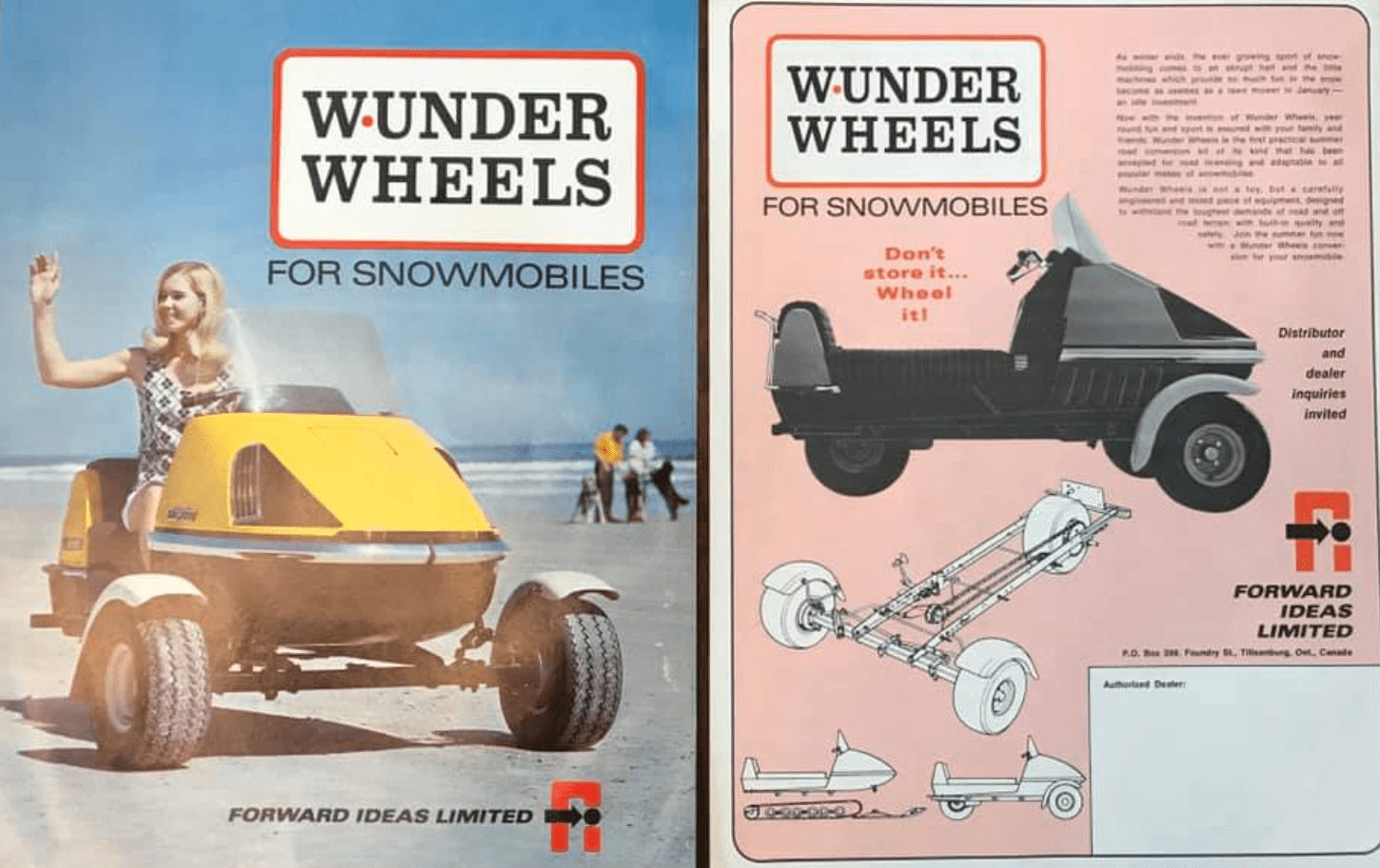
During the late 1960s and early 1970s, kits were available that could convert a snowmobile into a three-wheeled ATV for the summer months. The emergence of purpose-built ATVs in the 1970s seemingly put an end to this concept, but the Internet preserves everything. Spend enough time on Facebook, and you might come across the Wunder Wheels/Skat Trak Registry and Help Line, a group aimed at preserving this niche in powersports history.
This community also appears to be the largest source of information about Wunder Wheels and Skat Trak, the two most common snowmobile conversion kit brands from that era. Wunder Wheels was created by Forward Ideas Limited, a Canadian enterprise established in 1968 by Andry Balazs. According to a historical newspaper article shared in the Facebook group, Balazs sought an inventor to create something innovative. The inventor, Brit Donald Sessions, developed a steel frame that could slide beneath a snowmobile, with steering components for two front wheels and a drive sprocket for a single rear wheel.
Skat Trak began in 1952 under the name Acricast. Its conversion system was somewhat simpler, incorporating independent front suspension attached to a snowmobile’s ski pickup points instead of a completely separate frame. Skat Trak also produced its own line of paddle tires that could convert a snowmobile into a sand rail. Those tires seem to still be available, though the company’s website is currently inactive.
1970 Ski-Doo 3 Wheeler (Vintage Snowmobile Walk-arounds)
1970 T’NT 292 clone on a Wunder Wheels kit
The usefulness of these kits is clear—modified snowmobiles could be operated on certain public roads in Canada back then—but it remains uncertain how widespread their use really was. A member in the Facebook group, referencing discussions with company insiders, asserts that 1,751 Wunder Wheels kits were produced at Forward Ideas’ facility in Tillsonburg, Ontario. This could explain their scarcity today. If you’re looking to add wheels to your snowmobile, you’ll likely need to undertake the project yourself.
Kits like these aren’t merely fascinating for the practical ways they maximize vehicle use. They also provide a glimpse into a time when launching a new niche venture didn’t just involve sequestering programmers to create an app. Unique concepts like these spurred growth in the aftermarket.
### Snowmobile Conversion Kits from the 1970s: Changing Sleds into Trikes
The 1970s signified a pivotal period in the development of snowmobiles, not only concerning performance and design but also in the ingenuity of enthusiasts eager to modify their machines for greater versatility. Among the most compelling advancements of this era were snowmobile conversion kits that converted standard sleds into trike models. This article examines the background, mechanics, and influence of these conversion kits on the snowmobiling community.
#### The Emergence of Snowmobiles in the 1970s
Snowmobiling surged in popularity during the 1960s and 1970s, becoming a cherished winter activity across North America. As manufacturers such as Polaris, Arctic Cat, and Ski-Doo pushed performance limits, riders began seeking ways to personalize their vehicles. The notion of transforming a conventional snowmobile into a trike arose as a strategy for those wanting to improve stability and handling across diverse terrains.
#### Mechanics of Conversion Kits
Typically, conversion kits comprised a set of rear wheels and an altered suspension system that replaced the traditional rear skis of the snowmobile. The kits were crafted to work with various snowmobile models, enabling enthusiasts to modify their current sleds. Essential parts of these kits included:
1. **Wheels and Axles**: The key element of the conversion, these parts provided the necessary grip and stability. The wheels often exceeded the size of standard snowmobile skis to accommodate different surfaces.
2. **Suspension Adjustments**: To cope with the increased weight and ensure a comfortable ride, the suspension system had to be recalibrated. This frequently entailed replacing or modifying the rear suspension to suit the new wheel arrangement.
3. **Steering Systems**: Certain kits incorporated improvements to the steering mechanism to provide enhanced handling and control while navigating curves and uneven ground.
4. **Braking Systems**: With the increased speed capabilities of a trike, upgraded braking systems were often required to maintain safety.
#### Advantages of Trike Conversions
The foremost benefit of converting a snowmobile into a trike was enhanced stability. The added wheel created a broader foundation, lowering the likelihood of tipping over, especially under challenging conditions. Trikes also delivered better traction on packed snow and ice, making them conducive to a broader range of activities, including off-trail exploration and utility tasks.
Additionally, trikes were often perceived as more accessible to riders of differing skill levels. The increased stability simplified learning how to traverse snowy landscapes without the anxiety of losing control.
#### Cultural Impact and Community
The trend of converting snowmobiles into trikes nurtured a vibrant community of enthusiasts who exchanged advice, strategies, and experiences. Snowmobile clubs and online discussions emerged where riders could share their modifications and display their distinctive creations. This spirit of innovation and customization bolstered the overall expansion of the snowmobiling community during the 1970s.
#### Legacy of Conversion Kits
Though the popularity of snowmobile conversion kits peaked in the 1970s, their impact continues to resonate in contemporary snowmobiling. Today, the market provides a variety of aftermarket accessories and kits that enable similar adaptations, catering to a new generation of riders eager to personalize their machines.
In summary, snowmobile conversion kits from the 1970s played a critical role in converting sleds into trikes, enhancing stability and adaptability for riders. This inventive attitude not only shaped the snowmobiling experience of that era but also laid the foundation for enduring customization trends in the sport.