
It’s fair to say Forza Horizon 6 is the leading racing title of the year. Launched in May, it achieved a peak of over 300,000 simultaneous users on Steam shortly after its release. And keep in mind—that’s only Steam, excluding console and PC gamers on the Xbox platform, where Microsoft does not disclose player count data. However, all excitement eventually diminishes and what goes up must come down, thus, as of last month, FH6 was averaging just below 29,000 concurrent players at any time, a fraction of its peak. It may astonish you to learn what game is accelerating right behind, and could soon be hot on its trail.
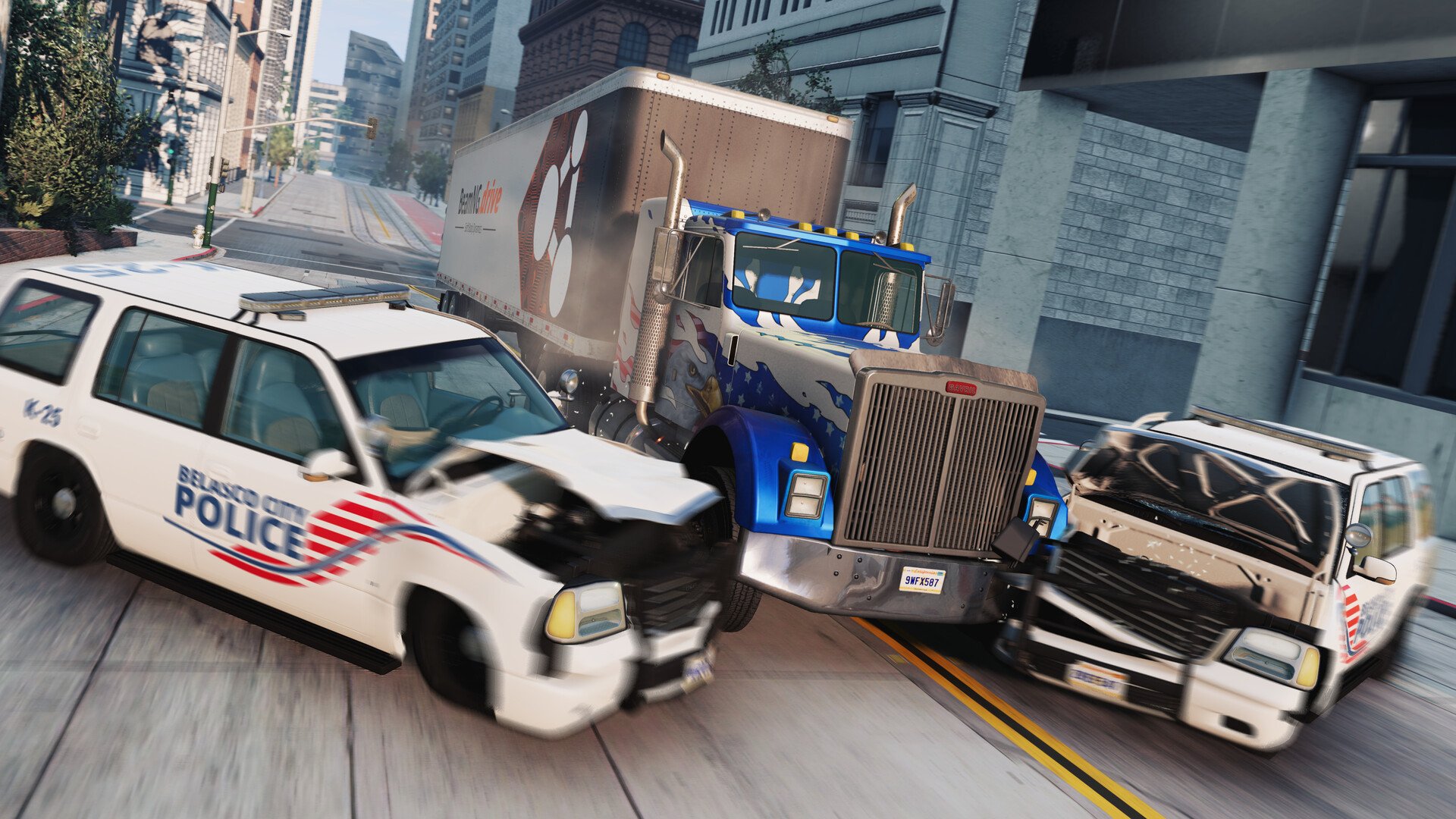
BeamNG.drive, the vehicle physics sandbox that’s been accessible in various forms for more than ten years now, recorded an average of 20,660 concurrent players on Steam in July, reflecting an 8.45% increase, according to data first noted by Overtake. The game, although still technically in early access, boasts a vibrant community of modders and has recently received its largest update ever, incorporating a component of Gran Turismo’s open-source tone-mapping system for more realistic colors and lighting.
I confess that I have very little experience with BeamNG.drive—honestly, I haven’t the faintest idea where to begin. I’m probably most familiar with it from TikToks showing players launching various vehicles off ramps under differing gravities. If you ever wondered what would happen to a Cybertruck subjected to 30 times Earth’s gravitational forces, BeamNG is the game for you.
Regardless, this is a fascinating progression that extends beyond just industry relevance. Triple-A titles priced at $80 are becoming increasingly common, and even those that technically cost less to start with, like FH6, upsell their users to premium editions offering additional perks for up to $120. Grand Theft Auto VI is set to debut with an $80 standard version that restricts customization options for characters and vehicles, which is obviously a main attraction of GTA for numerous players. To gain those privileges, you’ll have to spend $100 on the “Ultimate Edition.”
Are players growing weary of this? I don’t have the figures in front of me to confirm, but it’s generally not a trend most consumers would likely embrace. Therefore, it may be significant that a game priced at $25, offering countless ways to enjoy yourself—provided you’re willing to get your hands dirty—is finding a similarly-sized audience, at least on PC.
It’s also essential to highlight how fundamentally different these two games are. BeamNG is an intricate simulation sandbox where each player customizes their setup to create the desired experience, while Horizon is a straightforward, pick-up-and-play open-world racing game that is practically frictionless, yet significantly more structured in its design. FH6 also, like many contemporary, high-budget titles, operates on a FOMO cycle, with time-sensitive rewards available to those who invest the most time to keep the active player count high.
They couldn’t differ more dramatically if they tried, and yet, they claimed the top two positions in the racing category on Steam last month, with a considerable gap to Assetto Corsa trailing behind.
SteamDB’s statistics since BeamNG’s launch indicate that this attention is not an anomaly. Reviewing the past decade, the game has consistently trended upward, gaining momentum significantly in mid-2020 into 2021. Its peak for concurrent players also occurred just last month right after that major update, hitting 47,424 users. It’s clearly in a very strong position now, which is quite remarkable, especially since it’s developed by a modestly sized independent team of 70 people scattered around the globe. Perhaps all the publishers charging high prices yet closing studios could learn a thing or two from their example.
Have a news tip? Reach out to us at [email protected]
**Obscure Physics Simulation Game Attracts Nearly as Many Players as Forza Horizon 6 on Steam**
In the continuously changing world of video gaming, specific titles capture player attention in unforeseen ways. A recent example is the notable rise in popularity of an obscure physics simulation game, which has reportedly drawn nearly as many players as the much-anticipated Forza Horizon 6 on Steam. This article explores the factors contributing to the success of this niche title and examines the implications for the gaming industry.
### The Rise of Physics Simulation Games
Physics simulation games have long been a mainstay in the gaming community, appealing to those who appreciate the complexities of mechanics and the principles of physics. These games often allow for inventive problem-solving and experimentation, providing a sandbox setting where players can manipulate objects and experience realistic interactions. The recent success of this specific game underscores a growing interest in titles that focus on creativity and exploration rather than conventional gameplay mechanics.
### The Game in Question
While the name of the obscure physics simulation game may not be widely known, its gameplay mechanics and unique characteristics have attracted a committed following. Players are enticed by its innovative design, which fosters experimentation and presents a range of challenges that assess their grasp of physics concepts. The game’s community-driven content, including user-created levels and mods, has further increased its appeal, allowing players to continually engage with new material.
### Comparison with Forza Horizon 6
Forza Horizon 6, a flagship game in the racing genre, features breathtaking graphics, a vast open world, and a robust multiplayer experience. It is no surprise that such a prominent title gathers a large player base. However, the fact that an obscure physics simulation game is attracting nearly as many players raises intriguing questions about player preferences and the gaming market.
The contrast between the two games elucidates a shift in gaming culture, where players increasingly seek experiences that offer depth and creativity. While Forza Horizon 6 presents exhilarating racing action, the physics simulation game offers a more reflective and exploratory experience, appealing to a different segment of the gaming audience.
### Community Engagement and Longevity
A key factor contributing to the success of the physics simulation game is its enthusiastic community. Players are not only engaging with the game but also participating in its development through feedback, content creation, and sharing experiences on social media. This sense of community cultivates a loyal player base, which is crucial for the sustainability of any game.
Moreover, the developers of the game have been responsive to player feedback, implementing updates and features that enhance gameplay and address community concerns. This ongoing support helps to sustain player interest and attracts new players to join the community.
### Implications for the Gaming Industry
The success of this obscure physics simulation game serves as a reminder of the diverse interests inherent in the gaming community. It emphasizes the significance of innovation and creativity in game design, as well as the potential for niche titles to achieve notable player engagement. As the industry continues to develop, developers may take heed of this trend, resulting in a wider variety of game offerings that cater to different player preferences.
### Conclusion
The unexpected rise in popularity of an obscure physics simulation game, nearly competing with that of Forza Horizon 6 on Steam, highlights the dynamic nature of the gaming landscape. As players seek out unique and captivating experiences, the success of niche titles may pave the way for a more diverse gaming ecosystem. This phenomenon not only underscores the importance of community and player involvement but also encourages developers to explore innovative concepts that challenge traditional gaming norms.