
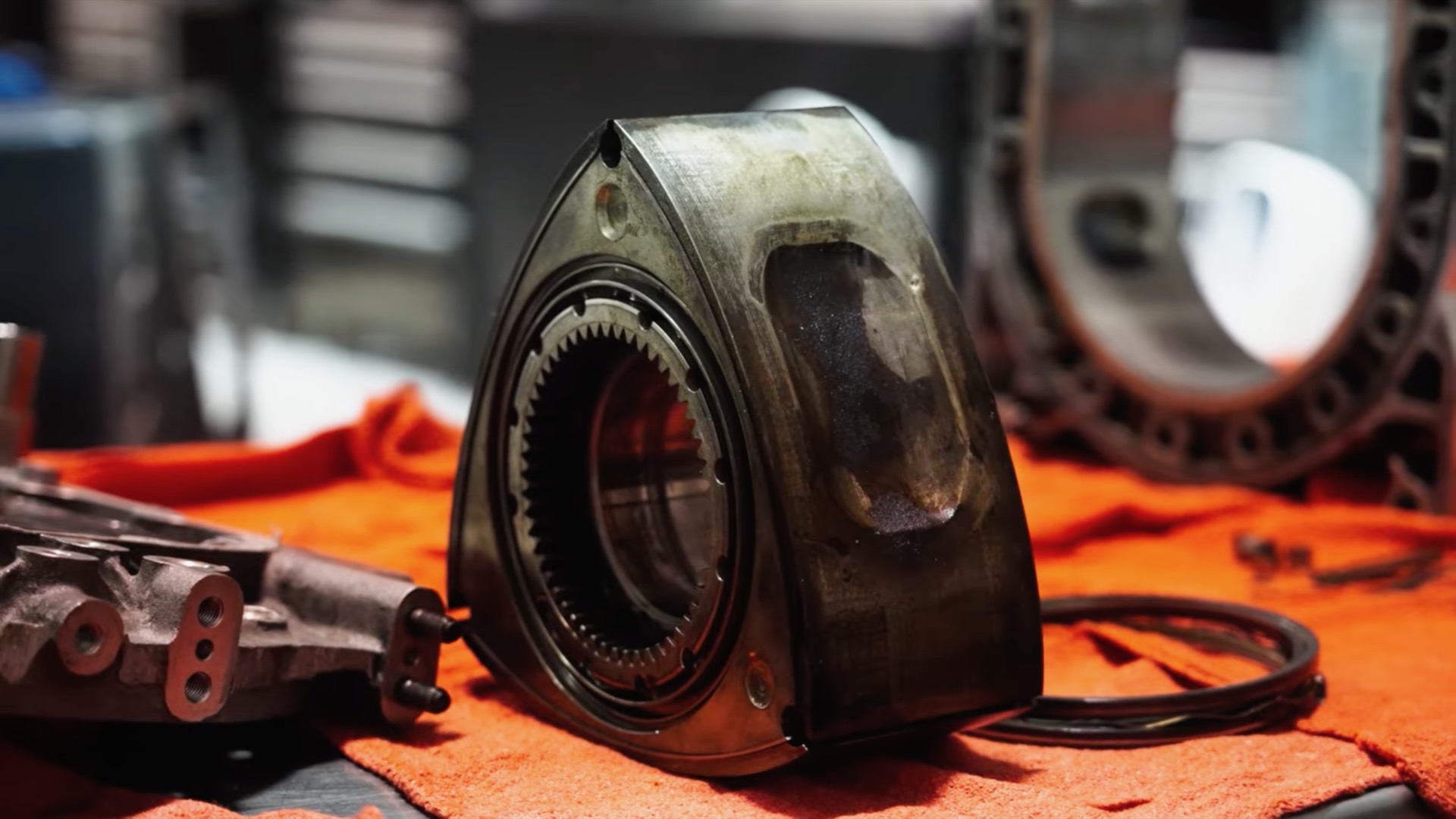
Only one rotary engine has triumphed in the 24 Hours of Le Mans, and it’s a powerful machine that revs up to 9,000 rpm and produces flames from its exhaust. Fortunately, Mazda intends to keep this engine and the vehicles it powered from becoming stagnant artifacts. The automaker’s motorsports division has recently published a video on its YouTube channel demonstrating how the robust four-rotor engines are serviced.
After years of effort, Mazda succeeded in winning Le Mans with the 787B in 1991, coinciding with the commencement of production for the FD RX-7 road car. However, instead of the recognized two-rotor 13B found in the RX-7, the 787B is equipped with a four-rotor unit named the R26B. Estimated to produce approximately 700 horsepower in racing configuration, this engine features rotors similar to those in Mazda’s road cars of that time, although nearly every other component differs. It even utilizes three spark plugs instead of two to enhance fuel efficiency.
Locating replacement parts can be quite challenging, yet the resilience of these engines suggests that any surviving units from their racing days should endure well in retirement. Major components are reportedly maintaining their integrity, according to Mazda. This durability is attributed to features like ceramic apex seals and more robust tension springs that help mitigate the “chatter” created by the steel apex seals commonly used in road cars when they vibrate against the rotary housing at elevated rpm.
The seals—positioned at each point of the triangular rotor to ensure compression—are a recognized point of vulnerability in rotary engines. Mechanics also carefully inspect the internal surface of the housing, which may contract when overheated, potentially compromising the seal. During rebuilding, the thickness of the inner surface is measured against the outer surface (which experiences less heat) to ensure compliance with specifications.
Inside the Mazda 787: Rebuilding a 4-Rotor Le Mans Prototype
Following Mazda’s groundbreaking victory in 1991, regulatory changes made the rotary engine unfit for competitive racing. Mazda would continue to be the only Japanese manufacturer to clinch a Le Mans title until Toyota’s first victory in 2018. Mazda made a comeback in high-level sports car racing within IMSA, starting with a diesel engine, followed by a gasoline turbo-four that positioned it as an underdog until deciding to step back after the 2021 season.
While the MX-5 Cup continues to provide exhilarating experiences, the absence of a current Mazda factory sports-car racing initiative accentuates the necessity of keeping vintage racers functional. They serve as a vital reminder of Mazda’s capabilities when it puts forth effort, and of a time likely not to be replicated. Despite ongoing speculations, a new Mazda rotary sports car is unlikely given the current business landscape, let alone a new rotary-powered Le Mans competitor.
**Mazda Unveils Six-Minute Documentary on the Overhaul of Its Le Mans 787 Four-Rotor Engine**
Mazda has released an engaging six-minute documentary that details the careful reconstruction of its legendary Le Mans 787 four-rotor engine. This engine is famed for its pivotal role in the Mazda 787B, which made history by winning the 24 Hours of Le Mans in 1991, demonstrating the first and only success for a rotary engine in the esteemed endurance race.
The documentary highlights the elaborate process of restoring the four-rotor engine, showcasing the technical skill and commitment of Mazda’s team. Viewers follow through the various phases of the reconstruction, from disassembly to the detailed evaluation of each part, ensuring that every component aligns with the high standards established by Mazda’s engineers.
Mazda’s four-rotor engine, referred to as the 4-rotor Wankel engine, is lauded for its lightweight structure and impressive power generation, traits that played a role in the 787B’s achievements on the track. The documentary stresses the distinctive features of the rotary engine, including its compact form and smooth power delivery, which set it apart from conventional piston engines.
Beyond highlighting the technical aspects of the restoration, the film also explores the historical importance of the 787B and its influence on motorsport. The documentary includes interviews with notable figures from Mazda, such as engineers and drivers involved in the 787B’s development and racing. Their perspectives provide a richer understanding of the challenges encountered during the car’s competitive journey and the innovations that arose from those trials.
The publication of this documentary is part of Mazda’s wider effort to honor its legacy and the engineering excellence that has characterized the brand. By sharing the narrative of the 787B and its four-rotor engine, Mazda aspires to inspire a new generation of automotive enthusiasts and engineers.
The six-minute documentary is accessible on Mazda’s official platforms, welcoming fans and newcomers to appreciate the craftsmanship and legacy of one of motorsport’s most renowned engines. Through this film, Mazda not only commemorates its history but also reinforces its dedication to innovation and performance in the automotive sector.