
“She recalled who she truly was, and everything changed.” ~Lalah Delia
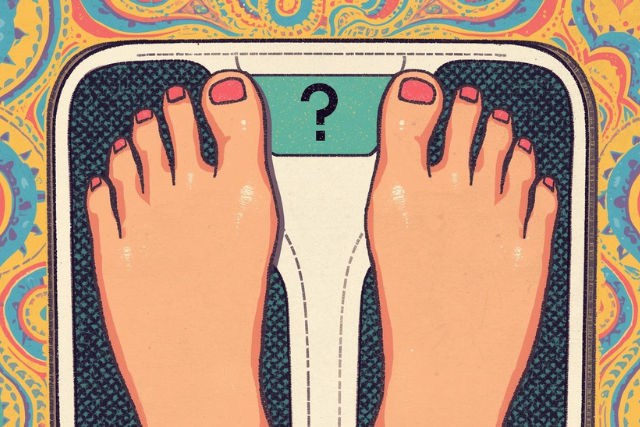
The scale. Those feared words and dreaded digits. It can instill dread in the hearts of generally content individuals. We glance at guidelines and BMI charts and constantly think, “It should be lower.”
<pHave you found yourself enjoying a perfectly fine day only to suddenly think, “Maybe I should check my weight?” And just like that, your day is spoiled.
How do we allow a $20 bathroom scale to dictate our self-worth?
I recall standing on the scale and seeing figures that somehow influenced how I gauged my value. What a ludicrous metric for judging our worth. Yet so many of us do just that. Along the way, we begin believing that weighing less equates to being more.
Growing up in the 1990s, I remember being told my target weight should be 120 pounds. Thanks, Seventeen Magazine and the fashion world. True, I’m not very tall. But that figure became something I pursued for years. I weighed myself religiously every day. I couldn’t care less about my energy levels or how I felt. The only thing that mattered was the number on the scale. If I could only reach that elusive figure, everything would be right in my world.
All around me, the message was clear: do more, eat less, weigh less. If I could just achieve that number, somehow, I would become the most worthy version of myself.
People would praise my weight loss, oblivious to the fact that I was often starving and fatigued. I felt awful, yet the scale’s number seemed good. It never made sense.
During that time, I took up running following my grandmother’s passing. Running provided a positive outlet for my grief. It helped me cope with my sorrow. But then, as good things often do, it turned negative.
I also realized one more thing—it reduced my size.
For whatever reason, that made me feel better about myself. So, for many years, I convinced myself that if I ran enough and ate very little, I could remain small. I recall being informed in my early twenties that my body fat percentage was too low. At that time, I wore that news like a badge of honor. Looking back, it seems somewhat absurd.
Life, of course, has its way of shifting things. After four pregnancies, controlling the scale’s number became increasingly difficult. Each time my weight inched up, I returned to running to attempt to bring that number down again. After every pregnancy, it became more challenging.
Even when I incorporated strength training, it wasn’t about developing strength. It was about expending more calories. Everything centered around pleasing the scale’s number. If I needed to perform jumping jacks between each exercise to burn more calories, I would do it. I never thought about whether I was gaining strength. To be frank, it didn’t matter.
Then something unforeseen occurred.
After a fall from my horse injured my ankle—and my ego—I was unable to run like I used to. Instead, I began strength training from a different perspective. I wasn’t training to shed calories. I was training to gain strength. If I couldn’t run, I still wanted to be able to move effectively.
I had a desire to lift things. Shift things. Feel capable within my body.
Then something peculiar started to happen. People began saying I appeared to have lost weight.
However, when I stepped on the scale, the figure hadn’t gone down. In fact, it had risen.
I recall thinking, “That’s curious… my scale indicates this, but my old jeans fit again.”
Gradually, it became clear to me.
Perhaps the scale wasn’t conveying the full story.
For years, I believed the scale accurately represented my health. What I ultimately realized is that it merely indicated how much gravity was acting on my body that morning. It wasn’t capable of measuring strength. It couldn’t quantify muscle. It couldn’t reflect how capable my body had grown.
As a nurse practitioner, I still weigh patients in my clinical practice. Weight trends can be relevant in specific circumstances, and occasionally, they assist in guiding medical choices. It can affect your health, and it’s my role to help you become healthier.
But that number was never intended to dictate whether someone could have a good day.
It doesn’t gauge resilience.
It doesn’t measure energy.
It doesn’t reflect confidence or strength.
What annoys me the most is recognizing that the same narrative I grew up with is still prevalent. I observe it in my adolescent patients. I see it in the media that bombards my children.
Boys are frequently urged to grow stronger and more capable. A higher number on the scale can even be applauded if it signifies they are building muscle.
Girls often receive a contrasting message. Smaller is preferable. I strive daily to alter that narrative. I want my daughters and all girls to understand that stronger is better.
I attempt to remind them of something I wish I had grasped earlier: our bodies are intended to be strong, healthy, and capable. Strength is something we cultivate, not something we shrink ourselves into.
I recall when that little bathroom scale held the power to dictate how my day would unfold. The number could jump up five pounds overnight due to hormones or water retention, regardless of whether I had done everything ‘right’ the day before.
Now, I perceive it differently.
If I’m going to zero in on a number, I’d prefer it to be the weight I can lift.
The number on my deadlift. The number on my squat. The number on my bench press.
Those figures narrate a far more significant story. They embody effort, consistency, and progress that truly reflect the work being accomplished.
And perhaps the day we stop allowing the scale to dictate our worth is the day we genuinely start valuing what our bodies are capable of. I think that day has come.
About Shannon McDonald
Shannon McDonald is a Nurse Practitioner and holistic nutrition coach who guides midlife women to regain energy and develop strength through her “Strong + Steady” approach. With more than 20 years of nursing experience, she instructs women to collaborate with their bodies through protein optimization and progressive strength training instead of restrictive dieting. Shannon merges clinical insight with faith-based wellness practices from her Nebraska homestead, where she alternates between scrubs and muck boots in her work and client sessions. Visit her at navigatingtowellness.com.