
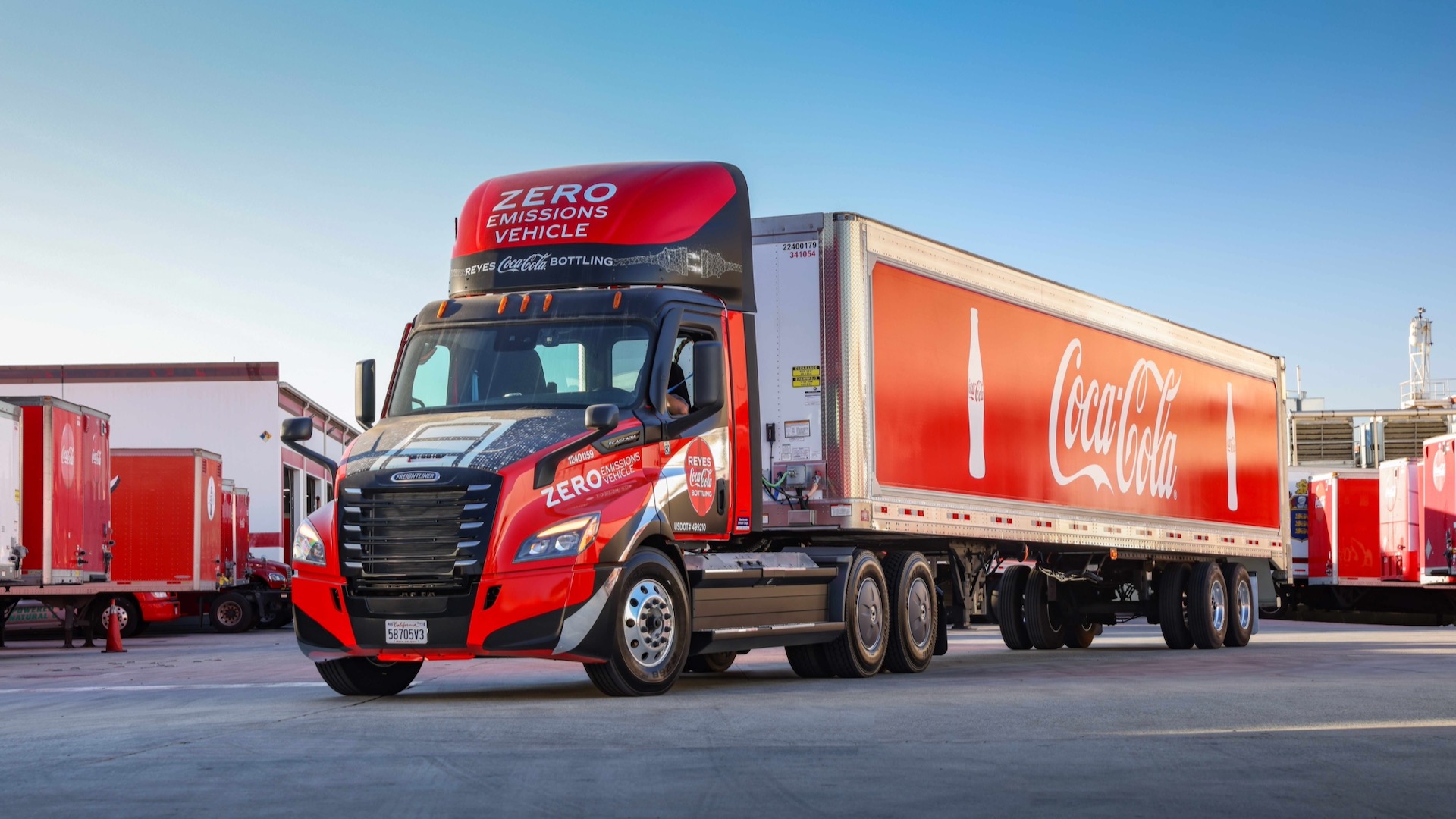
In the pursuit of reducing emissions, policymakers must consider factors beyond just passenger vehicles. Commercial trucks typically travel significantly more miles than regular personal cars, frequently accompanied by substantially higher tailpipe emissions. Once again, California—the state leading in EV sales—is at the forefront of incentivizing electric semi trucks and other commercial vehicles, employing a familiar strategy that has previously enhanced electric car sales.
On May 13, the California Air Resources Board (CARB)—responsible for overseeing the state’s emission regulations and EV incentive schemes—unveiled a $1 billion rebate initiative for electric trucks. Dubbed the California Clean Fuel Rewards program, it should not be mistaken for a rebate initiative for light-duty vehicles that was discontinued a few years back. This time, the incentives are designated for medium and heavy-duty vehicles. As of June 26, fleet purchasers will receive rebates ranging from $7,500 to $120,000 for acquiring a battery-electric vehicle, with the rebate amount increasing based on the vehicle category.
There are some stipulations. The minimum rebate of $7,500, applicable for Class 2B vehicles like pick-up trucks, is only accessible to public fleets. While California has hosted demonstrations of hydrogen fuel-cell semi trucks—like the “Project Portal” drayage operation at the Ports of Los Angeles and Long Beach managed by Toyota and PACCAR (parent firm of Peterbilt and Kenworth)—this rebate applies solely to new battery-electric trucks. Hybrids, pre-owned vehicles, and battery-electric motorcycles are ineligible. However, CARB stresses that the range of classes covered (2B-8) encompasses most types of commercial vehicles such as semis, box trucks, and delivery vans.
Fleets acquiring a qualifying vehicle will receive their rebate at the time of sale, eliminating the need for a separate application process. A 2022 analysis indicated that buyers preferred this approach for passenger cars, potentially increasing interest in electric truck acquisitions in California. The state is in the process of enrolling dealers to provide the rebate before its launch on June 26.
Funding for the program comes from California’s Low Carbon Fuel Standard revenues. Established in 2009, this standard establishes benchmarks for the lifecycle emissions (including those incurred during production and transport) of fuels used for cars and trucks operating on California highways. Companies that fail to meet these benchmarks are required to purchase credits to offset the difference, similar to obligations placed on automakers regarding emissions until the recent Trump Administration opted to halt enforcement of these regulations. CARB anticipates $250 million to be earmarked for EV rebates this year, culminating in a total of $1 billion by 2030.
The Clean Fuel Rewards program complements the Clean Truck and Bus Voucher Incentive Project, which California states has allocated $1 billion to support 11,600 “clean” vehicles (including battery-electric and hydrogen) across 2,000 fleets in the state. Together, these initiatives will aid California in reaching a goal, unveiled in 2020, of achieving 100% zero-emission truck sales by 2045. CARB asserts that by 2024, 23% of medium- and heavy-duty truck sales in California were zero-emission, more than double the state’s target. However, substantial progress is still required to meet that 2045 objective.
**California’s $1 Billion Rebate Initiative Seeks to Enhance Electric Semi Adoption**
California has initiated an ambitious $1 billion rebate initiative aimed at expediting the acceptance of electric semi-trucks, a crucial measure in the state’s mission to diminish greenhouse gas emissions and address climate change. This effort is part of California’s comprehensive strategy to shift toward cleaner transportation solutions, especially in the freight and logistics industries, which are significant contributors to air pollution.
**Initiative Overview**
The rebate initiative, overseen by the California Air Resources Board (CARB), is designed to offer financial incentives to enterprises and fleet operators that opt to purchase or lease electric semi-trucks. The rebates can cover a significant portion of the vehicle’s price, making electric options more attainable for companies that might otherwise shy away due to the higher initial costs associated with electric vehicles (EVs).
**Objectives and Aims**
The main objectives of the rebate initiative include:
1. **Cutting Emissions**: Heavy-duty trucks account for a substantial share of greenhouse gas emissions and air pollutants in California. This initiative aims to significantly reduce these emissions by encouraging the transition to electric semis.
2. **Encouraging Clean Technology**: The program promotes manufacturers to innovate and produce additional electric truck models, cultivating a competitive market that can lead to technological advancements and cost reductions over time.
3. **Fostering Economic Growth**: Through investment in electric vehicle technology, California seeks to generate employment within the green technology sector and stimulate economic development throughout the state.
4. **Enhancing Public Health**: The reduction of emissions from heavy-duty trucks is expected to improve air quality, which can yield considerable public health benefits, especially for communities situated near major freight routes.
**Eligibility Criteria and Application Procedure**
To qualify for the rebate, applicants must fulfill certain criteria, including:
– The vehicle must be a new electric semi-truck that complies with California’s emissions standards.
– The applicant must be a registered business or fleet operator within California.
– The rebate amount may fluctuate based on the vehicle’s weight classification and the applicant’s operational profile.
The application process requires the submission of documentation to prove eligibility, including purchase or lease evidence and compliance with state regulations.
**Industry Impact**
The launch of this rebate initiative is anticipated to have a transformative effect on the trucking industry in California. As more enterprises embrace electric semis, the demand for charging infrastructure is likely to rise, catalyzing investments in charging stations along key freight routes. This infrastructure development is essential for supporting the extensive utilization of electric trucks and ensuring their efficient operation.
**Challenges Ahead**
Despite the potential advantages of the program, several challenges persist. The initial expense of electric semis, the limited charging infrastructure, and concerns regarding battery range and performance are significant obstacles that need addressing. Moreover, the success of the program will rely on ongoing support from both state and federal governments for clean transportation initiatives.
**Final Thoughts**
California’s $1 billion rebate initiative signifies a considerable investment in the future of transportation. By advocating for the adoption of electric semis, the state is proactively addressing emissions reduction, improving air quality, and promoting economic growth. As this initiative progresses, monitoring its influence on the industry and the environment will be crucial, ensuring California remains a leader in the shift towards sustainable transportation.