
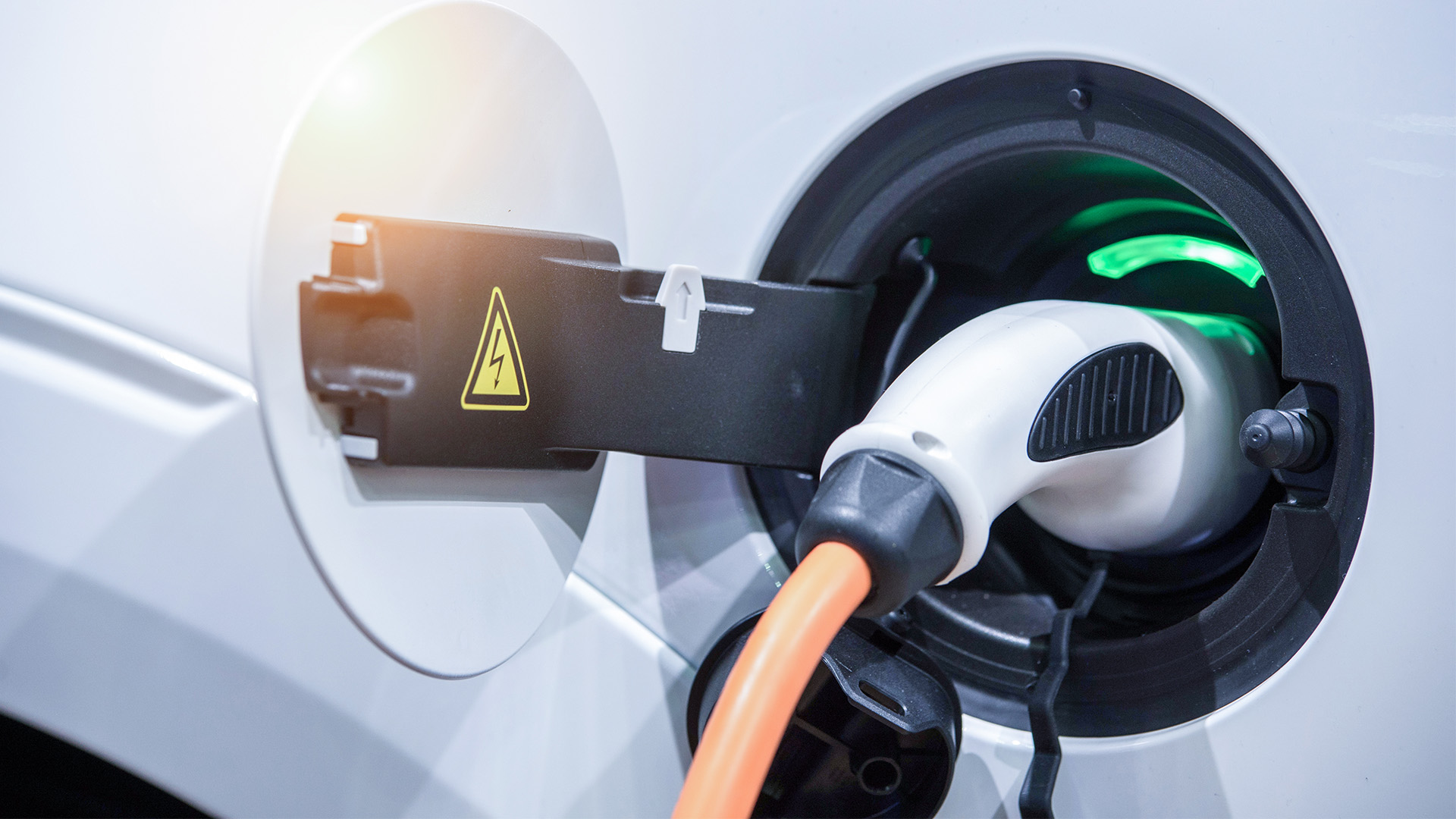
As car manufacturers strive for enhanced EV charging to provide quicker charging times, battery packs may reveal themselves as a vulnerability. Regular DC fast charging isn’t optimal for the longevity of EV batteries, and older batteries struggle more with demanding charging. As is the case with many issues today, researchers sought to determine if AI could offer a remedy.
In a recent publication by IEEE, scientists from Chalmers University of Technology introduced a “health-aware” charging algorithm that can assess a battery’s state of health and modify charging behavior accordingly as the battery ages. In tests, this approach reportedly decreased projected degradation sufficiently to extend a battery’s workable life by approximately 23% while keeping charging times comparable to new batteries, according to the researchers.
The AI-driven algorithm can connect with a battery monitoring system, “learning” the battery’s health status over time and detecting potential issues. Researchers assert this technique is effective enough to eliminate the requirement for dedicated sensors to monitor the battery. Most automobile manufacturers currently assess battery health by monitoring voltage at the cell level, but researchers appear to suggest that examining the chemical reactions within the cell would be necessary to achieve a similar outcome.
Depending on a battery’s health, the algorithm has the capability to either decelerate or accelerate charging by establishing various voltage limits. Utilizing this approach, the simulated battery completed 703 charge and discharge cycles before its capacity fell below 80%, as noted in the paper. In contrast, a simulated battery charged at a constant voltage managed only 572 cycles. Charging durations remained nearly the same, at 24.15 minutes for the conventional approach and 24.12 minutes for the AI approach.
Promising research initiatives do not always transition into commercially viable solutions, yet software capable of tracking battery health in real-time and adjusting charging accordingly is advancing—regardless of whether it carries the “AI” label. At that year’s CES, GBatteries revealed its proprietary charging software, while Breathe emerged from an Imperial College London research endeavor. The latter is now collaborating with Volvo to supply charging software for the manufacturer’s new EV lineup, initiating with the 2027 EX60. Beyond maintaining health, Breathe claims it can enhance charging speed by as much as 15-30% through real-time data monitoring.
**Artificial Intelligence-Controlled Electric Vehicle Charging Could Extend Battery Life by Approximately 23%**
As electric vehicle (EV) uptake continues to grow, the durability and efficiency of EV batteries have become key areas of focus for research and innovation. Recent studies reveal that AI-driven charging systems can significantly increase battery lifespan, with estimates suggesting an improvement of about 23%. This article examines how artificial intelligence can refine charging methods and enhance the sustainability of electric vehicles.
### Understanding Battery Degradation
Battery degradation is an inevitable process that takes place over time due to numerous factors, including charging cycles, temperature changes, and charging speeds. Lithium-ion batteries, the predominant type employed in electric vehicles, undergo wear that can result in diminished capacity and efficiency. Effectively managing these elements is crucial for extending battery life and ensuring peak performance.
### The Role of AI in Charging Management
Artificial intelligence can process large amounts of data to make instantaneous decisions that improve the charging experience. By incorporating machine learning algorithms, AI can forecast the optimal charging times, speeds, and methods based on specific driving behaviors, battery condition, and environmental factors. This tailored approach facilitates more efficient energy consumption and reduces strain on the battery.
### Key Benefits of AI-Managed Charging
1. **Optimized Charging Patterns**: AI frameworks can identify the most effective times to charge, sidestepping peak energy demand intervals and utilizing renewable energy options when possible. This not only aids the battery but also supports a more sustainable energy grid.
2. **Temperature Regulation**: AI can oversee battery temperature during the charging process and modify the charging rate as necessary. Keeping the battery within ideal temperature ranges mitigates the risk of overheating, a critical contributor to battery degradation.
3. **Adaptive Charging Speeds**: By assessing the current status of the battery and its historical performance, AI can dynamically adjust the charging speed. Slower charging rates tend to be less taxing on the battery, thereby enhancing longevity.
4. **Predictive Maintenance**: AI can anticipate potential battery problems before they escalate, enabling timely repairs or replacements. This proactive strategy aids in maintaining battery health and functionality over time.
### Impact on Battery Longevity
Research suggests that the adoption of AI-managed charging can facilitate a notable increase in battery life—estimated to be around 23%. This advancement is particularly significant as it leads to extended intervals between battery replacements, reduced environmental consequences, and lower overall expenses for EV owners.
### Conclusion
As the electric vehicle sector continues to develop, the incorporation of AI in battery management systems presents an encouraging pathway for improving battery longevity. By optimizing charging processes via intelligent algorithms, AI can aid in prolonging the life of EV batteries by roughly 23%, making electric vehicles more sustainable and economically feasible. The future of transportation may heavily rely on the effective application of these sophisticated technologies, ensuring that electric vehicles remain a viable and eco-friendly choice for consumers globally.