
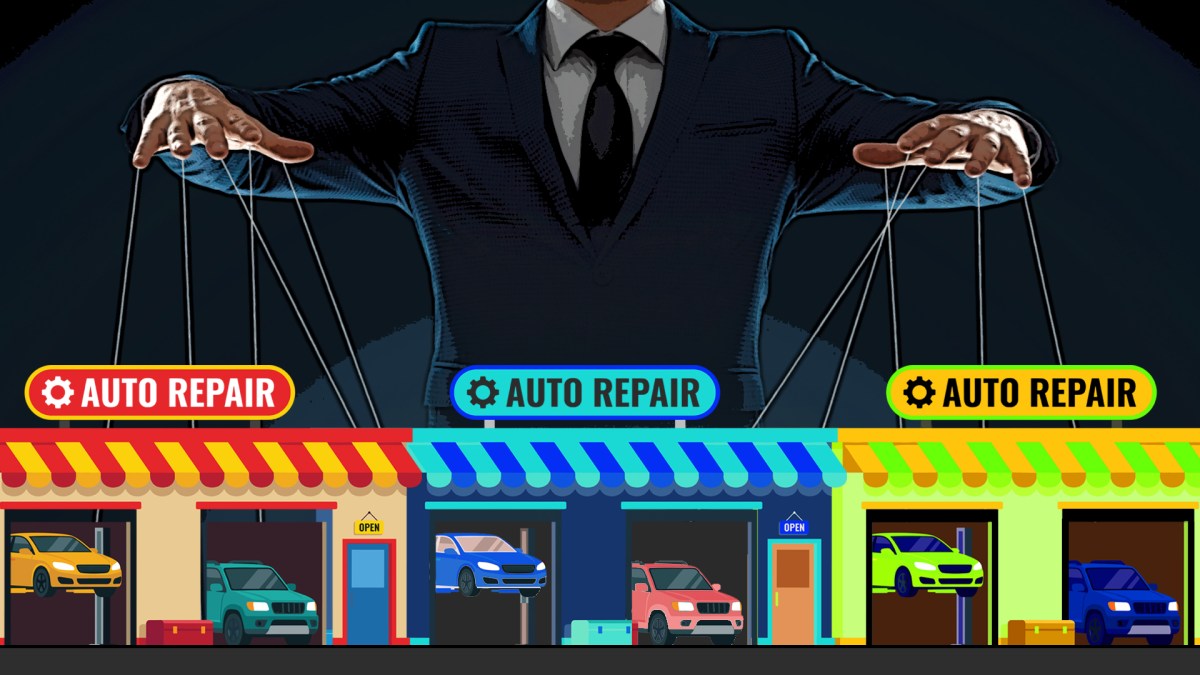
- Six major players dominate automotive services. Private equity firms oversee the majority of prominent chains, preserving local names for consumer confidence.
- Mavis grows through Pep Boys acquisition. This acquisition underscores the trend of consolidation within the sector.
- Strategic moves by private equity. Companies like Roark and Monomoy leverage regional brand recognition without changing branding.
- Effects on consumers. Consolidation can lead to advantages such as pricing and availability while decreasing competition and options.
Conclusion: A handful of dominant firms, backed by private equity, quietly oversee most auto service chains, influencing consumer choices and market conditions.
AI generated, editor verified
Mavis Tire has just acquired Pep Boys from Carl Icahn’s holding firm for $700 million—making one of the nation’s largest tire retailers even larger. However, the more fascinating aspect isn’t just Mavis’s expansion. It’s about who Mavis truly is and what it reveals about the shop in your neighborhood.
Earlier this month, we noted that O’Reilly Auto Parts was pursuing NAPA’s auto parts stores, leading us down a path exploring the American aftermarket auto parts market. (Summary: America only has four major auto parts retailers left, and two could merge.)
This week, the announcement “Mavis to Acquire Pep Boys” landed on my desk. Mavis boasts several thousand locations nationwide, while Pep Boys has about 800—making this somewhat noteworthy news for the industry. It got me thinking—regardless of how many auto service chains exist in the U.S., how many holding companies truly oversee them? The answer is six—six colossal firms operate nearly every car repair chain nationally.
And I’m sure you can guess the source of the genuine power behind those parent firms: indeed, private equity. Mavis (BayPine/Goldman/TSG), Driven (Roark), Jiffy Lube (now Monomoy), Take 5 (Roark), Strickland Brothers (Roark since 2024)—the automotive service sector, akin to the aftermarket, is being consolidated by private equity firms retaining the recognizable regional signs precisely because that local brand reputation is the asset.
The Secret Is Maintaining the Sign as It Is
The strategy is simple. A private equity firm acquires a regional chain—let’s say, a cherished tire shop that’s served your area for 40 years—and then it does not repaint the premises. The local name remains visible. The brand identity the shop developed over decades is exactly what the buyer sought, so altering it would be like burning money.
The outcome is that you can travel across the nation and encounter what seem like numerous differently branded local tire-and-service shops, yet half of them are governed by the same parent company. The fragmentation seen on the streets is intentional, not a coincidence. This allows these businesses to reach massive scale without appearing like the Walmart of oil changes or starting anew with brand establishment.
Of course, there are still thousands of single-location, independently owned auto shops. Franchises are also part of the equation—many brands in the list below do have local proprietors for some locations, even if the name on the signage belongs to a larger entity. But when examining local brand-name enterprises, here’s how the six automotive service powerhouses are distributed.
Mavis Tire Express Services
Ownership: Private equity—a consortium including BayPine, Goldman Sachs’ West Street, and TSG Consumer Partners.
This company is acquiring Pep Boys, and acts as the epitome of the strategy. You may recognize Mavis by its own name if you’re in the Northeast, but if not, you most likely know one of its other brands: NTB, Tire Kingdom, Tuffy, Town Fair Tire, Express Oil Change & Tire Engineers, and Brakes Plus, along with several regional names such as Action Gator, Jack Williams, and Dekalb Tire. Last year, Mavis took on Midas, another substantial brand on its own. Mavis operates its flagship under two names—Mavis Discount Tire and Mavis Tires & Brakes—primarily to navigate trademark issues concerning the term “Discount.” With the addition of Pep Boys and its roughly 800 locations, Mavis solidifies its position as one of the largest service networks on the continent.
Driven Brands
Ownership: Publicly traded, but directed by Roark Capital, the private equity firm behind a significant portion of American franchising.
If Mavis represents the tire-and-service empire, Driven serves as its counterpart across oil changes, repairs, and collision services. The portfolio, according to the company’s filings, includes Take 5 Oil Change, Meineke, Maaco, CARSTAR, ABRA, Auto Glass Now, and 1-800-Radiator & A/C. This covers the quick-lube service, the muffler business, the paint-and-body shop, and the windshield service—all under one roof in Charlotte. It’s arguably the closest comparison to what Mavis is constructing.
Monro
Ownership: Publicly traded, based in Rochester, New York.
Monro defines its assets as a collection of 16 regional brands, and that term—regional—is everything. You have Monro Auto Service, Mr. Tire, Tire Choice, and various local names such as Free Service Tire and McGee. Each reads as a hometown business. All fall under the same corporate parent in upstate New York. Monro’s presence is strongest in the East, so if you’re anywhere in the Northeast, you might have unwittingly entrusted your keys to Monro.
Bridgestone Retail Operations
Ownership: Bridgestone—the tire manufacturer itself.
This represents the vertically integrated model, distinct from the PE consolidations. The entity that manufactures the tires also holds ownership of the bays that install them. Bridgestone Retail Operations oversees Firestone Complete Auto Care, Tires Plus, Hibdon Tires Plus, and Wheel Works, presenting itself as the world’s largest company-owned auto-care network. When you get Bridgestone or Firestone tires installed at a Firestone establishment, the same corporation is involved at both ends.
Interesting tidbit: Bridgestone attempted to acquire Pep Boys in 2015 but lost the bidding to Icahn (who is now selling to Mavis). It’s all just high-stakes musical chairs.
Valvoline
Ownership: Publicly traded (NYSE: VVV).
Here’s an intriguing twist that illustrates the industry’s fragmentation. Valvoline the oil-change franchise and Valvoline the oil are no longer affiliated. The retail service division—Valvoline Instant Oil Change, Great Canadian Oil Change, and the Express Care model—now operates separately. The oil-production segment was sold to Saudi Aramco in 2023. Thus, the name on the sign and the bottle of oil used in your vehicle now link back to two entirely separate owners.
Jiffy Lube
Ownership: As of early this year, private equity—Monomoy Capital Partners.
This represents the most recent component of the equation. Jiffy Lube—arguably the most recognizable name in the oil-change sector—has recently changed ownership. In March 2026, Shell agreed to sell the approximately 2,000-location franchise network to Monomoy Capital Partners in a deal reported to be around $1.3 billion. The transaction was completed in July. Shell owned it for 20 years; now it’s transitioning to a private equity consolidator. This correlates with the year Pep Boys transitioned from Icahn to Mavis, and Jiffy Lube shifted from Shell to Monomoy. Two of the most recognized brands in American car maintenance exchanging strategic corporate parents for financial ones just months apart.
What This Truly Implies for You
None of this is inherently malicious. Jiffy Lube patrons go there for speedy service, not because they wish to cultivate a special rapport with their mechanic or require specialized work on unique vehicles. For many daily drivers, scale can lead to improved pricing, consistent warranties, and parts availability surpassing that of a small owner-operated shop.
When a local store can secure a part within 24 hours due to a connection with a national distribution network, that’s the system benefiting you. However, the decline in the number of competitors often results in less consumer choice which typically leads to poorer experiences or elevated costs.
It’s essential to recognize what’s transpiring. The Pep Boys acquisition isn’t an isolated event. It’s another building block in a framework that a small number of firms—predominantly controlled by private equity—have been constructing for years. The signs outside may still display dozens of different names. However, behind them, the actual number of decision-makers continues to dwindle.
So, the next time you pull into your favorite quick-lube lane, now you know who truly manages it. Increasingly, the answer is: one of the six companies discussed here.
Have insights regarding the auto service or aftermarket sector? Contact me at [email protected].
# An Overview of the Six Companies That Control Auto Service Chains in America
The auto service industry in the U.S. is a multi-billion dollar domain, defined by a combination of independent shops and large corporate entities. Six key companies have surfaced as leading figures in this landscape, molding the auto service field through extensive networks, brand familiarity, and a comprehensive range of services. This article outlines these six corporations.
## 1. **Goodyear Tire & Rubber Company**
Established in 1898, Goodyear ranks among the largest tire manufacturers internationally and runs a considerable number of auto service centers throughout the U.S. Goodyear’s service outlets provide various services, such as tire installation, alignment, brake services, and oil changes. The company is lauded for its dedication to quality and customer care, often using its strong brand reputation to draw in customers.
## 2. **Firestone Complete Auto Care**
A subsidiary of Bridgestone, Firestone Complete Auto Care has played a pivotal role in the auto service sector since its inception in 1926. Boasting over 1,700 locations nationwide, Firestone provides a thorough array of services, including tire sales, maintenance, and repair offerings. The brand is recognized for its proficiency in tire technology and is typically linked to high-quality products and services.
## 3. **Pep Boys**
Founded in 1921, Pep Boys is a prominent name in the automotive service industry, operating more than 900 locations throughout the U.S. The company offers an extensive range of services, including tire installation, oil changes, and mechanical repairs. Pep Boys also sells automotive parts and accessories, serving as a one-stop destination for numerous vehicle owners. The brand is especially well-regarded for its exceptional customer service and knowledgeable personnel.
## 4. **Midas**
Founded in 1956, Midas is noted for its muffler and exhaust services but has broadened its offerings to encompass a full suite of auto repair and maintenance services. With over 1,200 locations in the U.S., Midas emphasizes quality service and customer contentment. The company is recognized for its “Midas Touch” service guarantee, signifying reliability and credibility.
## 5. **Jiffy Lube**
Founded in 1980, Jiffy Lube has become synonymous with fast oil changes and routine maintenance services. With over 2,000 locations across the nation, Jiffy Lube has established itself as a frontrunner in the quick-lube segment of the automotive service industry. The brand prioritizes speed and convenience, offering services like oil changes, fluid checks, and filter replacements, catering to clients seeking efficient service.
## 6. **Meineke Car Care Centers**
Established in 1972, Meineke has risen to prominence in the automotive service landscape, with over 900 locations in the U.S. The company provides a diverse range of services, including exhaust, brake, and general repair options. Meineke is known for its competitive pricing and customer-focused approach, often providing promotions and discounts to draw in new clientele.
## Conclusion
The supremacy of these six corporations in the auto service sector reflects their capacity to adapt to evolving consumer demands and market trends. Through a combination of broad service offerings, robust brand recognition, and a focus on customer satisfaction, Goodyear, Firestone, Pep Boys, Midas, Jiffy Lube, and Meineke continue to shape the future of automotive services in America. As the industry progresses, these corporations are likely to stay at the forefront, guiding trends and establishing standards for quality and service.