
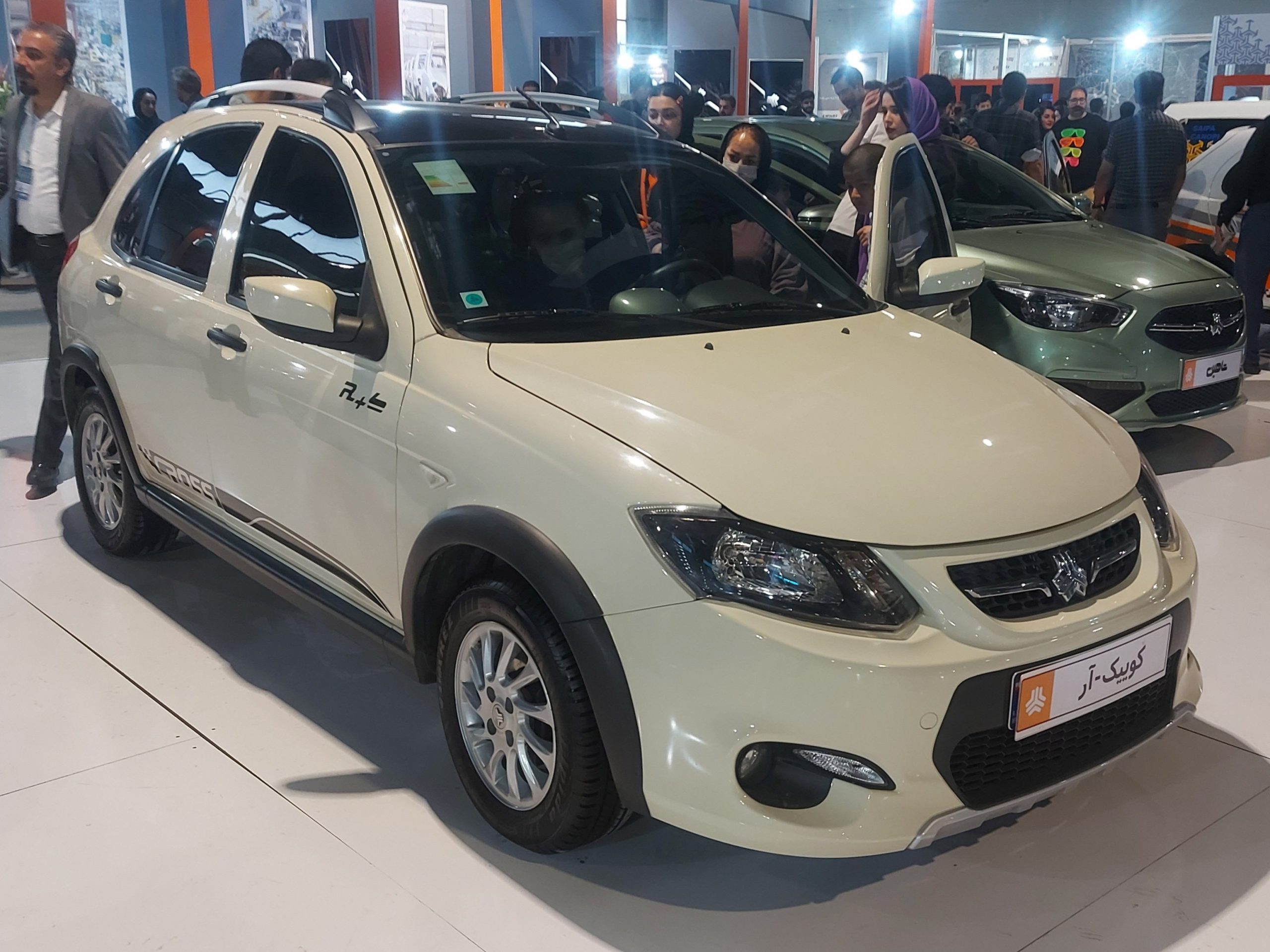
Iran has clearly raised fuel prices here in the United States. However, Iranians face an even more severe situation regarding car ownership—most vehicles are incredibly expensive, despite the fact that the country manufactures its own cars which are quite inexpensive by our standards. On the contrary, imports are priced like luxury vehicles.
Iran boasts a significant automobile industry, backed by government subsidies, featuring numerous domestic brands. The key players, in no particular order, include Iran Khodro, Saipa Corporation, Pars Khodro, Modiran Vehicle Manufacturing, Bahman Motor, and Kerman Motor. A notable mention is Zamyad, a subsidiary of Saipa that produces a licensed variant of the 1970s Nissan Junior pickup. Additionally, there’s Farda Motors, which effectively licenses and manufactures designs from China.
According to analysis from Mordor Intelligence, the dollar valuation of Iran’s automobile sector in 2026 is “projected at $45.38 billion” and is anticipated to exceed $70 billion by 2031.
Iranians also have access to a selection of new imports such as Toyotas and certain Chinese OEMs like Chery, alongside some older foreign vehicles like Peugeots. Furthermore, foreign-branded vehicles (including Peugeot) are manufactured in Iran. However, “access” might be a stretch. Only a limited number of companies linked to the state and certain intermediaries are authorized to import cars, and due to import taxes and VAT, the final cost can surge by as much as 200 percent, as reported by Al Jazeera in mid-September.
Consequently, despite a relatively extensive list of domestically made models and a few from abroad, purchasing a car is virtually unattainable for many individuals in Iran due to the soaring cost of living and rampant inflation there.
The same Al Jazeera article reveals specific examples of the current car ownership economics in Iran. The report outlined the plight of a modest-income Iranian office worker, and the situation appears quite dire.
They indicate that this individual drives an “old manual Peugeot 206,” which they estimate could sell for about 10 billion rials ($4,350). But upgrading to an automatic Peugeot 207 “could set him back 28 billion rials ($12,170).” This implies that even after selling his old vehicle, he’d need to allocate “over 20 months of his total salary” to make the switch. And he would still end up with an older Peugeot.
For context, Al Jazeera additionally shared the prices of various other automobiles in Iran:
“A local sedan, the Shahin model, exceeds 31 billion rials ($13,480), while a crossover, the Reera, is priced above 43 billion rials ($18,700) … a 2026 Toyota Land Cruiser VXR [is] currently around 660 billion rials ($287,000) in Iran, whereas the same model can be found for roughly $86,000 in the UAE.”
Tracking prices is challenging because of the instability of Iran’s currency, but as I am writing this, one could theoretically buy a Saipa Quick S, an 87-horsepower economy car based on the aging Kia Pride platform, for about the equivalent of $4,300, if one is fortunate enough to win the state’s car lottery.
This situation reflects a truly peculiar market—the least expensive vehicles cost significantly less than anything available here, yet no one can purchase them due to rampant inflation. Simultaneously, imported cars are more than double the prices found in neighboring countries. A high-feature Land Cruiser is an appealing option, but with a cost exceeding a quarter million USD, it becomes essentially unattainable in a region where individuals struggle to gather $12,000 for an old sedan.
Furthermore, Iran’s automotive market operates under a two-tier pricing structure involving “factory lottery prices” and “open market” prices.
Factory lottery prices are determined by the government—and they are exceedingly low, below market value, to keep vehicles “statistically affordable.” Consequently, due to this artificially created high demand and low-price situation, Iran has instituted a national car lottery to determine who can secure a good deal on vehicles. Iranian citizens sign up online (often needing to pay upfront) to essentially participate in a raffle for the chance to purchase a cheap Iranian car.
But, of course, there’s a secondary open market. The open market prices are vastly different because actual demand for cars is incredibly high. Given the declining value of Iranian currency, people do not regard cars as depreciating assets; instead, they function more like secure investments, akin to gold or foreign currency.
While we occasionally hear about classic collector cars as investments in the US, in Iran, even a simple economy car can act as an inflation hedge. That’s how unusual the Iranian market is.
I’m not an economist, but the downsides of such a system are quite apparent. Individuals can acquire cars through the lottery and then promptly resell them at a steep markup. Regular consumers are at a disadvantage as their chances of winning such a lottery are slim. Meanwhile, automakers lose out too, as they are forced to sell significantly below what buyers would be willing to pay.
The war has intensified the issue. Al Jazeera notes that “Domestic car prices have primarily surged by 40 to 80 percent since the onset of the war, while some vehicles are being sold for over 130 percent of their September 2025 prices.” The same article addresses the rise in parts costs, placing those dependent on vehicles for transportation in a considerable bind.
I dislike the saying “it could be worse,” since, indeed, everything could always be worse. Nonetheless, regarding car ownership, many Iranian individuals are contending with significantly more struggles than just expensive fuel.
Have a story tip? Reach out to us at [email protected]
**Iran Manufactures $4,300 New Cars with Limited Consumer Accessibility**
In recent news, Iran has garnered attention with its production of new cars priced around $4,300. This effort aims to strengthen the domestic automotive sector and offer affordable transportation options for its populace. Nevertheless, despite the low price point, accessibility for consumers presents a significant hurdle.
### Overview of Iran’s Automotive Sector
Iran’s car manufacturing industry has traditionally been one of the largest in the Middle East, with varying production capacities affected by numerous economic sanctions and domestic policies. The sector is chiefly dominated by a few state-run manufacturers, such as Iran Khodro and Saipa, which produce a spectrum of vehicles from sedans to commercial trucks.
### The $4,300 Car Initiative
The introduction of new cars priced at $4,300 is a strategic initiative by the Iranian government to energize the economy and provide residents with affordable vehicles. These cars are typically basic models aimed at fulfilling essential transportation needs without the luxuries associated with pricier vehicles. This pricing strategy targets a broader spectrum of the population, especially in a nation where economic difficulties have rendered vehicle ownership increasingly challenging.
### Accessibility Limitations
Despite the appealing price, multiple factors contribute to restricted access for consumers:
1. **Economic Sanctions**: Ongoing international sanctions have severely impacted Iran’s economy, culminating in inflation and diminished purchasing power for numerous citizens. Even with a low-cost vehicle, many Iranians find it difficult to manage associated ownership expenses, including insurance, maintenance, and fuel.
2. **Production Constraints**: The manufacturing of these vehicles faces limitations due to the unavailability of advanced technology and components stemming from sanctions. This constraint affects the quality and reliability of the vehicles, which may deter prospective buyers.
3. **Distribution Difficulties**: The distribution network for these cars is not well-established, particularly in rural regions. Many consumers may encounter obstacles in reaching dealerships or maintenance facilities, complicating the ownership experience.
4. **Market Demand versus Supply**: The demand for budget-friendly vehicles often exceeds supply, resulting in lengthy waiting times for consumers. This disparity can discourage potential buyers who may seek faster alternatives.
5. **Consumer Preferences**: A notable portion of consumers in Iran prefers newer and technologically superior vehicles. The basic models available at $4,300 may not align with the expectations of a population that is increasingly exposed to global automotive innovations.
### Conclusion
While Iran’s initiative to manufacture new, low-priced cars marks a significant attempt to improve mobility and invigorate the economy, the limited consumer accessibility poses considerable challenges. Tackling these issues will necessitate thorough strategies encompassing economic reforms, enhanced production capabilities, and improved distribution networks. Without these adjustments, the ambition to make affordable transportation a reality for all Iranians may remain out of reach.