
When caught in a major storm without an immediate power source ready, you’ll likely struggle to find a generator at a store. These tend to fly off the shelves when the lights go out, and constructing a generator on your own can become complicated. However, if you have suitable equipment lying around—which can surprisingly include a 2012 Chevy Cruze—you can maintain essential functions for five days (or longer).
A fortnight ago, in mid-August, Valparaiso, Indiana, was declared a disaster zone. The storms that swept through the northern region left thousands without power. At least one local resident turned to their car as a source of emergency power, sharing their setup on their YouTube channel.
The vehicle in question is a 2012 Chevy Cruze featuring a 1.4-liter turbocharged four-cylinder engine. While not particularly large for a car engine, it is adequately powerful for stationary generation. However, its limitations lie in its electrical output. Nevertheless, as the owner describes, this compact car is more suitable for this use than many others.
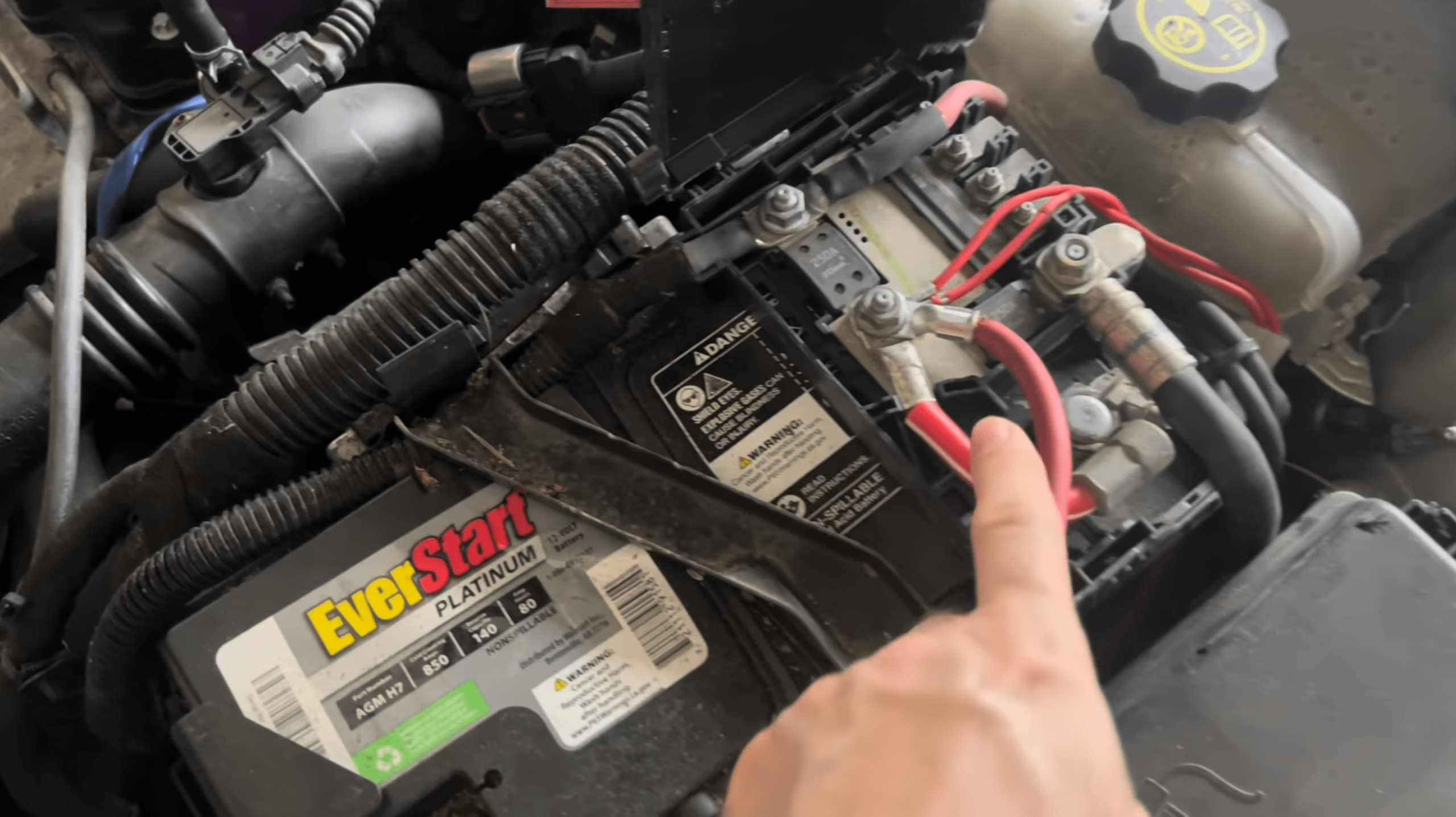
This particular Cruze is equipped with an H7 AGM battery, offering an upgrade over the typical flooded lead-acid battery, in conjunction with a 130-amp alternator provided by the manufacturer. The battery is connected to a 2,000-watt pure sine wave inverter, capable of managing surges up to 4,000 watts, allowing the car to power a decent variety of household electronics. It was sufficient to run two standard refrigerators, a full-size upright freezer, a television, lighting, and office gadgets including a printer, laptop, and external monitor. Quite impressive!
With the car idling continuously, it maintained a stable voltage range of 12.2 to 12.8 volts most of the time. Under heavier demands, it usually dropped to about 11.8 volts, with a recorded low of 10.9 volts. Although that could trip the circuit, the owner reported no issues with their appliances or devices. In fact, the vehicle would automatically raise the idle to 1,000-1,200 rpm to assist in powering the alternator.
After more than 120 hours of idling, the Cruze used several five-gallon containers of fuel. The owner estimates a consumption rate of .22 gallons per hour, which isn’t too bad. They occasionally hopped in the car to rev the engine, but aside from that, it required minimal maintenance. To be cautious, they also sent off some engine oil for testing to check if the five-day operation had adversely affected the engine.
I Powered My House With a Chevy Cruze for 5 Days
I’m not suggesting you acquire a Chevy Cruze solely for this function. However, if you already possess one? Well, perhaps you should purchase the additional items needed to enable this capability in a crisis.
Have a tip or inquiry for the author? Reach them directly at: [email protected]
**Chevy Cruze Supplies Power to Home for Five Days During Power Outage**
In recent times, vehicles have evolved beyond just modes of transportation, with numerous modern cars featuring advanced technologies that enable them to fulfill various roles. A prime example is the Chevy Cruze, which has exhibited its ability to supply power to a household during an unexpected outage.
### The Scenario
During a significant storm, a family found themselves without power for five days. With temperatures dropping and vital appliances rendered inoperable, they encountered a tough situation. Luckily, they owned a Chevy Cruze, which they discovered could be repurposed as a power source via its integrated inverter.
### Powering the Residence
The Chevy Cruze comes with a 12-volt outlet and, in specific models, a more robust inverter capable of converting the car’s battery energy to AC power. This feature enables the vehicle to operate small appliances, lighting, and even charge devices. The family made the most of this asset, keeping critical items operational, such as a refrigerator to maintain food freshness, lights for illumination, and chargers for their phones and laptops.
### Arrangement and Operation
To utilize the Chevy Cruze as a power supply, the family first ensured the vehicle was stationed in a safe, well-ventilated location. They connected extension cords from the car’s outlets to the necessary appliances. The vehicle’s battery was carefully monitored to prevent complete discharge, and family members alternated running the engine periodically to recharge the battery while also providing warmth.
### Advantages and Considerations
Leveraging the Chevy Cruze as a temporary power source offered numerous advantages:
– **Economical**: Rather than spending on a generator, the family tapped into an existing resource.
– **Convenient**: The capacity to power crucial devices without leaving their home was invaluable during the outage.
– **Mobility**: Should further emergencies arise, the family could conveniently relocate with their vehicle.
However, several factors needed consideration:
– **Battery Viability**: The car’s battery has a finite capacity, and prolonged use could result in a drained battery.
– **Fuel Usage**: Operating the engine consumes gasoline, which could pose a challenge during prolonged outages.
– **Safety**: Adequate ventilation was essential to prevent carbon monoxide accumulation while the engine ran.
### Conclusion
The Chevy Cruze’s capability to deliver power during an emergency outage underscores the innovative functionalities of contemporary vehicles. As families increasingly depend on technology for everyday living, possessing a vehicle that can function as a power source may prove to be invaluable. While it’s not a replacement for a dedicated generator, the Cruze’s features provide a pragmatic solution for immediate power requirements in emergencies. As more consumers acknowledge these attributes, the demand for vehicles with such multifunctional capabilities is expected to rise, signaling a new phase of automotive utility.