
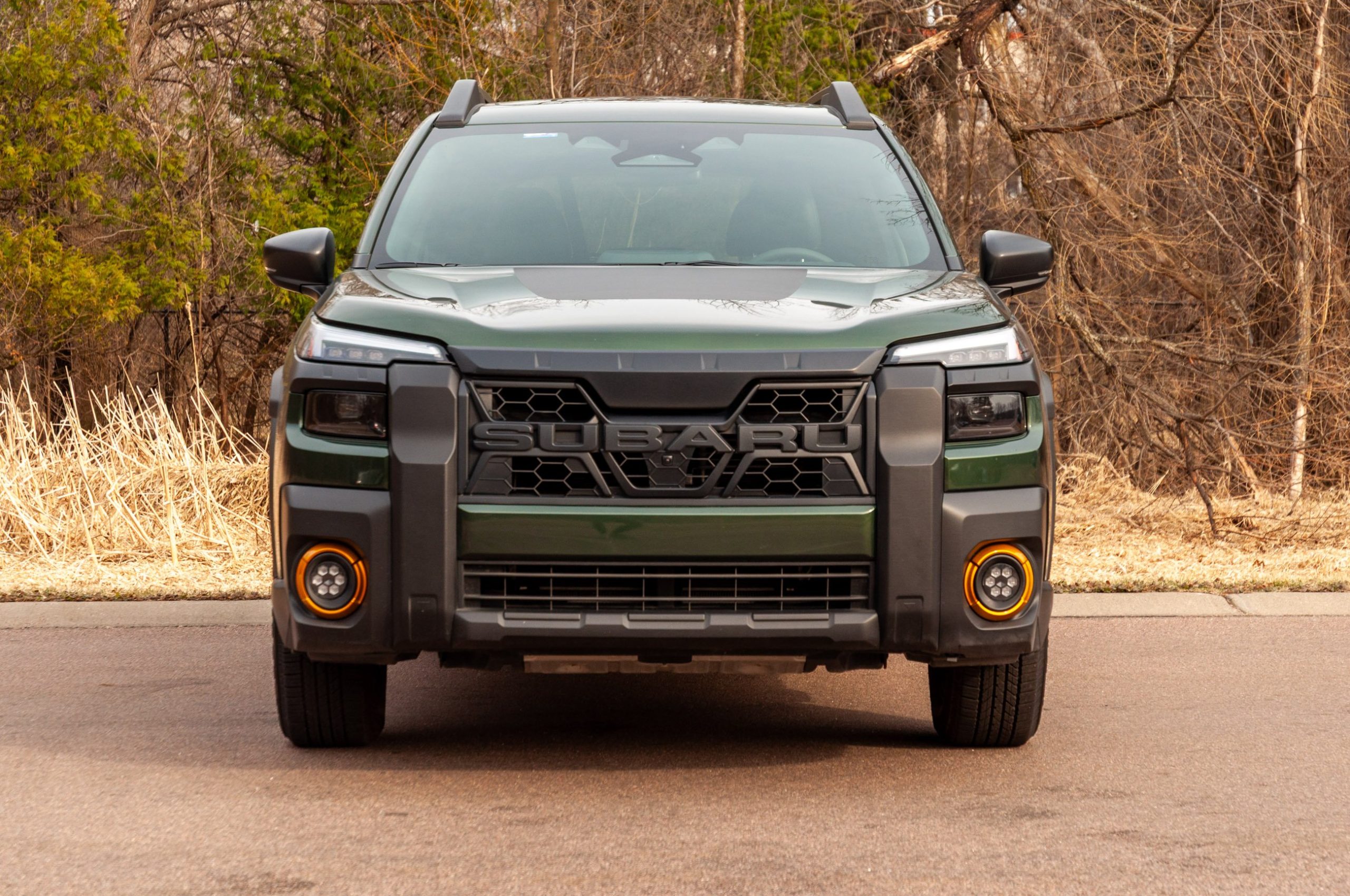
- Return to classic style. The 2026 Subaru Outback Wilderness features a boxy design, reminiscent of earlier versions.
- Advanced interior technology. Equipped with a 12.1-inch touchscreen and an improved infotainment system with wireless Apple CarPlay capability.
- Turbocharged efficiency. Contains a 2.4-liter turbocharged engine and adaptive dampers for enhanced ride comfort.
- Roomy and functional. Provides ample cargo capacity and excellent sightlines, designed with family needs in mind.
In summary: The 2026 Subaru Outback Wilderness merges robust styling with contemporary technology, offering a practical and capable vehicle for adventurous families.
AI-assisted, editor reviewed
There’s a strong demand for SUVs, yet it appears that few (apart from affluent enthusiasts) are interested in wagons. That’s the sentiment, and Subaru has taken note.
The 2026 Subaru Outback made its debut late last year with a more vertical and boxy profile, upgraded technology, a boxer engine, and all the practicality you expect, while the Wilderness variant elevates it even further.
Key Information
When the first camouflage photos of the new 2026 Outback were released, I had a debate with a Subaru representative about whether it would retain its wagon identity. When the Outback was presented at the 2025 New York Auto Show, I approached them and remarked, “Alright, if you squint hard enough, it’s still a wagon, but it resembles a squarer ‘80s Volvo.” We are stepping into crossover territory here, folks. The reason? The roofline has been raised by 1.4 inches, distorting perceptions.
It’s a matter of taste, but the Outbacks from the ‘90s and early 2000s were distinctly boxy right down to their headlights. Then the recent generations transitioned to more aerodynamic, swept-back designs for efficiency. Over time, they began to bulk up again, and now we’ve returned to a more angular form. The Wilderness variant adds an additional 0.8 inches of ground clearance, totaling 9.5 inches. It also features gold trim accents, but there are many textures to consider. The various plastic components on the exterior showcase different finishes, and it lacks a unified aesthetic. The rear design is visually overwhelming, and you’ll know it’s a Subaru as the name is displayed prominently across the front grille like it’s a high-end truck.
The interior, however, is less contentious in its design and blends form with functionality. The dashboard abandons its tidily arranged, vertically oriented center stack for a sizable 12.1-inch horizontal touchscreen and a 12.3-inch digital gauge display. A physical volume knob is conveniently placed between the two. The layout of the infotainment system’s interface resembles that of Toyota’s, but it’s not a direct imitation. Unlike its precursor, the new system starts up instantly, wireless Apple CarPlay operates seamlessly, and it doesn’t feel as though the processor is lagging. Personally, I preferred the vertical display from the previous Outback due to its integration, but the old system was frustratingly slow to operate. Physical buttons and knobs are retained for the entire climate control interface. Kudos to Subaru. The same applies to the buttons and levers on the steering wheel, which still deliver a gratifying click. I also appreciated that the steering wheel retains tidy and tight stitching.
However, inside, the materials in terms of type, texture, and finish can be overwhelming. Within a short distance, I identified five different finishes on the dashboard, while the car under test had Nappa leather seats that felt somewhat out of place. I miss the previous Outback Wilderness’s easy-to-clean material for when you entered the vehicle messy after a hike.
Seating across all areas is good, offering plenty of space upfront and in the rear. Subaru has designed this for families, and I (5-foot-10) found the rear seating comfortable even with the front seat adjusted, leaving ample room. Headroom is truly exceptional, thanks to the elevated roofline. In the back, the cargo area is not only generous; it falls just 3.1 cubic feet short of the Jeep Grand Cherokee with 34.6 cubic feet. Fold down the rear seats and the space expands to 80.5 cubic feet.
Behind the Wheel of the 2026 Subaru Outback Wilderness
Every Outback Wilderness is powered by the 2.4-liter turbocharged flat-four engine that produces 260 horsepower and 277 lb-ft of torque. The CVT remains the sole transmission option, combined with standard all-wheel drive. Similar to the previous Outback Wilderness, the current model uses the larger three-row Ascent’s 4.44 final drive ratio for quicker starts and easier hill climbs.
A Subaru representative confirmed the powertrain has not changed, so the enhanced smoothness of the new Outback Wilderness is attributable to engineers optimizing the powertrain and that final drive ratio to work in unison. There’s ample power available for the Outback’s intended purpose.
More notably, the ride quality is impressive with the Wilderness model’s adaptive dampers. Despite the increased ground clearance, the Outback Wilderness does not feel overly elevated and maintains good stability. The tall, boxy glass around the cabin provides excellent visibility, which is particularly beneficial nowadays when driving can often feel like being inside a bunker.
While there are many positives, the 225/65R17 Bridgestone Dueler A/T tires, marketed as all-terrain, resemble more street-oriented tires. They lack the aggressive treads of the previous model’s Yokohama Geolandar A/Ts, which are also available on the current Crosstrek Wilderness.
Final Thoughts
The 2026 Subaru Outback starts at $36,445 including a $1,450 destination charge, while the Wilderness model is priced at $46,445. The tested Emerald Green variant totaled $50,930 due to a $4,090 package that added navigation, a power moonroof, a surround-view camera system, and black Nappa leather-trimmed upholstery with copper stitching and cooled front seats.
The situation is clear: The 2026 Outback Wilderness fulfills its purpose by combining a wagon-like body and driving attributes with everyday usability and all-weather capabilities. Few alternatives exist, unless one prefers an SUV or a more complex luxury wagon at a higher price. While the new aesthetic may be more polarizing than its predecessors, we are in a time where standing out is essential. It’s a congested market.
Subaru provided The Drive with a week-long loan of this vehicle for the purpose of crafting this review.
Specifications for the 2026 Subaru Outback Wilderness
| Starting Price (Wilderness) | $36,445 ($50,930) |
| Powertrain | 2.4-liter turbocharged flat-four | continuously variable transmission | all-wheel drive |
| Horsepower | 260 @ 5,600 rpm |
| Torque | 277 lb-ft @ 2,000 to 4,800 rpm |
| Passenger Capacity | 5 |
| Curb Weight | 3,974 pounds |
| Cargo Capacity | 34.6 cubic feet behind second row | 80.5 cubic feet behind first row cubic-feet |
| Ground Clearance | 9.5 inches |
| Off-Road Angles | 20° approach | 21.2° breakover | 23.6° departure |
| EPA Fuel Economy | 21 mpg city | 27 highway | 23 combined |
| Overall Score | 8.5/10 |
Quick Overview
Functionality doesn’t always prioritize aesthetics.