
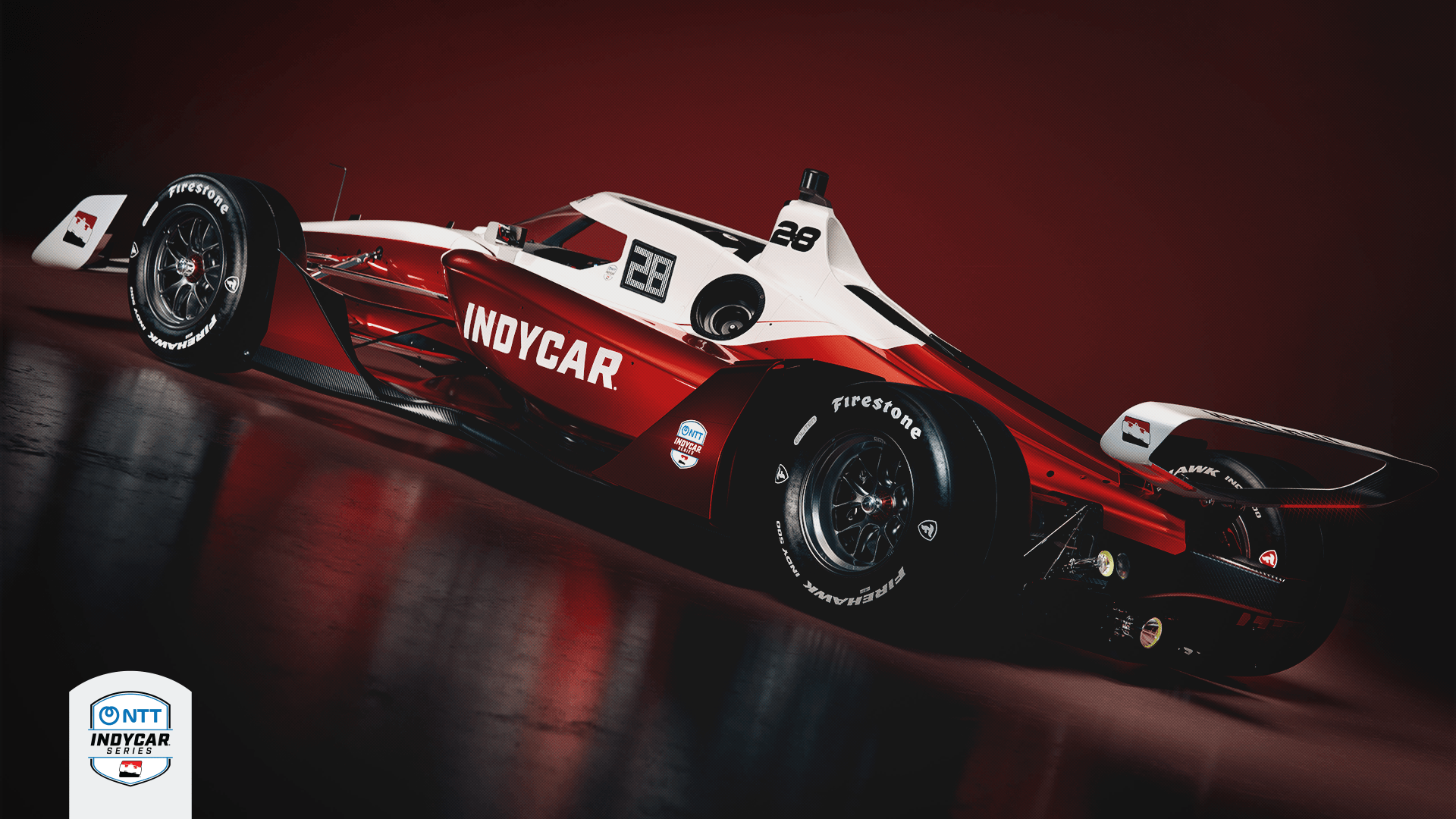
Introducing the IR28, IndyCar’s first entirely new race car in over 15 years. The American open-wheel series revealed these illustrations on Tuesday, and unless there are drastic changes within the next 18 months, this should be what we see debut at the opening race of the 2028 season.
The IR28 takes the place of the original DW12 (named in tribute to the late Dan Wheldon), although in its current form, the chassis is known as the IR18. The platform continues to be produced by Italian chassis manufacturer Dallara, which possesses a vast engineering and testing facility in Indianapolis (and of course, Italy). It will house Honda and Chevrolet’s versions of the 2.4-liter hybrid V6 engines, and with luck, an additional one from a yet-unnamed third manufacturer.
As discussed back in May, while IndyCar oversees the entire engineering initiative with Dallara, both engine manufacturers have collaborated closely to ensure their requirements are accounted for in both the cars and regulations.
Similar to the chassis and engine, the hybrid system in the new Indy cars will also be entirely novel. A more conventional battery-hybrid system will substitute the current supercapacitor system, boasting “approximately 14 times” the battery capacity of the existing system. The hybrid system alone will drop 20 pounds compared to the one currently in use, while the next-generation Xtrac transmission is expected to be 25 pounds lighter than the existing model. IndyCar claims the car is 100 pounds lighter, but it’s unclear if this weight reduction solely comes from the chassis and other lighter components mentioned, or if the total weight loss for the entire package is 100 pounds compared to the current setup.
The IR28 is the first chassis constructed specifically to accommodate IndyCar’s aeroscreen, as the previous version was merely outfitted with it after years of use. This enables a more streamlined and cohesive overall appearance, as everything has been proportioned as a package rather than as individual parts over an extended timeline.
The illustrations displayed here incorporate the superspeedway wing, but overall, the car’s aerodynamic package has been crafted to minimize dirty air to encourage overtaking on road courses, street circuits, and superspeedways. It’s important to note that no figures or metrics were provided alongside these renderings, though IndyCar might disclose some performance targets in the months ahead. Knowing the percentage improvements for downforce or expected lap times would be valuable.
The IR28 features a suspension system called the Custom AXIS Inertance Control Suspension System, offering teams greater flexibility and modularity regarding suspension setups. Additionally, a display screen will be positioned on the side of the car, adjacent to the aeroscreen, showing the car’s position during a race, similar to the systems used in IMSA and other racing series.
This is only the initial significant step in a lengthy process to introduce the newest and most advanced race car the series has ever produced. IndyCar plans to test the first prototype later this week, so stay tuned for more updates on the IR28. What are your thoughts thus far?
Have a tip? Reach out to us at [email protected]
**IndyCar Debuts Its First New Race Car in 16 Years**
In a major milestone for motorsport fans and the IndyCar Series, the organization has revealed its inaugural new race car design in 16 years. This announcement marks a significant point in the progression of IndyCar racing, showcasing advancements in technology, safety, and performance.
The new vehicle, referred to as the “IR-18,” is poised to succeed the aging Dallara DW12, which has served as the foundation of the series since its rollout in 2012. The IR-18 aims to enhance the competitive framework of IndyCar racing, offering teams enhanced aerodynamics, superior handling, and heightened safety features.
A prominent highlight of the IR-18 is its emphasis on aerodynamics. The innovative design features a sleeker body shape, which lessens drag and boosts downforce. This modification is anticipated to foster closer racing, enabling drivers to compete more assertively on the circuit. Furthermore, the car’s adjustable aerodynamic elements will allow teams to fine-tune their configurations for different tracks, improving their adaptability to varying circuit conditions.
Safety has also been a significant focus in the creation of the IR-18. The new car encompasses cutting-edge safety innovations such as a fortified cockpit, improved crash structures, and enhanced head protection systems. These advancements aim to furnish drivers with greater safeguards in case of an incident, addressing concerns raised in prior seasons.
The rollout of the IR-18 arrives at a time when IndyCar is enjoying a resurgence in popularity. The series has experienced a rise in viewership and attendance, driven by exciting races and a competitive roster of drivers. The new car is expected to elevate the thrill of the series, drawing in new fans while retaining existing supporters.
Teams and drivers have shared their excitement about the new vehicle. Many believe that the IR-18 will create a more level playing field, allowing for increased competitive racing and potentially altering the established order within the series. The car’s inaugural appearance is highly awaited, with teams keen to assess its performance throughout the upcoming season.
In summary, the launch of the IR-18 signifies a new chapter for IndyCar racing. With its focus on performance, safety, and competitive equity, the new vehicle is set to enhance the thrill of the series and engage fans in unprecedented ways. As teams gear up for the forthcoming season, all attention will be on the IR-18 and its influence on the future of IndyCar racing.