
“We often begin to truly discover ourselves only after we’ve lost our way.” ~Henry David Thoreau
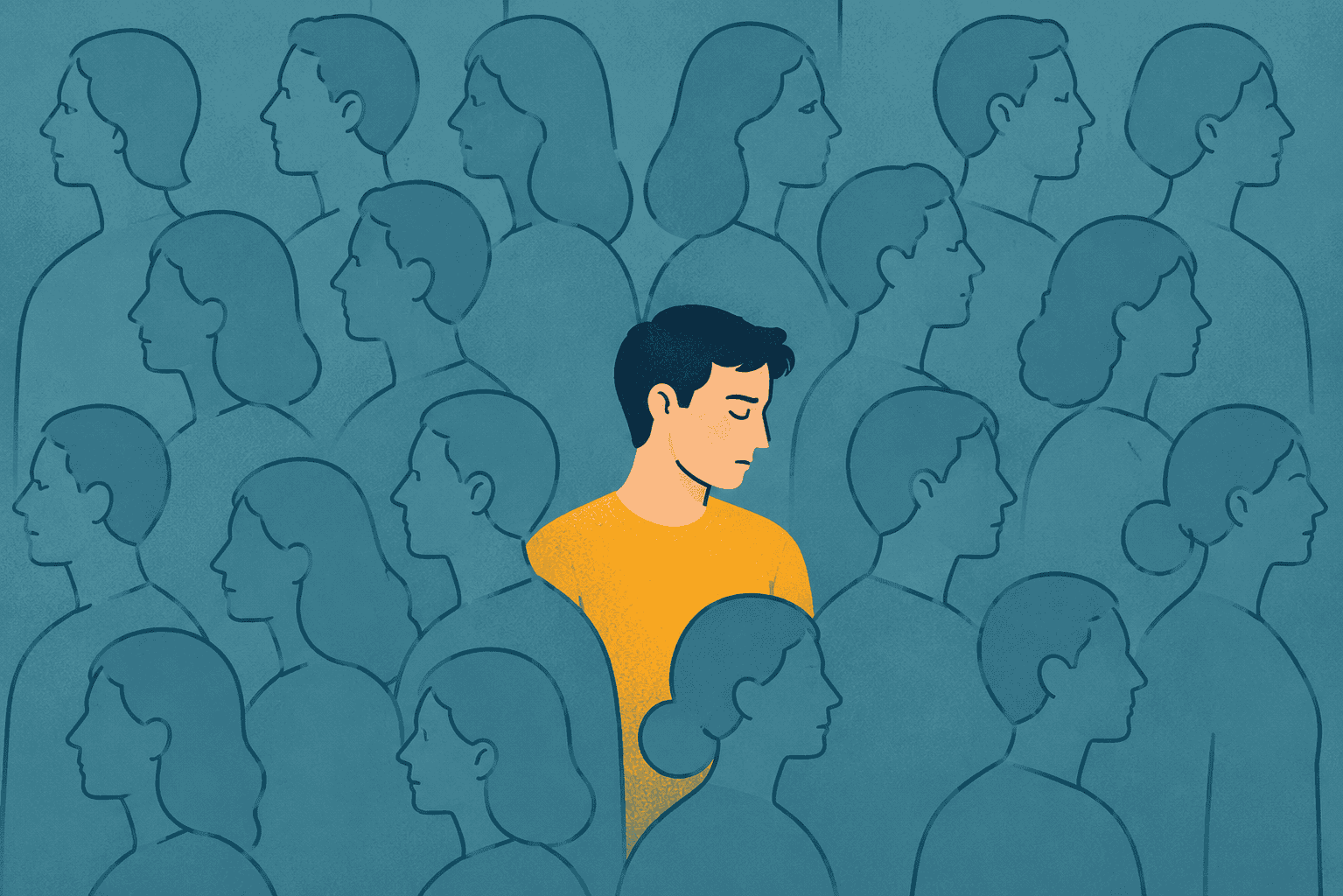
Most of my life has been spent feeling as though I stood just outside the circle.
Not always, but whenever I took a step back to reflect on my life as a whole, there was an ongoing sense of being an outsider gazing in.
I believe that feeling motivated me for quite some time. I wanted to demonstrate my worth, to earn my position through hard work and excellence. I aspired to be the kind of person others were happy to know.
I challenged myself in sports, striving to make impressive plays to gain the audience’s appreciation. I envisioned myself playing bass guitar with such vigor that the listeners would feel the rhythm pulsating through them. I built up my credentials and did everything possible to become an exceptional teacher, the kind that transforms lives.
These aspirations originated from a profound place within me. The passion for the game, the allure of music, and the pleasure of effective teaching were all genuine expressions of my spirit. However, interwoven within all of this, beneath it all, was an intense yearning for connection.
Each of those ambitions manifested in some manner, and I fully committed myself to them. Yet, what I uncovered within them was unexpected. The sense of belonging I had been striving for couldn’t be compelled from the outside.
I was in my early twenties when I reached Philadelphia for graduate studies, still carrying all of this baggage unbeknownst to me. One evening, a friend invited me to a party—a warm gathering of close friends in someone’s backyard, where we all gathered around a pool.
The group engaged in lively conversation, enjoying the night. I attempted to mingle, moving from one small talk to another in search of a way in. Nothing truly clicked.
After about an hour, I found myself at the pool’s edge, and something compelled me.
Acting on impulse, I stepped off the edge into the depth of the pool. Fully clothed. The frigid water enveloped me, and I remained submerged for several long seconds.
My friend felt embarrassed. I was in a state of numbness. We drove home in silence, with me soaked in the passenger seat.
I couldn’t articulate what I had done, not that evening and not for many years afterward. The memory lingered with me for three decades, resurfacing occasionally, painful and bizarre. And underneath that oddity, there was another layer, a sense of embarrassment I hadn’t summoned the courage to confront directly.
The embarrassment ran deeper than the action itself. Beneath it lay something I had kept concealed even from myself—the intensity of my desire to belong that evening and how vulnerable that desire left me.
For many years, I carried shame regarding that night, as if needing to be acknowledged and valued reflected a weakness or flaw in my character. It took me decades to realize that the need itself was never the issue.
Not long ago, I encountered a thought-provoking idea. For nearly all of human history, individuals lived in small communities of twenty to fifty people, and your role within that group was everything. It determined your access to food, protection, and survival for yourself and your offspring.
I also learned that the brain registers the pain of exclusion in the same way it processes physical injuries. So, while my plunge into the cold was odd and unexpected even for me, it was also a reaction to something ancient and fundamental.
Researchers in this field categorize the need to belong alongside basic needs like hunger and thirst. These are requirements that every individual possesses, whether or not we are aware of them.
I had no awareness of this when I entered that pool in Philadelphia. And after much painful introspection, I’m realizing now that I wasn’t needy in a shameful manner. I was simply a young man feeling painfully isolated in a crowd.
I think, in that moment, I opted for the rejection I could control rather than the one I couldn’t. The cold water was truthful. It didn’t pretend I belonged, and if I was to be cast aside, I chose to fully embrace that.
What I’ve come to understand is that the embarrassment I felt at the party and during the years of reflecting on it was integral to my becoming who I have always been destined to be.
Because I know what it feels like to be invisible, and I am aware of the shame tied to that feeling, I can recognize that struggle in others, and I can extend help. I’ve been too close to the pain of isolation to mistake it for something else or to overlook it when witnessing someone else’s suffering.
Three decades have provided ample time to observe the patterns in my life becoming clearer. And what I now notice is that the feeling I so desperately tried to evade offered me insights I would have otherwise missed: in one way or another, we all yearn for belonging.
When I enter a room today, whether it be a celebration, a family gathering, or a workplace, I find my gaze drawn to the individual standing alone.
The one who laughs a tad too enthusiastically at something that isn’t particularly amusing. The one gazing at their phone because it’s easier than being present with no defined purpose. The one who came hoping that tonight would be different and is beginning to question whether it will be.
I recognize that individual. I’ve been that individual, and in many regards, I still am that individual.
The sensation of not fitting in doesn’t vanish just because you become aware of it and work on it; at least it hasn’t for me. It subsides at times but never entirely disappears. And I’ve ceased waiting for the day it does.
What I’ve discovered instead is that the pain becomes something you can carry without being overwhelmed by it. It transforms into a part of your identity that you learn to accept, relate to, and even draw strength from, as it keeps you grounded in what it means to be human.
That’s what my life’s path has evolved into. What I want people to internalize and feel in their essence when they leave a space is this: You are acknowledged. You are listened to. You are cherished. And you are loved.
I’ve had to confront the reality of the limitations of those affirmations. When I concealed aspects of myself I was afraid to reveal, no external reassurance could fully reach me. Sometimes, the people around me weren’t observant enough to recognize the goodness within me regardless.
I had to concede that the belonging I sought wasn’t always obstructed by my own barriers. At times, it simply wasn’t being offered. Let’s be honest; the world can sometimes be an unwelcoming and harsh environment.
I’ve learned that we often provide to others what we most urgently need ourselves, and that certainly rings true for me. The pain I endured didn’t merely injure me; it revealed to me what I was designed for.
Not everyone will perceive you as your true self. Some will resonate at a different frequency, and that can be painful. However, the more genuinely you present yourself to the world, the greater the opportunity you give the right people to truly understand you.
That belief has undergone challenges and affirmations in my personal experience. In my twenties, I thought it would be amusing to bring a homemade Key Lime pie to a New Year’s Eve party filled with individuals striving to appear cool. It was akin to bringing baked goods to a nightclub, exemplifying my quirky sense of humor.
A young woman laughed heartily when I offered the pie and joined me at the kitchen table for a slice. We enjoyed each other’s company until the party faded into the background.
That young woman eventually became my spouse.
We have been together for over twenty-five years, and she has since revealed that she never liked Key Lime pie. The truth is, she was merely interested in connecting with the guy bold enough to be himself in a room full of people pretending to be someone else.
The traits that reveal your true self are discernible to those who know how to see. You hold a space in this world as you are right now, not only once you have earned it. And by sharing what is authentic about you, you provide the right individuals a chance to discover you.
The calling to recognize individuals, to assist them in opening up and genuinely belonging, isn’t a choice I made. I stumbled upon it by pursuing my own wound, my own desire for the same thing, all the way to its resolution. It has been an ongoing expedition with challenging falls along the way, yet it’s the most meaningful discovery I have made.
The young man I was when I stepped into that pool in Philadelphia wasn’t shattered. I was, in my own hurting and voiceless manner, searching for something real. And even though I still grapple with belonging from time to time, I have ultimately found it.
I’ve learned to belong to myself. I’ve learned to perceive the pain that individuals carry yet seldom name and to recognize it without judgment because I know it from my own experience. That understanding has transformed me from someone who was clawing for a place to belong into someone who strives to create that space for others.
The outside world is challenging to navigate. But it teaches you to truly observe.
About Daniel H. Shapiro
Dr. Daniel H. Shapiro is a keynote speaker, author, and mentor. He is dedicated to fostering human connections and the narratives we carry with us. For further details about his book, The 5 Practices of the Caring Mentor, or his mentoring and speaking offerings, visit yourinherentgoodness.com.
**Insights Derived from a Lifetime of Encountering Differences**
Throughout our existence, individuals face a plethora of differences that shape their viewpoints, beliefs, and interactions. These disparities can arise from culture, race, gender, socioeconomic status, and personal experiences. Engaging with diversity provides profound insights that contribute to personal development and societal comprehension.
**1. Enhanced Empathy and Comprehension**
Experiencing differences nurtures empathy. When individuals interact with those hailing from diverse backgrounds, they gain insight into varying life experiences and challenges. This exposure fosters a deeper understanding of others’ emotions and perspectives, leading to more compassionate interactions. Empathy is essential in forging relationships and resolving conflicts, as it encourages individuals to contemplate viewpoints beyond their own.
**2. Expanded Perspectives**
A life filled with diverse experiences allows individuals to expand their viewpoints. Exposure to various cultures, traditions, and ideologies challenges preconceived ideas and promotes critical thinking. This wider worldview can spur innovative solutions and creative thinking as individuals learn to meld various viewpoints and methods.
**3. Heightened Adaptability**
Navigating a world rich in variations necessitates adaptability. Individuals cultivate the ability to adjust their communication styles, behaviors, and expectations based on context and the people they engage with. This flexibility is a valuable asset in both personal and professional arenas, empowering individuals to thrive in diverse settings and collaborate effectively with others.
**4. Reinforced Identity**
Engaging with differences can also foster a stronger sense of self. As individuals encounter various viewpoints, they reflect on their own beliefs and values, often resulting in a more defined personal identity. This self-discovery process can bolster confidence and authenticity, as individuals learn to embrace their uniqueness while valuing the diversity surrounding them.
**5. Enhanced Conflict Resolution Capabilities**
Differences can sometimes lead to misunderstandings and conflicts. However, a life of experiencing these differences equips individuals with the faculties to navigate and resolve disputes. By comprehending the root causes of conflicts and appreciating the merit of diverse perspectives, individuals can tackle disagreements with a collaborative and compromising mindset.
**6. Increased Social Cohesion**
Engaging with differences fosters social cohesion. When individuals celebrate and appreciate diversity, they create inclusive communities. This sense of belonging and acceptance can strengthen social bonds and foster a collective commitment to addressing societal challenges. Communities that embrace diversity often exhibit greater resilience and innovation, drawing upon a wide array of experiences and ideas.
**7. Commitment to Lifelong Learning**
A dedication to understanding differences encourages continuous learning. Individuals who actively seek out diverse experiences are more inclined to pursue ongoing education, whether through formal avenues or informal interactions. This quest for knowledge not only enriches personal lives but also contributes to a more informed and engaged society.
**Conclusion**
The insights gained from a lifetime of experiencing differences are priceless. They enhance empathy, broaden perspectives, increase adaptability, reinforce identity, improve conflict resolution capabilities, promote social cohesion, and inspire a commitment to lifelong learning. Embracing diversity is not just a personal journey, but a collective obligation that enriches communities and fosters a more inclusive world. By acknowledging and valuing differences, individuals can contribute to a society that celebrates diversity and thrives on the strengths it provides.