
As the design chief of Jaguar, Ian Callum undeniably made a lasting impression on the esteemed British carmaker. Callum steered Jaguar away from uninspired retro designs, crafting a modern yet unique identity for the brand that has proven difficult to replicate. He has now embarked on a project that’s nearly as ambitious: rethinking the Jaguar XJ220.
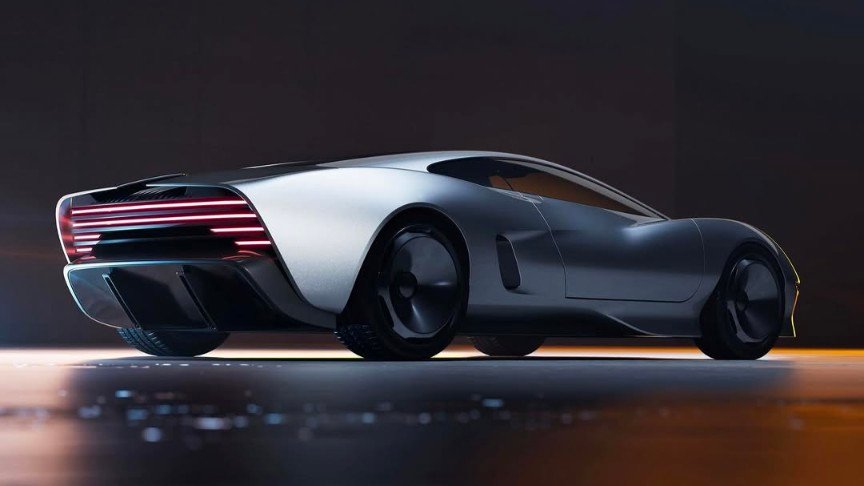
Earlier this week, Callum Designs, the design consultancy bearing his name, shared visuals of a neo-XJ220 concept on Instagram. Only a side view and rear quarter perspective were revealed, and Callum Designs refers to this refreshed interpretation of the XJ220 as a “design study” that isn’t intended for production. It is merely meant to showcase the capabilities of the company and serve as a promotion to prospective clients. This also commemorates the production XJ220’s debut at the 1991 Tokyo Motor Show.
Callum Designs has already explored a few restomod ventures. It introduced an Aston Martin Vanquish restomod to celebrate the model’s 25th anniversary and provided consulting for Evoluto’s Ferrari F355 restomod. However, this represents a complete overhaul. The basic outline of the XJ220 remains, but each surface is more pronounced. Sharp character lines flow over the wheels, and the rear end and windshield positions are more dramatic. The pop-up headlights have also been swapped for sleeker contemporary lighting.
Since this is merely a design study, there’s no indication of what powertrain Callum envisions. The original XJ220 famously made its debut in concept form at the 1988 British Motor Show with a V12 engine powering all four wheels but was subsequently modified with a simplified turbocharged V6 and rear-wheel drive. That was still sufficient for the XJ220 to claim the title of the world’s fastest production car, reaching a top speed of 217 mph in a 1992 test, but the change left some customers disillusioned. Only 282 units were produced over a span of about three years.
The development and production of the XJ220 were overseen by Tom Walkinshaw Racing (TWR), which was also responsible for Jaguar’s highly successful sports-car racing program during that period. After the XJ220 concept was revealed, Callum joined TWR’s newly-established design office, which set the stage for his involvement in the Aston Martin DB7, Vanquish, and ultimately his role at Jaguar. The Jaguar C-X75, envisioned as a successor to the XJ220, was also designed under Callum’s guidance, and Callum Designs has sought to bring that vehicle to market. Thus, there is a notable history linking Callum and the XJ220.
Reimagined supercars aren’t a new concept. Gordon Murray accomplished it with the McLaren F1, Lamborghini did so with the Countach, and Ruf offers a new car that resembles a 1980s CTR Yellowbird. Therefore, if Callum Designs chose to turn this concept into reality, it would likely find a willing market.
Have a tip? Contact us at [email protected]
**Envisioning the Jaguar XJ220: A Design Concept by Ian Callum**
The Jaguar XJ220, a term that resonates deeply with car aficionados, once held the title of the fastest production car globally. Debuted in the early 1990s, it epitomized aspiration, innovation, and a vision for the future of high-performance automobiles. Ian Callum, an esteemed automotive designer, played a critical role in its design, leaving a profound impact on the industry. This article delves into the design concept of the Jaguar XJ220 as envisioned by Callum, underscoring its aesthetic, engineering, and cultural importance.
**Aesthetic Vision**
The design of the Jaguar XJ220 stands as a testament to the blend of grace and fierceness. Callum’s vision aimed to create a vehicle that encapsulated the essence of Jaguar while challenging the limits of modern design. The XJ220 boasts a smooth, aerodynamic form defined by its low stance and elongated profile. The front end showcases sharp edges and a distinctive grille, honoring Jaguar’s legacy while indicating a daring new direction.
The incorporation of lightweight materials, like aluminum and composite components, not only boosts performance but also enhances the car’s stunning visual appeal. The signature pop-up headlights and rear spoiler are design features that serve practical functions while contributing to the vehicle’s avant-garde look. Callum’s precision in detail is apparent in every curve and edge, rendering the XJ220 a genuine masterpiece.
**Engineering Marvel**
Beneath its striking exterior, the Jaguar XJ220 is a marvel of engineering. Callum’s design wasn’t solely focused on aesthetics; it was about crafting a vehicle capable of delivering remarkable performance. The car was equipped with a 3.5-liter twin-turbo V6 engine, generating an impressive 542 horsepower. This engine, paired with a lightweight frame, enabled the XJ220 to reach a record top speed of 217 mph, a benchmark that endured for years.
The design also embraced sophisticated aerodynamics, featuring elements like a flat underbelly and rear diffuser, which reduced drag and enhanced stability at high velocities. Callum’s vision extended beyond just appearance to encompass the very core of performance, resulting in a vehicle that was as exhilarating to navigate as it was stunning to admire.
**Cultural Impact**
The Jaguar XJ220 made its entry during a time of fierce rivalry in the supercar arena, dominated by brands like Ferrari and Lamborghini. Callum’s design not only established the XJ220 as a serious competitor but also revolutionized the concept of a British supercar. Its launch sparked considerable excitement and intrigue, captivating the minds of automobile enthusiasts and collectors.
The legacy of the XJ220 continues to shape contemporary automotive design. Its combination of performance, luxury, and pioneering technology has inspired a fresh wave of supercars. Callum’s contributions to the XJ220 paved the way for his subsequent projects, cementing his status as one of the foremost designers in the automotive field.
**Conclusion**
Envisioning the Jaguar XJ220 through the perspective of Ian Callum’s design concept reveals a vehicle that transcends the realm of high-performance cars; it symbolizes creativity, artistry, and the relentless drive for excellence. The XJ220 stands as an enduring tribute to the influence of visionary design, leaving an indelible mark on the car industry and continuing to motivate future generations of designers and engineers.