
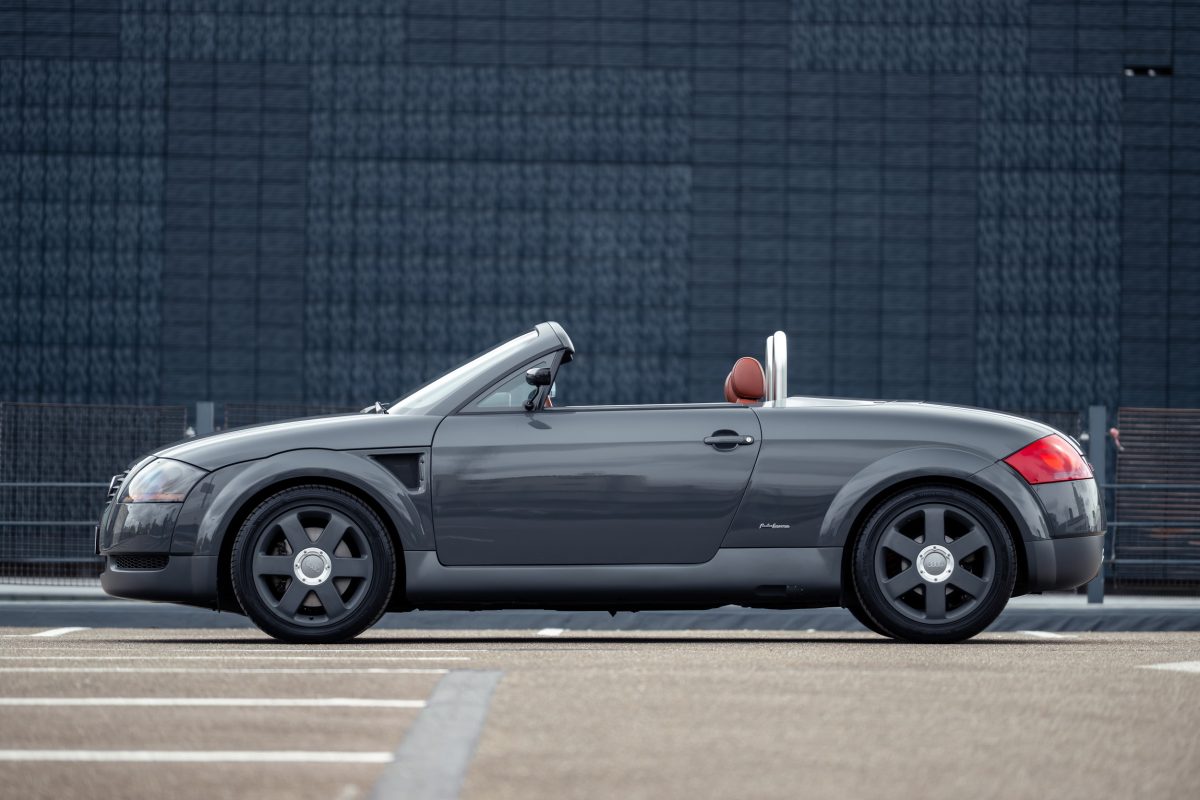
The inaugural Audi TT was such an innovative design that it’s surprising it is now mature enough to become a candidate for restomodding. Autoforma, a branch of Dutch coachbuilder Niels van Roij Design (known for creating a Rolls-Royce Corniche shooting brake), provided an early TT Roadster with some enhancements while honoring that legendary design.
This unique restomod draws inspiration from the 1995 TTS Roadster concept that indicated the forthcoming production TT convertible (which launched in 1999). It essentially moves in the opposite direction of the concept, reverting some of the modifications made for production to achieve a cleaner appearance. The front bumper was flattened, and more horizontal air intakes were added to highlight the width of the front end. New front-fender vents accommodate the side turn signals and required relocating the windshield washer reservoir to the trunk due to their intrusion into the compact engine bay.
This vehicle is truly a roadster. Autoforma eliminated the folding roof, substituting it with a sleeker tonneau panel situated behind the seats—similar to the 1995 concept. A small intake was incorporated into the side sills just in front of the rear wheels, and a new rear bumper integrates the exhaust tips and diffuser, further refining and simplifying the exterior, along with the added clip-on racing mirrors. Autoforma also removed weld seams behind the trunk lid, as well as the antenna and rear spoiler, but retained exposed screws for the new front-fender and side-sill intakes.
The TT features a lowered suspension, but Autoforma seems not to have modified the powertrain or any other mechanical aspects. Weight reductions from eliminating the convertible top, along with the use of carbon-fiber-backed materials for many of the new exterior components, should result in the engine propelling fewer pounds.
Nimbus Gray paint combined with a brown leather interior is the standout configuration for a first-generation TT, but Autoforma added its own twist. The paint predominantly exhibits a glossy pearl finish, but the lower body, A-pillars, and windshield surround sport a matte finish. Overall, the modifications will likely be recognized only by aficionados of the original Audi TT. This aligns, as this vehicle was constructed for Dutch designer Jos Baijens, who purchased a new one back in 1998.
If you have the means, Autoforma would probably be eager to create a TT restomod tailored for you. If you’re considering acquiring a new TT at some point, the closest option will likely be an electric sports car based on the Concept C and priced between the last TT and R8. Unveiled last year, the Concept C officially draws inspiration from the 1936 Auto Union Type C race car and the C6-generation Audi A6 that debuted in 2004, yet still seems to bear some resemblance to the TT.
**First-Generation Audi TT undergoes Restomod Evolution**
The first-generation Audi TT, manufactured from 1998 to 2006, serves as a quintessential example of automotive design and engineering that has attracted a loyal following. With its unique Bauhaus-inspired design and enjoyable driving dynamics, the TT has become an emblem of Audi’s dedication to innovation and performance. As the automotive industry shifts, many enthusiasts are embracing restomod projects to reinvigorate these iconic cars, merging classic designs with modern advancements.
**What is Restomod?**
Restomod, a blend of “restoration” and “modification,” pertains to the practice of revitalizing a classic vehicle while integrating contemporary components and technologies. This method allows car lovers to relish the nostalgic charm of a vintage vehicle while enjoying modern performance, safety, and comfort features.
**The Allure of the First-Generation Audi TT**
The first-generation Audi TT is lauded for its distinct design, featuring rounded forms and a minimalist cabin. Under the hood, it provided a variety of engines, including a turbocharged inline-four and a V6, offering a balance of performance and efficiency. The TT’s Quattro all-wheel-drive system further enhanced its allure, enabling it to perform admirably under diverse driving conditions.
**Restomod Optimization Process**
1. **Engine and Performance Enhancements**: Many restomod initiatives commence with an engine swap or significant enhancements to the current powertrain. Enthusiasts frequently select more robust engines, like the 2.0 TFSI from later Audi models, which can yield a considerable increase in horsepower and torque. Upgrading the exhaust system, turbocharger, and intercooler can also boost performance while preserving the vehicle’s essence.
2. **Suspension and Handling Upgrades**: To enhance handling and ride quality, restomod endeavors often integrate modern suspension systems. Transitioning to adjustable coilovers, performance sway bars, and upgraded bushings can revolutionize the driving experience, delivering improved road feedback and cornering capabilities.
3. **Integration of Modern Technology**: Incorporating contemporary technology is a defining characteristic of restomod projects. This may involve installing a modern infotainment system with Bluetooth capability, navigation, and superior audio quality. Furthermore, upgrading the instrument cluster to a digital display can increase functionality while retaining the classic aesthetic.
4. **Interior Renovation**: The interior of the first-generation TT can be rejuvenated with high-end materials and modern conveniences. Bespoke upholstery, enhanced seating, and modernized climate control systems can develop a more comfortable and enjoyable driving atmosphere while preserving the car’s original appeal.
5. **Exterior Modifications**: While many enthusiasts prefer to keep the original paint and body structure, others may choose custom paint finishes or body kits to give the TT a more assertive appearance. Upgrading to contemporary LED headlights can also improve visibility and refresh the vehicle’s look.
**Obstacles and Considerations**
Restomodding a first-generation Audi TT presents its own array of challenges. Sourcing quality parts, particularly for older models, can be challenging. Additionally, striking a balance between integrating modern components while maintaining the car’s original identity necessitates careful planning and execution. Enthusiasts must also weigh the effects of modifications on the vehicle’s worth and insurance considerations.
**Conclusion**
The restomod evolution of the first-generation Audi TT symbolizes a blend of classic aesthetics and contemporary performance. By adopting the restomod philosophy, enthusiasts can craft a distinctive vehicle that honors its origins while reaping the rewards of modern technology and engineering. As the automotive landscape continually transforms, the restomod movement guarantees that iconic vehicles like the Audi TT stay relevant and pleasurable for future generations.