
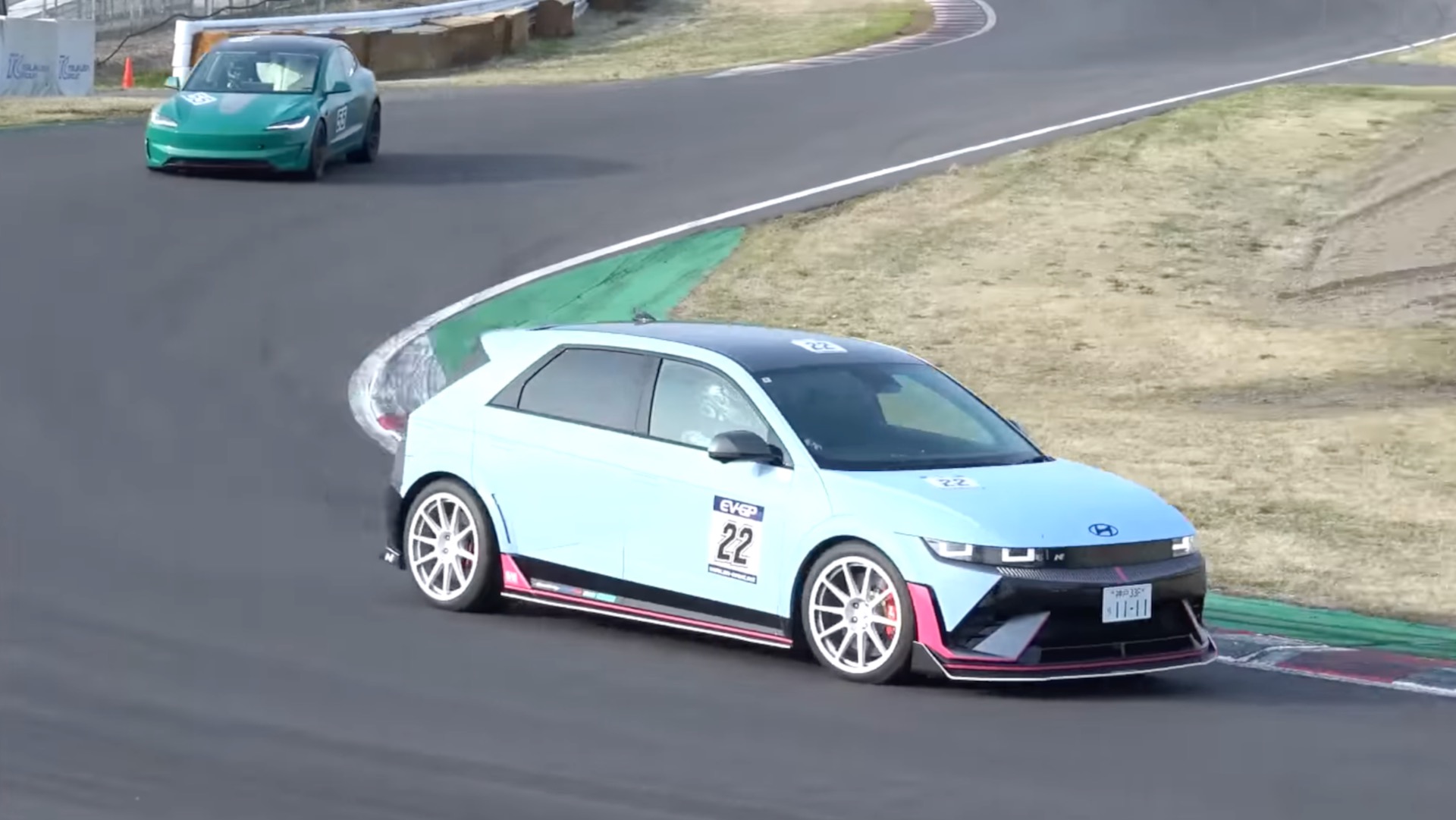
Similar to the road vehicles it typically aims to promote, EV racing is expanding, albeit at a pace that is less rapid than anticipated. While Formula E is introducing its fourth generation of single-seaters, and various other categories have experimented with electric powertrains, discussions about overtaking internal combustion engines for viewers and sponsorship funds have quieted down, just like the silent race cars themselves. However, the Japan Electric Vehicle Race Association (JEVRA) has discovered a successful formula.
Established in 2010 to advocate for EVs in the fight against climate change, JEVRA commenced its 2026 All Japan EV-GP season with a race at Tsukuba in late March. Footage from that event recently surfaced on YouTube, showcasing some of the most exhilarating racing around, rivaling an MX-5 Cup race. This is attributed as much to the production choices as to the vehicles and regulations.
The visuals are accompanied by a jazz fusion soundtrack that fits perfectly within a video game, or wafting out from a café onto the streets of Tokyo. It serves as an excellent substitute for engine sounds. The lively commentary further enhances the vibe, even for those who do not understand Japanese. The reason F1 commentators maintain a speed that aligns with the race cars is that the passion in their delivery is what truly matters.
The structure is also appealing. It harkens back to earlier racing days, where one could take a street car, affix some numbers to the doors, and hit the track. The lineup for this competition featured a Tesla Model S Plaid along with several Model 3 Performance and Hyundai Ioniq 5 N entrants—all with minimal (if any) visible modifications and full interiors. The vehicles are categorized into classes based on output, from 150 kilowatts (201 horsepower) in EV-4 to 401 kW (537 hp) or more in EV-1. Additional classes exist for SUVs and hydrogen fuel-cell vehicles, although none were involved in this race.
2026 ALL JAPAN EV-GP Series Rd.1 筑波EV55km Race TSUKUBA CIRCUIT
The regulations also accommodate the constraints of existing EVs. JEVRA has an EV-R class for range-extended models such as the BMW i3 REx and Mazda MX-30, along with Nissan e-Power hybrids that, owing to this series-hybrid system, are driven by electric motors while their gasoline engines serve solely as generators. Some Note e-Power hatchbacks will be present in this race, which was also confined to just 55 kilometers (34 miles), or 27 laps of Tsukuba. Any longer and battery life might become a concern.
It would still be interesting to see this format attempted elsewhere. Shorter races are successful in rallycross, after all, and align with the attention spans diminished by constant scrolling. It’s fantastic to witness the track-oriented Ioniq 5 N performing its intended purpose, and the same could be said for the Porsche Taycan or Lucid Air Sapphire. Electric GT sought to establish production-based EV racing a few years back but fell short, even with FIA endorsement. Perhaps it simply required jazz fusion and Japanese commentary.
**Investigating the Influence of Japanese Commentary and Jazz Fusion in Amplifying EV Racing Enthusiasm**
The landscape of electric vehicle (EV) racing has swiftly transformed, engaging audiences with its combination of advanced technology and exhilarating competition. As this sport acquires traction, the significance of commentary and music in amplifying the viewing experience has been increasingly recognized. Specifically, Japanese commentary and jazz fusion music have surfaced as distinctive components that enhance the thrill and engagement of EV racing events.
**Japanese Commentary: A Cultural Insight**
Japanese commentary in EV racing introduces a unique cultural element that resonates with both domestic and global viewers. The commentary style often features enthusiasm, accuracy, and extensive knowledge of the sport. Commentators in Japan excel at explaining the nuances of racing dynamics, vehicle capabilities, and driver tactics in an engaging way. This expertise not only enlightens viewers but also amplifies the race’s drama, rendering every turn and overtaking maneuver more impactful.
Furthermore, the incorporation of the Japanese language and cultural allusions can foster a distinctive atmosphere that immerses viewers in the event. The passion and vigor of Japanese commentators can elevate the thrill, making even the most intricate aspects of the race exciting for fans. This cultural approach cultivates a community feeling among viewers, allowing them to share the thrill and anticipation of each race.
**Jazz Fusion: The Beat of Velocity**
Complementing the vibrant commentary is the infusion of jazz fusion music, which adds a touch of sophistication and rhythm to EV racing events. Jazz fusion, known for its combination of jazz improvisation with elements of rock, funk, and electronic beats, offers an energetic and lively soundtrack that enhances the overall ambiance of the races. The improvisational essence of jazz facilitates a smooth and dynamic auditory experience that echoes the high-speed action on the track.
Choosing jazz fusion as a musical backdrop is especially appropriate for EV racing, as it embodies the innovative essence of electric vehicles. Just as jazz fusion artists explore various sounds and styles, EV manufacturers continually strive to push technological and performance limits. The harmony between the music and the racing generates a deeply engaging atmosphere that draws in audiences, making them feel like active participants in the event.
**The Effect on Audience Engagement**
The fusion of Japanese commentary and jazz fusion music greatly influences audience participation during EV racing events. Viewers become more than mere spectators; the lively commentary and rhythmic music pull them into the exhilaration. This heightened engagement can contribute to growing viewership and a more profound emotional connection to the sport.
Moreover, the distinctive blend of cultural commentary and innovative music can attract a wide array of viewers, appealing to both long-time motorsport enthusiasts and newcomers to racing. This inclusivity is vital for the expansion of EV racing, as it seeks to solidify its position as a prominent sport.
**Conclusion**
In summary, the fusion of Japanese commentary and jazz fusion music is crucial in elevating the excitement of EV racing. The passionate and informed commentary enriches viewers’ understanding of the sport, while the energetic jazz fusion soundtrack enhances the overall experience. Together, these elements create a captivating atmosphere that not only entertains but also nurtures a sense of community among fans. As EV racing continues to develop, the significance of these cultural and artistic contributions will remain a key element in its success and popularity.