
The 2026 Genesis G90 is frequently characterized as a more affordable option compared to the BMW 7 Series and the Mercedes-Benz S-Class, but its ability to challenge the norms isn’t the most captivating aspect of this vehicle. The true appeal of the G90 lies in its inherent duality—the interface boasts the sharp, sans-serif modernity akin to an iPhone app, yet the driving experience embodies classic luxury car traits. We’re not just referring to a serene and silent ride; the G90 is incredibly plush, plush, plush.
It’s enjoyable to drive, but it shouldn’t be dubbed a “driver’s car.” It operates like a limousine that also provides enjoyment for the driver. Consider: Exceptionally gentle driving characteristics—that famed “floating” ultra-smoothness reminiscent of classic Cadillac models from the Baby Boom era—and a user interface that emphasizes clarity over fanciful design, along with a plethora of indulgent features such as push-button-close doors and seat massagers.
Key Features
This is a true six-figure flagship, and it certainly looks the part. The design, which has seen only slight modifications since its introduction a few years ago, has proven quite timeless, largely due to its understated elegance. It possesses the commanding presence desired in a large luxury vehicle without being ostentatious. A simple term for that: Classy.
The standard-wheelbase G90 spans 207.7 inches, making it quite comparable in size to the 2026 S-Class (209.5 inches) but noticeably shorter than the 7 Series (212.2 inches). Genesis effectively utilizes that space with fabulously comfortable rear seats that evoke the transatlantic first-class experience expected in a vehicle of this caliber.
Every G90 is equipped with a 3.5-liter twin-turbo V6 featuring all-wheel drive and an eight-speed automatic transmission. Upgrading from the base model adds a 48V E-Supercharger to the powertrain, increasing horsepower from 375 to 409, though fuel economy dips slightly (from 21 to 20 mpg in combined driving).
What Is An E-Supercharger?
Genesis has provided a rather thorough explanation of its distinctive E-Supercharger system. The key point regarding why this technology is beneficial is as follows:
“Traditionally, a turbocharger utilizes exhaust gases to spin the turbine following combustion, which in turn drives a compressor wheel to compress air into the engine, thereby increasing output. Enhancing the turbocharger’s capacity can boost airflow and ultimately elevate maximum output, but this usually results in delayed compression times. As a result, when the engine is under load or operating at low speeds, it can lead to a lag in acceleration or slower throttle response.
“Conversely, the 48-volt e-supercharger resolves these issues by engaging at speeds below 1,750 revolutions per minute. It compresses air behind the compressor wheel and channels it to the engine, amplifying low-end output and minimizing turbo lag. When the engine hits higher revolutions per minute, where the turbochargers alone suffice for boosting, the airflow bypasses the e-supercharger and is directed straight to the engine intake manifold.”
In simpler terms, while the system contributes to peak horsepower, its most notable advantage is a significant feeling of low-speed thrust that makes the vehicle feel extremely powerful.
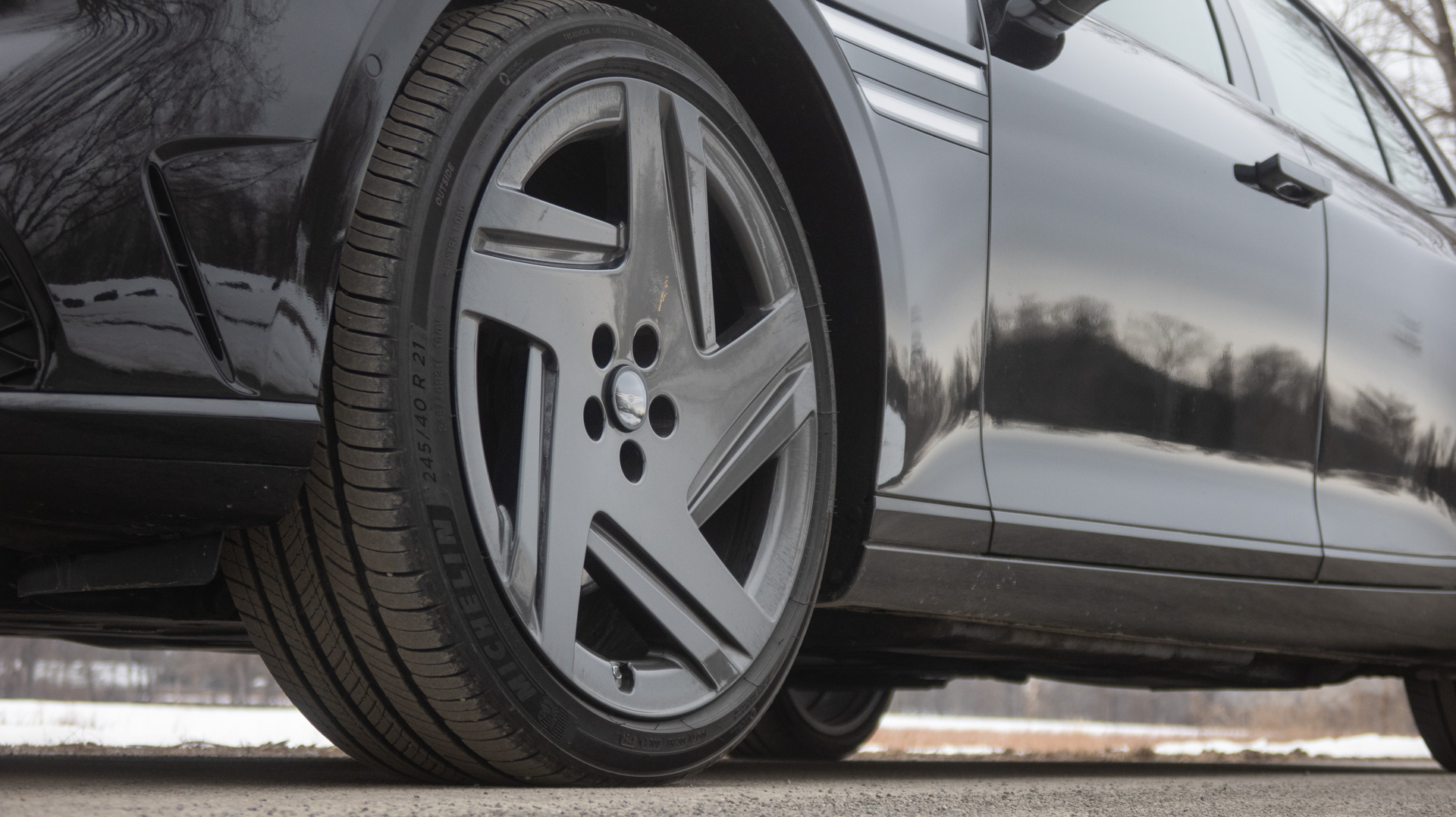
Models featuring the E-Supercharger also include more luxurious details, like multi-chamber air suspension, rear-wheel steering, larger brakes, and additional features. The top-tier model we evaluated, the G90 3.5T E-SC MHEV Prestige Black AWD (yes, that’s the complete proper designation), comes with unique all-black trim, wheels, and light bezels for a dark, almost imposing look.
Experiencing the 2026 Genesis G90
Settling into the G90’s seats is reminiscent of reclining on your beloved couch after a long day at work. Delight, relief, and a sense of security envelop you as you press a button and the door closes effortlessly. That’s a habit that takes some adjusting to—I kept forgetting the doors are powered and found myself battling with the mechanism.
The controls are straightforward and easy to locate, and the steering wheel appears to be designed for minimal user effort—with just two large spokes, you can grip it in virtually any manner you prefer.
When you accelerate and take off, it feels almost as if the car is stationary while the world whizzes by. There’s not much sensation of speed, but it’s certainly not sluggish. In fact, this 5,000-pound vehicle feels surprisingly light. It almost feels as if it’s gliding. There is a sport mode; if you press the accelerator and turn the wheel as if you’re in an ’80s action film, there’s considerable body roll—it’s much more like a boat than its stiffer German counterparts. The car doesn’t encourage aggressive driving.
However, it does provide seamless acceleration when needed, along with an almost astonishingly smooth ride, even across New York City’s battered roads. One of the vehicle’s front-facing cameras works with the air suspension to minimize the impact of potholes and speed bumps. Genesis refers to this feature as “Preview Electronic Control Suspension,” and from my perspective, it performs impressively. The G90 also boasts an unexpectedly tight turning radius—thanks to rear-wheel steering that activates at low speeds.
All in all, the driving experience is remarkably effortless.
Pros and Cons
I’ve made it clear that comfort is the primary highlight here. Yet, design and presence in parking lots are also very impressive. The G90’s understated appearance is already aging gracefully; this car will undoubtedly remain attractive in ten years. The sumptuousness may not be to everyone’s taste—if you’re seeking steering feedback and driver involvement, this is not your vehicle—but I believe Genesis made a smart choice to focus on relaxation here. There are numerous high-powered, high-stiffness luxury cars in the market.
Some aspects that annoyed me were simply a matter of acclimating to the settings. I never grew fond of the “push-button close” doors, for instance. I found the cabin lighting consistently irritating. Ambient light strips inside reflect on the windshield at night. The rear climate control display is unnecessarily bright and far too challenging to deactivate quickly. At least the main infotainment screen is mostly stylishly integrated into the dashboard.
Fuel efficiency leaves much to be desired, especially in comparison to competitors. That’s a sincere critique we will revisit shortly. A more technical observation I couldn’t help but make is that the design of the buttons and some interior material selections felt a bit more “toy-like” than “timeless luxury item.” Although the fundamental surfaces (seats, steering wheel) are well-executed, the wood trim and buttons do not appear or feel as durable as those in my nine-year-old BMW 3 Series. It’s not a dealbreaker, but I won’t overlook mentioning it.
Comfort in the Rear Seats
The G90 is nearly best appreciated from the rear-right seat. And it’s evident that the vehicle was primarily designed for chauffeur duties. There are convenient controls to slide the front passenger seat towards the windshield, creating a soft-leather haven for those being transported.
The rear seats do not completely recline, but they get as close as one could reasonably expect, and they are incredibly comfortable. The rear center console, which tucks away if you must endure the indignity of a third person on the rear bench, is equipped with cupholders, chargers, and comfort controls. If you instruct your driver to activate Chauffeur mode, the car’s muted response amplifies the floating sensation to the point where you genuinely feel as if you’re in a high-end spaceship.
Fuel Efficiency
The top-level Genesis G90 is most directly comparable to the base models of the BMW 7 and Mercedes S. In comparison, it consumes significantly more gasoline. Based on the figures below, it’s evident that Genesis’ E-Supercharger system focuses more on enhancing low-speed power rather than improving efficiency. I’m uncertain if this is a deal-breaker, but if you’re choosing a Korean vehicle over German counterparts solely due to perceived lower running costs, it seems that’s not actually accurate.
Assessment and Conclusion
The top-tier Prestige Black G90 we tested and photographed here has a sticker price of $107,895. While that’s a substantial amount, it represents a robust value when compared to other models on the market. If you’re in search of a contemporary interpretation of traditional luxury car values, look no further. It’s exceptionally comfortable, easy to operate, and a joy to travel in.
Genesis granted The Drive a seven-day loan of this vehicle for the purpose of composing this review.
2026 Genesis G90 3.5T E-SC MHEV Prestige Black AWD Specifications
| Base Price (as tested) | $105,750 ($107,895) |
| Powertrain | 3.5 twin-turbo V6 E-SC | 8-speed automatic transmission | all-wheel drive |
| Horsepower | 409 @ 5,800 rpm |
| Torque | 405 lb-ft @ 1,300-4,500 rpm |
| Seating Capacity | 5 |
| Cargo Volume | 10.59 cubic feet |
| Curb Weight | 5,150 pounds |
| EPA Fuel Economy | 17 mpg city | 24 highway | 20 combined |
| Score | 8/10 |
Quick Overview
A sofa on wheels that accelerates beautifully and provides comfort as well.