

If you have ever found yourself in a position where you had been in a calorie deficit and losing body fat, but then things stopped working, this post is for you.
For the sake of this post, it is assumed that you have a solid understanding of how calories and fat loss work. Great background reading on the topic would be this other post.
Generally, the reason a calorie deficit stops being a calorie deficit isn’t solely due to one reason. Because of that, we will go through multiple explanations and then tie it together at the end.
Actual Loss in Body Size Leading to Reduced Energy Expenditure
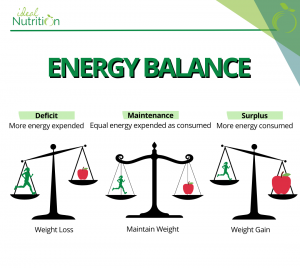
Our body requires energy (calories) to fuel its daily functions. When total body mass reduces, typically it requires less energy.
Directly, this means fewer calories are burned for things like maintenance of muscle tissue or other passive functions.
Indirectly, this means fewer calories are expended during things like walking around during the day.
Metabolic Adaptation
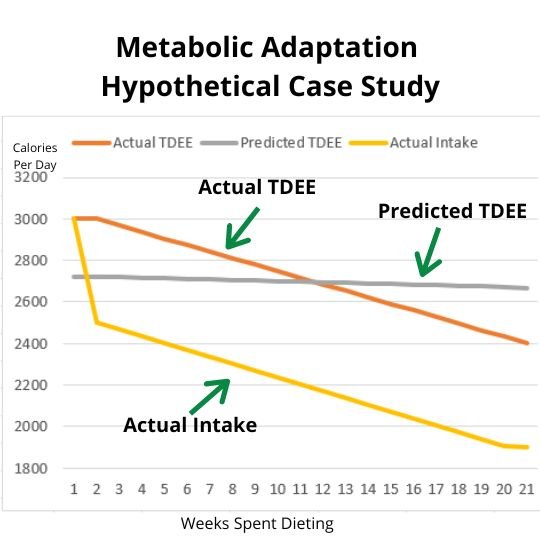
This is the main one a lot of people will be interested in. Our metabolism is adaptable. If we eat fewer calories, our metabolism can “slow down.”
It does this by downregulating certain functions, usually starting with lower importance functions.
Two good things about metabolic adaptation are that:
- It often isn’t that big of a deal. It rarely accounts for more than a couple of hundred calories per day difference.
- It goes in both directions. When you eat more calories, your body adapts in the other direction. It also does not take that long for things to return to normal too.
Incidental Movement
When we are consuming higher calories, we naturally tend to move more and burn more calories.
There is a huge variation between people when it comes to calories burned through incidental movement.
When people are on a lower calorie intake for an extended period, their incidental movement often decreases.
Some of this is completely unintentional, such as naturally fidgeting less or moving slightly slower. Other times it is just due to feeling fatigued. For example, somebody might have less interest in going for a walk if they feel fatigued.
This is actually a large reason why a lot of bodybuilding coaches have step targets for their clients. Doing that partly offsets this issue.
Thermic Effect of Food
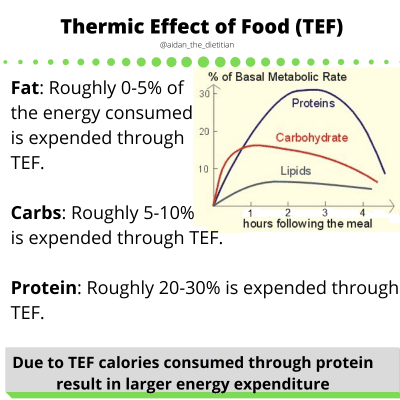
The thermic effect of food is relevant in a few ways.
One is that our body burns calories in the process of eating and digesting food. It’s often around 10% of the total calorie intake that gets expended in this process. But it depends on variables such as protein and fibre intake, as well as the processing of the food.
When you reduce calorie intake, you reduce the thermic effect a bit as well.
In other cases, it plays a role when people change their intake. For example, if you switched from a minimally processed diet to a highly processed diet, calories burned through this well decrease a bit.
Arguably, this one is the least relevant. But it is a great example of how our intake affects our expenditure.
Increase in Hunger and Cravings
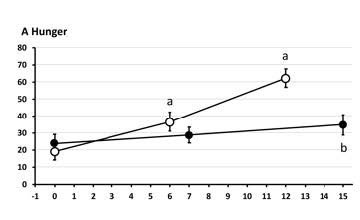
When you are consistently in a calorie deficit, it is common for hunger and the desire to eat to increase.
In some cases, people find it a lot easier to stick to a decent-sized calorie deficit initially.
If there is not some form of structure that ensures intake remains the same, in many cases (not all) people will unintentionally increase their intake as the weeks go on. This obviously can reduce the size of the deficit or erase it.
Inconsistency or Unintentional Routine Changes
From the mental perspective, it is common for people to be more rigid with their actions earlier on with a deficit. Sometimes, people are really consistent initially. And then they might still be quite consistent after that, but there could be a small gap. This could be with either exercise or nutrition.
This can obviously contribute to reducing the size of the deficit as well.
Summary
One of the trickiest things is that it is rarely one explanation. Often, it is a combination of factors.
If this is relevant for you, though, you have 3 options:
- Reduce calorie intake further (either through consistency or changing the plan)
- Increase calorie expenditure (either through incidental movement or formal exercise)
- Take the emphasis off fat loss for a bit.
It comes down to a case-by-case basis which one makes sense for you. But if you are at a plateau for a while, it makes sense to make a change.
 admin
admin