
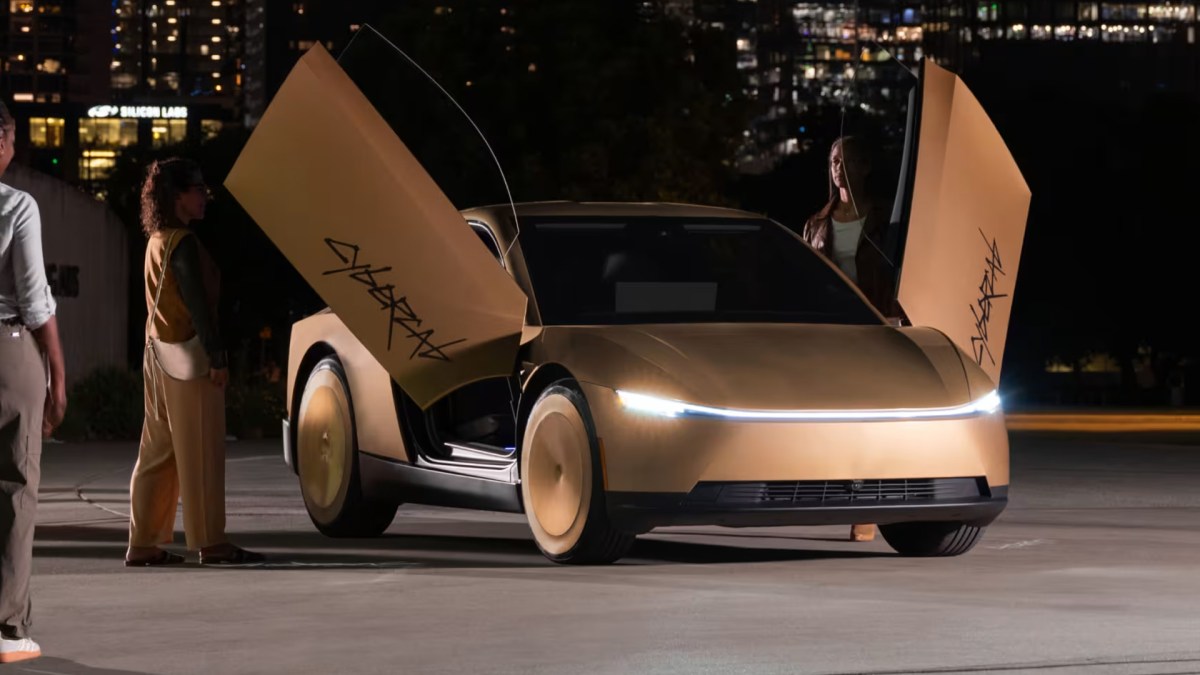
The Tesla Cybercab, commonly referred to as Robotaxi, is an autonomous personal transport pod that mirrors a car’s shape. Without a steering wheel or pedals, it’s bound to feel strange to ride in, even for those accustomed to the wonders of modern vehicle automation. However, the distinctions between the Cybercab and typical cars extend beyond visual impressions from the seats—the braking system operates on a fundamentally different principle than what is typically found on the roads.
Whether these vehicles will indeed populate the streets in substantial numbers is still uncertain—the NHTSA has already launched an inquiry into Tesla’s certification process for public use. More details will follow.
Regarding the intriguing braking technology, a standard automotive braking configuration is hydraulic, employing long tubes filled with fluid to maneuver the pads. When you depress the brake pedal, a small piston is activated, pushing sealed fluid toward the calipers, which then grip the rotating rotors. The Cybercab contains calipers and rotors, but lacks a master cylinder or brake lines. It operates on a fully electric brake-by-wire system, which remains (nearly) unprecedented in 2026.
Some vehicles incorporate electronic brake controls that manage a hydraulic system (like the electro-hydraulic brake arrangement seen in Lexus vehicles), and Tesla is not even the first to entirely eliminate brake fluid in a production model (the Chery Exeed EX7 claimed that distinction earlier this year).
This distinction is crucial: Electro-hydraulic (EHB) braking, such as that employed by Lexus, has been utilized in production vehicles for numerous years. Conversely, electro-mechanical braking (EMB)—which uses no fluid whatsoever—is more recent and innovative.
The mechanism operates by utilizing a small electronically controlled actuator that applies braking force directly to the rotors, individually, at each wheel.
Kyle Conner from the Out of Spec Reviews YouTube channel, which focuses on EVs, attended the unveiling event of the vehicle and shared a video showing a partially assembled Cybercab, illustrating precisely what we are discussing:
Some commenters are expressing concern about this innovation, but even as a Luddite myself, I find the brake-by-wire concept quite logical. The benefits are substantial—I suspect that production costs were significantly reduced (likely Tesla’s primary incentive for adopting such a system)—and it also permits varying levels of force to be applied to each wheel individually, potentially enhancing traction. Being an EV, the Cybercab will likely mainly utilize regenerative braking for slowing down. And when mechanical brakes are necessary, it won’t let them heat up excessively—it’s intended for city driving, not racing.
The Cybercab stands out as a testament to cost-effective design, utilizing the minimum number of lightweight parts. The outer body panels are literally made from injection-molded polyurethane. Effectively, it resembles a giant PowerWheels vehicle.
Tesla appears to have initially invested heavily in the development of this model (focused on creating it with a minimal number of components), and is now counting on manufacturing and maintaining a large volume of them at a low cost. This seems a reasonable approach for taxis, although it is peculiar that it only accommodates two passengers. (However, as most taxi rides reportedly involve two or fewer individuals, this choice also has pragmatic validity.)
The exact supplier for the brake system in the Cybercab has not been officially disclosed yet, but a consensus among critics suggests that it is likely Brembo’s Sensify system.
I suspect we will witness similar technology in other vehicles soon. In the meantime, I’m eager to learn more about the Cybercab—it appears somewhat quaint aesthetically and is conceptually intriguing. Kyle Conner remarked that it seems designed for long-term use in his footage; to me, it looks more akin to being made for disposability, resembling a mobile device, and constructed at such low cost that replacing the entire vehicle would be a minor expense.
Wall Street does not seem to share the enthusiasm that the early YouTubers displayed. Tesla’s stock has declined amid reports that the “lackluster Cybercab launch has prompted a US investigation.” Yes, the vehicle is already under scrutiny to “assess the process and technical data Tesla relied upon for certifying the Cybercab and related matters.”
Do you have insider information about the Cybercab? Share it with me at [email protected].
**Tesla Cybercab Omits Steering Wheel and Brake Lines: A Design Analysis**
The Tesla Cybercab signifies a major transformation in automotive design, especially within the domain of self-driving vehicles. One of the most notable aspects of the Cybercab is its elimination of conventional driving controls, like the steering wheel and brake lines. This design decision reflects Tesla’s aspiration for a fully autonomous future, wherein human involvement is reduced.
**1. Self-Driving Technology**
Central to the Cybercab’s design is Tesla’s cutting-edge self-driving technology. The vehicle is outfitted with a range of sensors, cameras, and AI systems that enable it to navigate and function without human intervention. By removing the steering wheel and brake lines, Tesla reinforces its dedication to a driverless experience, allowing passengers to partake in various activities during their trip.
**2. Cabin Design and Passenger Comfort**
The removal of a steering wheel and brake lines creates new opportunities for cabin design. The Cybercab boasts an expansive interior that prioritizes passenger comfort and ease. Without the need for standard controls, the interior can be redesigned to offer more seating, entertainment selections, and workspace. This design strategy caters to the increasing demand for ridesharing and on-demand transport solutions.
**3. Safety Features**
Safety is a critical factor in autonomous vehicle design. The Cybercab’s lack of a steering wheel and brake lines is paired with advanced safety features. The vehicle’s AI is capable of making instantaneous decisions to evade obstacles and react to changing road conditions. Furthermore, the absence of mechanical controls decreases the likelihood of user mistakes, which is a key contributor to many accidents involving conventional vehicles.
**4. Regulatory and Legal Considerations**
The launch of vehicles like the Cybercab introduces significant regulatory and legal challenges. As the automotive sector progresses towards autonomy, lawmakers must address issues related to liability, insurance, and safety requirements. The Cybercab’s unique framework questions existing regulations predicated on traditional vehicle operation, necessitating a reassessment of how autonomous vehicles are categorized and regulated.
**5. Market Influence and Future Directions**
The Tesla Cybercab is set to have a substantial impact on the future of transport. Its pioneering design may establish a benchmark for other manufacturers to investigate similar ideas, potentially fostering wider acceptance of autonomous vehicles. As urban environments continue to contend with traffic congestion and pollution, the Cybercab’s design could provide a sustainable solution by diminishing the number of vehicles on the road and encouraging shared mobility.
**Conclusion**
The Tesla Cybercab’s absence of a steering wheel and brake lines represents a bold advance towards a future characterized by autonomous vehicles. By emphasizing innovative technology, passenger experience, and safety, Tesla is reshaping the landscape of transportation. As the industry progresses, the Cybercab may act as a catalyst for transformation, impacting design philosophies and regulatory structures for years ahead.