
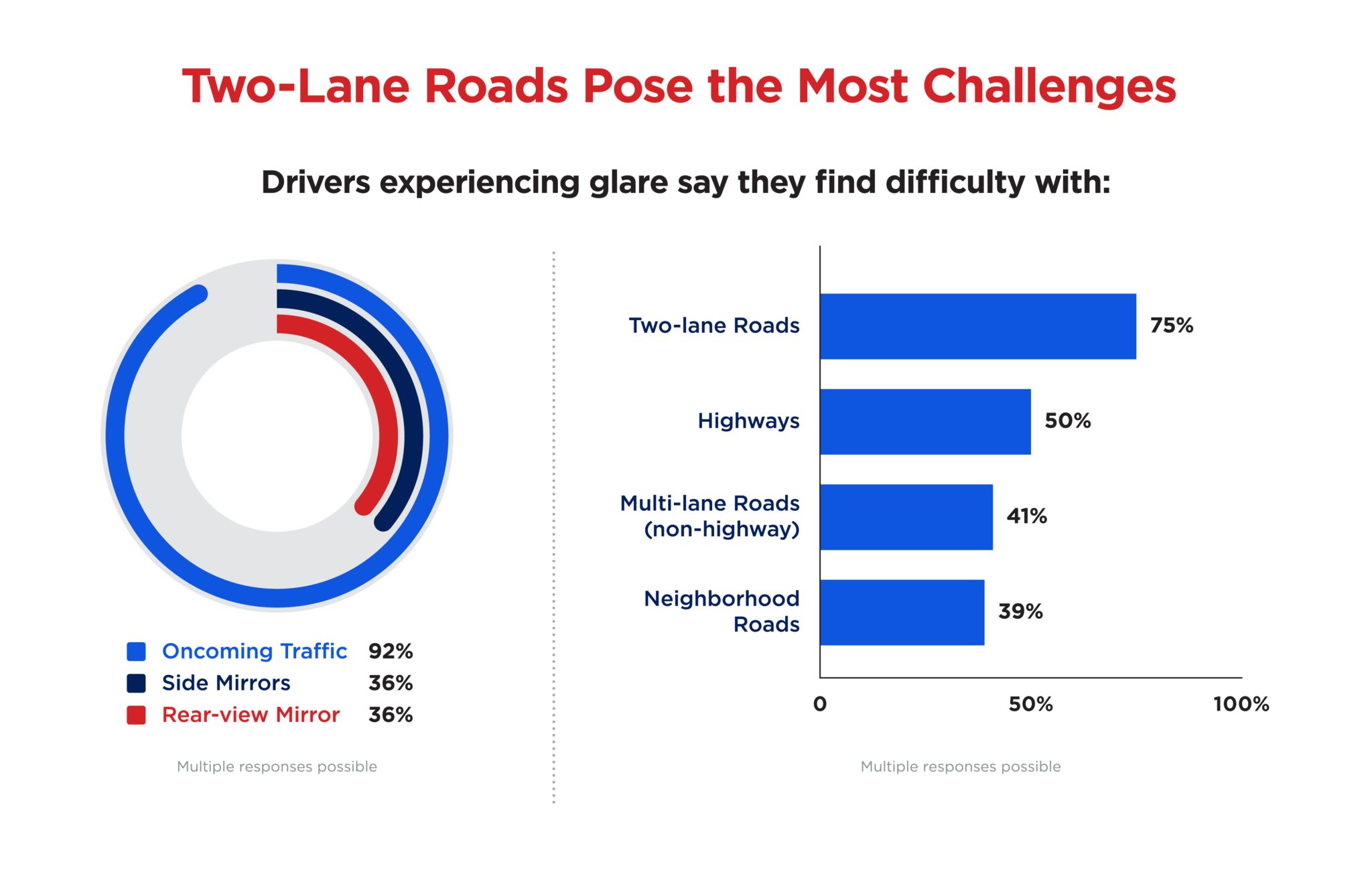
If you think that headlights have become excessively bright over the years, you’re not alone. In a recent AAA survey, 60% of drivers stated that glare was an issue when driving at night, with nearly 73% claiming that the problem has intensified over the last ten years. This aligns with the rise of more potent LED headlights from both car manufacturers and the aftermarket.
“Headlight glare has turned into a significant source of irritation and worry for millions of motorists,” remarked Greg Brannon, AAA’s director of automotive engineering and research, in an announcement. Brannon linked the growing concern over headlight glare to various elements, “including newer headlight technologies and taller vehicle designs.”
The survey included 1,092 interviews with U.S. drivers aged 18 and older, conducted from February 5 to 8, 2026. Participants were selected via a probability-based panel meant to reflect the overall U.S. driver demographic. Among those surveyed, 92% cited glare from oncoming headlights as their primary concern, while 36% noted glare from rearview or side mirrors as the most significant issue.
The survey revealed some differences in glare sensitivity. Drivers who wear prescription glasses reported higher glare experiences than those who don’t, at 70% compared to 56%. Pickup truck drivers were less likely to report glare (41%) than drivers of other vehicle types (66%). Women indicated a higher frequency of glare (70%) than men (57%). However, age and driver height did not show statistical significance, according to AAA.
The organization advises drivers to refrain from directly staring at approaching headlights to diminish glare effects and to ensure their own headlights are functioning properly for optimal visibility. AAA also recommends sticking with the original equipment, as aftermarket lighting’s unregulated nature significantly contributes to glare issues. Aftermarket products often seek to increase brightness without consideration for beam alignment, and federal regulators remain inactive on the matter.
Meanwhile, current regulations hinder the introduction of adaptive lighting systems found in Europe to the U.S. Audi’s Digital Matrix LED headlights can direct light appropriately away from oncoming drivers, but outdated regulations that predate LED technology prevent their availability in this market. This restriction also applies to all other manufacturers except Rivian, which has tailored its adaptive lighting system specifically for the U.S. Yet authorities remain tolerant of brightness levels that could evoke sympathy for Dracula.
**Survey Shows 60% of Drivers Face Problems with Headlight Glare**
A recent survey by the National Highway Traffic Safety Administration (NHTSA) revealed that about 60% of drivers face challenges due to headlight glare while driving at night. This finding raises serious concerns about road safety and the overall driving experience, sparking discussions regarding headlight design and regulations.
**What is Headlight Glare?**
Headlight glare happens when bright lights from approaching vehicles create a blinding effect, hindering drivers’ ability to see ahead. This issue is especially concerning for older drivers, who might have diminished vision at night. The survey points out that glare can trigger heightened anxiety and discomfort, potentially impairing a driver’s quick reaction to road dangers.
**Survey Findings**
The survey, which gathered responses from over 1,000 drivers spanning various demographics, uncovered several crucial insights:
1. **Differences by Demographics**: Younger drivers reported more frequent glare experiences than older drivers. Conversely, older drivers demonstrated a stronger concern regarding glare’s impact on driving safety.
2. **Time of Day**: Most respondents indicated that they primarily face glare during nighttime driving, with a notable number also experiencing issues during dawn and dusk.
3. **Types of Vehicles**: SUV and truck drivers reported more glare incidents in comparison to sedan drivers. This can be linked to the increased height of these vehicles, resulting in more direct exposure to oncoming headlights.
4. **Technological Factors**: Numerous respondents expressed dissatisfaction with the rising brightness of contemporary headlights, particularly LED and HID (High-Intensity Discharge) lights, which tend to be more intense than standard halogen bulbs.
**Impact on Road Safety**
The commonality of headlight glare is more than just a nuisance; it presents serious hazards. The NHTSA has long recognized that visibility-related issues lead to a significant proportion of nighttime accidents. With 60% of drivers citing glare problems, there is an urgent need for both manufacturers and regulators to tackle this issue.
**Possible Solutions**
1. **Headlight Standards**: Advocates are pushing for tighter rules on headlight brightness and beam patterns to reduce glare for oncoming drivers. Changes to the regulations governing headlight design could alleviate glare impact.
2. **Driver Awareness**: Enhancing drivers’ understanding of appropriate headlight use—such as the importance of utilizing low beams in certain situations—might reduce glare-related occurrences.
3. **Innovations in Vehicle Design**: Automakers are urged to invest in technologies that can automatically adjust headlight brightness according to the surrounding environment, thereby mitigating glare for other road users.
4. **Public Awareness Efforts**: Campaigns designed to inform the public about the implications of headlight glare and to encourage safe nighttime driving behaviors could further improve road safety.
**Final Thoughts**
The survey results highlight a critical issue impacting a substantial portion of the driving community. With 60% of drivers expressing concerns regarding headlight glare, it is vital for all stakeholders—manufacturers, regulators, and drivers—to work together on solutions that enhance visibility and safety on the road. As technology advances, tackling the challenges posed by headlight glare will be essential for ensuring safer nighttime driving experiences for everyone.