
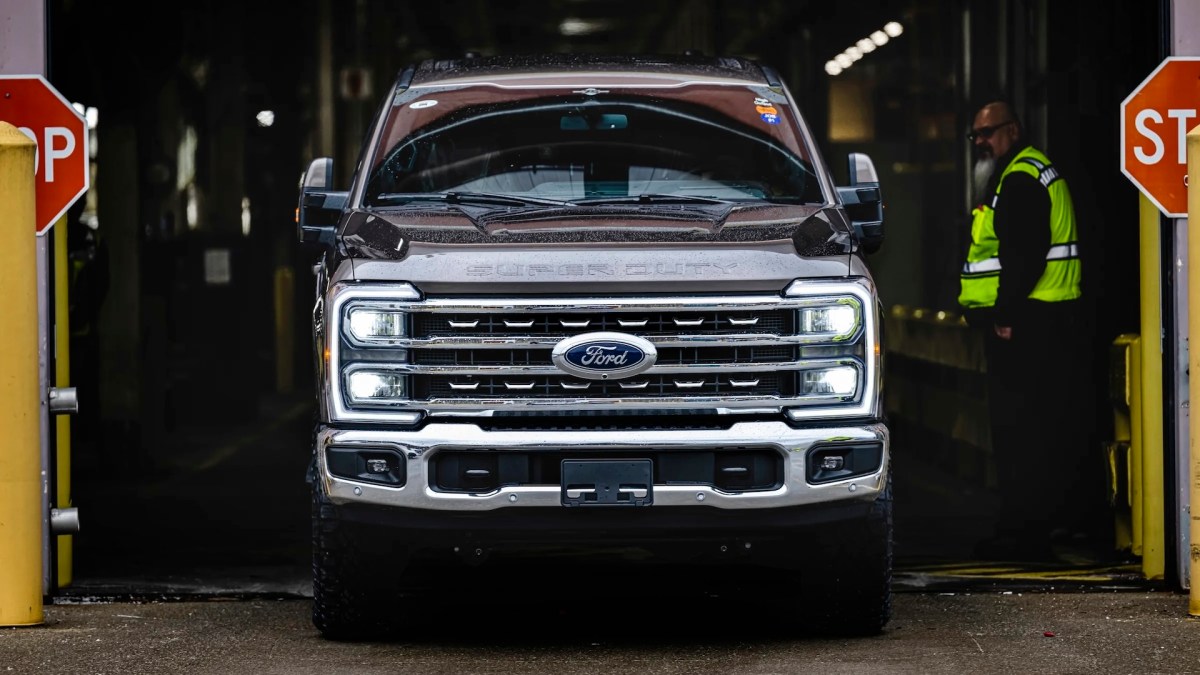
- Larger vehicles, greater risk. Since 2009, pedestrian death rates have risen 75%, associated with the prevalence of bigger vehicles like pickups and SUVs.
- Safety is size-dependent. The dimensions of bigger vehicles contribute to more pedestrian fatalities, with estimates suggesting 200 to 400 lives could be saved annually if vehicle sizes had remained constant.
- Policy changes have repercussions. Adjustments in emissions and fuel economy regulations unintentionally fostered the rise of larger automobiles, affecting pedestrian safety.
- The physics of impact count. Larger vehicles affect force distribution differently, and their added height and weight elevate the danger of fatal accidents.
Takeaway: The increasing prevalence of larger vehicles has markedly raised pedestrian death rates, revealing the unforeseen outcomes of policy shifts and design trends in automobiles.
AI aided, editor verified
Since 2009, there has been a notable change in road safety concerning pedestrians in America. Following a period of declines, pedestrian fatalities have consistently risen since the Great Recession, and we instinctively understand the cause: the vehicles are becoming larger. A recent analysis by The New York Times and the Insurance Institute for Highway Safety reveals that thousands of deaths could have been averted in the last 16 years had vehicle sizes not increased so dramatically in height and weight.
“Our analysis of federal and industry data, including previously unexamined vehicle size metrics, shows that the rise of large pickups and SUVs is a significant factor,” the Times report stated.
“We estimate that around 200 to 400 pedestrian deaths each year could have been avoided if vehicles had not expanded in size over the last 25 years,” the report added. “This accounts for nearly 10 percent of the uptick in pedestrian fatalities.”
The data shows that pedestrian deaths have increased by 75% since 2009, with these fatalities correlating to the dangers posed by the bulk, height, and blind spots associated with modern trucks and SUVs.
Why focus on 2009? The answer is tied to a series of significant events from that decade. The surge in truck and SUV sales began in the ’90s and likely would have continued unabated into the late 2000s if not for the economic downturn. This disruption was short-lived, and rising fuel costs prompted nearly-new SUVs to flood the secondary market faster than usual.
In the immediate aftermath of 2008, not only did we see a tightening of emissions standards, but also a reform in how vehicle fuel efficiency was assessed. Soon after, the Cash for Clunkers program removed nearly 700,000 older cars from the market, pushing consumers toward newer models that were purportedly more efficient.
The revision introduced during the Obama administration is known as the “footprint model.” This system classifies vehicles based on multiple criteria, such as physical size and wheel dimensions. The EPA’s new regulations allowed manufacturers to exceed pollution limits as long as the cars were larger, but the specifics of the government’s guidelines are less relevant than their unintended impacts, including the literal and metaphorical increase of the crossover model, which has overtaken the mid-sized sedan as the preferred family vehicle in America, at least for now.
Quick question: If something is approaching you at 50 miles per hour, would you prefer it to be a small object or a large one, assuming the mass is equal?
Whap! Time’s up. What was your answer? If you chose the small object, you could be in serious trouble. If you went with “large,” your chances are better. Why? There are two main reasons. First, F=ma, and second, P = F/A. Well, that’s really one main concept, known as “physics.”
In full detail, those formulas illustrate two interconnected principles. The first expresses that force equals mass times acceleration. In simpler terms, the force with which an object strikes you is proportional to both its weight and speed. To bypass the math, heavier objects in motion cause more damage. Obvious, right?
The second formula indicates that pressure equals force divided by area. This explains how the force of an impact is spread out. If the area increases, the pressure decreases, even with the same weight. Thus, if a bullet were to be magnified numerous times its size without altering its weight, its lethality would diminish inversely with its physical dimensions, even if it still struck with high velocity.
But since not everyone can be a Doctor Strange, let’s apply this to automobile design. It makes sense that the most pedestrian-friendly front-ends would be the ones that spread impact forces across a larger area. This rationale led to several European policies that have significantly influenced vehicle manufacturing. The low-profile, sharp-nosed cars disappeared almost instantly for designs resembling the front of a barge.
However, as discussed with my rudimentary physics explanation, that seems beneficial, right? Absolutely, but we must not forget the one constant: mass. And if you haven’t noticed by now, the average weight of new vehicles has consistently increased, not just because each new generation grows and adds more features, but also because smaller cars, which once helped maintain the average, have virtually vanished.
There’s a reason why the phenomenon of automotive shrinkflation behaves differently than in other sectors. Surprisingly, it is generally more profitable for manufacturers to offer you larger vehicles for your money; they address the “shrink” aspect through clever options pricing (alongside skillfully edging on customer excitement).
The concern lies not solely in mass, but also in height. Yes, increasing the area over which impact is distributed reduces the force felt by a particular part of the body, but as that area rises higher from the ground, the impact location on the body ascends as well. If you are struck below your center of mass, you’re more likely to fall toward the vehicle. If hit at or above that level, you may be knocked down in front of the vehicle instead. The latter scenario is less likely to be survivable due to the limited visibility of taller trucks and SUVs.
“We witness numerous catastrophic collisions even at lower speeds because the pedestrian is thrown forward,” noted Shawn Harrington, from Forensic Rock, who conducted crash evaluations for the report. “Before the driver realizes what has happened, the pedestrian’s head is already under the tire.”
As car enthusiasts, we’ve always accepted that increases in weight and size bring about performance drawbacks, but decades of innovation in tire and safety engineering have produced vehicles that, while heavier and more powerful than ever, are still manageable to drive. However, the statistics tell the truth; this all comes with a heavy price, and that cost is being borne by lives.
Have a news tip? Contact us at [email protected]!
**75% Increase in Pedestrian Deaths Since 2009 Linked to Larger Trucks and SUVs**
In recent times, the concerning spike in pedestrian deaths has emerged as a critical public safety issue. Statistics reveal that pedestrian fatalities have jumped by 75% since 2009, a trend strongly associated with the rising presence of larger vehicles, primarily trucks and SUVs, on our roads.
**The Data Supporting the Increase**
As reported by the National Highway Traffic Safety Administration (NHTSA), pedestrian fatalities surpassed 6,500 in 2020, marking the highest tally in over thirty years. This alarming rise can be attributed to various elements, including urban growth, distracted driving, and in particular, the expanding size and weight of vehicles. The shift towards larger trucks and SUVs has been especially notable, with these vehicles now representing a significant share of new car transactions.
**How Vehicle Size Affects Pedestrian Safety**
Bigger vehicles increase risk for pedestrians due to their mass and dimensions. When a pedestrian is struck by a typical passenger vehicle, they have a higher survival likelihood compared to being impacted by an SUV or truck. The added weight and height of these vehicles can result in more severe injuries or fatalities. Research indicates that the probability of death for pedestrians rises significantly when hit by larger vehicles, with SUVs being particularly hazardous due to their elevated front ends, which can make contact with pedestrians at head level.
**Challenges from Urban Design and Infrastructure**
The growing number of pedestrian fatalities is further complicated by urban planning and infrastructure challenges. Many municipalities have not adjusted their road designs to handle the influx of larger vehicles. Inadequately designed intersections, lack of crosswalks, and insufficient pedestrian signals worsen the risks for those walking. Moreover, urban sprawl often creates greater distances between locations, prompting more individuals to walk while simultaneously exposing them to increased traffic dangers.
**Distraction of Drivers**
Distracted driving continues to be a key factor in pedestrian-related accidents. The widespread use of smartphones and other distractions makes it harder for drivers to stay alert. As driver attention wanes, the chances of overlooking pedestrians rise, compounding the increasing fatality rates.
**Possible Solutions and Safety Recommendations**
Tackling the rise in pedestrian fatalities necessitates a comprehensive strategy. Important actions include:
1. **Stricter Vehicle Safety Regulations**: Pushing for tougher safety requirements for larger vehicles, including enhanced pedestrian detection technology and design tweaks to minimize injury risks.
2. **Urban Planning Improvements**: Cities must emphasize creating pedestrian-oriented infrastructure, such as wider sidewalks, dedicated bike lanes, and safer crosswalks. Applying traffic-calming methods can also help lower vehicle speeds in areas frequented by pedestrians.
3. **Public Education Efforts**: Raising awareness among both drivers and pedestrians about safe road practices can cultivate a culture of caution. Campaigns focused on reducing distracted driving and advocating for pedestrian rights can effectively decrease accident rates.
4. **Legislative Initiatives**: Lawmakers should consider adopting regulations that prioritize pedestrian safety, such as enforcing stronger penalties for distracted driving and providing incentives for manufacturers to produce safer vehicles.
**Final Thoughts**
The significant rise in pedestrian fatalities post-2009, largely attributed to the increasing size of trucks and SUVs, highlights the pressing need for comprehensive strategies aimed at improving road safety. By addressing vehicle design, urban infrastructure, and driver conduct, communities can strive to mitigate the tragic incidents and foster safer conditions for pedestrians.
 admin
admin