
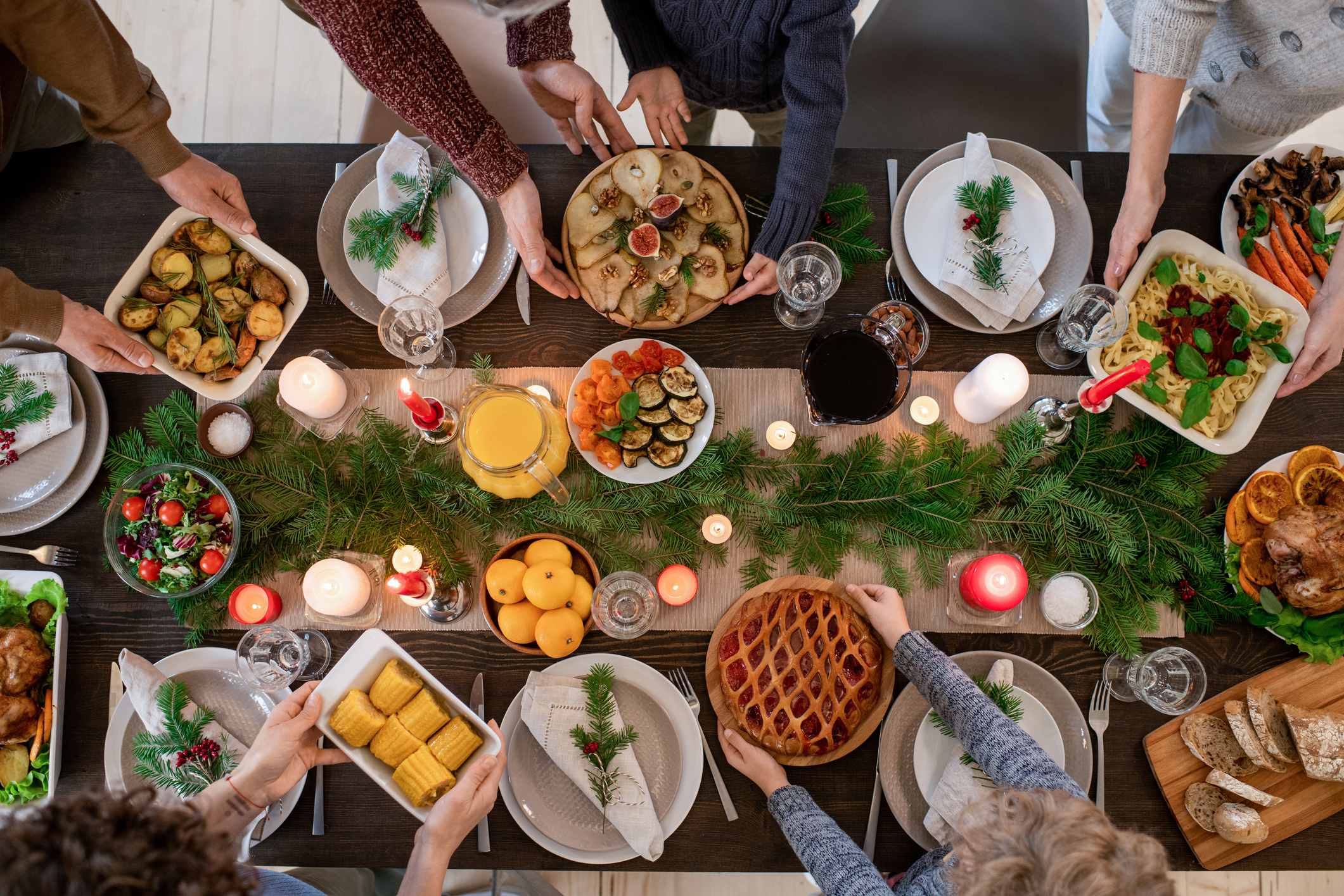
It’s a frequent occurrence for individuals to lose touch with their bodies during the holiday season. However, remaining in tune doesn’t entail eating flawlessly or avoiding all comforting treats. It involves acknowledging your body’s signals even amid busy schedules and heightened emotions.
Dining during the holidays seldom revolves solely around food. It encompasses memories, customs, family interactions, fun, stress, happiness, sorrow, celebration, connection, and societal expectations—all occurring simultaneously.
This guide offers practical mindful-eating techniques to assist you in managing the holidays more effortlessly.
Why Holiday Eating Feels Different
The holiday season alters almost every element that influences our eating habits:
- irregular routines
- traveling
- indulgent foods
- social influences
- emotional triggers
- altered routines
- sleep deprivation
- heightened stress
These aspects raise cortisol levels, may disrupt digestion, and amplify food thoughts, particularly for those who have been dieting for years. There is nothing wrong with you — your body is merely reacting to an unfamiliar or unusual setting.
Maintain Meal Consistency
The most common error individuals make during the holidays is omitting meals to “prepare” for a substantial dinner.
This results in:
Moreover, skipping meals in anticipation of the “big” meal continues the dieting cycle of compensating for food, feeling guilt regarding food choices, and the desire to get it “right.”
The objective: to anchor meals every 3–4 hours, stabilizing hunger hormones and enhancing appetite control. This acts as a beneficial baseline and guideline to adhere to.
Incorporate a Grounding Ritual Before the Meal
A tranquil nervous system facilitates better digestion, fullness, and decision-making.
Consider trying one of these:
- five slow breaths
- sensing your feet on the ground
- relaxing your jaw/shoulders
- pausing before reaching for food
This helps transition you from fight-or-flight mode to regulation.
Create a Well-Rounded Holiday Plate (Without Restrictions)
Utilize the Foundational Five as an adaptable guide—not a strict regimen.
Holiday culinary traditions are remarkably varied, and your mindful eating approach should respect the meals that are significant to you. The aim isn’t to perfect your plate—it’s to design one that keeps you centered, content, and connected to your body.
Employ the Foundational Five as a flexible structure for any holiday gathering.
Protein (the foundation of your plate)
- Roasted turkey
- Glazed ham
- Braised beef or brisket
- Roasted chicken
- Smoked salmon or baked fish
- Lamb chops or lamb roast
- Tofu steaks or baked tofu
- Lentil loaf or lentil patties
- Stuffed vegetables with grains/legumes
- Chickpea-based meals
Carbohydrates (comfort + sustained energy)
- Mashed potatoes
- Stuffing or dressing
- Rice pilaf or flavored rice
- Basmati or jasmine rice
- Noodles (soba, egg noodles, or long noodles)
- Gnocchi
- Dinner rolls or sweet bread
- Cornbread
- Plantains
- Couscous or bulgur
Vegetables (fiber + micronutrients)
- Roasted root vegetables
- Green beans or green bean casserole
- Sautéed greens (spinach, kale, collards)
- Cabbage rolls
- Roasted Brussels sprouts
- Squash or pumpkin dishes
- Simple herb salads
- Pickled vegetables
- Steamed broccoli or mixed vegetables
- Carrot or beet salads
Fats (satisfaction + flavor)
- Olive oil drizzles
- Butter or ghee
- Avocado slices
- Tahini or sesame-based sauces
- Nut toppings (almonds, pecans, pistachios)
- Cheese or yogurt-based sauces
- Pesto or herbed oil
- Olives
- Walnut or pine nut garnish
Flavor Factor (delight + fulfillment)
- Cranberry sauces or fruit relishes
- Herb dressings
- Chutneys
- Ginger-garlic sauces
- Citrus zest or wedges
- Spiced sauces or gravies
- Chimichurri
- Pickles
- Fresh herbs (parsley, cilantro, dill, basil)
- Spice blends (warming spices, garlic mixes, holiday spice combinations)
No deprivation. No compensations. Just nourishment.
Take the First 2–3 Slow Minutes
Research indicates that the initial moments of eating set the tone for your digestive response, either quickening or slowing down the entire meal.
Slowing just the start increases satisfaction without necessitating mindful chewing throughout.
Embrace Emotional Eating with Curiosity, Not Shame
Food carries emotional weight—especially during festivities.
Instead of: “I ought not to be eating this.”
Consider: “What feeling is present, and what do I require?”
Emotions do not negate hunger. Awareness fosters space for choice.
Post-Meal, Avoid “Fixing Mode”
No detox programs.
No cleanses.
No compensatory actions.
Revert to your regular routine the following day: a well-rounded breakfast, hydration, light activity, and rest. Trust that your body knows how to respond.
FAQs
How can I prevent overeating during the holidays?
Consistently eat throughout the day, regulate your nervous system prior to meals, and incorporate protein and fiber to stabilize your appetite.
What if I experience guilt after eating?
Guilt is a learned response, not an inherent one. Replace judgment with curiosity: “What did I require at that time?”
Is emotional eating during the holidays normal?
Yes. The holidays induce emotional surges; emotional eating is a typical human reaction.
Should I monitor my food intake during the holidays?
No. Monitoring increases strain and detaches you from your cues.
How do I return to usual eating after a large holiday meal?
Re-establish your routine—not restrictions. Balanced meals, hydration, and rest help regulate your body.
If you seek support in remaining connected to your body throughout the holidays—and beyond—The Mindful Nutrition Way provides a structured 5-R Framework to assist you in cultivating lasting peace with food.
You can apply here.
**Mindful Eating Techniques for Staying Connected to Your Body During the Holidays**
The festive season is marked by celebrations, family reunions, and, frequently, sumptuous meals. While partaking in festive foods brings joy, it may also result in overeating and a disconnection from our body’s instinctual hunger signals. Mindful eating presents a means to relish holiday goodies while remaining aware of your body’s needs. Here are several strategies to help you embrace mindful eating throughout the holidays:
1. **Establish Intentions Before Meals**: Prior to eating, take a moment to articulate an intention for your meal. This might be as simple as “I will savor my meal and heed my body’s signals.” Setting an intention fosters a mindful mindset and primes you to engage consciously with your meal.
2. **Engage Your Senses**: Before your first bite, take a good look at your food. Notice the colors, textures, and scents. Engaging your senses can elevate the dining experience and help you cherish the meal more profoundly, resulting in greater satisfaction with smaller servings.
3. **Eat Slowly and Chew Thoroughly**: During festive occasions, it’s easy to rush through meals. Slow down by taking smaller bites and chewing thoroughly. This not only aids digestion but also allows your brain to register fullness, which can help prevent overeating.
4. **Pause Between Bites**: Set your fork down between bites and take a moment to breathe. This pause allows you to assess your hunger and fullness levels, granting you the chance to decide if you want more or if you feel satisfied.
5. **Listen to Your Body’s Signals**: Be attentive to your body’s cues of hunger and fullness. Eat when you feel hungry and stop when you feel comfortably full. This may involve leaving food on your plate, which is entirely acceptable.
6. **Practice Gratitude**: Take a moment to express gratitude for the meal you are about to enjoy. Recognizing the effort behind preparing the dish can heighten your appreciation and mindfulness.
7. **Minimize Distractions**: Aim to eat surrounded by minimal distractions such as TVs or smartphones. Concentrating solely on your meal helps maintain presence and awareness of your eating process.
8. **Be Compassionate to Yourself**: The holidays can be a tough time for sustaining mindful eating habits. If you find yourself overeating, show yourself compassion. Acknowledge it without self-judgment and use it as a learning opportunity.
9. **Stay Hydrated**: Sometimes, thirst masquerades as hunger. Ensure you’re hydrating adequately throughout the day, particularly before meals, to better identify true hunger vs. thirst.
10. **Reflect After Meals**: Once finished, take a moment to contemplate the experience. Think about how the food made you feel, both physically and emotionally. This reflection can help solidify mindful eating practices for future meals.
By incorporating these mindful eating strategies, you can enjoy the culinary delights of the holiday season while remaining attuned to your body’s requirements. Mindful eating enhances the joy of dining and supports overall health, allowing you to fully embrace the holiday spirit.
 sparta