
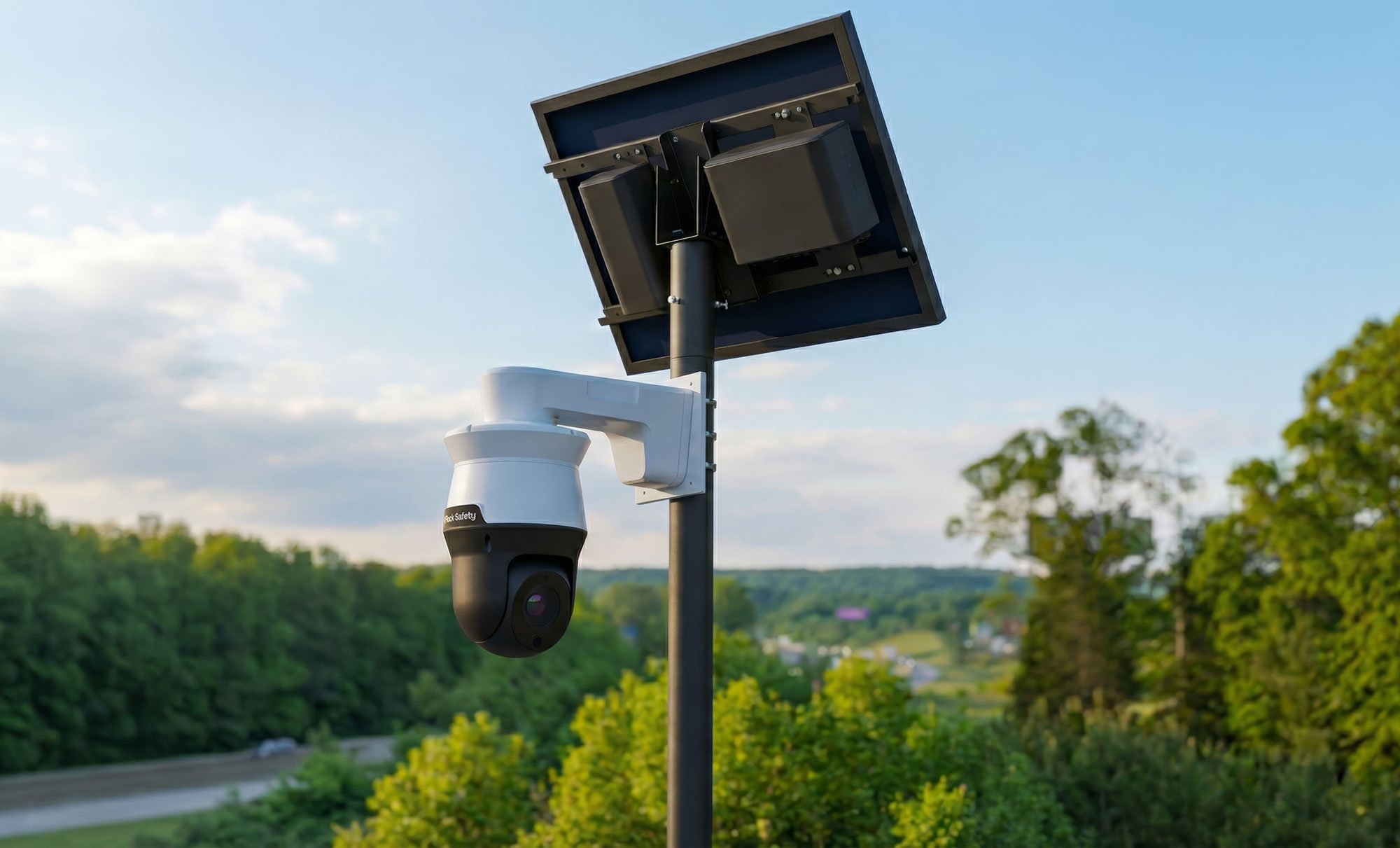
Just a few days ago, we released an article concerning the companies responsible for managing automatic license plate readers who are selling the data they gather, and how this profit-driven surveillance is set to expand, permitting readers to monitor your electronic signatures—involving everything from your smartphone to your wearable devices and the infotainment systems in your vehicles. No license plate? No issue, due to a tool known as SignalTrace. The name certainly gives away its purpose.
Compounding the problem, 404 media published two further reports outlining police misconduct related to a well-known camera system named Flock. Perhaps you’ve heard of it; the business has agreements with municipal and state governments across the nation to provide passive video surveillance of public areas.
“Flock links communities, enterprises, and public safety to ensure incidents are understood accurately and decisions are based on facts,” declares the company’s website.
It also proclaims “Privacy first,” featuring a notably prominent link to Flock’s data privacy policy. That seems welcoming and clear, doesn’t it? Unfortunately, Flock’s history regarding the protection of that data (and even its unfiltered camera feeds) is substandard, to put it mildly. Last month, independent reporters uncovered that Flock improperly disclosed personal information and related search inputs entered by law enforcement through various search engines.
That compromised data was consolidated into a searchable resource named HaveIBeenFlocked, where you can verify if your license plate has been queried through Flock’s database—and sometimes, why it was.
That could be more significant than one might anticipate, since law enforcement isn’t utilizing Flock solely for its official duties. Several officers have been found using Flock data to stalk both acquaintances and strangers. One officer in Florida exploited Flock’s license plate search to harass his ex-girlfriend and her family over several months in 2024; another in Missouri executed 542 “test” searches over ten months to track both his wife’s car and an unknown second vehicle.
A collective known as “Deflock Joplin” compiled that timeline using HaveIBeenFlocked; upon reporting the pattern to the Joplin Police Department, the claims were duly examined:
“In December of 2025, the Joplin Police Department became aware of a potential policy infraction by one of its personnel regarding the improper utilization of a departmental resource, particularly, the Flock license plate reader (LPR) system,” stated the Joplin PD. “An internal inquiry was immediately launched by the Joplin Police Department’s Office of Internal Affairs. The officer under scrutiny was quickly placed on administrative leave pending the conclusion of our internal inquiry.”
Rest assured; it wasn’t merely a paid holiday, although the specific details regarding his departure weren’t disclosed, the officer “is no longer working for the City of Joplin.”
Flock informed 404 Media in June that it was aware of 15 instances of police misuse of its database—then proceeded to take credit for exposing the wrongdoers.
“There are also 140,000 active users of Flock each month, so the relatively infrequent cases of misconduct, while undoubtedly wrong and terrible, are precisely that—uncommon,” a Flock representative stated to the media.
“Humans are error-prone; contrary to most tools society provides law enforcement, Flock guarantees that in cases where our technology is misused, the evidence needed to hold accountable parties is right there in our system,” remarked the representative. “We also suggest all our clients to have a usage policy, regular training, and to utilize our Audit Assistance tool, which proactively alerts unintended use.”
In simpler terms, Flock offers the necessary tools for proper oversight of its system. Whether departments choose to maintain those tools, review their reports, or act on any resulting insights is entirely beyond the company’s control.
What’s Flock going to do? “Terminate” a valued client for not maximizing the product’s potential? Envision that type of capitalism; pickup trucks would be as uncommon as honest politicians.
Regardless of where you reside in the U.S., there’s a fair possibility Flock (or a similar tool) is either in operation or being tested within your vicinity. In the contemporary Internet of Things, you no longer require a license plate to be monitored, nor must you be inside a vehicle to become a target.
Welcome to the future.
Have a story lead? Reach out to us at [email protected]!
**Law Enforcement Using License Plate Readers for Surveillance Efforts**
In recent years, law enforcement entities across the United States and globally have increasingly adopted technologies to bolster their surveillance capacities. One of the most notable advancements in this domain is the deployment of License Plate Readers (LPRs). These automated systems have changed how police departments observe vehicle movements, track illicit activities, and enhance community safety.
**What Exactly are License Plate Readers?**
License Plate Readers are advanced devices that utilize optical character recognition to automatically capture and log license plate numbers from automobiles. Generally mounted on police cars or stationary locations like traffic signals and thoroughfares, LPRs take pictures of license plates and can also note the time, date, and location of the capture. The gathered data can be retained in databases for future access and evaluation.
**How LPRs Function in Law Enforcement**
1. **Solving and Preventing Crimes**: LPRs play a crucial role in addressing crimes by identifying vehicles involved in illicit actions. When a vehicle connected to a crime is identified, law enforcement can promptly react, potentially detaining suspects or recovering stolen items.
2. **Recovering Stolen Vehicles**: One of the primary applications of LPR technology is the recovery of stolen automobiles. Once a stolen vehicle is reported, its license plate number can be entered into a national database, allowing LPRs to scan for it and notify officers upon detection.
3. **Traffic Law Enforcement**: LPRs aid in enforcing traffic regulations by identifying vehicles with expired registrations, outstanding warrants, or those involved in hit-and-run scenarios. This function promotes a more efficient allocation of police resources and improves roadway safety.
4. **Amber Alerts and Missing Individuals**: During instances of missing persons or Amber Alerts, LPRs can be utilized to search for specific vehicles related to these cases. This swift action can be crucial in finding missing people.
5. **Data Gathering and Analysis**: The information collected by LPRs can be examined to identify trends in criminal behavior, traffic patterns, and other critical metrics. This data can shape law enforcement strategies and resource distribution.
**Concerns Over Privacy and Regulation**
Despite their advantages, the deployment of LPRs raises significant privacy issues. The capability to track individuals through their vehicles has sparked discussions about surveillance overreach as well as the potential for misuse. Opponents contend that the indiscriminate gathering of data could violate civil liberties, leading to unmerited scrutiny of innocent individuals.
To mitigate these concerns, some regions have put regulations in place governing the utilization of LPR technology. These laws may include limits on data retention durations, specifications for data access, and transparency measures to keep the public informed about the use of their information.
**The Future of LPR Technology**
As technology progresses, the capabilities of License Plate Readers will evolve as well. Innovations in artificial intelligence and machine learning may enhance the precision and efficacy of LPR systems, enabling law enforcement to analyze data better and react to incidents in real-time. Furthermore, integration with other surveillance technologies, such as facial recognition and traffic cameras, could develop a more comprehensive public safety framework.
In summary, License Plate Readers are a formidable asset for law enforcement agencies, providing significant advantages in crime deterrence and public safety. However, the equilibrium between efficient policing and the safeguarding of individual privacy remains a vital aspect to consider as this technology advances. Continuous dialogue among law enforcement, policymakers, and the public will be necessary to shape the future of LPR utilization.
 admin
admin