
As a child, I frequently felt as if I existed in two utterly distinct realms.
My parents’ residence resembled an ice fortress. Everything was visually appealing. Everything was neat. Everything seemed precisely as it should be. Yet, it was frigid.
My mother seldom allowed me to pursue what I truly desired. Rather, I was expected to only engage in what was necessary.
Countless nights, I went to sleep weary, annoyed, or silently stifling tears.
Whenever I voiced my grievances, my mother would invariably respond, “You must endure it. That’s how everyone lives.”
Then there was the realm of my grandmother.
Her home radiated warmth.
It was never completely neat because she was perpetually crafting something—baking, sewing, planting flowers, or experimenting with new recipes simply for the joy it brought her.
She prepared meals she genuinely savored and would never compel me to consume food I disliked.
She cherished animals.
On balmy summer evenings, she adored sleeping outdoors in the garden beneath the stars and always invited me to join. My mother never permitted it.
My grandmother was not flawless. Yet she imparted a lesson my nervous system has never forgotten:
Equilibrium.
You need not force yourself through everything. Certain things thrive when approached with inspiration rather than obligation.
And when the day has already been taxing, don’t persist in the race once you return home. The day may have drained you. Home need not be.
Enjoy a warm bath. Relish something you truly appreciate. Envelop yourself in your favorite blanket. Retire early.
At times, healing is far more straightforward than we perceive.
We’ve all encountered those days. The type that leaves you emotionally spent before dinner.
Your shoulders ache. Your mind refuses to settle. And all you desire is something—anything—that will make the stress vanish.
Regrettably, many of the habits we resort to after challenging days don’t effectively facilitate recovery. They merely distract us long enough to postpone confronting our feelings.
From my own experiences, here are five habits that subtly intensify tomorrow’s challenges—and the healthier alternatives that genuinely help reset your nervous system.
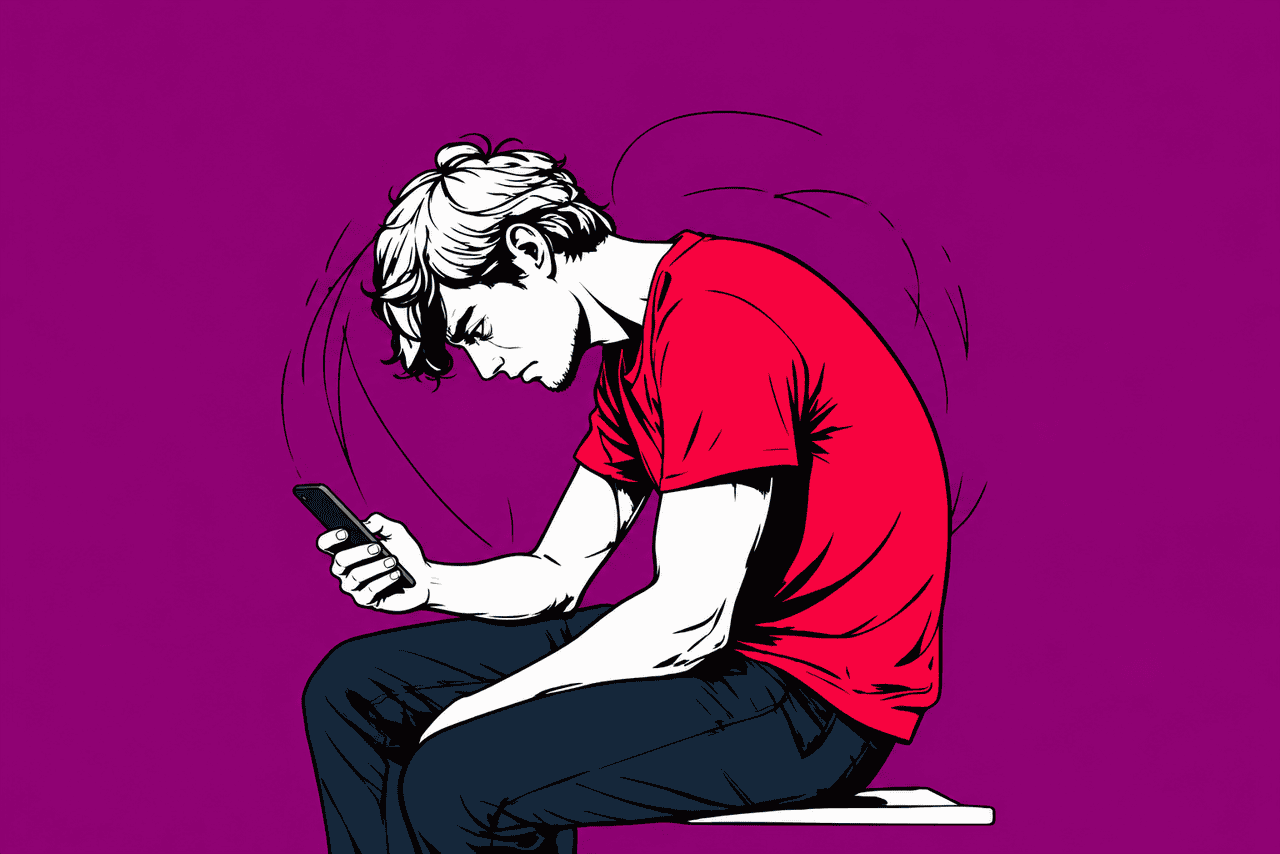
1. Scrolling until you forget why you picked up your phone
It appears innocuous. Just a few moments on social media. Then thirty minutes morph into two hours. Instead of feeling rejuvenated, you somehow end up feeling even more stressed.
Our minds often seek distraction because slowing down means finally acknowledging how emotionally drained we truly are.
And perhaps the most peculiar aspect? The algorithm seldom presents what we genuinely wished to see.
Instead, it inundates our minds with endless suggestions, opinions from strangers, and content we never requested.
That’s why I now depend on much simpler rituals. The kind that soothes my mind instead of overcrowding it. The kind that gently refocuses my attention on myself and my inner world.
Consider this alternative.
Do absolutely nothing for a span of ten minutes.
Prepare yourself a cup of tea or whatever is comforting.
Observe the sunset. Few sights are as beautiful as the sky slowly changing hues. Even better if you can share the experience with someone special.
Position yourself beside an open window.
Spend a few moments near water.
Take a bath.
Take a shower.
Your nervous system doesn’t invariably need more stimulation. Sometimes it simply requires silence.
I particularly enjoy being surrounded by nature and water.
Even a few tranquil minutes in the small green area close to my apartment aids my body in unwinding.
I don’t reside in a house outfitted with a garden like my grandmother did, nor can I place a bed beneath the stars as she adored. At times, I miss that.
However, I’ve realized something unexpected. Opting not to scroll Instagram provides my mind with far more inspiration than thirty minutes on Pinterest ever could.
2. Ignoring your emotions
Many of us learned to don emotional façades long before reaching adulthood.
“I’m fine.”
Even when we are not.
“It wasn’t that bad.”
Sometimes that’s merely another way of expressing, “I don’t believe I deserve better.”
“I’ll handle it tomorrow.”
Occasionally, that’s a healthy choice.
But when tomorrow extends into next week and next month, our emotions don’t vanish. They linger.
Eventually, they may surface as anxiety, irritability, weariness, or emotional numbness.
Healing commences the moment we permit ourselves to utter one simple statement:
“Today was challenging.”
Many of us were taught that being strong necessitates feigning that we’re okay.
In truth, acknowledging your emotions is among the strongest actions you can undertake.
I wore that mask throughout most of my childhood. My mother held the belief that maintaining the facade of “everything is fine” was simply part of existence.
I was expected to smile, even when I lacked the desire to. Perhaps that’s why, as an adult, I no longer compel myself to pretend.
If I need to cry, I cry.
And I’ve never required my daughter to feign being okay when she isn’t.
I want her to understand that every emotion has its place. That emotions don’t signify weakness. Pretending they don’t exist does.
3. Treating stress like a personal failure
We often perceive stress as evidence that we aren’t strong enough.
We chastise ourselves for feeling overwhelmed instead of posing a far more crucial question:
What caused my overwhelm in the first place?
Stress is informative.
Sometimes it indicates we’ve taken on too much. Sometimes it signals the need for rest. Sometimes it reminds us that our boundaries quietly vanished.
And occasionally, the stressful day wasn’t entirely our responsibility.
We cannot control the behavior of others. People disregard boundaries. They disappoint us. They create unnecessary pressure. The sole aspect we truly control is our subsequent response.
When I was a child, my grandmother would joke that emotions were akin to tiny worms.
“If you keep them locked inside,” she’d laugh, “they’ll start gnawing at you from within.”
Thanks to her, those little ‘worms’ never had the opportunity to linger within me for very long.
I’m no longer fearful of my emotions. I love each one of them. I allow myself to experience them. Then I let them go.
I don’t carry yesterday’s stress into tomorrow. Each morning, I strive to start anew—as if someone has placed a fresh sheet of paper in front of me.
4. Trying to earn rest
Many of us harbor the belief that we must complete just one more task before earning the right to rest. One more email. One more load of laundry. One more hour of work.
The issue is that one more thing seldom remains as just one item. There’s perpetually another task awaiting. Another notification. Another reason to defer caring for ourselves.
The finish line continues to shift.
We forget that rest was never intended to be something we had to earn. It’s a biological necessity.
Your brain cannot recuperate while it’s constantly awaiting permission to slow down. And the reality is, very few individuals will cease to safeguard your well-being if you don’t.
That’s why prioritizing yourself isn’t selfish; it’s healthy.
No one has ever discovered lasting happiness by treating life as an endless race.
I understand that because I lived in that manner for a time.
Initially, it even seemed productive. I thought I was working diligently. I believed I was fulfilling all my obligations. But over time, I began to observe something.
Many of my days were dominated by automatic habits that consumed my time without yielding meaningful results. I didn’t recognize them until I decelerated.
That’s the peculiar aspect of perpetual rush. When you’re always in flight, you seldom notice where you’re actually heading.
Our minds are filled with invisible anxieties.
The fear of falling behind.
The fear of missing out.
The fear that everyone else is progressing faster than we are.
It’s simple to misinterpret constant movement as meaningful advancement. That’s why equilibrium holds such significance. Not a balance between work and idleness. A balance between creation and recuperation. Between donating your energy and permitting yourself to replenish it.
When I ultimately released the habits that weren’t beneficial to me, something unexpected occurred.
My body expressed gratitude. My nervous system expressed gratitude. But so did my creativity. My work became more vibrant. More alive.
For the first time, I recognized that previously, I hadn’t truly been creating. I had been producing. I was generating content for someone else.
For expectations. For the algorithm.
There was nothing inherently wrong with my creations. Some of it was lovely. Yet when I reflect on my work now, the sensation is entirely distinct.
Now my creativity feels invigorated. It breathes. And even when I refrain from voicing a word, it expresses for me.
5. Looking for instant relief instead of real recovery
After a taxing day, comfort feels alluring.
Sometimes it manifests as food.
Sometimes it’s online shopping.
Sometimes alcohol.
Sometimes another episode of a TV show.
Sometimes just one more hour on our devices.
None of these activities are inherently wrong simply because they bring enjoyment. They only transform into a problem when they become our exclusive means of coping.
True recovery typically appears far less dramatic.
A meaningful conversation.
A serene walk.
Gentle movement.
Music.
Reading.
Journaling.
Eight hours of uninterrupted slumber.
None of these actions promise instantaneous escapism. What they provide is something significantly more valuable. Healing.
For healing doesn’t merely apply a beautiful facade over our pain and declare everything is fine.
Healing gently confronts the pain itself. It listens. It understands. And gradually, it enables the wound to evolve into something other than an open scar.
For me, shedding my “I’m fine” mask wasn’t effortless. It took years. And perhaps I’m still on that journey.
But the moment I acknowledged that I had been wearing it, it felt as if someone had lifted a heavy burden from my shoulders.
I no longer need to continually patch my soul with fleeting distractions, hoping they will make the pain vanish.
Instead, I can at last tend to the part of me that has been hurting all along.
Stress Doesn’t Mean You’re Failing
Perhaps the greatest misunderstanding regarding stress is not that we experience it. It’s that we believe we shouldn’t.
The true issue is that we frequently punish ourselves merely for feeling overwhelmed.
My grandmother used to tell me something I’ll always remember.
“A stressful day doesn’t signify weakness. It doesn’t mean you’re failing. It doesn’t imply you’re living life incorrectly. It simply indicates your mind and body are requesting care rather than criticism.”
For years, I didn’t entirely grasp what she meant. Now I do.
Recovery isn’t about evading your emotions. It’s about fostering sufficient safety to finally experience them without drowning in them.
Whenever I endure a tough day, I attempt to recall something that alters everything.
I envision the weary version of myself is not an adult at all. She’s a little girl who had a particularly challenging day.
Would I criticize her?
Would I suggest she should have exerted more effort?
Would I expect her to smile while she felt the urge to cry?
Certainly not.
I’d prepare her a warm cocoa.
I’d narrate her a bedtime story.
I’d envelop her in the softest blanket available.
I’d remain with her until she felt secure enough to drift off to sleep.
So why should I extend any less kindness to my adult self?
Perhaps that’s the essence of healing.
Not becoming tougher. Not pretending nothing hurts. Not compelling yourself to “remain positive.” But learning to be the safe haven you’ve been seeking all along.
Because at times, the healthiest action to take after a stressful day isn’t to become more productive.
It’s to become gentler. More patient. More compassionate. Especially toward yourself.
And perhaps tomorrow won’t commence with the burden of yesterday. Maybe it will begin the way every new day is meant to start—like a blank sheet of paper.
The world will likely continue urging us to do more.
Move swiftly. Achieve greater. Remain available. Stay productive.
But healing often murmurs something entirely different.
Slow down. Breathe. Return to yourself.
The to-do list will still be present tomorrow.
Your nervous system deserves your focus today.
Because your worth has never been contingent on how much you accomplish in a single day.
Occasionally, the most courageous action you can take is to permit yourself to rest.
And trust that tomorrow, you’ll begin anew—not because you pushed yourself harder, but because you finally granted yourself the permission to recuperate.
About Oleksandra Fomichova
Oleksandra Fomichova is a writer and visual storyteller delving into self-worth, boundaries, healing, authenticity, and the subtle process of becoming yourself. Her writing emerges from lived experiences and a lifelong bond with creativity. She is the author of Under My Skin and Empath Diaries (Russian-language eBook here) and discusses what transpires when we cease performing our lives for others and start living them for ourselves. Follow her on Instagram here.
**Five Unproductive Habits That Intensify Daily Stress**
In today’s fast-paced environment, stress has become a prevalent aspect of many people’s lives. While a degree of stress can be beneficial, pushing us to meet deadlines or perform effectively, persistent stress can adversely affect both mental and physical well-being. Frequently, the habits we cultivate in our daily routines may unintentionally escalate stress levels. Below are five unproductive habits that can intensify daily stress.
1. **Procrastination**
Procrastination is a behavior with which many struggle, often resulting in heightened anxiety and stress. When tasks are postponed, they accumulate, creating a feeling of overwhelm. The impending deadlines and incomplete tasks can generate a cycle of stress that hampers productivity and mental health. To counter procrastination, breaking down tasks into smaller, manageable pieces and establishing specific deadlines can help alleviate pressure.
2. **Negative Self-Talk**
The manner in which we converse with ourselves has a substantial effect on our stress levels. Negative self-talk, marked by self-criticism and pessimism, can foster a toxic mindset that amplifies stress. This behavior can lead to feelings of inadequacy and hopelessness, making it tougher to navigate daily obstacles. Engaging in positive affirmations and mindfulness practices can aid in shifting this negative internal dialogue toward a more constructive and supportive tone.
3. **Poor Time Management**
Inefficient time management can result in disorder and increased stress. When individuals neglect to prioritize tasks or overcommit, they often find themselves in a race against time. This can lead to missed deadlines and a chronic feeling of being overwhelmed. Employing tools such as planners, to-do lists, and time-blocking methods can enhance time management capabilities and relieve stress.
4. **Neglecting Physical Activity**
Integrating regular physical activity into one’s routine is vital for managing stress. However, many tend to adopt a sedentary lifestyle, which can intensify feelings of stress and anxiety. Exercise releases endorphins, which function as natural mood enhancers. Even brief walks or simple stretching can significantly contribute to lowering stress levels and enhancing overall well-being.
5. **Neglecting Sleep**
Adequate sleep is essential for both mental and physical health, yet numerous individuals prioritize other activities over obtaining sufficient rest. Poor sleep hygiene can lead to increased irritability, diminished cognitive function, and heightened stress. Establishing a consistent sleep routine, creating a serene environment, and minimizing screen time before bed can improve sleep quality and assist in managing stress effectively.
In summary, recognizing and addressing these counterproductive habits is crucial for reducing daily stress. By implementing positive behavioral changes, individuals can foster a healthier mindset and enhance their overall quality of life.
 admin