
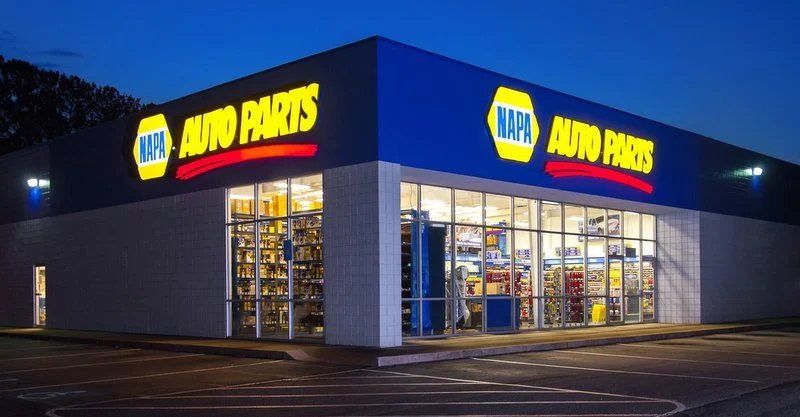
- O’Reilly eyeing $10B NAPA purchase. This potential acquisition could transform the automotive parts retail market.
- Distinct operational strategies. O’Reilly’s corporate uniformity stands in stark contrast to NAPA’s franchise model.
- Possible regulatory challenges. Antitrust issues could hinder the agreement, particularly in overlapping territories.
- Aspirations for global expansion. O’Reilly’s offer could bolster its international presence.
AI assisted, editor reviewed
Currently, there are just four major automotive parts retailers remaining in the U.S., and rumors suggest that two of them might merge. O’Reilly seems to be considering a $10 billion investment to bring NAPA into its fold. This scenario would create significant interest in the auto industry, as despite both brands being recognized for their physical retail presence, O’Reilly and NAPA operate fundamentally different business models.
Before addressing the differences between NAPA and O’Reilly (I often mistakenly think it’s “O’Reilly’s,” but that’s incorrect—no apostrophe-S), let’s establish the key context and the latest news highlights.
Why This Matters
O’Reilly is a major publicly traded enterprise known for its consistent corporate governance across its stores. NAPA Auto Parts operates under a hybrid corporate/franchise system, resulting in many stores possess a more localized, independent feel. A significant portion of NAPA’s outlets (approximately 4,500 out of 6,000) are owned by individual entrepreneurs rather than the corporate parent, Genuine Parts Company (GPC). GPC also manages a company called Motion that supplies industrial components to factories.
Earlier this year, GPC indicated a desire to disentangle its auto and industrial branches. There hadn’t been much discussion about this until recently, when I noticed reports indicating that O’Reilly Automotive submitted a bid for GPC’s automotive parts sector, which Bloomberg states could be valued at $10 billion or more.
GPC has not officially put NAPA on the market; instead, it has shared plans to make NAPA an independent entity by 2027. O’Reilly seems to be acting proactively in response to its competitor’s next steps by attempting to acquire it.
Now, why is this significant beyond possibly changing signage at parts stores? Let’s explore the differences between these brands from a consumer perspective.
- NAPA’s franchise system is heavily geared towards the commercial mechanic sector, and automotive enthusiasts often prefer NAPA for its more experienced counter personnel (the seasoned professionals who know what a carburetor is) and premium, OEM-quality house brands (such as Carlyle tools or Echlin ignition parts).
- O’Reilly is a corporate-run behemoth that has expanded significantly by assimilating regional chains over the years (for example, CSK Auto/Checker/Schuck’s/Kragen in 2008). While it excels in inventory management, O’Reilly stores typically offer a more uniform corporate retail experience.
O’Reilly vs. NAPA: Is One Superior?
As a regular customer of auto parts stores, I’ve had favorable experiences at both NAPA and O’Reilly. The O’Reilly shops were my top choice while living in Los Angeles. I became familiar with the counter staff at several O’Reilly outlets, who were consistently helpful and knowledgeable. However, I also encountered excellent, seasoned staff members at NAPA. I recall visiting a NAPA near Lake Tahoe one winter and having an extensive discussion with an employee about the different antifreeze types and their chemical compositions.
In light of this, if O’Reilly were to acquire NAPA, it would be intriguing to see whether it maintained the franchise model (or even the branding) or decided to eliminate it. Should the independent NAPAs disappear, the automotive culture might lose not just the welcoming atmosphere of NAPA’s local speed shop charm, but also opportunities for enthusiast-run parts shops. On the flip side, perhaps it is irrelevant, as anyone can ostensibly market car parts from anywhere on the internet.
Speaking of presence, GPC’s automotive division encompasses over 10,000 locations worldwide. O’Reilly has been quietly pursuing expansion into Canada and Mexico in recent years—its $10 billion proposal could also aim at establishing an international auto parts empire.
What Comes Next
Rumors suggest that a deal for acquiring NAPA could be finalized by “late summer,” but it is difficult to ascertain how feasible this timeline is. Antitrust and monopoly regulations should impede O’Reilly from fully absorbing NAPA—in fact, I found some relevant statistics. There are around 1,800 O’Reilly stores located within a mile of a NAPA outlet. In those overlapping regions, about 600 markets do not have nearby AutoZone or Advance Auto Parts. Hence, in those 600 areas, an O’Reilly takeover would create an instant monopoly, making those specific outlets prime candidates for regulatory forced sell-offs or closures.
As of now, the stock market has responded with GPC’s shares rising (indicating approval of the brand’s valuation at $10 billion), while O’Reilly’s stock has dropped slightly (since a cash acquisition would lead to debt and navigate antitrust concerns).
Many uncertainties surround this situation that I will be monitoring closely. Perhaps O’Reilly inherits NAPA’s brands and Carlyle tools, or alternatively, the NAPAs close down and morph into Advance Auto Parts or AutoZone locations to meet regulatory requirements.
At present, O’Reilly commands Wall Street’s focus, boasting a market valuation nearing $77 billion. It possesses the liquidity and credit capacity to engage in landmark acquisitions. Meanwhile, GPC (NAPA) has faced challenges. Hard hit by elevated supply chain expenses and economic fluctuations, its stock performance has been suffering, with the entire GPC conglomerate valued at around $16 billion.
I generally believe that fewer competitors could negatively impact consumers over the long haul, although I anticipate a surge of comments expressing “I purchase everything online anyway.” My local NAPA may not always stock the parts I require, but they usually can procure them within a day. I would prefer to back a locally owned enterprise rather than a global corporation when given the choice.
Have any insights about the auto parts industry? Feel free to contact me at [email protected].
**Examination of the $10 Billion Acquisition that May Transform the Auto Parts Sector**
In recent months, the automotive parts industry has been buzzing with speculation regarding a potential $10 billion acquisition that could redefine the automotive supply chain framework. This examination explores the implications of such a major deal, assessing the principal players involved, the strategic intents behind the acquisition, and the prospective effects on the sector at large.
### Principal Players
The proposed acquisition involves a leading auto parts producer and a significant technology company. The auto parts producer boasts a comprehensive range of components from conventional mechanical parts to state-of-the-art electronic systems. Meanwhile, the technology company is renowned for its advancements in artificial intelligence, data analysis, and connected vehicle technologies. This merger signifies a blending of traditional manufacturing with contemporary technology, which is becoming increasingly vital in the changing automotive environment.
### Strategic Intents
1. **Integration of Technology**: The foremost reason behind the acquisition is the amalgamation of advanced technology within the auto parts supply framework. By merging manufacturing proficiency with technological advancements, the new company aims to enhance product offerings, boost operational efficiencies, and curtail costs.
2. **Market Growth**: The acquisition enables the auto parts manufacturer to broaden its market presence, particularly in the electric vehicle (EV) domain. As the automotive sector pivots toward electrification, having a technological partner can facilitate the creation of components that satisfy the needs of contemporary vehicles.
3. **Supply Chain Robustness**: The COVID-19 pandemic underscored weaknesses in global supply networks. Acquiring a tech company allows the auto parts producer to harness data analytics for more effective inventory management, precise demand forecasting, and enhanced supply chain robustness.
4. **Sustainability Efforts**: Both organizations have expressed a commitment to sustainability. The merger could expedite the creation of environmentally friendly components and production methods, aligning with global movements toward greener automotive solutions.
### Potential Effects on the Sector
1. **Heightened Competition**: The acquisition may trigger a wave of consolidation within the auto parts industry, compelling other manufacturers to bolster their technological capabilities. Smaller entities might find it challenging to compete, resulting in a more concentrated market.
2. **Acceleration of Innovation**: With increased resources and expertise, the unified entity is likely to expedite innovation in automotive components. This could prompt the swift development of intelligent parts, enhanced connectivity, and improved safety features.
3. **Pricing Shifts**: The merger could modify pricing dynamics within the sector. As the new entity capitalizes on economies of scale and improved efficiencies, it may result in lower costs for consumers. Conversely, if the acquisition leads to diminished competition, it could also cause prices to rise in the long run.
4. **Job Market Transformations**: The fusion of technology into manufacturing may lead to job losses in traditional roles while creating new prospects in technology-focused positions. The sector will need to navigate this transition carefully to maintain a skilled workforce.
5. **Regulatory Oversight**: Given the magnitude of the acquisition, it is likely to draw regulatory attention. Antitrust considerations may come into play, particularly if the merger significantly changes market dynamics. Regulatory agencies will need to evaluate the potential effects on competition and consumer options.
### Conclusion
The prospective $10 billion acquisition within the auto parts industry signifies a critical juncture that could redefine the field. By merging traditional manufacturing with advanced technology, the new entity aims to position itself as a leader in innovation and sustainability. Nevertheless, the ramifications of this acquisition extend beyond the parties involved, influencing competition, pricing, and the overall trajectory of the automotive sector. As the landscape shifts, stakeholders must remain vigilant in observing the developments arising from this significant transaction.