

It has been well documented that creatine is one of the safest and most effective supplements. We know that statistically, a much larger percentage of research in the sports nutrition world is done on men than women. And partly because of this, it arguably has flown a bit under the radar that there are potential reasons to believe creatine is more beneficial for women than men.
In this post, we will explore those reasons and how relevant they might be.
Why Women Might Benefit More
Although there are a lot of potential explanations, including many hormonal factors, the simplest one is that women, on average, have lower creatine stores than men.
Due to starting at a lower baseline, the increase that is seen from supplementation can have a larger positive benefit.
Why Are Women’s Baseline Stores Lower?
For background context, we naturally produce some creatine in our body, and we get some from food.
Men typically produce slightly more (~2g per day) than women (~1-1.4g per day). But this is mostly to do with overall size and muscle mass difference is on average.
Creatine from food sources is usually found in animal products, which means people who are plant-based will have low intakes compared to those with more animal-dominant diets.
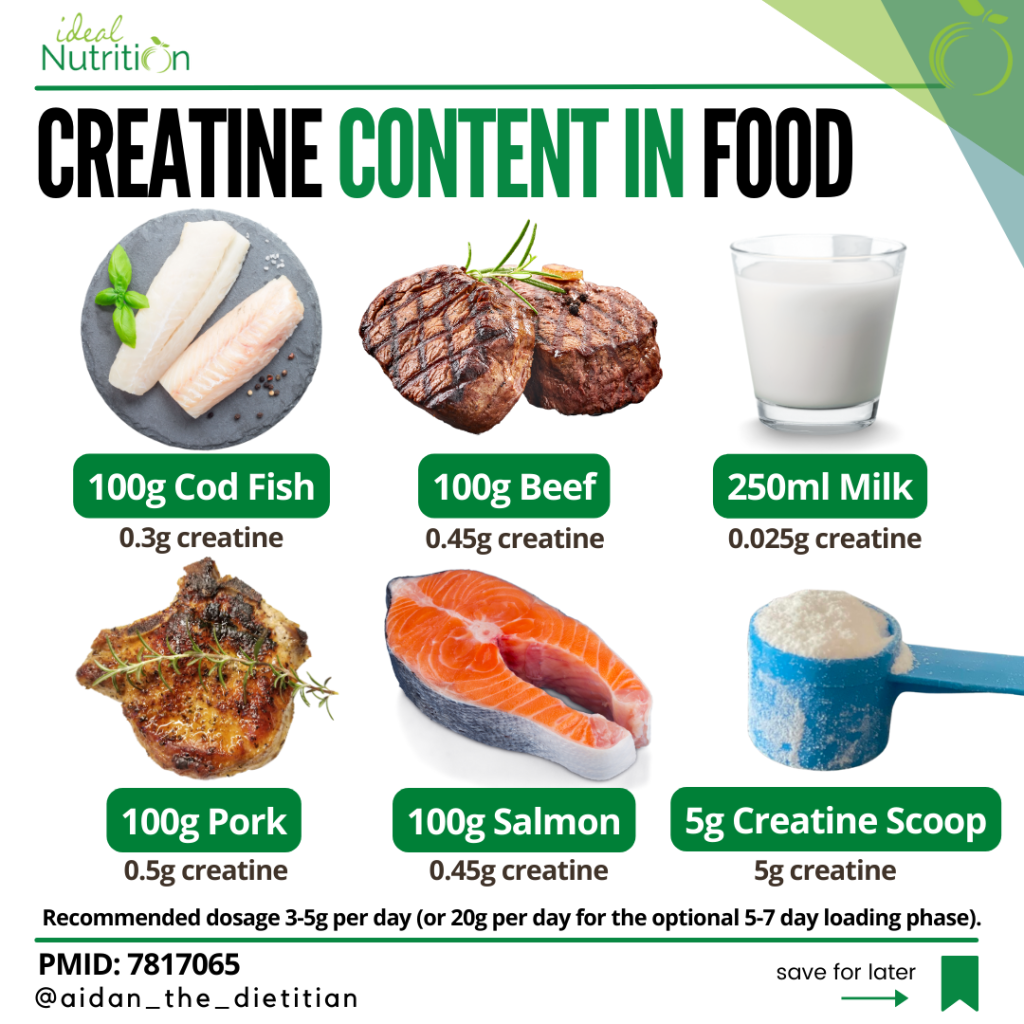
On average, most people get around 1-2g of creatine through food per day. Women tend to average slightly lower than men in this area, too, because:
- Slightly lower intake of food/calories on average
- Slightly lower intake of creatine-rich foods as a proportion of total intake, on average.
Beyond muscle mass and dietary intake differences, it has been proposed that hormones such as oestrogen might play a role in the reduced stores too.
Does This Carry Over to Improved Outcomes?
Given that both men and women are able to fully saturate their muscle creatine stores, and women are coming from a lower baseline on average, it makes sense to assume there will be more benefits. But as in most cases, rather than assume, it makes sense to check.
A meta-analysis looking at body composition and performance changes found the following:
- Women experienced around 15% increase in exercise performance after supplementing with creatine for 10 weeks
- Men experienced a 6% improvement
- Similarly, women also experienced larger percentage gains in lean mass.
That’s a pretty large gap. Although that is technically almost 3x more improvement for women than men, I’m hesitant to make that claim strongly. Instead, I am just going to highlight that it is more evidence that women often average more benefit than men from creatine.
Summary
The evidence suggests women might benefit even more from creatine supplementation than men.
The combination of lower baseline stores, potential hormonal influences, and the data showing larger average improvements in performance and lean mass all point towards creatine being a particularly worthwhile supplement for women to consider.
Like most areas of sports nutrition, more research, specifically in women, would be ideal. But this also happens to be an area where, because there is so much research in general, there is also a lot of female-specific research. Based on what we know so far, creatine is safe, effective, and likely even more beneficial for women than for men.
 admin
admin