
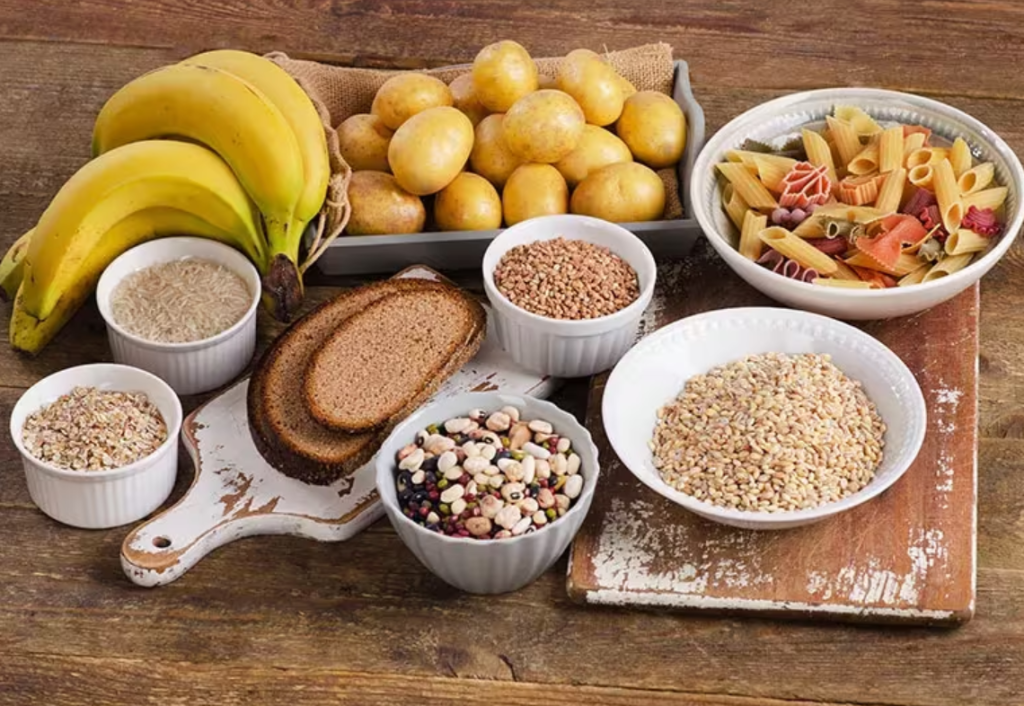
If you are wondering whether having carbohydrates before bed will help you sleep, this post will cover this. It will include aspects in relation to mechanisms, timing, glycaemic index, pros and cons, and also practical tips.
Mechanisms
The main mechanisms typically proposed fall into two categories:
1) Tryptophan & Serotonin Pathway
– Carbohydrates increase insulin, which helps more tryptophan cross the blood–brain barrier. This boosts serotonin and melatonin production.
– These are directly tied to sleep quality and onset.
2) Cortisol & Blood Sugar Regulation
– Stable blood sugar may reduce night-time wake-ups.
– Very low-carb or long fasts before bed can lead to disrupted sleep for some people.
There is merit to these proposed mechanisms. One caveat that is worth adding is that it is quite difficult to increase things like melatonin noticeably with food.
Specifically, there are a lot of articles out there that say things like “X food is a good source of melatonin” but when you actually do the maths, it is <1% of the dosage people are consuming when they directly supplement melatonin.
Positive Research
One of the most frequently cited studies found that having a high GI meal (jasmine rice in this case) 4 hours before bed significantly improved the time it took to go to sleep. This was compared with other options such as lower GI, or meals timed one hour before bed.
Some big caveats are:
- The sample size was only 12 people
- The calorie distribution from the meal composition was 90.4% carbohydrate, 8% protein and 1.6% fat.
This actually brings up an important note: A lot of the research with positive findings has used specifically high-carb meals that are low in protein. Theoretically, this helps with increasing tryptophan levels far more than if protein were included.
A systematic review identified that higher-carb diets improved REM sleep, which is beneficial for memory processing and mood. From another angle, they also found that low-carb diets helped improve a different sleep stage. So, there can be different benefits to each.
There is a lot of research looking at carbohydrates and sleep in general, but not as much as we would like, looking specifically at the timing.
Potential Downsides
Multiple studies have found that consuming high amounts of refined carbohydrates in general is linked with poorer sleep.
This is not specific to pre-sleep carbs, but it is worth being aware of.
The opposite is true too where higher fibre carbohydrates have been linked with better sleep.
Another potential downside is that large meals can disrupt sleep. A good example of this is if reflux is occurring, which will impact sleep quality and quantity in many cases.
An Outlier – Tart Cherry Juice

Tart cherry juice is consistently linked with improved sleep.
It is one of the few food options that actually leads to a measurable increase in melatonin levels. Tart cherries contain tryptophan, too.
And then there is also the possibility that consuming the drink within the hours leading up to going to sleep helps due to the carbohydrate content, too.
Practical Interpretation
Given there are still gaps in the research, some relevant interpretations are:
- It is likely that eating carbohydrates 3-4 hours prior to going to bed helps sleep.
- A smaller carbohydrate-based snack 1-2 hours before bed could have potential benefits.
- It is best to avoid large meals prior to bed.
- The majority of your diet should be minimally processed and fibre-rich. So if you had higher GI carbs prior to bed, you would want to balance this out elsewhere.
- The improvement in sleep, if relevant, likely is not large. So if this got in the way of other major nutrition goals, it might not be worth doing.
From another angle, this is also good news for athletes looking to replenish glycogen stores anyway. Because, at a minimum, it gives another reason to not specifically avoid carbs in that window too.
 admin
admin