
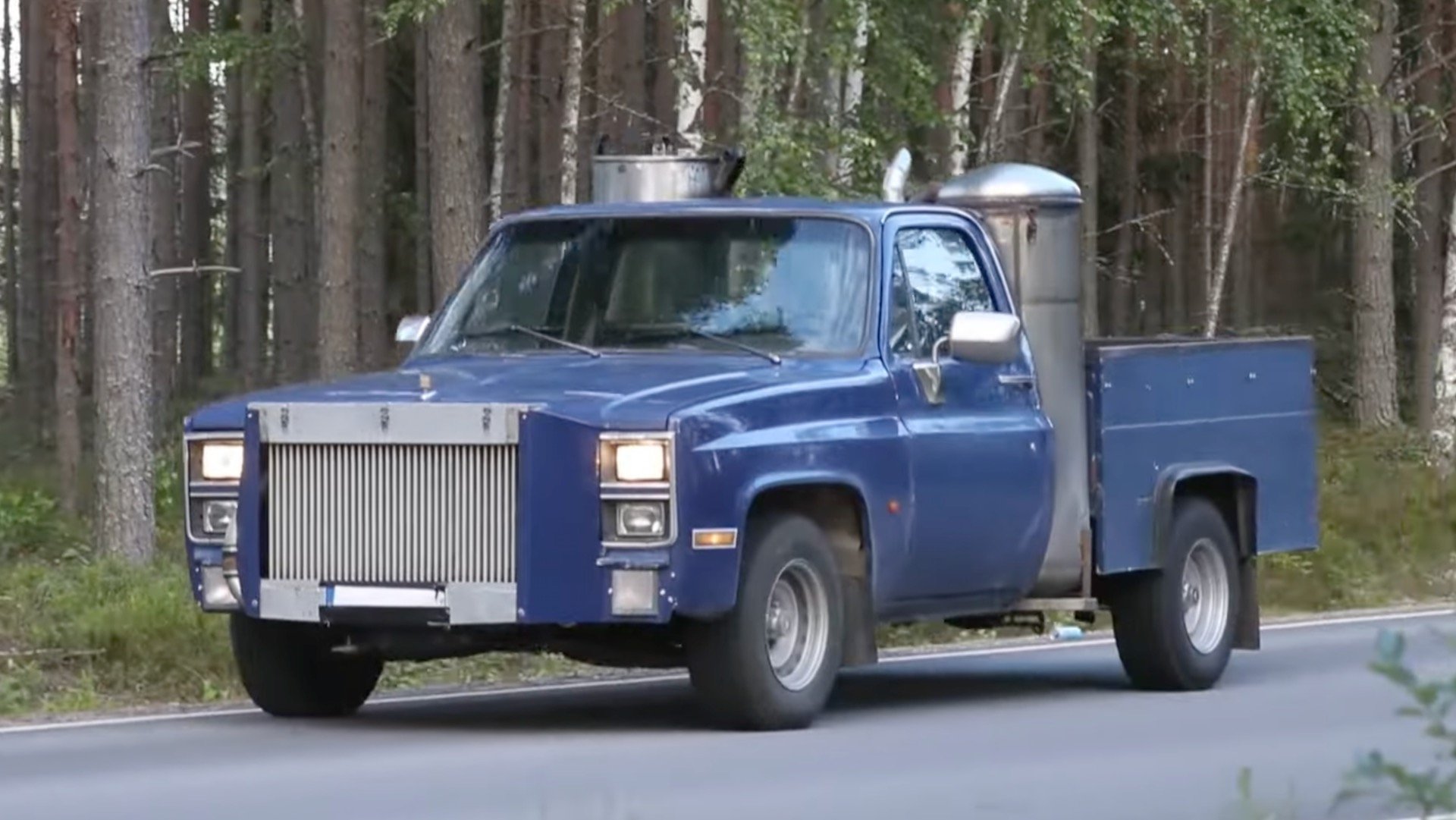
While most of us lack oil reserves in our yards, timber is abundant. With some effort, you can modify an internal-combustion engine to run on wood gas, converting your outdoor space into a fuel station. YouTuber Jp Prat Projects demonstrated how this is achieved with a video featuring his father’s squarebody Chevrolet pickup, which has not consumed gasoline for over 100,000 kilometers (62,000 miles). And it is surprisingly quick.
We previously highlighted this truck, but Jp Prat Projects has since shared a follow-up video of a standing-mile run on a secure airport runway. The truck reached a peak velocity of 125 kph (77.6 mph), which Jp Prat Projects claims marks a record for a wood-fueled vehicle. This claim seems credible given the limited competition for the title of fastest wood-powered car in the standing-mile and land-speed racing circles.
The vehicle is a 1983 Chevy driven by a 350-cubic-inch V8 engine, originally from 1972. It operates on wood gas produced from burning wood chips in a large metal cylinder positioned behind the cab. This process generates carbon monoxide, which mixes with hydrogen in a device known as a gasifier, also located behind the cab. A filter prevents soot and ash from entering the gasifier and a ball valve controls the flow.
The journey to the airport encompassed a distance of 211 kilometers (131 miles). The average fuel efficiency for the entire round trip and standing-mile run was 80.5 pounds of wood per 60 miles. The wood-gas system is approximately 15% more energy demanding than gasoline, based on the video, but if you readily have firewood, that’s not a major issue. Additionally, burning wood is nearly carbon neutral, as trees absorb carbon dioxide from the atmosphere and release it when they die and decompose, as noted by the host.
New Standing Mile Speed Record On Wood – V8 Wood Gas Chevrolet Fleetside
One downside is that a wood-gas vehicle requires a bit more time to get started. The filter needs cleaning before ignition, and similar to the steam engines that historically traversed the country on wood, ash and soot must be cleared from a pan beneath the unit. Additionally, a crumpled newspaper must be ignited at the bottom of the gasifier to initiate combustion. The ignition process takes about five to ten minutes. However, the engine doesn’t need any alterations or a secondary fuel source to commence, unlike some other alternative-fuel systems.
Wood chips also occupy more space than liquid fuels. The bags of wood chips required for long journeys typically reside in the truck’s bed, but for the speed-record trial, they were transported on a trailer pulled by a support vehicle to keep the pickup lightweight for its standing-mile attempt. Utilizing all available cargo space for fuel isn’t practical for most drivers, but it’s still intriguing to witness outdated technology being repurposed in this manner.
**Chevy Truck Fueled by Wood Establishes New Speed Record**
In a pioneering accomplishment that combines ingenuity with sustainability, a group of engineers and automotive fans has successfully achieved a new speed record with a Chevy truck fueled entirely by wood. This extraordinary achievement not only highlights the potential of alternative energy sources but also emphasizes the creativity of contemporary engineering.
**The Idea of Wood-Fueled Vehicles**
The concept of utilizing wood as a fuel source isn’t entirely novel; it dates back to the early 20th century when wood gasifiers were used in times of fuel scarcity. However, advancements in technology have reignited interest in this eco-friendly energy option. The technique involves transforming wood into gas through pyrolysis, which can subsequently power internal combustion engines.
**The Chevy Truck Alteration**
The initiative began with a standard Chevy truck that underwent considerable modifications to integrate the wood gasification system. Engineers formulated a custom gasifier that effectively transforms wood chips into flammable gas. This arrangement was combined with the truck’s engine, enabling it to operate on the produced wood gas.
**Achieving the Speed Record**
Following thorough testing and adjustments, the Chevy truck was primed for its record-setting bid. The team selected a regulated setting to ensure safety and peak performance. With a blend of skilled operation and the innovative wood gas system, the truck attained a remarkable speed that exceeded former records for wood-fueled vehicles.
**Environmental Influence and Future Prospects**
This accomplishment signifies more than just a speed record; it marks a meaningful stride toward sustainable transportation. By utilizing wood, a renewable resource, the initiative illustrates the potential for decreasing dependency on fossil fuels. The triumph of the Chevy truck could spur additional research and development within alternative fuel technologies, paving the way for greener automotive solutions.
**Final Thoughts**
The record-setting Chevy truck powered by wood stands as a tribute to human ingenuity and the quest for sustainability in the automotive sector. As the world confronts climate change and seeks cleaner energy solutions, innovations like this provide optimism for a future where vehicles can run efficiently without harming the environment. This achievement not only sets a new benchmark for speed but also sparks discussion about the potentials of renewable energy in transportation.