
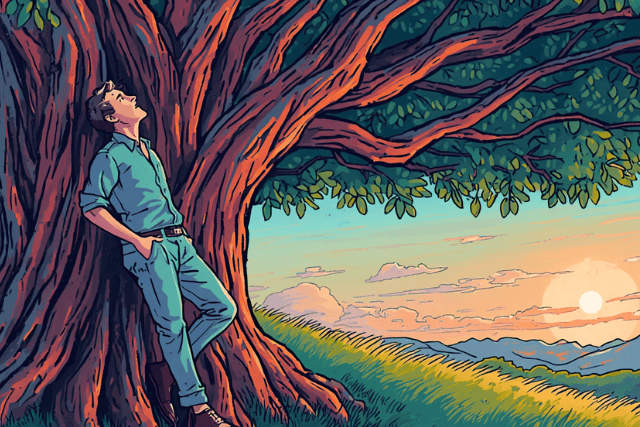
“In every encounter with nature, one gains so much more than they search for.” ~John Muir
I used to perceive life as an obstacle course, filled with hurdles that one either overcame or fell over. For quite some time, I fell over often.
What I failed to grasp back then was how easily repeated failures can cultivate a habitual expectation of the next one. Eventually, you stop existing in the moment and start anticipating the next misstep.
Upon my college graduation, I pursued what I believed was the expected route. I relocated to Philadelphia to commence a master’s program. In my early twenties, I juggled a daytime job, evening classes, and the challenge of constructing a life in a city that still felt strange to me.
I had always been somewhat anxious, but it was typically manageable. Then, unexpectedly, something shifted. I would find myself in class or at work, feeling as if my entire body was trembling from within.
That was the onset of the panic attacks.
Initially, they appeared sporadically. I would experience a jolt of electricity coursing through me, my chest would constrict, and I would struggle to inhale. Most of the time, I could take a few deep breaths and endure until it passed.
However, they soon grew more frequent.
I found it hard to focus in class or at my job. I recall exiting a movie theater midway through because I felt I couldn’t breathe. I attempted therapy for a handful of sessions, hoping to gain clarity about my situation, but nothing seemed beneficial.
After my first term, I understood that I needed to leave Philadelphia. I loaded my belongings into my car and drove back to Florida, convinced of my failure.
The panic attacks accompanied me home.
At twenty-two, without a definitive direction, I felt as if my mind and body were in constant turmoil. To escape that sensation, I started taking walks in a nearby park. There was a small pond there, accompanied by a grand banyan tree.
I found myself inexplicably attracted to it.
I discovered that banyan trees don’t merely grow upward. They send down roots from their branches until they become trunks themselves. This one appeared to create a living cathedral, its branches spreading outward to accommodate anyone seeking refuge. One day, I climbed into the area where the branches separated and settled there.
For the first time in months, I experienced tranquility.
Resting against the bark, I had a peculiar yet comforting sensation that the tree was absorbing my anxiety and drawing it into the earth beneath.
During subsequent visits, I began observing the tree more attentively. That’s when I realized something that saddened me. Someone had hammered nails into the trunk.
Some were old and corroded. Others appeared newer. Each felt like a minor act of aggression against something so giving.
Without much thought, I began removing them.
I climbed higher, examining every branch I could reach, extracting one nail after another. The more time I dedicated to caring for the tree, the more connected I felt to it.
In the weeks that followed, a change occurred.
My panic attacks lessened in frequency. When they did arise, I no longer felt as overwhelmed by them.
Eventually, I recognized that even when I wasn’t at the park, I could close my eyes, envision the banyan tree, and feel my body relax. Decades later, I still mentally return to that place whenever life becomes too much.
One afternoon, I ascended the tree with that familiar tightness already forming in my chest. I thought I had identified every nail by then, but nestled in a shaded area of the trunk was one I had overlooked. It took several minutes of working it back and forth before it finally broke free.
As I held the rusty nail in my palm, I came to a realization.
For those brief moments, I hadn’t thought about my own chest at all.
I kept visiting the park. For the first time in a long time, I felt small in a manner that wasn’t terrifying. I felt part of something much larger than myself.
<p Years later, after marrying and becoming a father, the first place I wanted to introduce my children to was that park.
They enjoyed climbing into those same branches. My daughter even named the tree: Nelly.
From time to time, we still return. Watching my children situate themselves in the same crook of branches that once supported me through one of my life’s most challenging seasons fills me with gratitude. Few joys are greater than sharing a place that once contributed to your healing.
Reflecting now, I believe the tree imparted a lesson I had never comprehended. Anxiety tends to draw our focus inward.
Every sensation feels significant. Every heartbeat transforms into something for me to monitor. Every thought becomes another issue to resolve.
During those years, I expended so much energy observing myself that I nearly forgot there was a world outside of my own fears.
The banyan tree welcomed me into a new way of living. Instead of asking, How can I stop this feeling? I began asking, What deserves my attention right now?
Sometimes it was a rusty nail embedded in the trunk. Other times it was the breeze whistling through the leaves or a turtle silently entering the pond. Unknowingly, my attention transitioned from managing myself to nurturing something beyond me.
This didn’t imply neglecting my own struggles. Learning to focus on my thoughts and emotions has been a vital aspect of my life. Yet I’ve also discovered that healing requires another action, one that extends outward toward the world.
We need instances of self-reflection, but we also need moments when we immerse ourselves in loving, serving, or acknowledging something beyond our own existence, allowing our anxious minds to loosen their hold.
I’ve encountered that same lesson numerous times since then. It arises whenever I’m truly present with another person, attentive to someone who’s suffering instead of fixating on myself. It surfaces while observing birds in my yard, wandering through the woods, or sitting under a canopy of trees.
Time and again, the natural world reminds me that I am part of something larger than my own thoughts.
Nelly still stands beside that pond.
The rusty nails are gone, but the blessing persists.
Every visit reminds me that while our inner work is essential, healing doesn’t occur in isolation. By caring for another living being and appreciating beauty, we present ourselves to something beyond our own anxieties. And when we do, we may find that we are the ones who are being healed.
About Daniel H. Shapiro
Dr. Daniel H. Shapiro is a keynote speaker, author, and mentor. He is dedicated to human connection and the narratives we carry with us. For more information about his book, The 5 Practices of the Caring Mentor, or his mentoring and speaking services, visit yourinherentgoodness.com.
**A Useful Question to Relieve Anxiety**
Anxiety is a prevalent experience that can manifest in various ways, impacting individuals differently. Whether it’s situational anxiety linked to particular events or generalized anxiety that permeates daily life, discovering effective coping strategies is crucial for managing these emotions. One powerful method that can aid in alleviating anxiety is the practice of asking oneself a specific question: “What is the worst that could happen?”
### Comprehending the Question
The query “What is the worst that could happen?” functions as a cognitive reframing technique. It prompts individuals to confront their fears directly rather than allowing them to simmer in the background. By articulating the worst-case scenario, individuals may recognize that the outcome isn’t as disastrous as their anxiety implies.
### Dissecting the Process
1. **Identify the Source of Anxiety**: The initial step is to determine what is triggering the anxiety. This may involve an upcoming presentation, a challenging conversation, or a life transition.
2. **Pose the Question**: Once the source is identified, ask yourself, “What is the worst that could happen?” Document the potential negative outcomes. This process externalizes fears and renders them more manageable.
3. **Assess the Likelihood**: After enumerating the worst-case scenarios, evaluate how likely each outcome is to materialize. Generally, individuals discover that the chances of the worst-case scenario are minimal.
4. **Consider Coping Strategies**: For the scenarios that seem plausible, reflect on how you would cope if they indeed occurred. This proactive approach diminishes feelings of helplessness and enhances a sense of control.
5. **Reframe Your Thoughts**: Finally, adjust your thinking by concentrating on the best possible outcomes or the most probable outcomes, which are frequently more favorable than the worst-case scenarios.
### Advantages of This Approach
– **Mitigates Catastrophic Thinking**: By facing fears head-on, individuals can lessen the inclination to engage in catastrophic thinking, which often intensifies anxiety.
– **Encourages Problem-Solving**: This approach promotes a problem-solving mindset, enabling individuals to think critically about their fears and create actionable plans.
– **Boosts Resilience**: Regularly implementing this questioning technique can bolster emotional resilience, facilitating easier navigation of future anxiety-provoking situations.
– **Enhances Self-Awareness**: Engaging with one’s fears cultivates greater self-awareness and understanding of personal triggers, resulting in more effective anxiety management.
### Conclusion
The question “What is the worst that could happen?” stands as a straightforward yet powerful tool for alleviating anxiety. By urging individuals to confront their fears, assess their likelihood, and strategize coping mechanisms, this approach can transform anxiety from a debilitating force into a manageable element of life. Integrating this question into daily routines can empower individuals to tackle their challenges with enhanced confidence and clarity.