
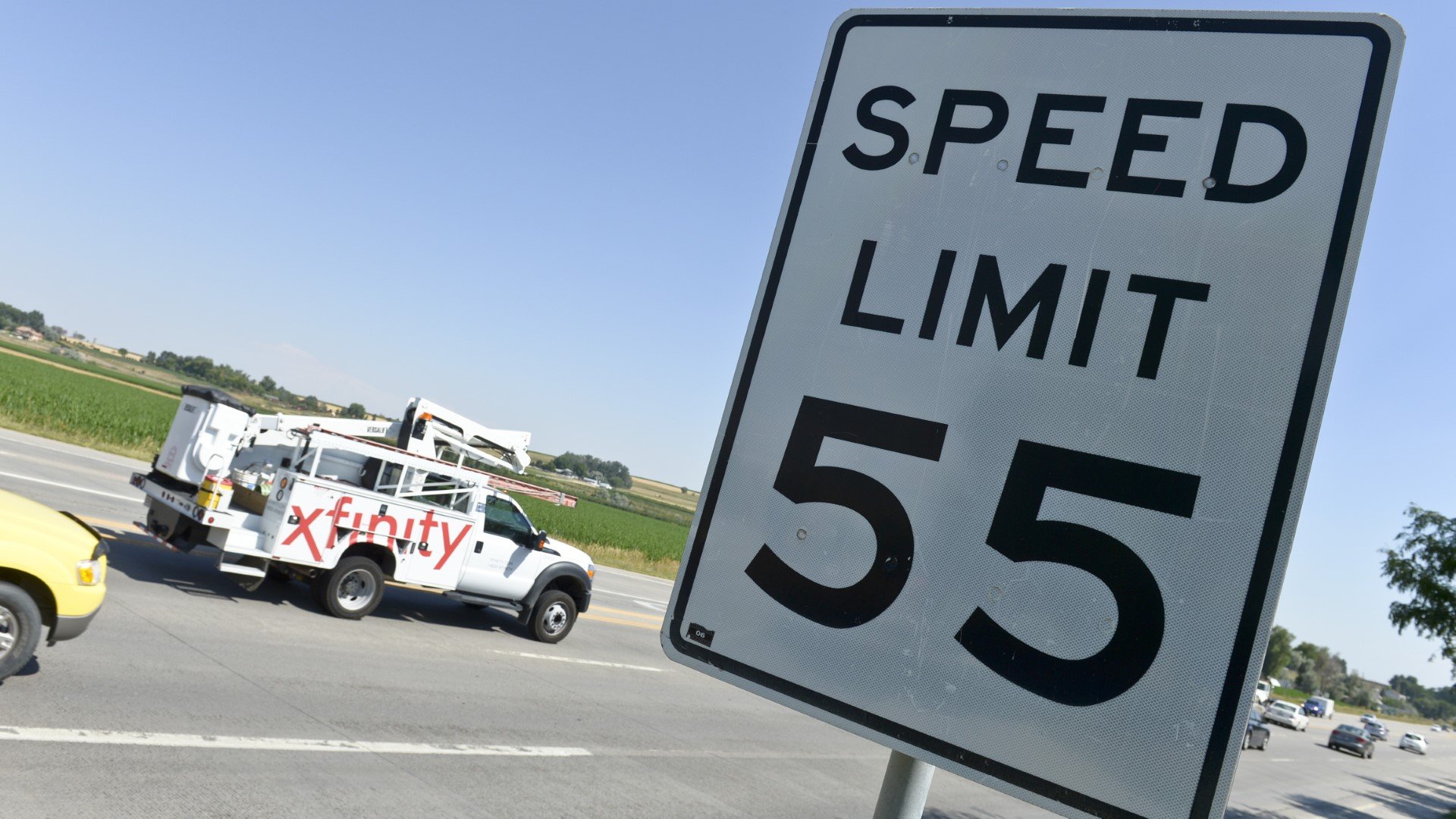
“Super Speeders” beware: Last year, several states and the District of Columbia passed laws allowing for the installation of speed-governing devices in the cars of habitual/flagrant offenders. Virginia was the first to implement its program, and according to the Wall Street Journal, the rollout hasn’t exactly been perfect.
Virginia’s device interfaces with the car’s onboard computer similarly to a DUI interlock device, only instead of preventing the car from turning on, it prevents the driver from accelerating past the speed limit. There is an override feature built in for merging or emergency situations, but it only allows the driver to exceed the posted limit by 5 mph for 30 seconds, and it can only be done twice per key cycle.
If you’re on and off the highway a lot during your commute, that restriction might prove challenging. The devices are also somewhat limited in their capabilities. While they can prevent drivers from accelerating, they cannot apply the brakes or kill the engine. For the approximately 100 drivers in Virginia who received these devices after a reckless driving conviction, there have been other obstacles to implementing the tech.
Like any device that tells a car where it is, these are only as good as their programming—and in some cases, the accuracy of their GPS hardware relative to their programmed road maps. Some users have reported issues with GPS drift—cases where the device believes the car is on a different road entirely. Imagine being on a highway with a 65-mph limit, but having the device register the car on an adjacent surface boulevard with a 35-mph max. Talk about chaos.
But despite the issues, program boosters say this is a better solution than many available alternatives. Many drivers will simply drive on a suspended license, for example, and this program is significantly cheaper than paying to keep somebody in jail over a speeding ticket. In fact, when given the choice between a commute-only license restriction and the speed limiters, offenders tend to pick the latter.
The devices have to be installed in all cars the offender has permission to operate, and tampering with/removing the device can result in jail time. One of Virginia’s offenders already got in trouble for trying to fiddle with their hardware.
Washington (State), New Mexico, Georgia, Illinois, and Maryland are all implementing similar programs. New York City is also standing up its own version; the rest of the state is not participating. 10 other states have introduced similar legislation this year, WSJ says, including Virginia neighbors North Carolina and Tennessee.
Got a story tip? Let us know at [email protected]!
The post States Are Forcing Speed-Limiter Devices on ‘Super Speeders’ appeared first on The Drive.