
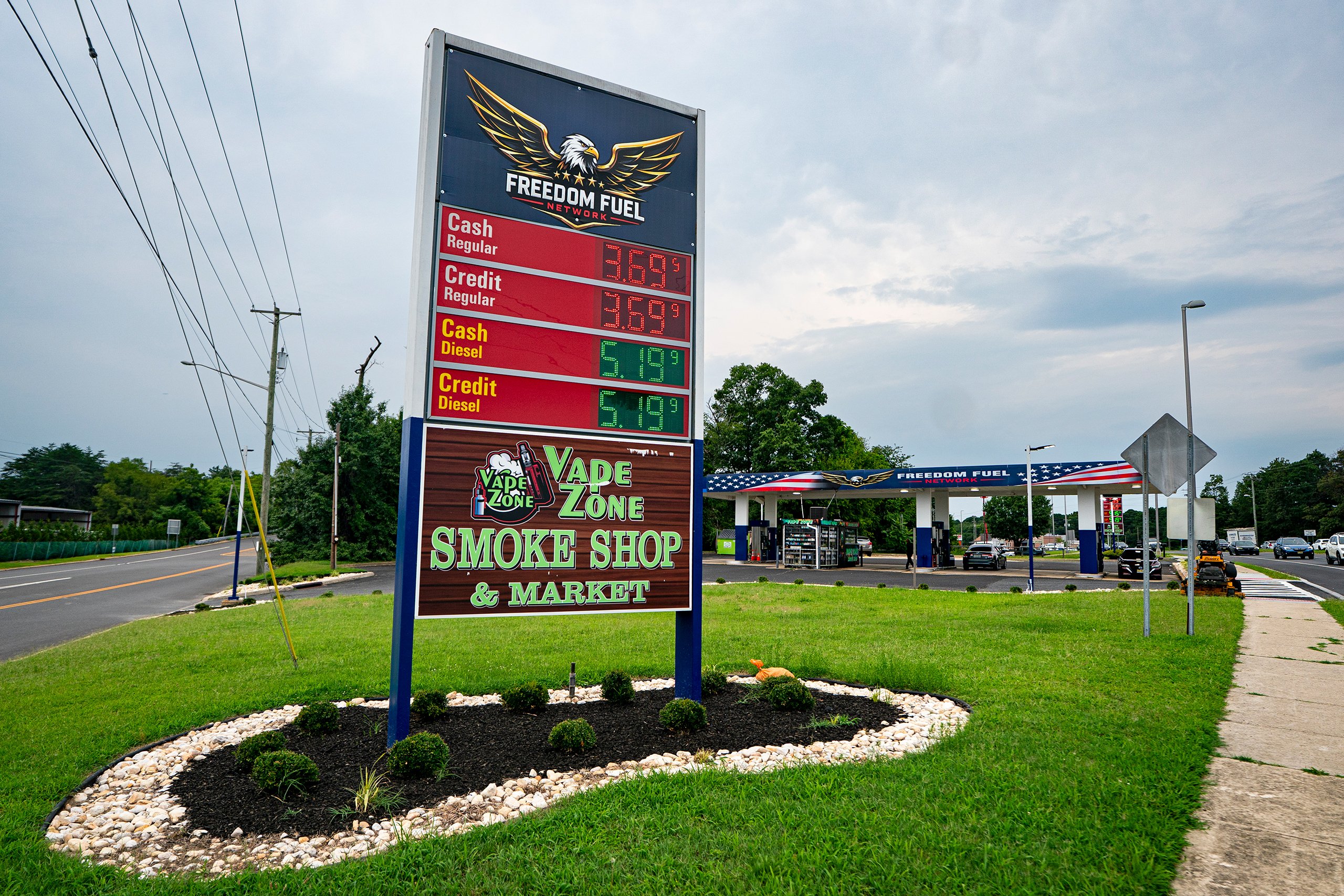
In July, a new network of gas stations named Freedom Fuel Network emerged in the Northeast, seemingly out of thin air, boasting remarkably low prices. From its inception, it seemed to have influential supporters, with its inaugural retail location being highlighted by the White House’s official X account, and President Donald Trump praising the business for “stepping up” as “a VERY astute Retailer.” The federal government stated that it was not subsidizing Freedom Fuel or involved with the business in any capacity, prompting curiosity about how it managed to offer gas 30 cents per gallon cheaper than the national average.
A recent lawsuit claims to provide an answer: The gas was acquired unlawfully.
That’s the assertion from Mansfield Oil Company based in Gainesville, Georgia, which has filed a lawsuit against the New Jersey distributor KRSM for allegedly failing to compensate it for 1.1 million gallons of fuel, worth $4 million. KRSM is said to have subsequently sold some of that fuel to Freedom Fuel at a reduced price, which allegedly was possible because it had not compensated Mansfield in the first place. This is the plaintiff’s rationale for why Freedom’s fuel was indeed so inexpensive.
“Despite the last delivery being over five weeks ago, KRSM has yet to make any payment towards the $4,000,000 owed to Mansfield,” stated Urs Broderick Furrer, the attorney representing Mansfield, in a statement quoted by The New York Times. While the final destination of the 1.1 million gallons remains uncertain, Mansfield suspects that a portion was delivered to at least 10 of Freedom’s 29 retail locations in New Jersey and Pennsylvania.
Meanwhile, Mauro Tucci, the attorney for KRSM President Syed Kazmi, stated that “KRSM disputes the claims in this matter, which centers around an accounting disagreement over fuel invoices inaccurately priced by Mansfield Oil.” It’s noteworthy that Mansfield claims it could not invoice KRSM until late July “due to a data error,” and that KRSM ultimately rejected the bill. Mansfield alleges that Kazmi communicated over the phone in the ensuing weeks that he would remit payment, but failed to do so.
Compounding the confusion is that since the establishment of Freedom Fuel Network—and in spite of its promotional support from the Trump administration—no one has been able to determine who truly owns the chain. KRSM and Kazmi both deny any affiliation. Additionally, a White House representative informed the Times that “the Administration has had no contact or dealings with the defendant: KRSM Inc or Syed Kazmi.”
Mansfield’s lawsuit was submitted on August 19 in the U.S. District Court for the Eastern District of Pennsylvania. Judge Gerald Austin McHugh has instructed KRSM to maintain a minimum of $2.75 million in a bank account during the litigation process, and Mansfield seeks “at least $3.998 million plus interest, costs, and other damages” from KRSM, according to MDM Distribution Intelligence.
Have a news tip? Contact [email protected]
**Lawsuit Claims ‘Freedom Fuel’ Gas Stations Sold Stolen Fuel**
In an important legal update, a lawsuit has been launched against the ‘Freedom Fuel’ gas station network, alleging that the company knowingly marketed stolen fuel to its patrons. This lawsuit poses serious concerns regarding the authenticity of the gas station’s practices and the potential repercussions for consumers and the wider fuel sector.
**Allegations Background**
The case, brought forth by a group of plaintiffs, asserts that ‘Freedom Fuel’ gas stations acquired fuel from unauthorized vendors, resulting in the distribution of pilfered gasoline. The plaintiffs contend that the gas stations were aware of the illicit origins of the fuel yet continued selling it to enhance profits. This behavior not only contravenes local and federal regulations but also erodes consumer confidence in the fuel retail sector.
**Legal Repercussions**
The accusations against ‘Freedom Fuel’ could lead to significant legal ramifications. If the court determines the gas stations were guilty of selling stolen fuel, they may incur substantial fines, restitution demands, and possible criminal charges against involved individuals. Additionally, the lawsuit might trigger deeper inquiries into the supply chains of other gas stations, initiating a broader investigation into fuel sourcing methods throughout the industry.
**Effects on Consumers**
For consumers, the fallout from this lawsuit is considerable. If the claims are validated, customers who bought fuel from ‘Freedom Fuel’ might have inadvertently supported the illegal fuel trade. This could raise concerns over the quality and safety of the fuel they utilized, as unlawfully obtained fuel may not comply with regulatory standards. Moreover, consumers might be eligible for compensation if they can demonstrate harm from purchasing the allegedly stolen fuel.
**Response from the Industry**
The fuel sector is vigilantly observing the situation, as it could establish a precedent regarding how gas stations are held accountable for their sourcing practices. Experts in the industry suggest that this lawsuit could result in heightened scrutiny of fuel suppliers and stricter regulations to ensure that gas stations are sourcing fuel legally and ethically.
**Final Thoughts**
The lawsuit against ‘Freedom Fuel’ gas stations underscores the essential need for transparency and ethical standards within the fuel sector. As the case progresses, it will be crucial to watch its effects on consumer confidence, regulatory practices, and the operational integrity of gas stations nationwide. The outcome could represent a defining moment in tackling the issue of stolen fuel and safeguarding consumers from unlawful practices in the marketplace.