
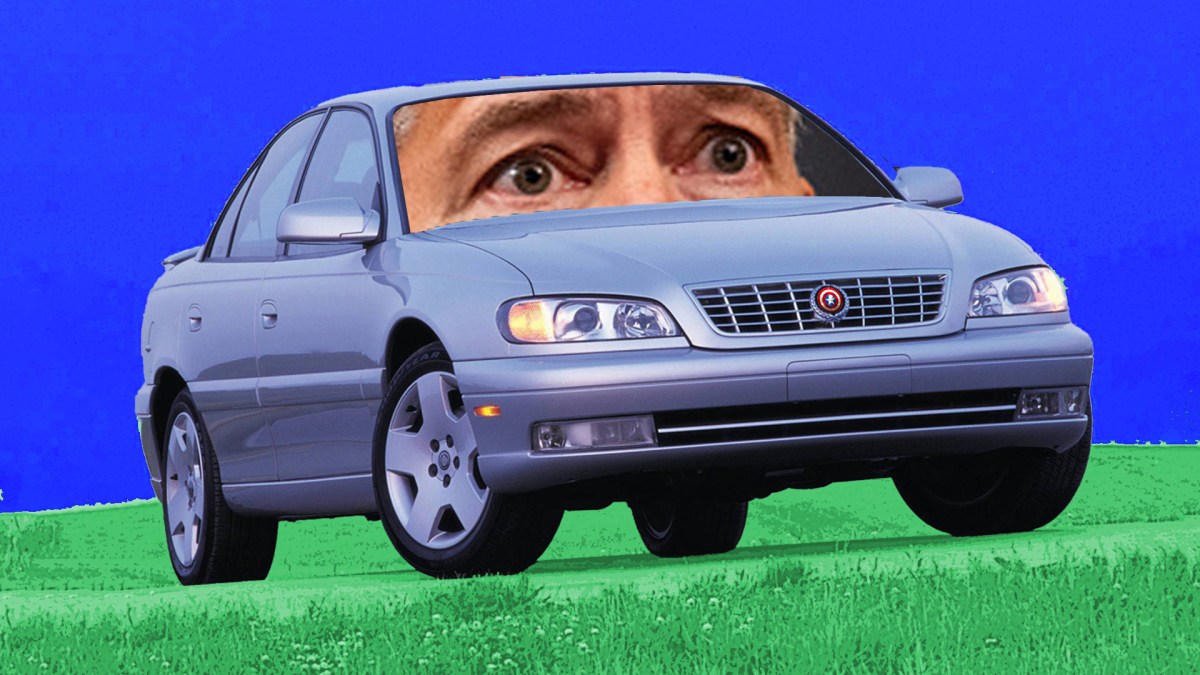
- Critique of the ‘Freedom Car’ concept. The idea seeks to eliminate requirements for autonomous and connected vehicles but is lacking in depth.
- Noteworthy historical irony. The 2002 ‘FreedomCAR’ advocated for hydrogen technology, while the 2026 version contests technology mandates.
- Power rests with automakers. In the absence of regulation, companies can determine vehicle connectivity, narrowing consumer options.
- Role of insurance companies. Insurers might render non-tracked vehicles unfeasible by advocating for data collection.
AI assisted, editor reviewed
A communication from Transportation Secretary Sean Duffy to six senators overseeing the highway legislation is circulating in news outlets this week. Hidden within it is a phrase we must address: “Freedom Car.” The Freedom Car idea is generally positive, yet the manner in which it’s being presented is shortsighted at best and regressive at worst.
What Does the “Freedom Car” Entail?
This is neither a new model of Dodge nor a proposal for a government-supported American variant of East Germany’s Trabant—though Secretary Duffy’s presentation does carry some irony.
This is also not an actual law or detailed regulation. It’s merely an item on a wishlist of concepts. Here’s the exact wording of what was stated.
In Appendix A, under the title Protecting Consumer Choice, Duffy wrote:
“Freedom Car – Right to Drive Disconnected and Non-Automated: Prohibit any Federal, State, tribal, or local authority from requiring that vehicles sold or operated on public highways be equipped with automated driving systems or be capable of transmitting data wirelessly.”
It is mentioned again in the text on page three:
“Protecting Consumer Choice: We must uphold the right of Americans to buy and operate traditional vehicles by prohibiting any mandates that necessitate vehicles to be capable of wireless data transmission or automated driving.”
Republicans Previously Presented ‘FreedomCAR’ in 2002
Here’s the irony I referenced in the previous section. In 2002, then-Energy Secretary Spencer Abraham introduced the “FreedomCAR Partnership” concept. (CAR stood for Cooperative Automotive Research.) It was a collaborative R&D agreement between the Department of Energy and Detroit’s Big Three (Ford, GM, and what was then DaimlerChrysler) aimed at commercializing hydrogen fuel-cell technology.
Then-President Bush advanced it to the 2003 FreedomCAR and Fuel Initiative, aspiring to decrease reliance on foreign oil. Spoiler alert: It didn’t genuinely materialize, and we did not transition to hydrogen by 2010 as Secretary Abraham had anticipated.
Put differently:
- The 2002 FreedomCAR was a Republican-branded initiative focused entirely on pushing a technology mandate—encouraging the industry to adopt hydrogen/fuel-cell technology, framed around “freedom,” including consumer choice.
- Duffy’s 2026 Freedom Car is a Republican-branded initiative centered on preventing a technology mandate—prohibiting the government from imposing connected/automated technologies, also presented as consumer freedom.
Same party, same slogan, same “freedom” call—contrary policy. This type of slogan-based marketing is a bipartisan tendency in Washington, but the “Freedom” + “car” combination specifically is making its second Republican appearance. This time, it concerns keeping technology out rather than fostering it.
The Flaw in the 2026 ‘Freedom Car’ Rationale
Duffy discussed averting the government from mandating autonomous or connected vehicles. At first glance, it appears to be a sound idea. And in the short run, a formal policy in that direction would safeguard your right to drive pre-Bluetooth cars. However, it fails to address what manufacturers will actually produce and market.
Because here’s the reality: There’s a limited number of non-digitally connected cars, and their existence is diminishing. Regularly driving a well-kept 2005 Mazda3 might be feasible in 2026. But what about in 2046?
If the U.S. government was genuinely concerned with protecting Americans’ rights to drive disconnected vehicles, it would need to legislate requirements for manufacturers to ensure their ongoing availability. The manner in which the “Freedom Car” concept is articulated in Duffy’s letter grants all authority to corporations. If they collectively choose to make all their vehicles connected, by the time our children start driving, it will be impractical at best and impossible at worst to daily drive something that’s too old to actively gather user data.
Consider insurance companies as well. Currently, a popular car insurance tactic is encouraging drivers to install their own vehicle trackers with the promise of lower rates if their driving habits align with their criteria. Given that insurance is mandatory in most states, insurers could collectively decide not to insure non-tracked vehicles, frame it as enhancing road safety, and voilà, older cars are practically made illegal.
Thus, the new “Freedom Car” notion is a feeble token idea that sounds appealing yet, as formulated, offers no safeguard for drivers and consumers against the true regulators of American roads: automakers and insurance firms.
The initiative is misguided. It directs all its restrictions at the government without acknowledging the actual forces that will determine whether disconnected cars exist in twenty years. If the aim is to safeguard the freedom to drive off-grid, the focus should be less on halting government mandates and more on preventing large corporations from collecting data in the first place. Or at the very least, developing pathways for consumers to opt out of it.
Have any insights into government or corporate practices regarding automotive data collection? Feel free to reach out to me at [email protected].
**The ‘Freedom Car’ Misidentifies the True Opponent in Its Mission**
The idea of the ‘Freedom Car’ has surfaced as a representation of innovation and progress within the automotive sector, especially concerning sustainable transport. However, as the movement gathers momentum, it becomes more evident that its emphasis may be misaligned, focusing on the incorrect adversary in its quest to promote freedom and sustainability.
Fundamentally, the ‘Freedom Car’ initiative aspires to transform the automotive sphere by championing electric vehicles (EVs) to mitigate carbon emissions and tackle climate change. This objective is admirable, as the transportation industry significantly contributes to greenhouse gas emissions. Nevertheless, the initiative frequently defines its opposition as conventional fossil fuel vehicles and the oil sector, which, while undeniably part of the issue, may not represent the most efficient focal point for accomplishing its aspirations.
A primary concern with targeting fossil fuel vehicles is that it simplifies the intricacies of the transportation ecosystem. The true adversary may not be the vehicles themselves but rather the systemic factors that sustain reliance on fossil fuels. This encompasses challenges related to infrastructure, economic inequalities, and consumer habits that are not sufficiently addressed by merely promoting electric vehicles.
Additionally, the ‘Freedom Car’ initiative risks estranging potential partners in the shift towards sustainable transport. By framing traditional vehicles and their manufacturers as adversaries, the initiative could unintentionally foster a rift that obstructs collaboration. Working with current automotive manufacturers to transition their technologies towards more eco-friendly options might lead to more substantial outcomes than outright confrontation.
Another vital consideration is the environmental consequences of electric vehicle production. The extraction of materials necessary for EV batteries, like lithium and cobalt, prompts ethical and environmental dilemmas. The ‘Freedom Car’ initiative must confront these challenges and advocate for a comprehensive view of sustainability that covers the entire vehicle lifecycle rather than concentrating solely on emissions during operation.
Moreover, the initiative often disregards the significance of alternative transportation methods, such as public transit, cycling, and walking. By fixating on personal vehicles, the ‘Freedom Car’ could overlook chances to advocate for thorough transportation policies that emphasize accessibility and lessen overall vehicle dependence.
In summary, although the ‘Freedom Car’ initiative harbors noble intentions in promoting electric vehicles as a means to attain freedom from fossil fuel dependence, its concentration on traditional vehicles as the main adversary may obstruct advancement. A more impactful strategy would involve tackling the systemic issues that encourage reliance on fossil fuels, nurturing cooperation with existing automotive manufacturers, and pushing for a wider array of sustainable transportation solutions. By recalibrating its objectives, the ‘Freedom Car’ can more effectively contribute to a sustainable future that genuinely reflects the essence of freedom.