
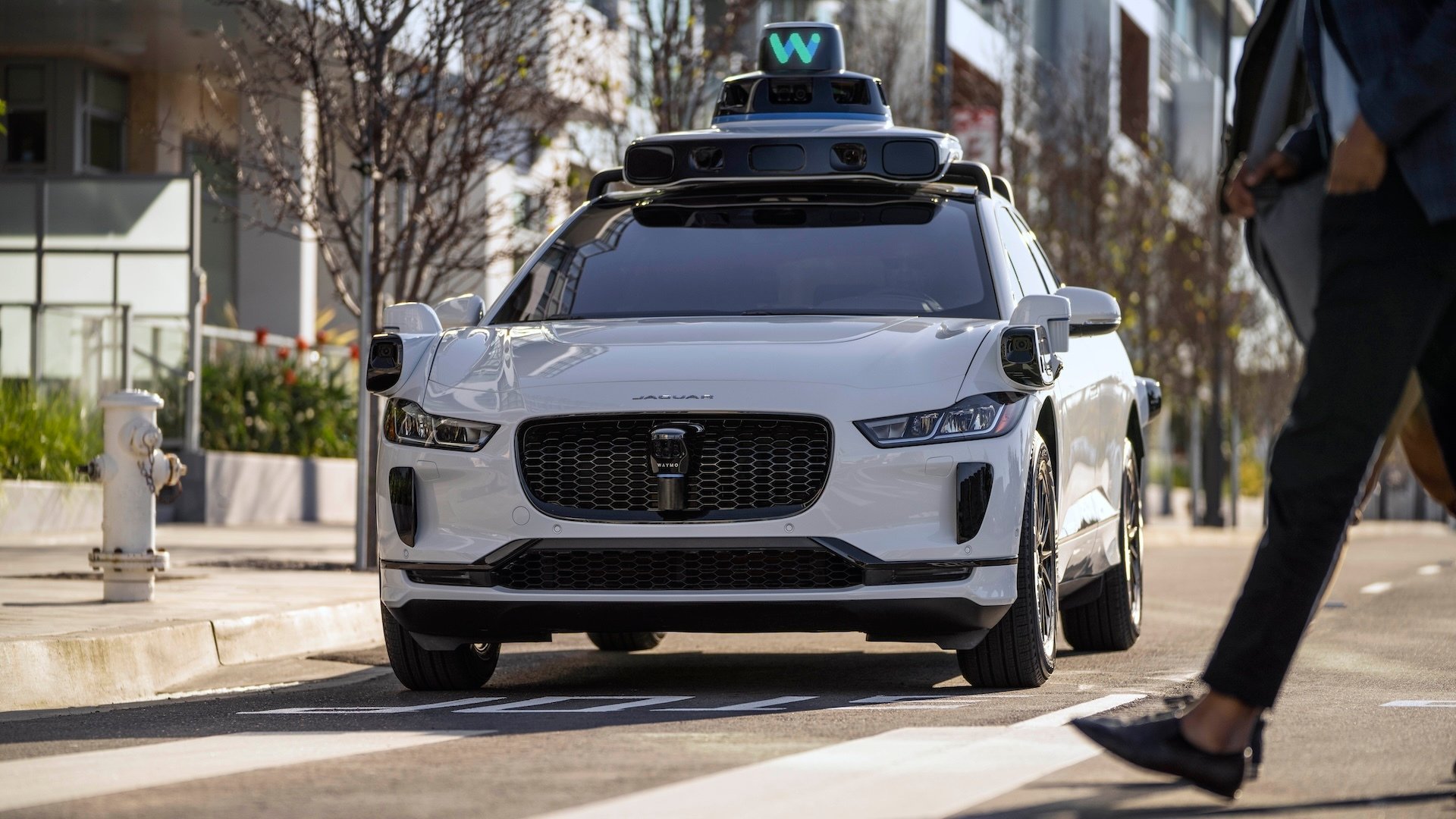
Since Waymo burst onto the scene as Google’s autonomous-driving initiative nearly 20 years ago, the expectation that self-driving vehicles would significantly reduce accidents has remained just that—an expectation. A few companies are running autonomous ride-hailing services in select cities (San Francisco is quite the hub for autonomous vehicles), yet notable incidents illustrate how real advancements remain elusive. Nevertheless, Waymo might be making strides in the right direction, as indicated by the Insurance Institute for Highway Safety.
The organization, supported by the insurance industry and recognized for its detailed crash assessments, recently examined Waymo’s safety history. A study released this week indicated that Waymo’s vehicles experience fewer crashes than human drivers per vehicle mile traveled (VMT). This is based on an evaluation of accident rates in cities where Waymo is currently operational—San Francisco, Phoenix, Los Angeles, and Austin—utilizing available information. The constraints of that data are the main takeaway.
During the study period, Waymo vehicles operated approximately 50 million miles autonomously, while human drivers amassed around 222 billion miles in the same locales within the same timeframe. The total crash rate for Waymo vehicles was 68% lower per VMT than that of human drivers, and this trend largely persisted on a city-specific level. The crash rates for Waymo vehicles were 76% lower in Phoenix, 35% lower in San Francisco, and 71% lower in Los Angeles. However, in Austin, the Waymo fleet encountered 4% more crashes than human drivers, though the sample size was relatively limited. Waymo cars were associated with 85% fewer single-vehicle incidents and 81% fewer injury-related crashes per VMT compared to human drivers overall.
However, as the IIHS details in a related press release, obtaining a meaningful comparison between human and autonomous driving was challenging. Although companies must report accidents involving self-driving vehicles to the National Highway Traffic Safety Administration (NHTSA) and the State of California, they are not obliged to report the mileage covered by these vehicles, nor how much of it occurs in autonomous mode. This omission makes it impossible to determine the frequency of self-driving car accidents accurately.
Waymo is unique in providing VMT data that other firms do not, which is why it was the sole company analyzed. Even with this information, researchers had to adjust for discrepancies in reporting standards between crashes involving self-driving cars and those involving human drivers. Most states only mandate reporting accidents that result in injuries or exceed $1,000 in property damage, and even in those cases, many drivers still neglect to report them to law enforcement. The IIHS estimates that about half of accidents and a third of injuries go unreported.
In the meantime, prior to a 2025 update to its reporting rules, the NHTSA required companies to document minor accidents involving self-driving cars, and the expensive and sensitive sensors often surpass the $1,000 damage threshold anyway. Researchers also discovered duplicate reports, and instances where a vehicle might not have been operating in autonomous mode. After eliminating those extraneous cases, researchers further attempted to determine whether a crash would have been reported to authorities if a human had been driving, to facilitate a true apples-to-apples comparison.
Researchers concluded that just 22% of the 736 autonomous-car accidents logged during the studied time frame were likely “reportable to police.” Out of that figure, 89 involved Waymo vehicles (the highest for one operator), yet only 64 of those incidents occurred in autonomous mode. This represents a rather limited dataset, and the intricate process leading to it reveals the challenges inherent in reaching concrete conclusions about the safety of self-driving cars.
“These are positive indications for the future of autonomous vehicles,” Eric Teoh, lead author of the study, stated regarding the findings. “We now need to refine the data collection system to ensure that this level of safety is maintained as these technologies gain traction.”
**Research Shows Waymo’s Autonomous Vehicles Experience Fewer Crashes Compared to Human-Piloted Cars**
Recent investigations have underscored the safety benefits of self-driving vehicles, especially those managed by Waymo, a frontrunner in autonomous technology. The analysis, which scrutinized accident data over several years, indicates that Waymo’s autonomous cars are linked to considerably fewer accidents compared to human-operated vehicles.
**Principal Discoveries of the Analysis**
1. **Crash Rate Assessment**: The analysis discovered that Waymo’s self-driving vehicles had a crash rate that was roughly 50% lower than that of human-operated vehicles. This finding is particularly significant considering the growing number of cars on the roads and the corresponding risks of accidents.
2. **Incident Classification**: The evaluation categorized incidents into various types, such as minor fender benders, serious collisions, and near-misses. Waymo’s vehicles were primarily involved in minor occurrences, which were often attributed to unforeseen interactions with human drivers, rather than failures within the autonomous system.
3. **Data Collection Approach**: The investigation utilized data gathered from Waymo’s extensive testing and operational activities throughout various cities. This information encompassed real-world driving situations, offering a thorough understanding of how these vehicles function in different environments.
4. **Safety Mechanisms**: Waymo’s self-driving technology features cutting-edge sensors, machine learning analytics, and real-time data processing capabilities. These attributes empower the vehicles to perceive and respond to their surroundings more efficiently than human drivers, who may be susceptible to distractions or impaired judgment.
5. **Public Attitude and Acceptance**: The outcomes are anticipated to shape public attitudes towards autonomous vehicles. As safety remains a core concern among potential riders, showcasing that self-driving cars can lower the chances of accidents may foster greater acceptance and adoption of this technology.
6. **Regulatory Considerations**: The findings of the study could also influence policymakers and regulators. Given the evidence suggesting that self-driving cars can improve road safety, it may prompt more supportive regulations and backing for the rollout of autonomous vehicle technology.
**Closing Thoughts**
The study highlights the promise of Waymo’s self-driving cars to significantly enhance road safety. With a crash rate notably lower than that of human drivers, these vehicles signify a substantial advancement in transportation technology. As further exploration and practical applications are pursued, the results may lay the foundation for a future where autonomous vehicles play a pivotal role in mitigating traffic accidents and boosting overall road safety.