
If you’re heading to Tokyo, sushi is probably on your must-eat list. This is my best sushi in Tokyo for 2026, from low- to high end.
Sushi is beloved in Japan (as it is all over the world) and the range of the quality of sushi goes from the sky’s-the-limit high-end to discount end-of-the-night supermarket. Mike and I have eaten so much sushi in Tokyo that I’m surprised I haven’t developed a fish allergy (I did develop a caviar allergy from too much free caviar in Las Vegas).
We are sushi obsessed. From 4 am sushi breakfasts at the old Tsukiji Market way back in the day to chain restaurant kaiten/conveyor belt sushi to Michelin starred omakase, we’ve eaten it all and more. Most of the places on this list are ones we’ve visited/revisited in the past year or so, so they should all still be open and still maintaining their standard of quality.
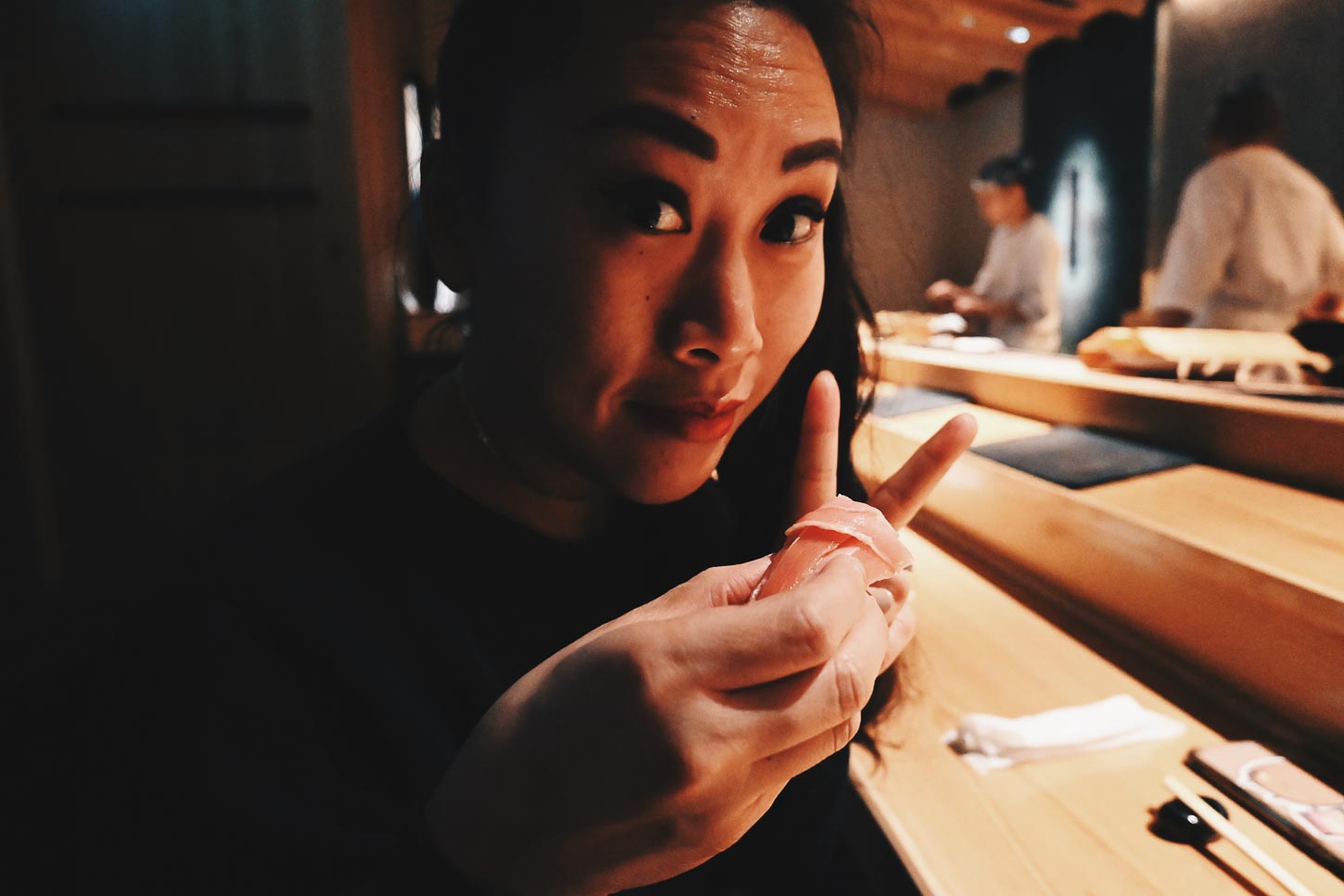
My Ultimate Guide to Sushi in Tokyo
This is my ultimate guide for sushi in Tokyo. I’ll go through the tourist traps, the places that are under the radar good, and whether or not you should drop upwards of ¥30,000 on an omakase dinner. Tokyo is probably my most favorite city in the world. We’ve spent so much time there (from 2011-2020 we lived in Tokyo for 3 months every year) that it’s a second home for us. Sometimes it feels like we’re more comfortable there than here. We’ve made Japanese friends, we have our favorite sunset spots, and we definitely have our favorite places to eat sushi.
What are the different price points of sushi in Tokyo?
First off, the thing you should know is that sushi is the food of the people and everyone in Tokyo eats it, from young to old. Because it’s so universal, it’s available at every price point. When you go to Tokyo, it’s best if you have a solid idea of how much you want to spend. Keep your expectations in check and of course, be respectful (but please not quiet, more on that below). My sushi guide is separated by budget, so feel free to scroll to your preferred spend.
Tokyo Budget Sushi (¥100 – ¥2000)
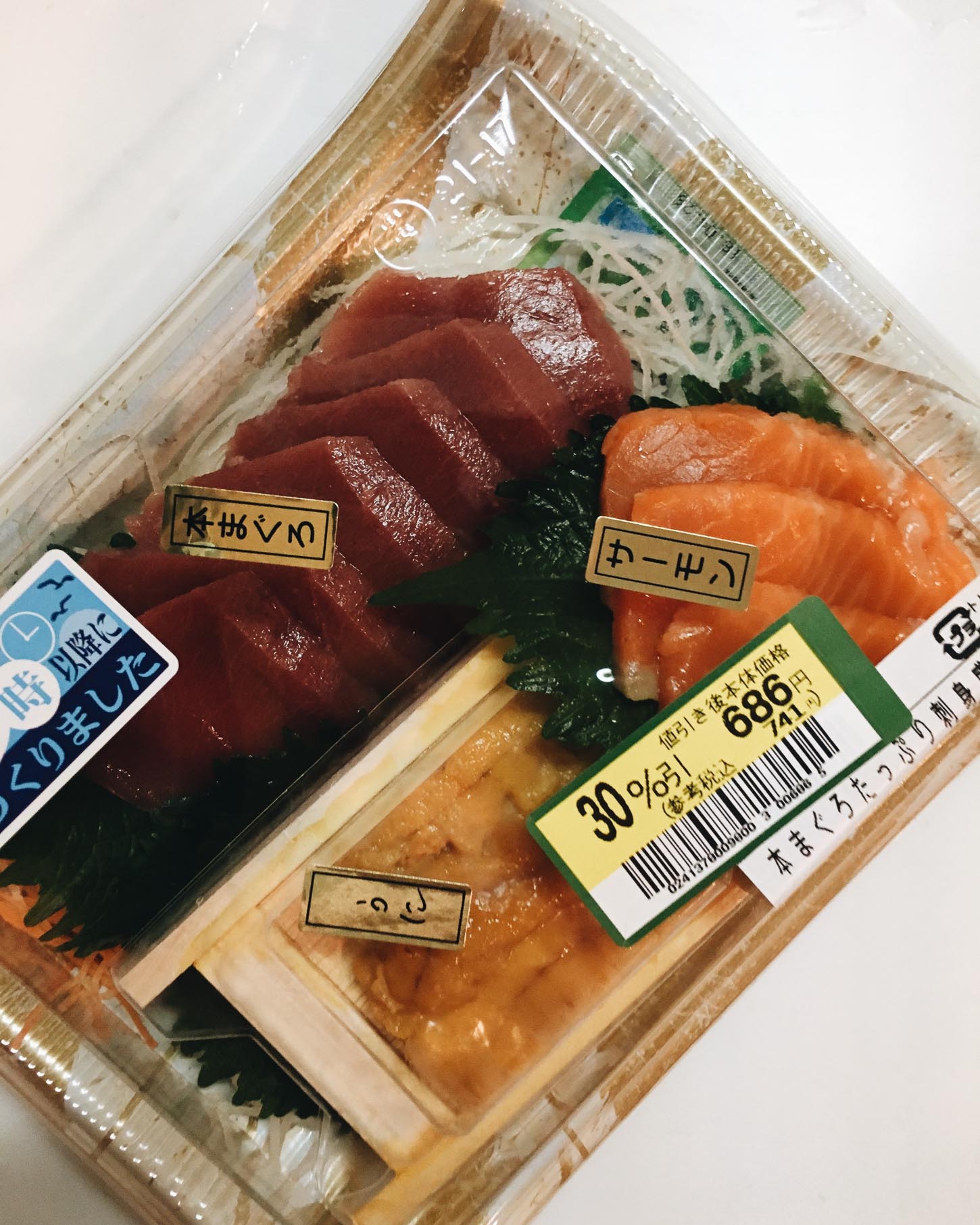
This is the sushi we get when we’re super hungry and can’t be bothered to make a reservation or wait in line. Budget sushi is premade and found in supermarkets, convenience stores, and depachika (the food halls in the basement of large department stores). Contrary to what you may think, this kind of sushi is decent. Think of it like a good sandwich: when it hits, it hits.
If you want to truly maximize your budget, the fresh sushi take away trays at grocery stores or depachika are deeply discounted an hour or so before closing.
My favorite combini sushi
7-11, Lawson, and FamilyMart all sell sushi, ranging from rolls (maki) to nigiri assortments. They also sell onigiri, which, technically is triangle sushi. Most combini get multiple deliveries daily and if you time it just right, either in the morning or right before the evening rush, you’ll find a pretty decent selection. Generally, the Japanese public rate 7-11 as having the best sushi, followed by Lawson, then FamilyMart, but I personally have a soft spot for FamilyMart as we lived in the center of a circle of 4 of them within a 1 block radius.
Grocery stores
You know how in grocery stores in North America you can get deli food and rotisserie chicken? Well, in Japan, you get things like curry bowls, yakisoba, and sushi. Grocery store sushi tends to be sightly higher on the scale of quality compared to combini. There are so many grocery stores in Tokyo, even in the middle of the city. Some of our favorites are Seijo Ishii, Maruetsu, Life, and AEON. All the grocery stores will have a large selection of assorted sushi trays. We usually shop at Life but when we can justify the trip, we always stop at Odakyu OX at the end of the Chiyoda line to pick up some sushi. Truly though, I love all Japanese grocery stores.
Tokyo Depachika aka department store sushi: two ¥1000 – ¥2000
If you’re on a budget and looking to try sushi in Tokyo, your best bet is to go to a department store at the end of the night. On the basement level of department stores, they have what they call depachika, essentially a high-end food hall. They have sushi counters where the sushi is made fresh and packaged into convenient trays. At the end of the night, the sushi gets discounted and you can fight with the grannies while trying to score the best tray.
I’ve tried every one of these depachika and they’re all great. Our two favorites were the Tokyu in Shibuya which is now gone (RIP in peace old Shibuya) and the very first one you’ll probably run into at Daimaru, conveniently connected to Tokyo Station.
Daimaru Tokyo Depachika
Basement Level
Gran Tokyo North Tower
1 Chome-9-1 Marunouchi, Tokyo
Open daily, 10am – 8pm
Cost-effective and casual ¥2000 – ¥6000
Moving on from pre-made sushi, we’re going to go to made to order sushi. In this category, we’ll explore my favorite kaiten/conveyer belt sushi, standing sushi bars, and casual chain restaurants. Most of the restaurants in this category don’t require reservations, as in you can just walk in, but they usually have line ups which in my opinion are worst than scoring a reservation. If you’re the kind that gets hangry, be sure to factor in wait times.
Kaiten sushi
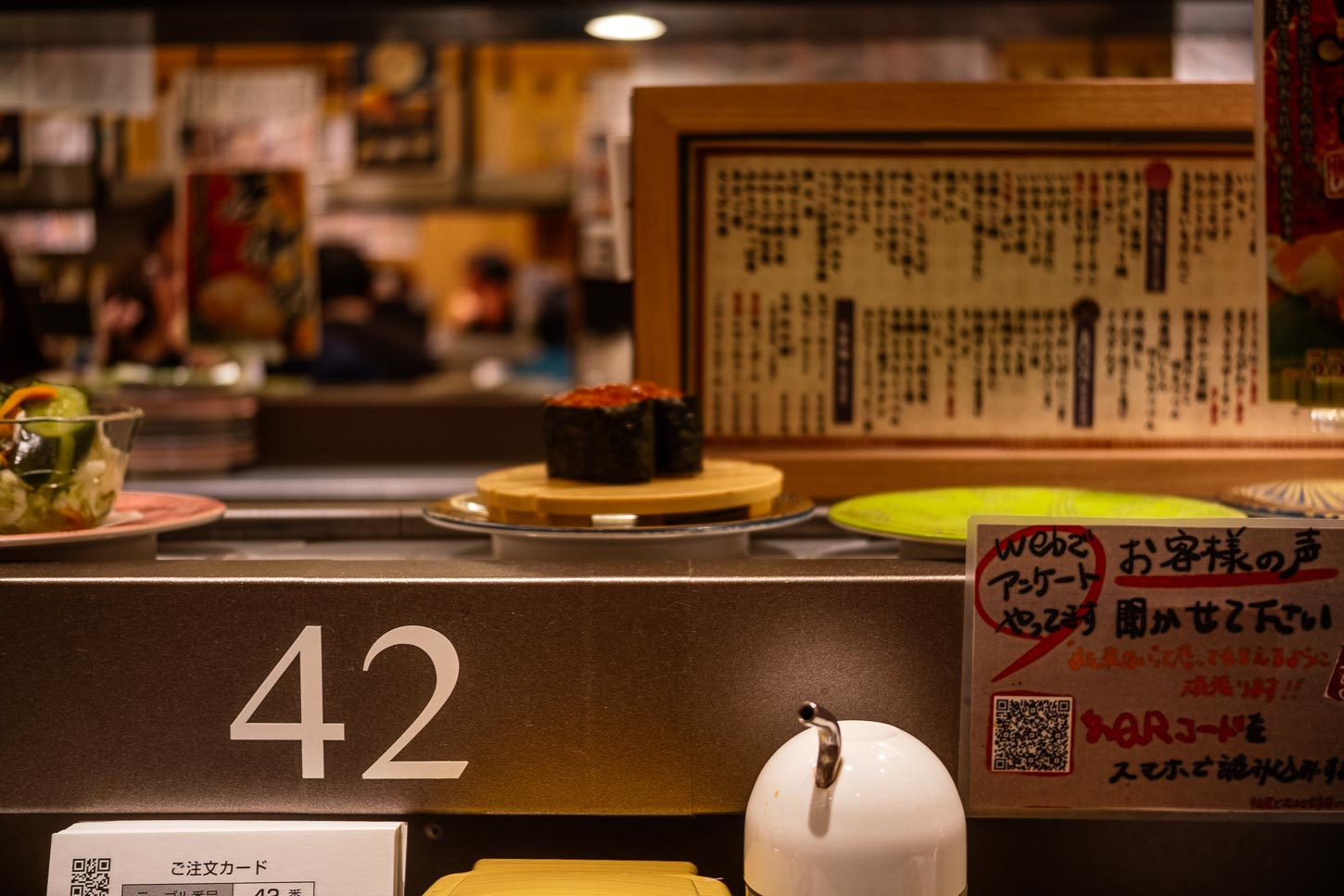
Kaiten sushi or kaitenzushi is a beloved sushi experience for locals and tourists alike. In Tokyo these days you usually order via an ipad and is either handed to you or comes directly to your table via express train. I love kaitenzushi because it’s nice to try a variety of sushi without any pressure.
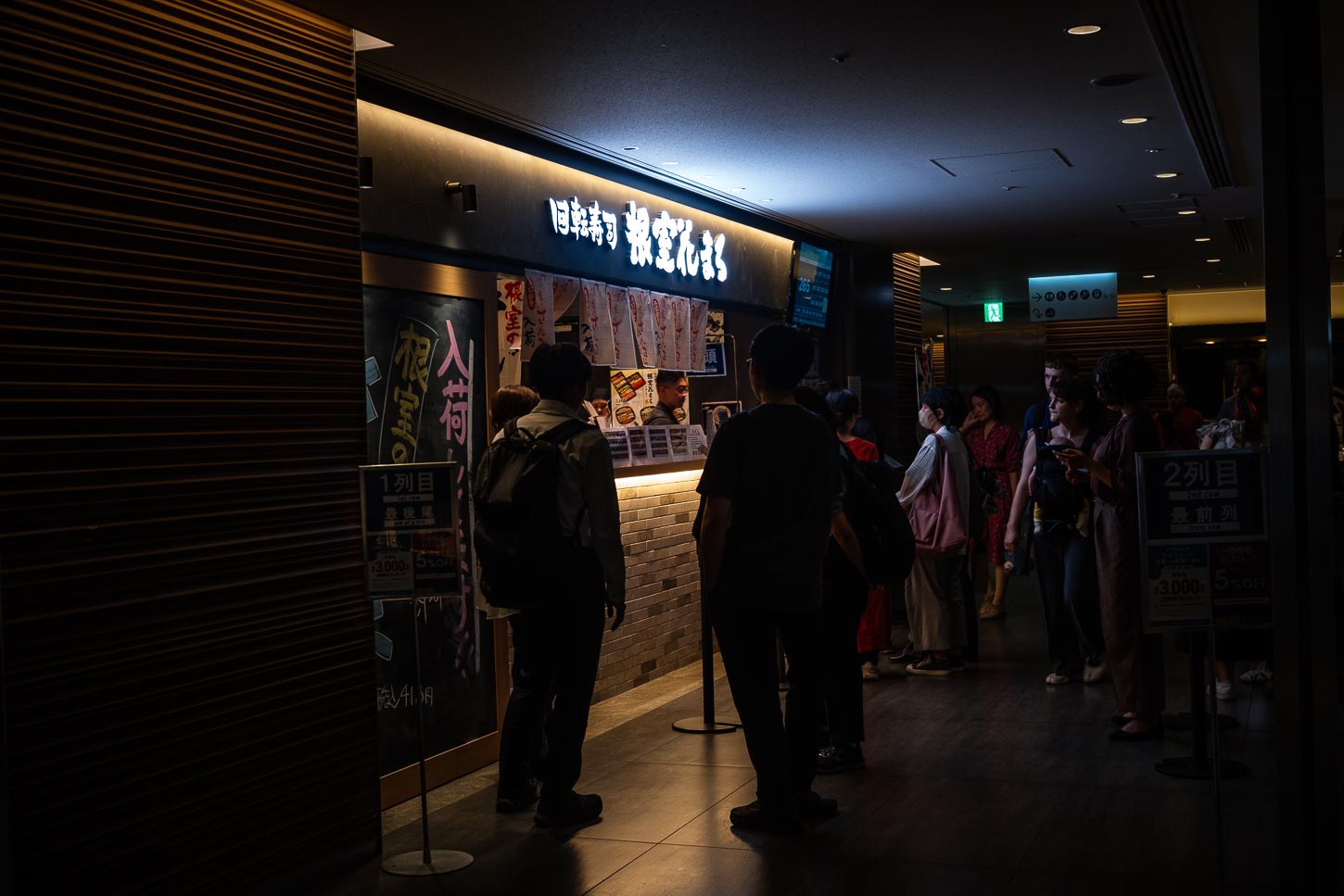
There’s usually quite a bit of a wait for any kaiten sushi, so put your name down and then circle back after doing a bit of a wander. Our favorites depend on whether or not we need to eat right away. We frequent either Nemuro (a Hokkaido sushi chain that has expanded all of Japan) in KITTE if we’re willing to wait an hour+ or Megumi in Shibuya (owned and operated by a tuna wholesaler) if not. In both places, an ipad is available but it’s pretty helpful if you can read (or use translate) the handwritten signs, as that’s where the best and most interesting pieces are.
Kaitenzushi Nemuro Hanamaru KITTE Marunouchi ¥2000 – ¥4000
KITTE Marunouchi 5F, 2-7-2 Marunouchi, Tokyo
Daily 11am – 11pm
Miuramisakiko Megumi ¥2000 – ¥4000
Shibuya Hikarie 6F, 2-21-1 Shibuya, Tokyo
Daily 11am – 10pm
Standing sushi bar
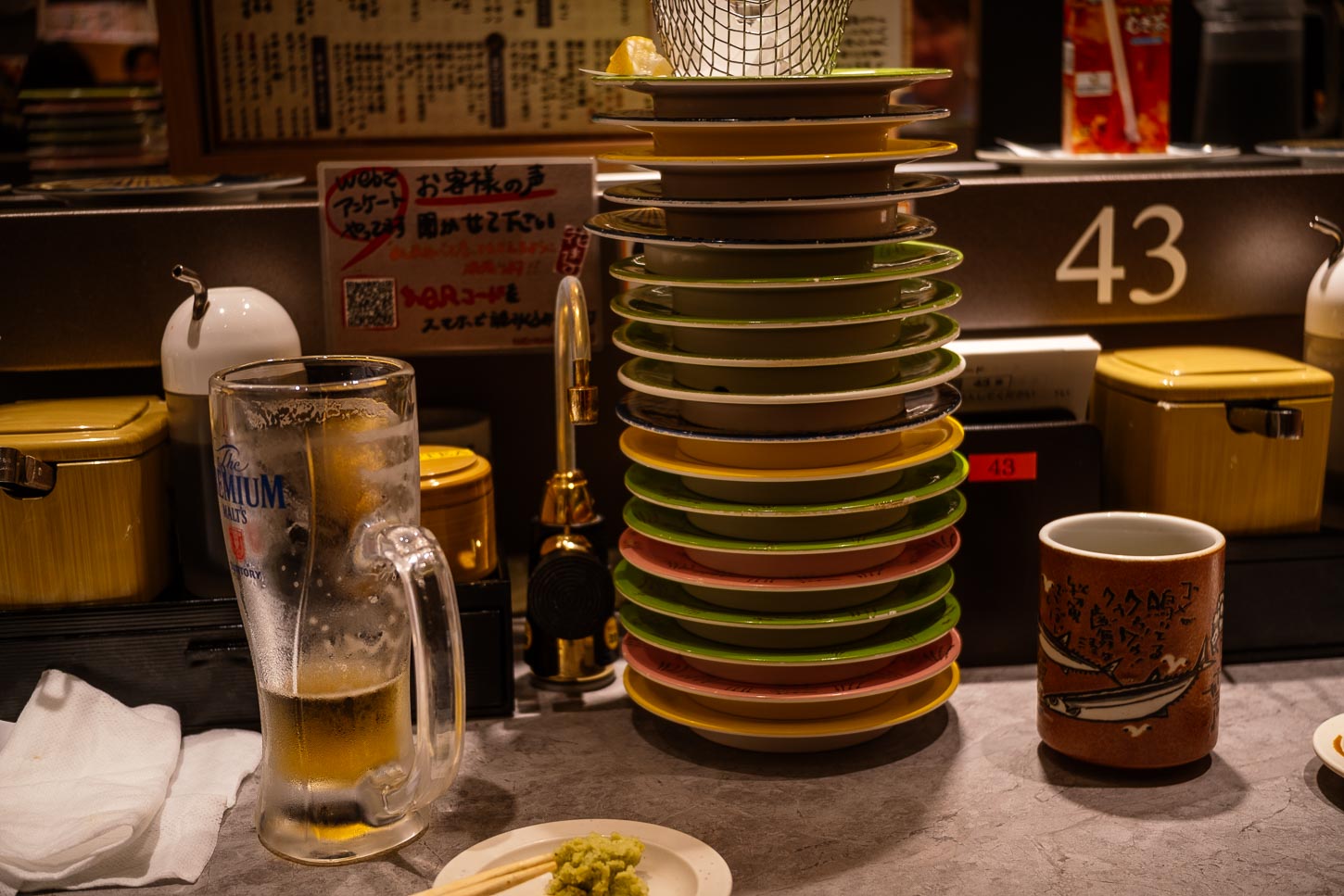
When we want to step it up from kaitenzushi but still keep it casual, standing sushi bars are where we go. Here the ipads (if they exist) are often only in Japanese or you need to just call out your order to your chef. You don’t need to speak Japanese but it’s super helpful if you can identify and know the names of all the sushi you like. Mike is really good for this, especially with obscure pieces. I on the other hand keep things simple with my core 3 (akami, torotaku, and menegi – see below) that I order on repeat.
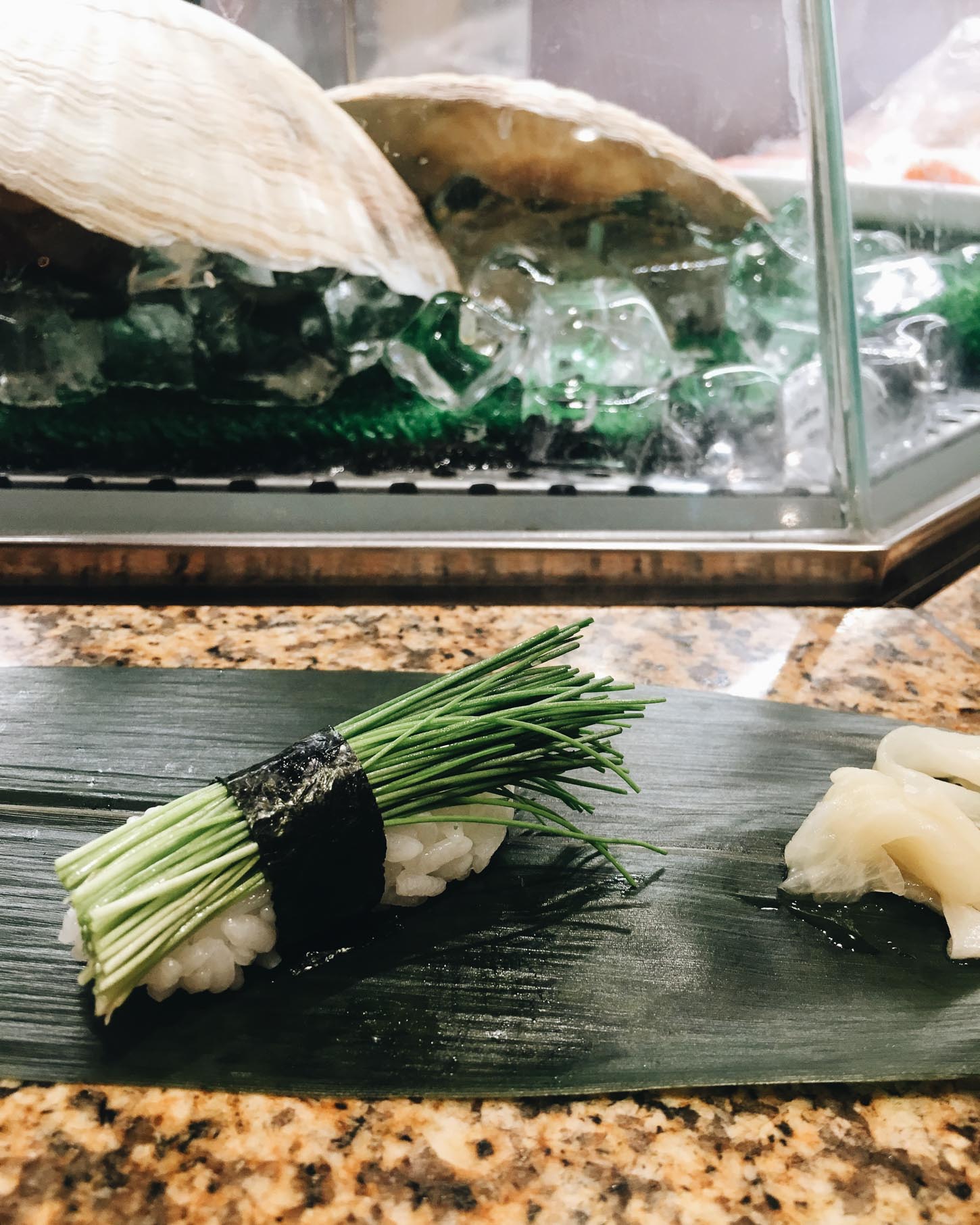
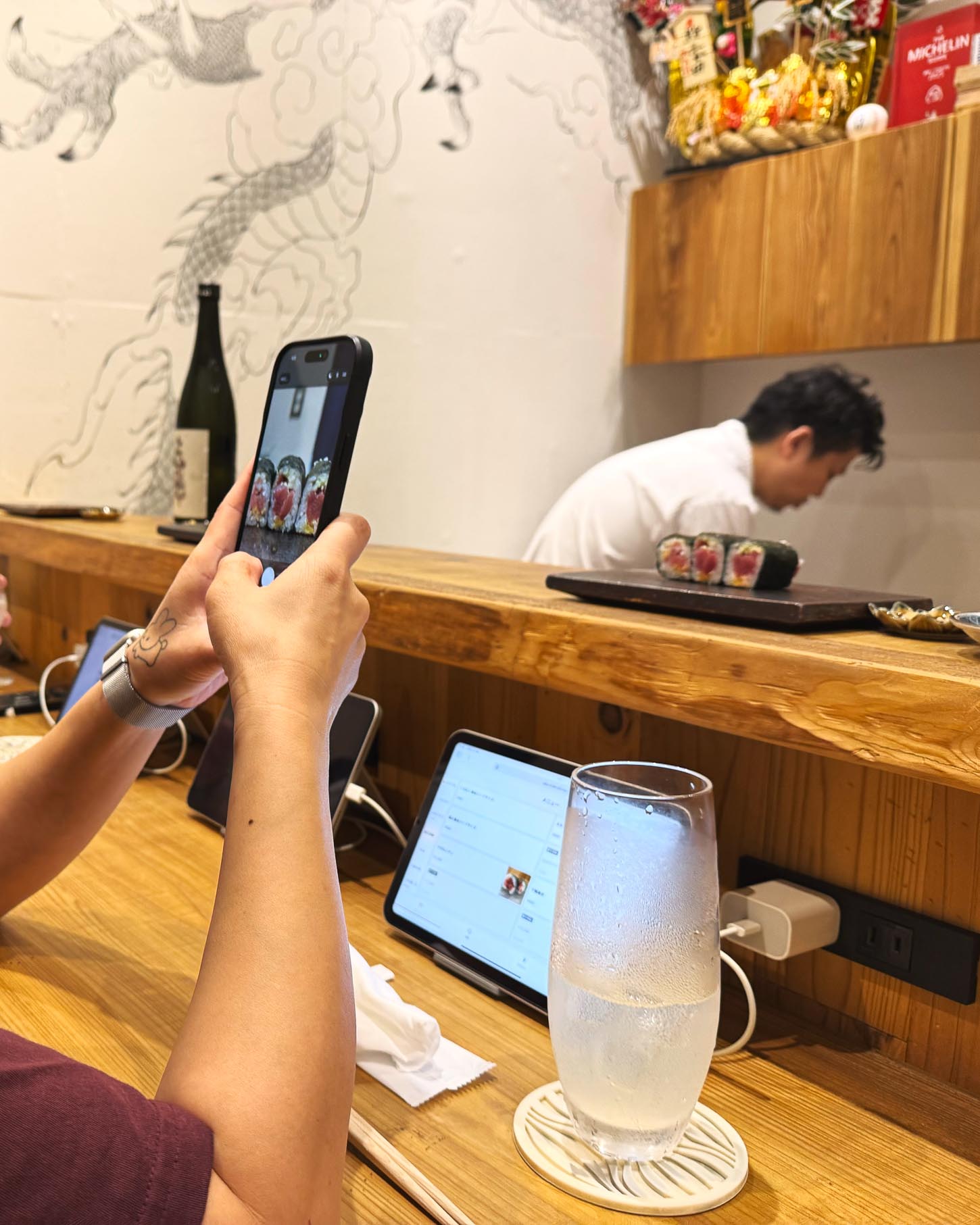
Our current fave standing sushi bar is Sushi Mitaka, which now has a Michelin recommendation and is reservations only and is super out of the way, but worth it. It’s run only by a husband-wife team – he does the sushi and she does the drinks and hot food. It can be a little quiet as it’s very much a neighborhood kind of place but I love how charming and authentic it is.
Sushi Mitaka
Johnan Building 1F, 4-1-4 Mita, Minato City
Reservations only
Omakase sushi
So far, all the sushi places I’ve talked about serve sushi a la carte style. The truth is, 9 times out of 10 we’re usually at an omakase, aka chef’s choice. If you’re going to have sushi, omakase is the way to go. A lot of people think omakase is super expensive and sophisticated (and it can be) but like all sushi, omakase comes at many price points and vibes.
Entry level omakase sushi in Tokyo ¥5,000 – ¥12,000
Entry level omakase, at least the way it exists now, is a somewhat new experience in Tokyo. These intro omakase sushi bars are typically chains with several sushi wakiita (chefs and apprentices working under the head chef) and one itamae (head chef). Unlike super traditional sushi bars, these restaurants often have a table or two for slightly larger groups. New-style omakase is not as chef-y as traditional. The menu doesn’t change much based on the season – instead they’ll focus on the standards, starting off with delicate, light fish before moving on to deeper flavors, then fatty flavors and other types of seafood.
Entry level omakase is a great place to dip your toes into omakase. The quality is good, the rice is properly cooked and seasoned, and if you’re a sushi lover, you’ll be absolutely enchanted before quickly moving on. Entry level omakase is a gateway and it won’t be long until your sushi standards move you to the next level. Our favorite here is the lunch omakase at Sushi Tokyo Ten Shibuya in the Stream complex.
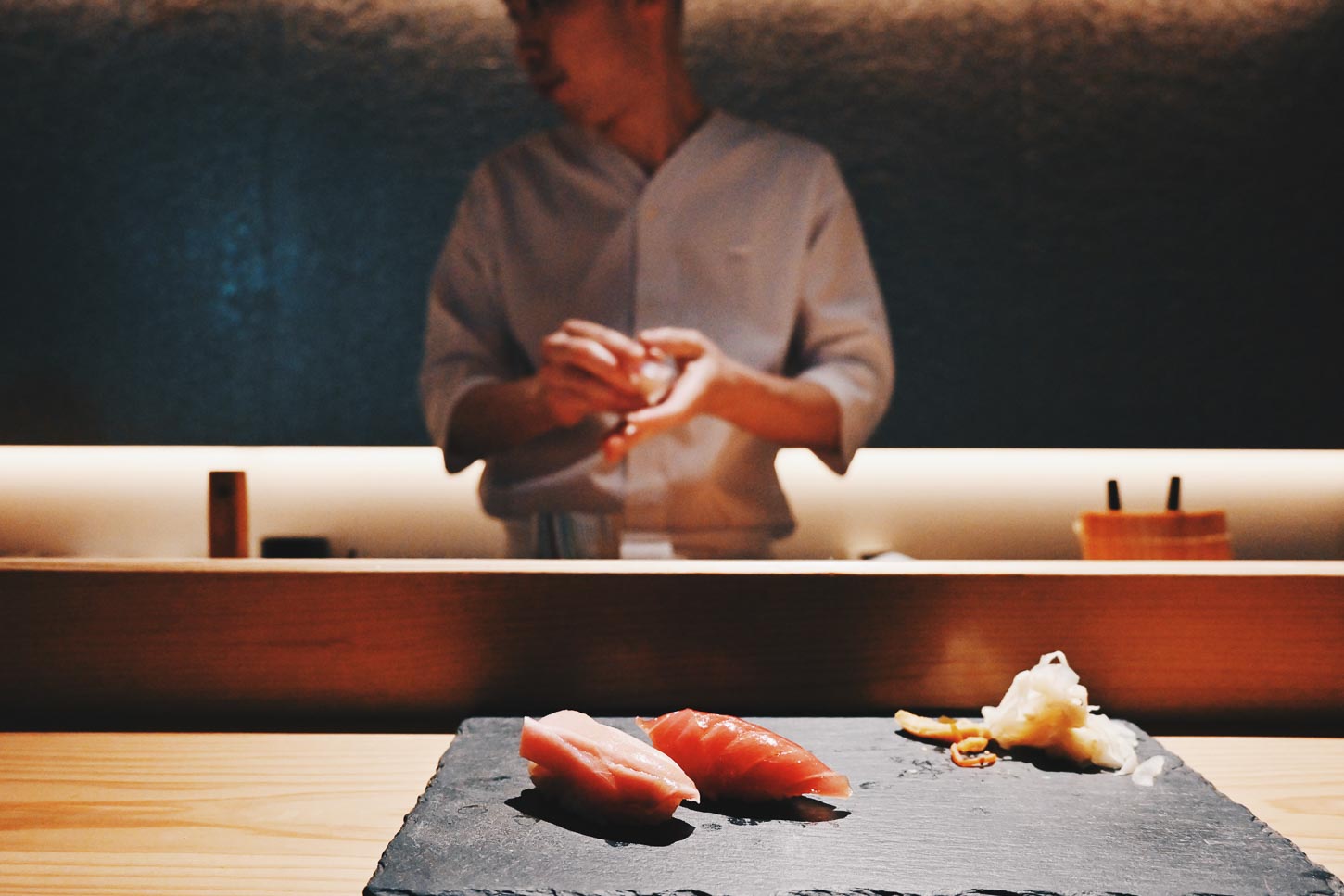
Sushi Tokyo Ten ¥5000-¥10000
A new-ish omakase chain with several locations in Tokyo. Their lunch omakase starts at ¥5000 and their dinner starts at ¥10,000. All of their spaces are beautiful and if you can, get a counter seat for the most omakase experience.
Shibuya Location
Shibuya Stream 3F, 3-21-3 Shibuya, Tokyo
Daily 11am-3pm, 5pm-11pm
Mid range omakase Sushi in Tokyo ¥12,000 – ¥25,000
The next level of omakase is what Mike and I call mid-range. This is our sweet spot, the places that we find have good cospa (cost-performance aka the cost-benefit ratio). Restaurants in this range tend to be excellent. They’re a bit more involved compared to entry level omakase but without the pomp and ceremony of the more famous places. This is also the niche where you can find more seasonal fish and seafood, innovative rice vinegar mixes, as well as cool vibes beyond zen minimalism. Beyond Tokyo Ten above, all omakase requires reservations. These are our current faves:
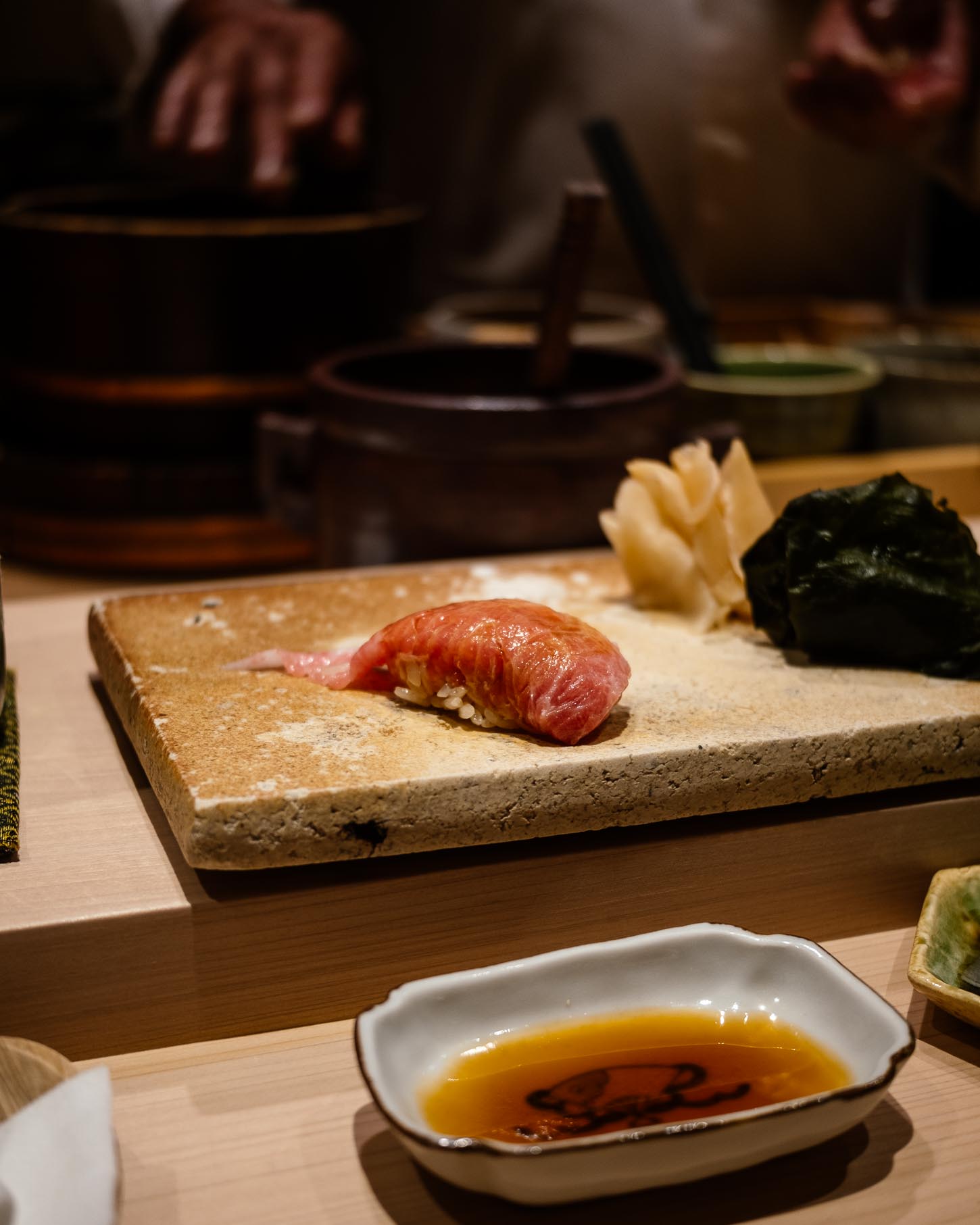
Sushi Itsutsu ¥12000 – ¥20000
I love looking at tabelog for highly rated, yet affordable sushi places. Japanese people are BRUTAL with their reviews and really, anything that scores over 3.5 is going to be solid. Itsutsu is sitting at 3.6 and only ¥12000. For a sushi place in Ginza, that’s amazing cospa.
The room is quiet and refined and the fish was premium. The shari at Itsutsu is tender, seasoned well, and shaped with experienced hands. I even enjoyed their otsumami (cooked dishes) which is rare for me. It’s a solid, fun experience and I hope it doesn’t blow up too much because Mike and I want to go there on the regular.
1F 3−12−8 Futaya Bldg Ginza,Tokyo
Tues – Fri 6pm- 11pm
Monday Closed
Sat-Sun 1pm – 3pm, 5:30pm – 10:30pm
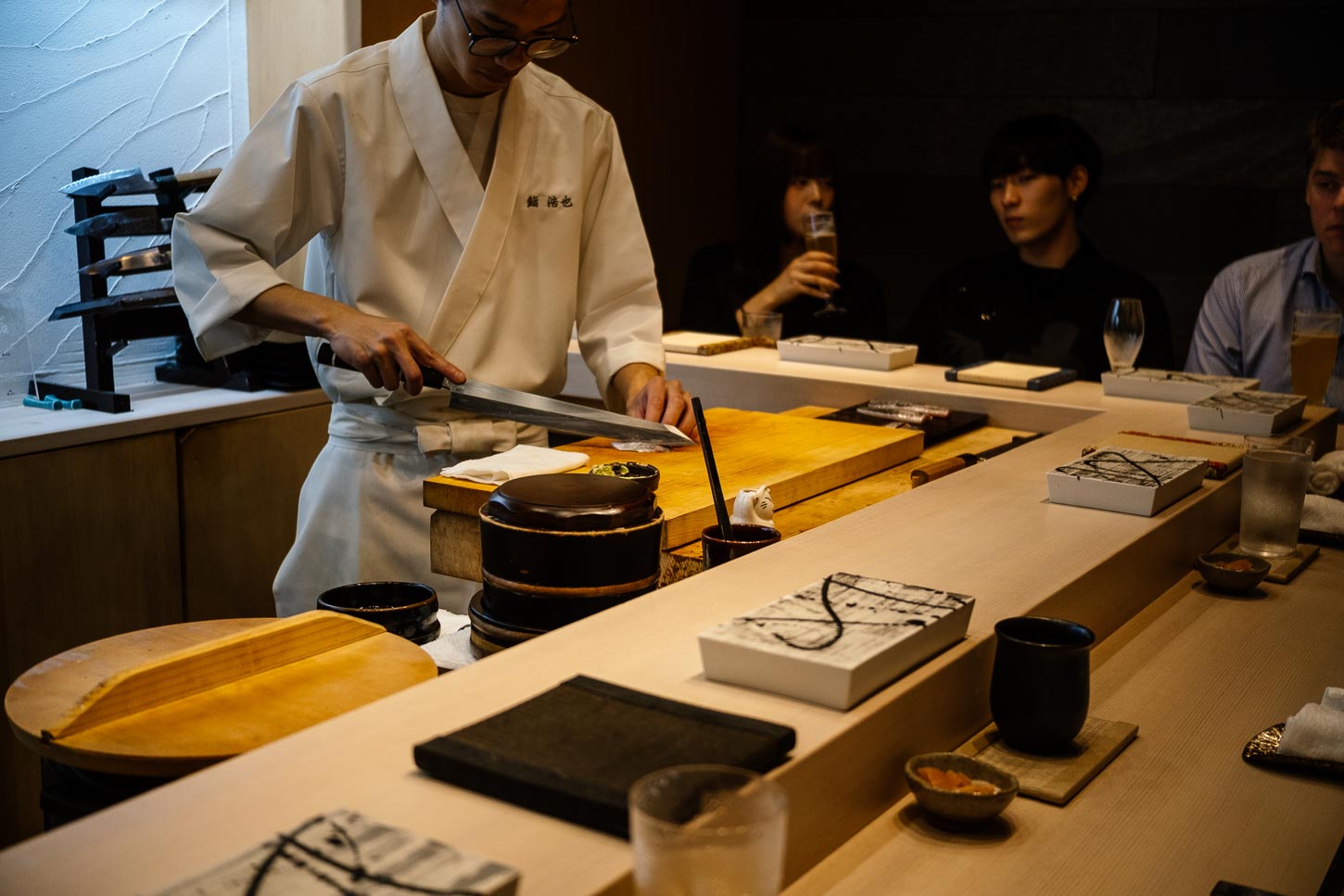
Sushi Hiroya ¥14000 – ¥20000
Hiroya sits near the top the mid-range, price point wise.Their lunch omakase starts at ¥14,000. The space is small and cozy with 10 counter seats and an exceptionally young chef. It’s really impressive – Hiroya sits at a very high 3.74 rating on Tabelog, as well as being one named one of the coveted 100 best sushi shops in Tokyo in 2025.
We showed up for lunch there as I love omakase lunch. Give me all the nigiri sushi and none of the appetizer/otsumami. It was mainly tourists with only a couple of Japanese at one end of the bar. I like to believe they seated us at the other end as honorary Japanese. We were served 10 pieces and the fish was premium and unique, with tempura mehikari (green eye fish) hand roll being a stand out. One of the best omakase lunches I’ve had in Tokyo, ever.
Sushi Hiroya
1F 1-9-2 E-GAMI Bldg Hamamatsucho, Tokyo
Wed + Sun 12pm – 3pm
Daily 6pm – 11pm
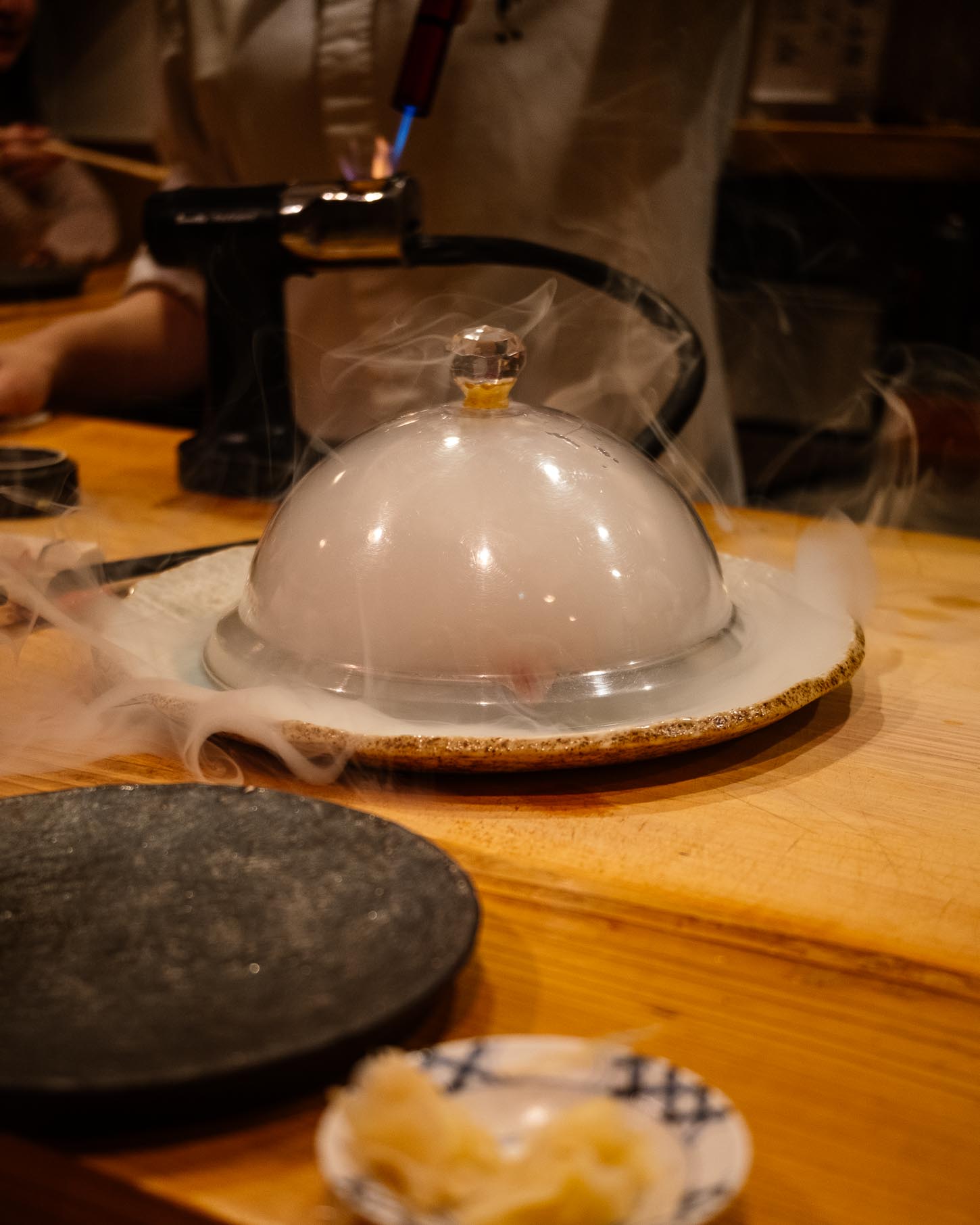
Sushi Onikai ¥14000 – ¥20000
If you’re looking for cospa, Sushi Onikai is for you. The dinner omakase starts with a couple of seasonal otsumami and then goes directly into a three kinds of tuna hand roll before heading straight into 16 exquisite pieces of sushi. Standouts for us during the fall season included: the kohada, kampachi with pickled daikon, and marinated katsuo. They do interesting (for sushi) stuff with smoke and fire, it’s a whole show. No melon to end here, just a simple rectangle of tamago.
Onikai is very much a locals place, where the few tourists also spoke excellent Japanese, but Chef Toda speaks a bit of English (actually quite a lot but he seems shy about it). He told us about the several annex branches of Onikai, where Toda-san doesn’t chef. We haven’t been to the annexes, but the fact that they exist speaks to Onikai’s popularity. We loved it so much we went back several times in the same season, which we hardly ever do.
Sushi Onikai
2F, 2-18-11 Kamimeguro, Tokyo
Daily 6pm – 11pm
Closed Mon
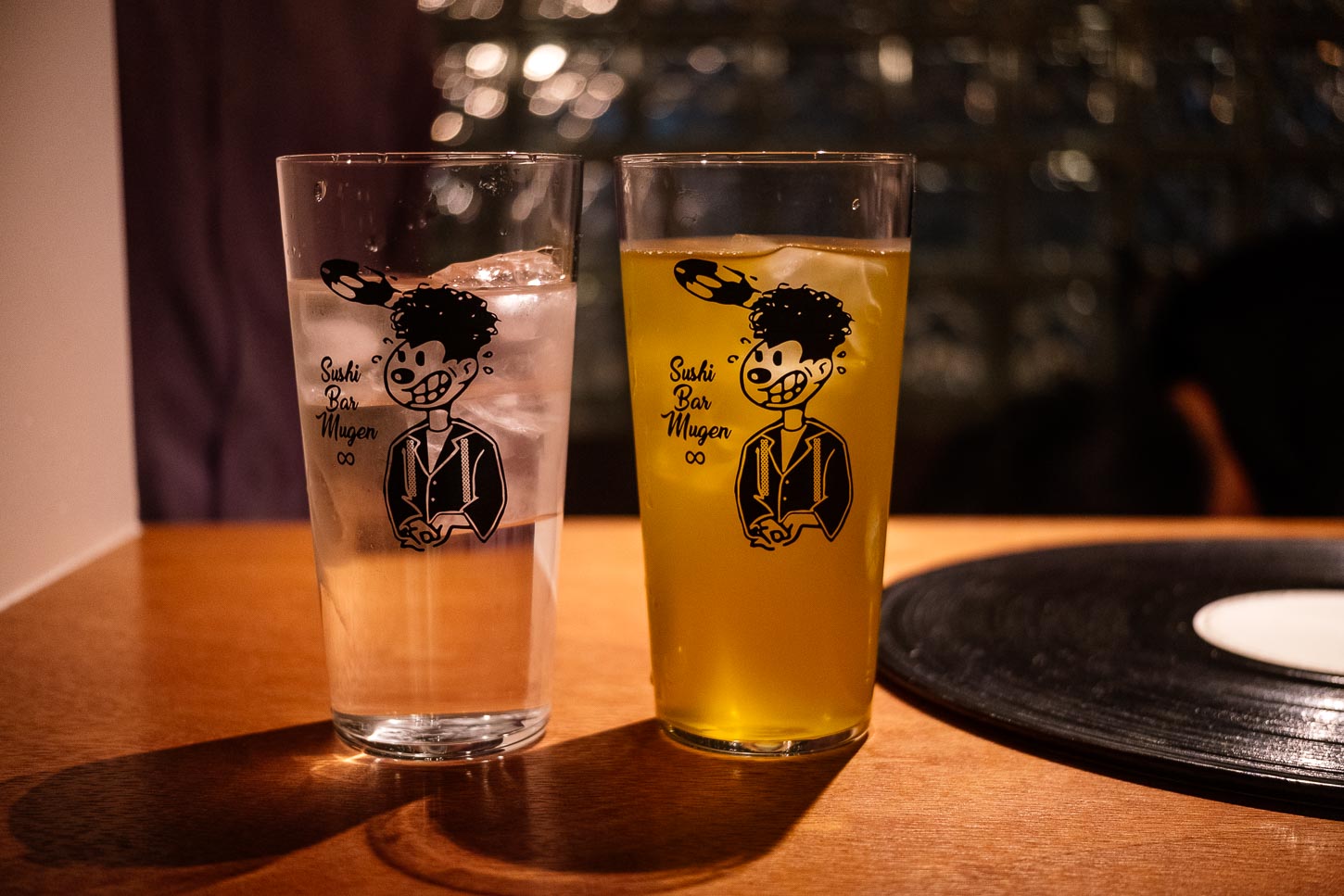
Sushi Bar Mugen ∞
Sushi Mugen feels like its on the verge of becoming high end but the owner/chef intentionally prefers not to me. The cospa is amazing here as is the selection of sushi. Most of all, the tamago is to die for. I’m a tamago connoisseur, sometimes I think it might be the most important part of sushi for me.
Mugen is different than other sushi bars because it’s opinionated. The owner doesn’t have much sake on hand but a huge selection of gin. Unlike the soft atmospheric music of most places, he spins his personal collection of (mostly) jazz. The sushi is served on pottery that looks like records, or maybe they’re just real records, I’m not quite sure. Overall the vibe is really cool and unique. Mike says that Mugen is one of his favorite sushi places, money no object.
Mugen is very hard to find. It’s on a back street just off a main street and looks like a deserted cafe space at night. You just have to look for the signage and follow the instructions to be buzzed in.
Sushi Bar Mugen ∞
1F 2-2-13 Roppongi, Minato City
Closed Weds
High end luxury omakase sushi in Tokyo ¥30,000 – ∞
When a lot of people think of omakase in Tokyo they dream of Jiro -an exclusive super high end omakase experience you can brag about. The truth is, true super high end omakase restaurants are actually quite rare for tourists to get into because they typically have a rolling reservation system for regulars only.
These are the sushi bars that you have to jump through hoops to get into. They’re the places that you need to have a relationship with the sushi chef/owner. Typically, your family has been going there for generations. They roll out reservations to their loyal list first, then put the remainders up for grabs.
If you dream of high end sushi, and you’re incredibly lucky, there are ways to get reservations (or so the internet tells me). Two higher end places that we’ve had the pleasure of eating at are Tokami and Kizaki. For Tokami, Mike used our credit card concierge back when those still worked and for Kizaki, a friend introduced us and made the reservation directly with Chef Kizaki-san. We haven’t been back to these places in awhile, but they’ve only become more famous and harder to get into, so hopefully that speaks to their continued excellence.
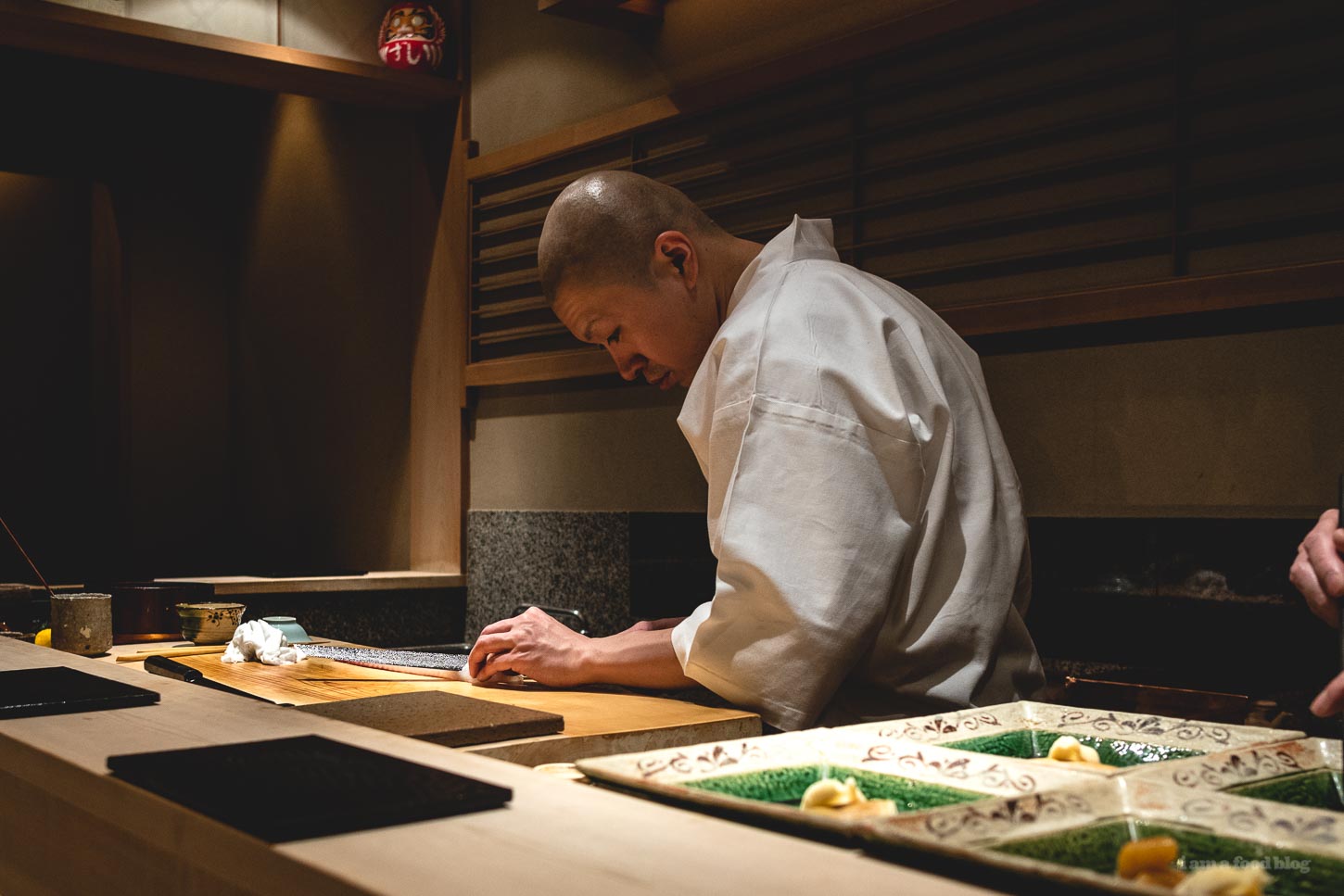
Tokami
¥30,000 – ¥40,000
Tokami opened in with great fanfare in 2013 by renowned tuna wholesaler Yamayuki/Yamasachi. Thanks to the head chef, Hiroyuki Sato-san, they earned a Michelin star during their very first year. In 2017, Sato-san left to start his own restaurant, Hakkoku. We got to eat at Tokami while Sato-san was still there and it was absolutely a dream come true. It’s when I truly fell in love with akazu, or aged red sake yeast vinegar. Sato’s shari (rice) is exquisite, with the temperature, texture, and ratio of seasoning adjusted to each and every piece of fish. Somehow Sato-san’s akazu seasoning, which is a custom mix of two different vinegars, makes rice taste even more like rice. I’m not 100% sure but I feel like Sato-san might have started the current akazu trend. If not, he sure helped it along.
The rice at Tokami (and I assume is now at Hakkoku) is dark, almost rusty-ruby, coated with umami, and deeply aromatic. The fish supplied by Yamayuki is insanely high quality with loads of seasonal catches. Currently, Tokami is helmed by Shota Oda-san, a chef who worked directly with Sato-san while he was still at Tokami. From what I see on reviews, after a brief hiatus, Tokami re-opened again and so far the reviews (from Japanese citizens) have been glowing.
Tokami
New Ginza Bldg 11 B1F 8 −2−10 Ginza, Tokyo
Daily 6pm – 9pm
Closed Sun + Wed
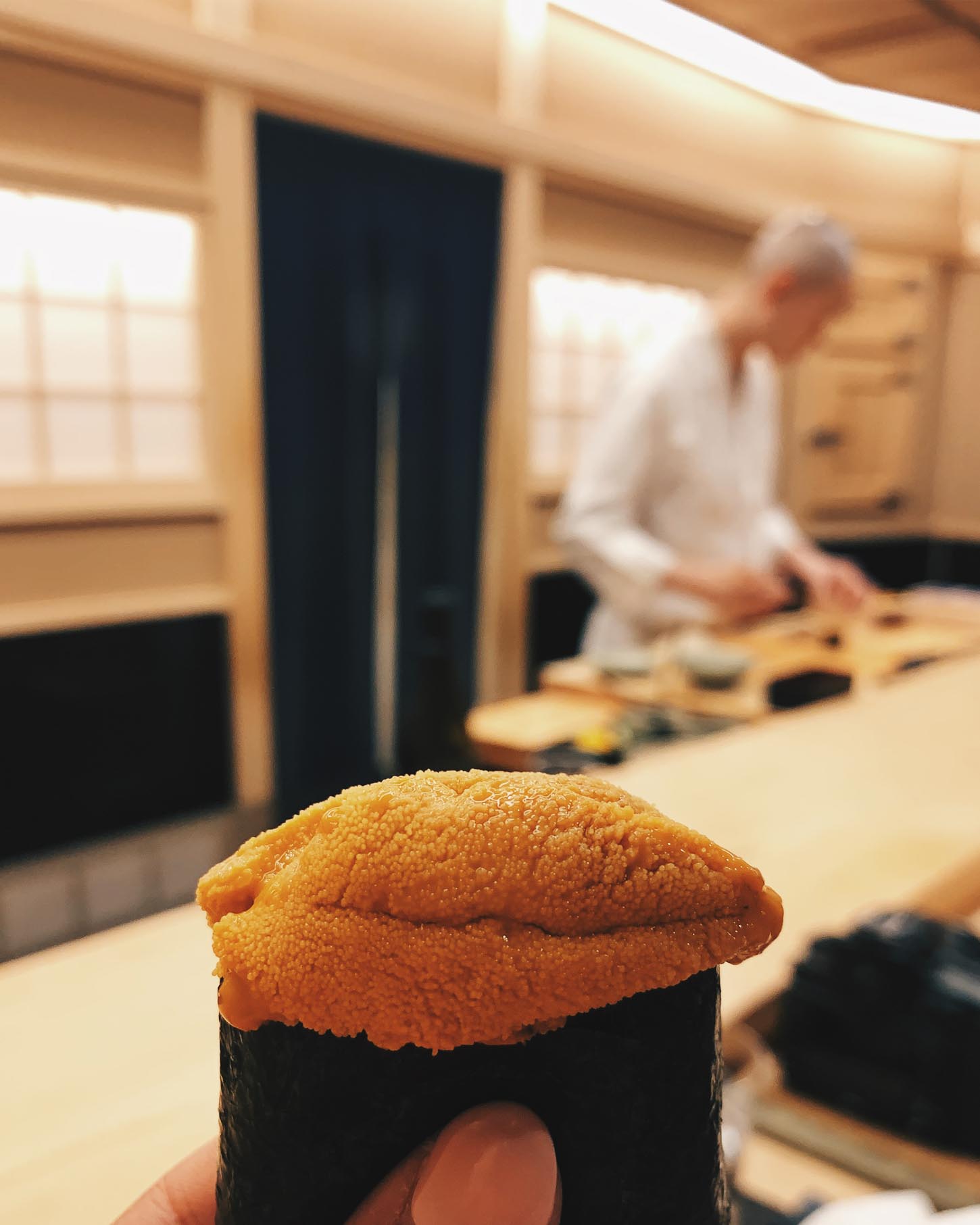
Kizaki
¥30,000 – ¥40,000
Kizaki, started by Hitoshi Kizaki-san, is a direct offshoot of Tokami and since we love the shari at Tokami, it was a no brainer when a friend managed to score us a last minute reservation. Kizaki-san has an impeccable resume: he studied at Kyubey, worked at Saito, and staged at Tokami before he opened his own shop. Kizaki’s shari, also imbued with red sake lees vinegar, is reminiscent of Tokami’s, but with a slightly lighter touch, and firmer grains. The neta is fresh, varied, and delicious.
The room is just 9 counter seats, run by Kizaki and his wife, a former sake wholesaler, who sommeliers the sake list. Truly, there’s a huge difference between mid-range and high-end omakase. Every bite is thought out, the technique is amazing, and the meal is immaculate. You enter a sushi flow state where every piece builds on the last and your tastebuds literally die and go to heaven.
Kizaki
5C Akasaka Seimei Kaikan Bldg 3−21−10 Akasaka, Tokyo
Daily 12pm – 2pm, 6pm – 11pm
Sunday 12pm – 2pm
Closed Monday
My tips and tricks for sushi in Tokyo
Go for the lunch omakase
Lunch omakase is what I think is the best cospa of all omakase. Mike isn’t as huge of a fan as I am, because, rightfully so, he believes that all the best pieces are reserved for dinner service. But as someone who wants sushi and only sushi, lunch is the way to go. It’s cheaper and they usually don’t have any otsumami/hot appetizers to start you off. They go straight into nigiri sushi, just the way I like it. Most mid-range and high-end sushi will have a lunch option and it’s almost always easier to score that reservation.
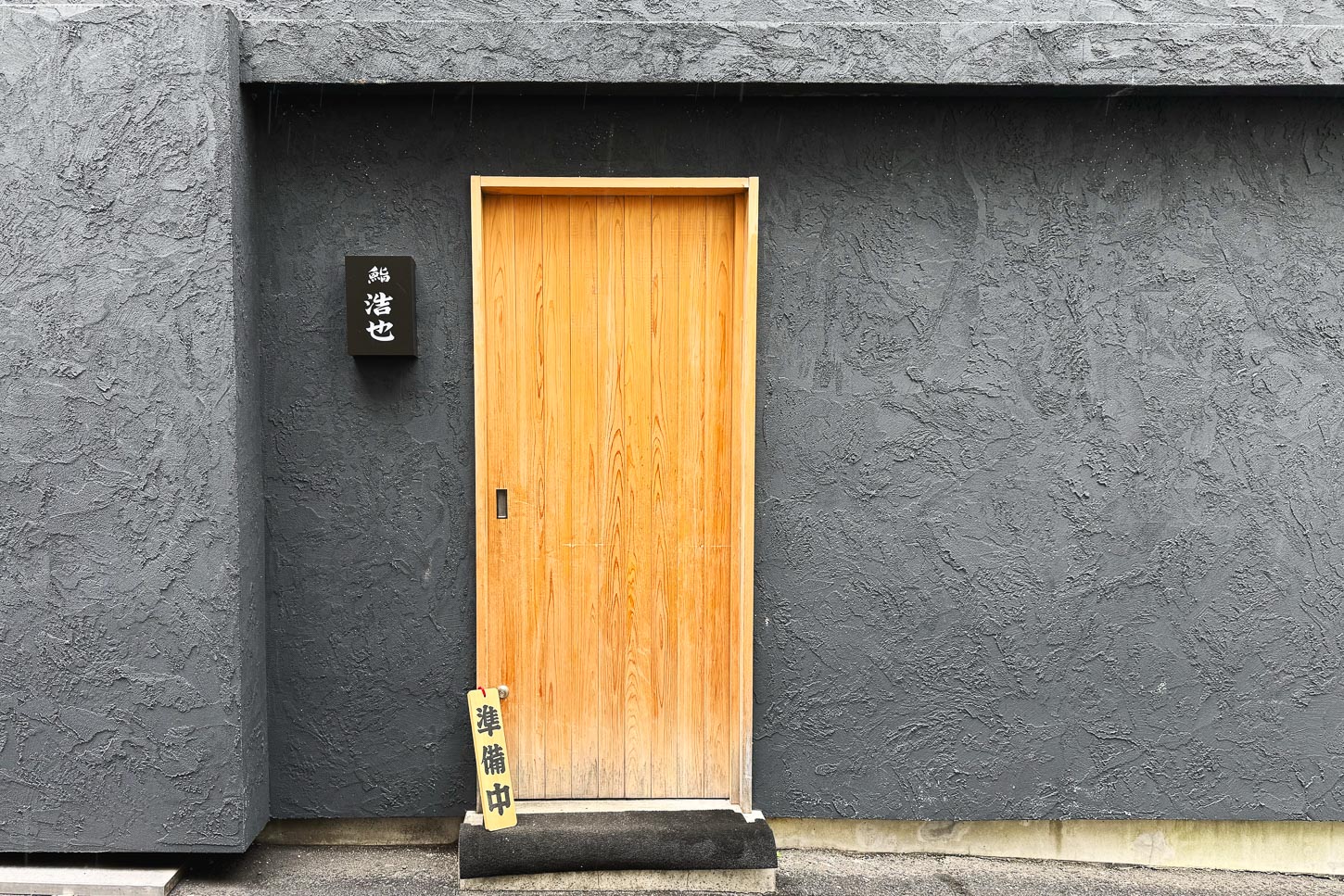
Make reservations
Yes, you will need reservations. Please make them and be on time. Omakase is coursed around the diners and most places have a set time. They won’t start until everyone is seated at the counter, so this is one of those occasions where you absolutely don’t want to be late. Find the restaurant beforehand, planning out your route, and figure out which floor it’s on. As a rule of thumb, it’s probably best to show up 10-15 minutes early. Don’t go inside though. Hang around slash near the street entrance. Usually you can up nod at the other patrons that are waiting around for the exact same thing.
Order drinks
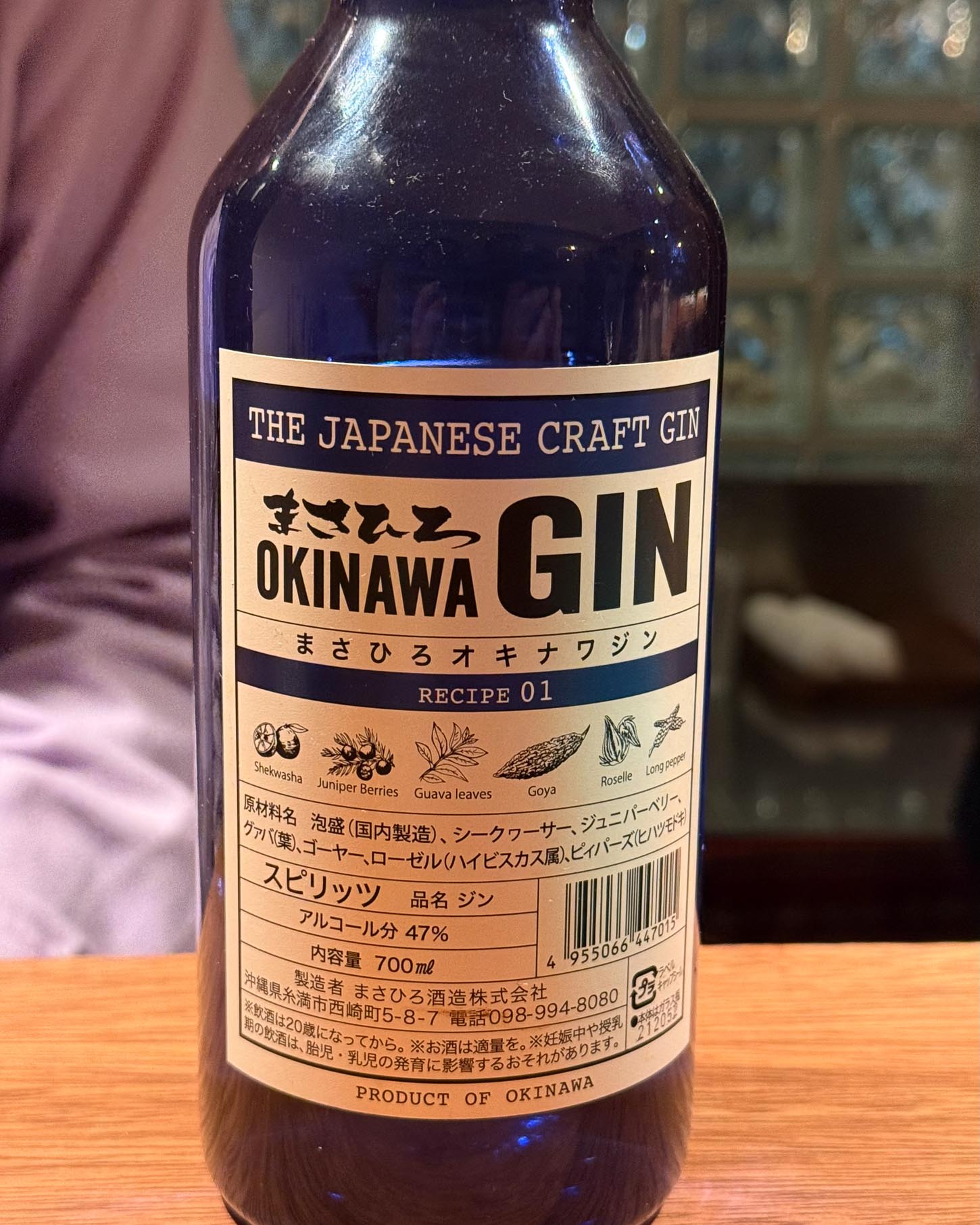
This one is a little under the radar, but when you go to omakase, drinking is part of the experience. This is the first thing they will ask you. Please don’t say “mizu” aka water. You don’t have to drink alcohol as they typically have non-alcoholic drinks. Be sure to get one drink per person and if you’re the kind, keep it free flowing. Sushi chefs LOVE it when you do the sake pairing or ask them to recommend you their favorite sake. Mike has so much experience with this 😉
Enjoy yourself
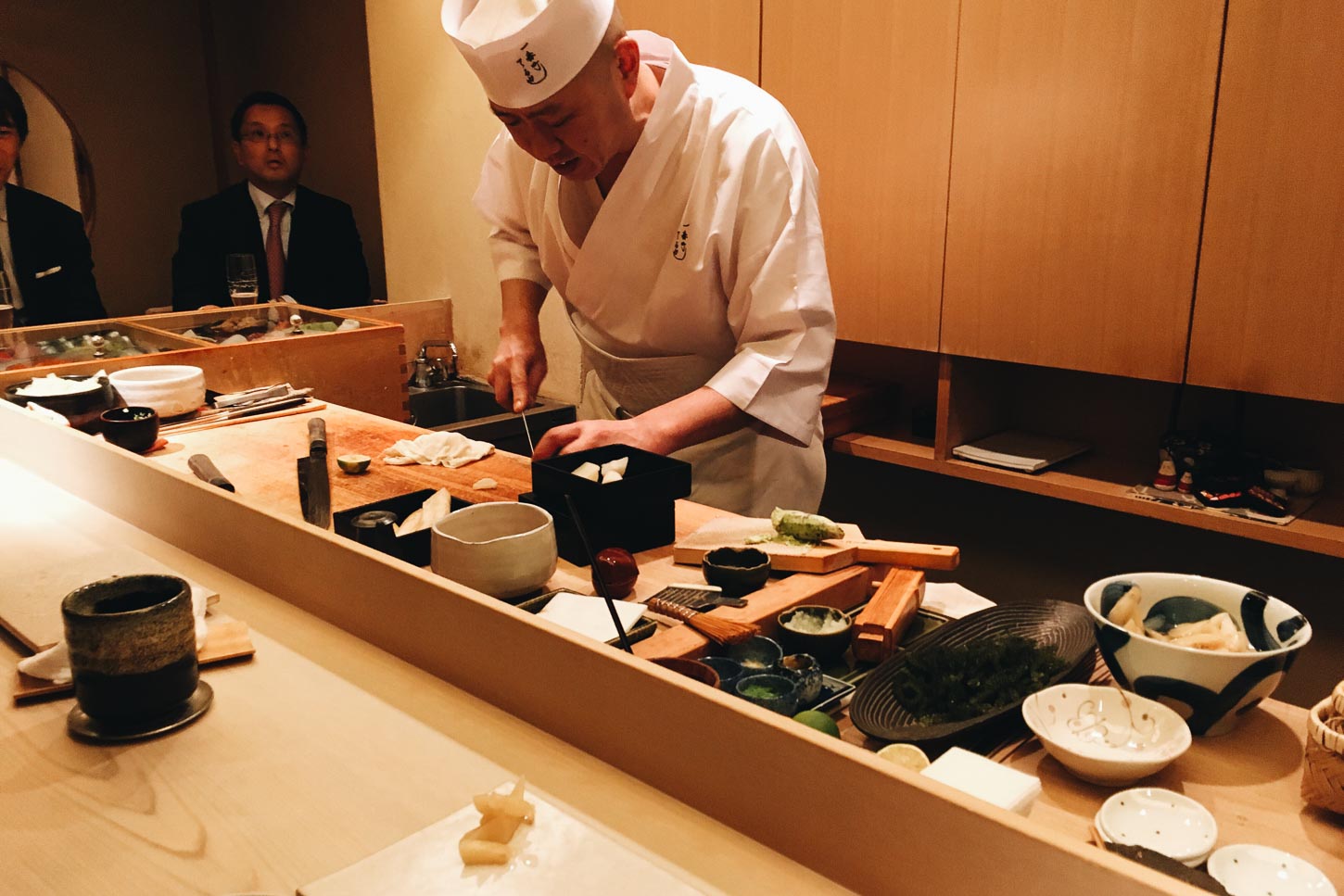
A lot of tourists kind of put a damper on sushi places by being too polite and proper. That’s not to say you should whoop it up and start throwing things (please don’t) but loudly chatting with the chef or your friends is highly encouraged. Most omakase sushi is a celebratory event meal even for Japanese, so they’re there to have fun and hope you are too. All of my favorites have been at places where a bunch of salarymen are celebrating closing a big deal and having the time of their lives.
Whew, that was a super long post! I hope you get to enjoy some sushi in Tokyo soon! If you have any recommendations, leave them in the comments, Mike and I love trying new sushi spots.
may all your sushi dreams come true,
xoxo steph
PS – If you want a detailed what happens when you go to mid-range to high-end omakase, from deciding where to go, to making the reservation, finding the restaurant, and what you’ll experience, let me know in the comments and if there’s enough interest, I’ll write that up!