
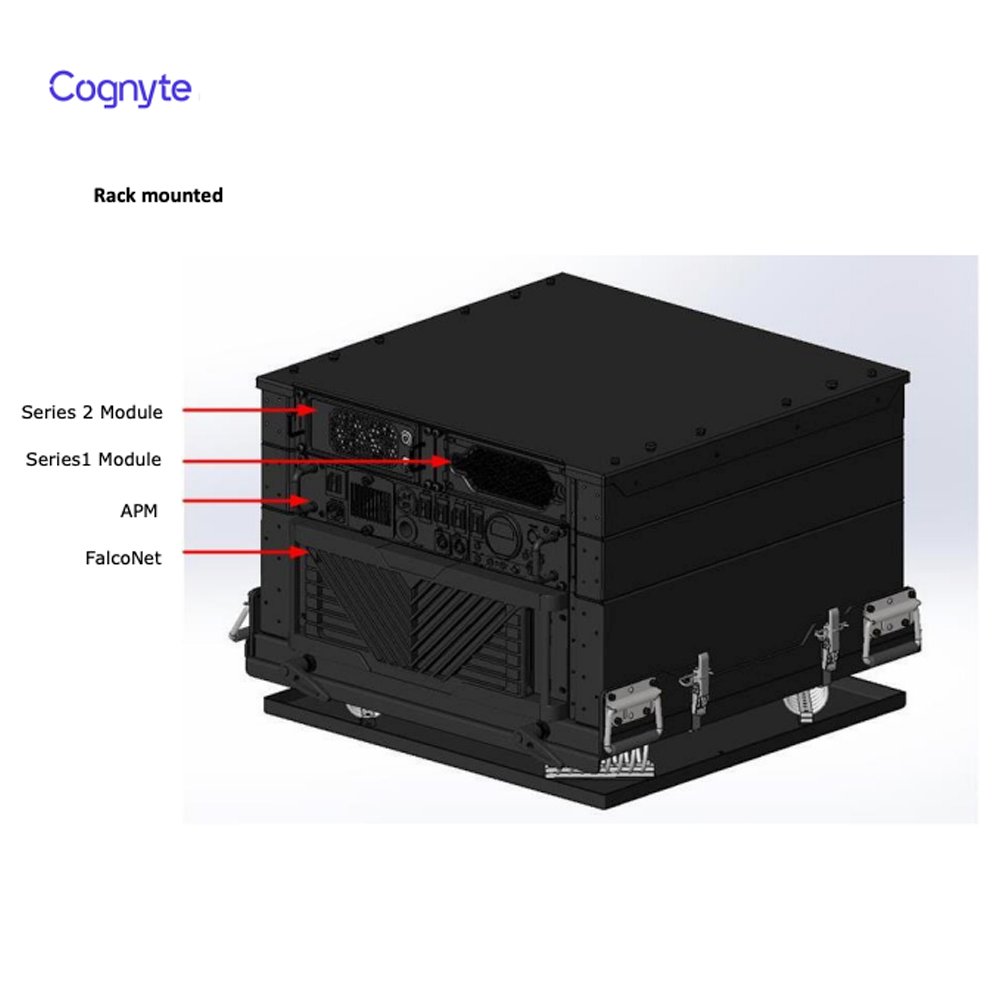
Menacing Israeli surveillance technology is being rolled out on American highways. FalcoNet, from a firm named Cognyte (a competitor to Palantir in Israel), covertly monitors individuals by tapping into the link between your mobile device and the nearest cell tower. The concept is to attach this device to a helicopter, backpack, or Chevy Tahoe to gather everyone’s information while on the move. It’s already operational in Florida. This year, the Texas State Police invested nearly $4.5 million in a small fleet of FalcoNet-equipped SUVs. I sourced the purchase invoice and FalcoNet manual for more insights into the technology.
In March 2026, the Texas Department of Public Safety (DPS) Criminal Investigations Division sought approval to allocate $4,487,500 for a Cognyte surveillance system. Specifically, they requested “authorization for an emergency purchase required to ensure the safety and welfare of state personnel and assets. Postponing the procurement process could lead to unacceptable risks to personnel safety and hinder operational readiness.”
The request memo is filled with urgency and intense wording—rich with expressions like “emergency” and “immediate.” However, no particular details are provided. “Any delay in procurement would jeopardize employee safety, public safety, operational readiness, and overall success of the mission,” the memo asserts, without clarifying how or why this brand-new, costly technology has become crucial to their operations.
Naturally, it wasn’t merely $4.5 million for four 2026 Chevy Tahoes, though the SUVs themselves were still oddly priced at $150,000 each. Here’s how the expenditure can be broken down:
- FalcoNet Core System (x4): $2,850,000
- Unlicensed FalcoNet core system: $200,000
- Delta 5G Perpetual license for FalcoNet V (x4): $280,000
- 2026 Chevrolet Tahoe (x4): $600,000
- FalcoNet Backpack core V2 – 6 x BTS (2G/3G/4G/5G): $355,500
- Flexable [sic] antenna kit: $27,000
- Cognyte PA Ranger: $105,000
- Unlicensed FalcoNet Backpack core V2 – 6 x BTS (2G/3G/4G/5G): $70,000
- Total PO Amount: $4,487,500
So, that’s how (and why) the Texas police allocated $4.5 million for four Tahoes. They are outfitted with highly advanced surveillance technology.
Regarding the FalcoNet system itself, the main concern that people are justifiably alarmed about is its capability to collect private data from unaware individuals en masse and in secrecy. I don’t view myself as someone with secrets, yet I still detest this intensely. Recently, one of our own staff members was wrongfully detained due to corporate-controlled police technology!
As Cybernews highlighted, the legality of such practices remains contentious. Indeed, the Supreme Court ruled (Chatrie v United States) that “individuals possess a reasonable expectation of privacy regarding location data that reveals their movements, and that even brief tracking of that nature qualifies as a search under the Fourth Amendment.”
We have covered and will keep covering the swiftly evolving corporate surveillance infrastructure that affects our driving experience significantly.
Additionally, we can delve into the details of this technology since I discovered the FalcoNet user manual and thought you might find its workings interesting. GM provides a standard police setup for the Tahoe: Tahoe Police Pursuit Vehicles come equipped with a V8 engine, enhanced brakes, durable suspension, secondary battery, and a 250-amp alternator.
The FalcoNet system can be described as follows:
- Dimensions & Form Factor: The core module has measurements of 563mm x 200mm x 86mm (designed as a 2U half 19” rack drawer) and weighs 8kg.
- Hardware Interface: The module is equipped with RJ45 LAN ports, a 4-way Amphenol Power connector, SMA panel connectors for GPS and clock syncing, and QN-Type connectors for RF input and antenna output.
- Power: It operates on a DC power input ranging from 24v to 36v, drawing around 35 watts while idle and 260 watts during full power transmission.
- Kits: Government purchase orders (like one from the Florida Department of Law Enforcement) indicate the system is modular and comes in “Deployment Kits” packed in SKB Pelican cases containing the core Software Defined Radio (SDR) base stations, power distribution units, and directional antenna kits.
From an exterior perspective, I suspect these Tahoes will appear quite regular. Standard antenna-concealing methods include a slightly elevated false roof, disguising them in what resembles a Thule ski box, or using small pucks. However, for $4.5 million, I’m sure Cognyte can ensure these SUVs are made to look as intimidating or inconspicuous as Texas DPS requires.
Got a story tip? Contact us at [email protected].
**Analysis of Texas Police Spending: $4.5 Million Commitment in Four Chevrolet Tahoes**
Recently, discussions surrounding law enforcement finance and resource distribution have highlighted a significant expenditure by a Texas police department: a $4.5 million investment in four Chevrolet Tahoes. This choice prompts inquiries into budget priorities, vehicle selection, and the overall effect on community safety and police functions.
**Context Surrounding the Expenditure**
The funding for these vehicles emerges during ongoing conversations about police budgets nationwide. Numerous departments are reevaluating their expenditures in response to community input and calls for reform. The decision to commit such a large sum for just four vehicles suggests a strategic focus on enhancing police capabilities, yet it also raises concerns regarding fiscal accountability and transparency.
**Cost Breakdown**
The $4.5 million expense translates to about $1.125 million per vehicle. This amount is substantially greater than the typical price of a Chevrolet Tahoe, which usually falls between $50,000 and $70,000 for standard models. The heightened cost may result from specialized modifications, advanced technology integration, and enhanced safety features customized for police use. These modifications can encompass:
– **Emergency Response Equipment**: Installation of sirens, lights, and communication systems.
– **Surveillance Technology**: Integration of body cameras, dash cameras, and various monitoring systems.
– **Durability Enhancements**: Reinforced structures and off-road capabilities for diverse terrains.
**Justification for the Expenditure**
Advocates of this expenditure argue that investing in top-quality vehicles is vital for effective law enforcement. The Chevrolet Tahoe is recognized for its reliability, roominess, and ability to manage a variety of operational demands. Law enforcement agencies often require vehicles that can perform in high-pressure situations, transport personnel and equipment, and project a commanding presence in the community.
Moreover, this investment may reflect a broader strategy to upgrade the police vehicle fleet, ensuring that officers have access to the most current technology and safety features. This modernization can optimize response times, enhance officer safety, and ultimately strengthen community relations.
**Community Reaction and Impact**
The community’s response to this considerable spending has been mixed. Some residents express support for providing police with the necessary tools to effectively perform their roles, highlighting the significance of officer safety and community security. Conversely, others raise concerns regarding fund allocation, questioning if such a substantial investment in vehicles could be utilized more effectively for community programs, mental health services, or other public safety efforts.
Critics contend that this expenditure illustrates a preference for police militarization over community involvement and social services. This viewpoint underscores the need for a balanced strategy to public safety that integrates investment in preventative measures and community resources.
**Conclusion**
The $4.5 million commitment to four Chevrolet Tahoes by a Texas police department stands as a pivotal point for broader dialogues about police financing, resource distribution, and community values. As law enforcement agencies navigate the complexities of contemporary policing, their spending decisions will continue to influence public perception and community trust. Continuous conversations between police departments and the communities they serve will be crucial in seeking a path forward that aligns effective law enforcement with community needs and expectations.