
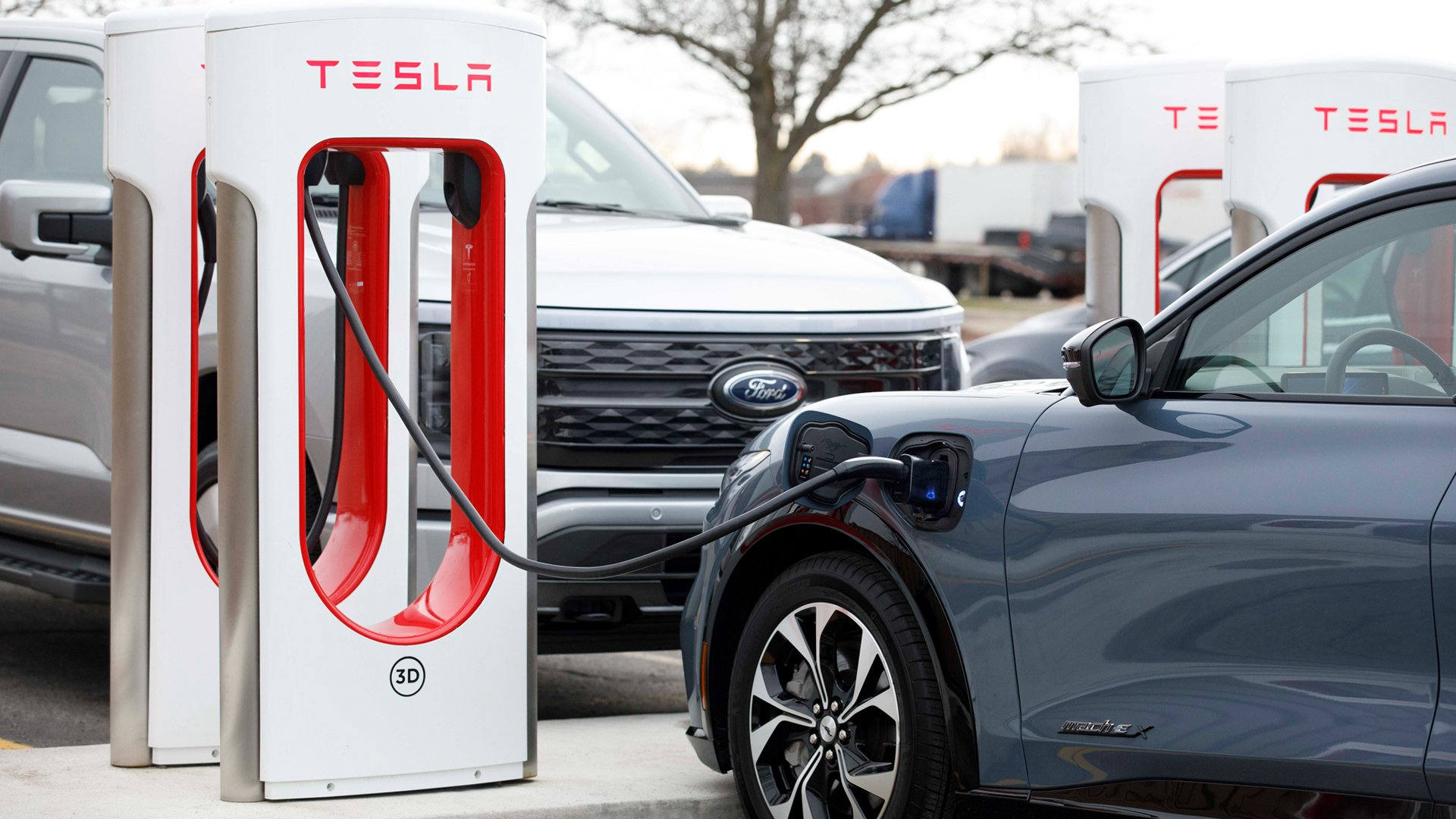
Electric vehicles are free from tailpipe emissions, but other elements must be considered when assessing their ecological impact. Manufacturing plays a major role, along with the origin of their power supply. This aspect is frequently cited by critics questioning the ecological advantages of EVs, yet a recent study confirms that, indeed, a vehicle that doesn’t emit pollutants while in operation is the more environmentally friendly choice.
The aforementioned study was released in May in the Environmental Research Letters journal. The key statistic is that EVs can cut emissions by 40-60% in comparison to internal combustion engines “in most areas.” However, the specific level of emission reductions relies on several factors, the most crucial being the energy mix of the local grid where they are utilized. Coal-powered plants heighten the effective emissions of EVs charged from the electricity they produce, but the same is true for renewable energy sources, offering precisely the opposite effect.
“The electricity composition is the most significant factor contributing to these regional differences,” the abstract of the study states, “resulting in more consistent and substantial emissions reductions if the electricity supply becomes cleaner.”
The Union of Concerned Scientists has articulated this same message for over a decade. The organization has been monitoring real-world EV emissions in the United States since the beginning of the modern EV age, illustrating how they have been reduced as the electrical grid has been cleaned up. Currently, the average EV in the U.S. has emissions equivalent to a 96-mpg gasoline vehicle, according to UCS. The organization features an online tool that allows you to view the estimated emissions based on a specific year, make, and model in your ZIP code—useful for any prospective EV buyer.
Driving habits also play a significant role, according to this latest study. Researchers determined that urban driving conditions were more effective for maximizing emissions reductions compared to rural driving. In consistent urban scenarios, plug-in hybrids could reach 80-90% of the emissions savings compared to all-electric vehicles, presuming they are frequently charged and utilized in electric mode. That figure drops to 60% in rural settings.
This indicates that, considering high mileage and a high proportion of urban driving, local governments or fleet managers aiming to lower emissions only need to achieve a 9% EV penetration to realize a 10% reduction in emissions. A fleet with lower annual travel but more rural usage would need a 42% EV adoption rate to achieve the same emissions reduction. In contrast to the electricity mix and driving behaviors, local climate “has a comparatively moderate effect” on relative emissions, as per the study.
Emissions reductions won’t materialize if consumers don’t choose EVs, and in this regard, the study brings some promising news. Researchers indicated that EVs are financially competitive with internal combustion engines “in numerous areas and for many consumers,” with the key factor being the comparison of electricity costs to gasoline prices. The introduction of more affordable EVs like the Slate pickup and its Ford competitor ought to improve the economic outlook for at least some buyers.
**Research Indicates Electric Vehicles Are More Environmentally Sustainable Than Gasoline Cars, Emphasizing the Role of Energy Sources**
Recent research has increasingly indicated that electric vehicles (EVs) possess a greater level of environmental sustainability compared to conventional gasoline vehicles. This assertion holds particular significance in the context of ongoing global initiatives aimed at addressing climate change and mitigating carbon emissions. However, the ecological advantages of EVs are deeply interconnected with the sources of electricity utilized for charging them, making the selection of energy sources a critical component of their overall eco-friendliness.
**Comprehending the Environmental Effects**
Electric vehicles generate zero tailpipe emissions, which is a substantial advantage compared to gasoline vehicles that release carbon dioxide (CO2) and additional detrimental pollutants. An in-depth analysis conducted by researchers from a prominent environmental institute established that, even when considering the emissions produced during the generation of electricity, EVs typically result in lower total greenhouse gas emissions relative to gasoline-powered vehicles.
The study assessed various scenarios, including regions with diverse energy mixes. In areas where electricity is predominantly sourced from renewable energies like wind, solar, and hydroelectric power, the emissions linked to EVs are considerably lower. Conversely, in areas heavily dependent on coal or other fossil fuels for power generation, the benefits of EVs are less pronounced, although they frequently still outperform gasoline vehicles in terms of total emissions.
**The Significance of Energy Sources**
The conclusions highlight the necessity of transitioning to cleaner energy sources to optimize the environmental advantages of electric vehicles. As the power grid becomes more environmentally friendly, the lifecycle emissions of EVs are expected to decrease. This shift is crucial not only for enhancing the sustainability of electric vehicles but also for attaining broader climate objectives.
For example, adopting renewable energy sources can significantly diminish the carbon footprint associated with charging EVs. The study pointed out that in regions where renewable energy constitutes a major element of the grid, the carbon emissions tied to charging an electric vehicle can be up to 75% less than those produced by driving a gasoline vehicle over the same mileage.
**Lifecycle Evaluation of Electric Vehicles**
The lifecycle assessment of electric vehicles incorporates emissions generated during manufacturing, operation, and disposal. While the production of EVs, particularly their batteries, can lead to higher emissions compared to conventional vehicles, these are often counterbalanced by the lower emissions during their operational phase. The study discovered that over the lifespan of a vehicle, EVs generally yield lower total emissions, especially as advancements in battery technology and recycling methods continue to improve.
**Policy Considerations and Future Paths**
The insights derived from this study bear significant implications for policy-makers. To fully harness the environmental advantages of electric vehicles, governments must prioritize funding for renewable energy infrastructure and foster the transition away from fossil fuel reliance. Furthermore, policies that support the establishment of efficient battery recycling initiatives can further enhance the sustainability of electric vehicles.
As the automotive sector progresses, the integration of cleaner energy sources into charging infrastructures will be crucial. This encompasses expanding the accessibility of charging points powered by renewable energy and promoting the use of smart grid technologies that optimize energy utilization.
**Summation**
To sum up, the data clearly suggests that electric vehicles are more eco-friendly than gasoline cars, particularly when charged using renewable energy sources. The significance of energy sources cannot be understated, as they are pivotal in shaping the overall environmental impact of electric vehicles. As society advances towards a more sustainable future, the ongoing development of clean energy solutions will be vital for maximizing the advantages of electric mobility.
 admin
admin