
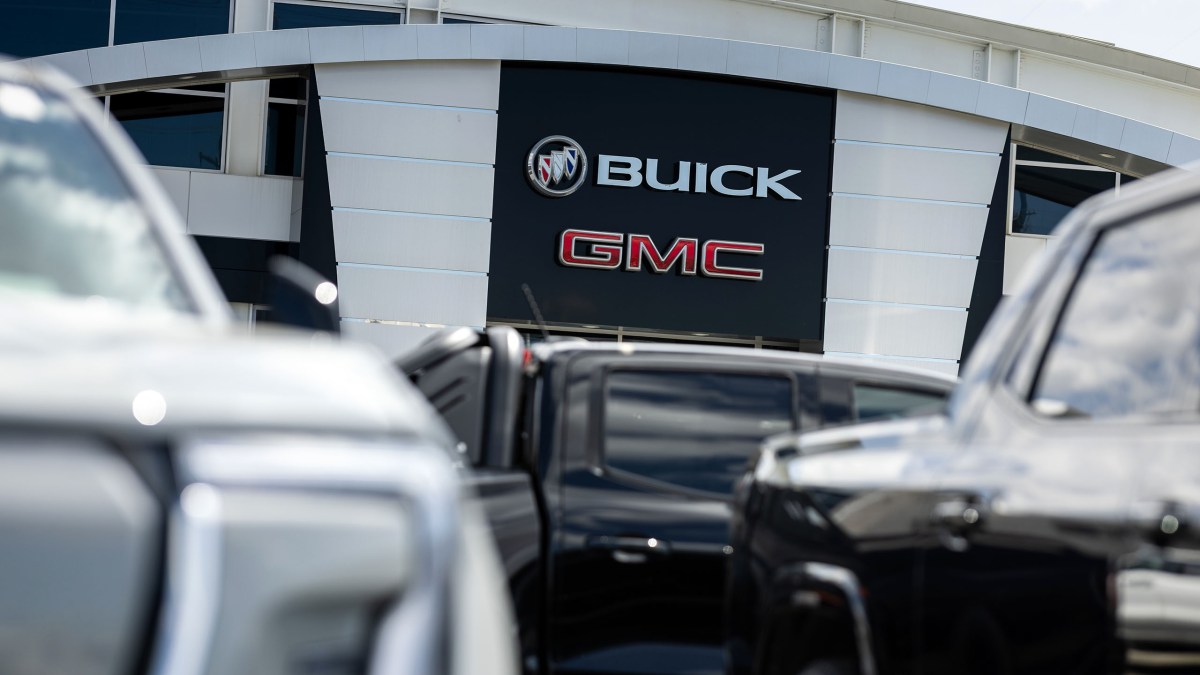
- Dealership files lawsuit against GM over inventory issues. Sun GMC alleges GM is depriving it of vehicles, jeopardizing its operations.
- Allocation system puts pressure on dealers. Automakers use allocations to influence dealership actions and effectiveness.
- Sun GMC’s stock significantly declines. From 1,200 units in 2017 to merely 501 in 2025.
- Dealers encounter a difficult feedback cycle. Reduced inventory results in fewer sales, damaging their relationship with automakers.
Essential takeaway: Sun GMC is suing GM for $15 million, alleging that unfair inventory policies are undermining its business.
AI assisted, editor reviewed
Picture yourself managing a McDonald‘s. It might not be the top performer in your vicinity, but you’re selling enough burgers to turn a decent profit and pay your employees every night. Over time, you start to observe that your warehouse is sending you an ever-decreasing supply of burger patties and chicken fillets. And whoever is responsible for ensuring your shake machine is operational? That person hasn’t shown up in ages. Then, when you reach out to corporate about the lack of supplies for your customers, they suggest you just buy Happy Meals from a store across town and offer those to your customers instead.
When customers voice their dissatisfaction about the low quality and inconsistent service, everyone looks to you as the problem. You’d probably be quite upset, right? Perhaps even outraged enough to consider legal action. Say, for $15 million? That’s precisely what a GMC dealership in Long Island, New York, is pursuing.
As reported by Automotive News, Sun GMC in Wantagh, N.Y., contends that GM “has been unjustly depriving it of inventory for sales, causing irreparable damage to Sun’s business and reputation,” compromising the dealer’s capability to continue functioning.
GMCs aren’t exactly the same as cheeseburgers, it’s true, and the above analogy is a bit simplified, but it does reflect a degree of truth. Sure, we often gripe about dealerships—it’s our prerogative as consumers in a capitalist system. However, if you think the dynamic between buyers and dealers is tough, you should witness the strain between dealers and manufacturers.
When customers feel dissatisfied with a dealership, they take their business elsewhere. But dealers, in their own right, are consumers too; they must purchase vehicles to sell them, and unlike individuals, they can’t easily switch to another manufacturer if they feel they’ve been unfairly treated—and like consumers, they’re pretty much always getting a raw deal. How? This is known as the allocation.
In an ideal scenario, automakers would anticipate our needs, manufacturing every new vehicle required in a given year, and distributing them flawlessly across the country based on our needs. In reality, dealers receive allocations from an automaker’s total annual production based on each dealer’s performance, and once those units are assigned, the flow is shut off, regardless of how many (or how demanding) your customer base might be.
On paper, it appears straightforward: If you sell more vehicles, you obtain more vehicles. The same principle applies to quality. If you sell higher-end, more expensive models, you should (theoretically, at least) be granted greater quantities of such valuable units in the next round. If it were this uncomplicated, everyone would likely be begrudgingly satisfied with the existing system. But, unfortunately, it’s not.
Since a new-car dealership franchise cannot thrive without new vehicles to sell, manufacturers can exploit the allocation system as leverage against what they perceive as noncompliant dealerships. A string of poor feedback or customer complaints adds up over time. Ever wonder why sales representatives are so fixated on those surveys they send out? Trust me; they couldn’t care less about your satisfaction. Five stars simply translate to more cars.
At least, that’s how it should work. In reality, automakers can leverage the allocation to compel dealers into compliance with various demands. Is your signage dated? Have you not remodeled your facility recently? Are your windows not sufficiently clean, or is your lot not completely free of clutter? You may not be upholding the standards outlined in your franchise agreement. Offend the automaker, and you could find yourself deprived of what you need to remain in business.
That’s precisely what GM is allegedly doing to Sun GMC, according to the dealership’s claims. In its lawsuit, the dealership reported receiving approximately 1,200 vehicles in 2017; that number has been on a decline since then. In 2025, it received merely 501. When Sun expressed its concerns about insufficient vehicles to sell, GM reportedly instructed the dealership to procure cars from another source (and presumably pass the increased expenses onto the customer).
And somehow, despite selling 99% of its allocated stock, GM still deems Sun an underperforming dealership.
The dealership asserts it has had to include used vehicles in the new-vehicle showroom just to maintain some level of inventory. Compounding the issue, the dealership’s reduced inventory creates a self-perpetuating cycle. With fewer incoming vehicles, fewer sales occur, further harming its standing with corporate.
So, the next time you embark on a car shopping expedition, remember that the individuals working across that uncomfortable desk are as much at a disadvantage as you are. This knowledge may not save you any money, but it might provide you with a bit of comfort about your forthcoming experience.
Have a news tip? Share it with us at [email protected]!
**GMC Dealer Attains 99% Sales Rate, Yet GM Declares It a Failure and Ceases Future Shipments**
In a surprising development, a GMC dealership has recorded an astounding 99% sales rate, yet General Motors (GM) has categorized the dealership’s performance as inadequate, resulting in a suspension of future vehicle shipments to the dealership. This scenario raises concerns regarding the criteria utilized by automotive manufacturers to assess dealership performance and the broader ramifications for the auto industry.
### The 99% Sales Rate
The dealership in discussion, situated in a competitive marketplace, has showcased outstanding sales performance, effectively selling nearly all of its inventory within a designated time frame. This accomplishment is frequently recognized as a sign of success in the automotive retail industry, where sales statistics are a key indicator of a dealership’s vitality and operational effectiveness. A 99% sales rate conveys that the dealership has adeptly engaged customers, offered appealing inventory, and executed effective marketing strategies.
### GM’s Perspective
Notwithstanding the dealership’s impressive sales numbers, GM has determined the performance to be unsatisfactory. The automaker’s choice to categorize the dealership as a failure stems from numerous factors that go beyond simple sales figures. GM’s benchmarks for dealership success frequently encompass elements such as customer satisfaction ratings, service department effectiveness, and compliance with corporate branding guidelines. If a dealership excels in sales but falters in other metrics, it may be viewed negatively by the manufacturer.
### Factors Influencing GM’s Decision
1. **Customer Satisfaction**: GM places considerable importance on the customer experience. If the dealership has received unfavorable feedback from clients regarding service quality or post-sale assistance, this could influence GM’s decision.
2. **Service and Parts Sales**: A dealership’s profitability isn’t reliant solely on vehicle sales. Revenue from service and parts is critical for long-term viability. Poor performance from the dealership’s service department may prompt GM to reassess its relationship.
3. **Brand Compliance**: GM maintains stringent branding protocols and operational standards that dealerships must adhere to. Any deviations from these standards may lead to repercussions, including reduced inventory allocations.
4. **Market Strategy**: GM may have overarching strategic objectives that the dealership’s performance does not support. For example, if GM is pivoting focus toward electric vehicles or new models, a dealership that primarily sells conventional vehicles may not align with the company’s future initiatives.
### Implications for the Automotive Industry
This situation emphasizes a rising tension in the auto sector between manufacturers and dealerships. As consumer preferences shift and the market evolves, manufacturers are increasingly concentrating on comprehensive performance metrics rather than merely sales figures. This trend may lead to more rigorous assessments of dealerships, prioritizing customer experience and brand consistency.
Furthermore, the decision to halt shipments could greatly impact the dealership’s operations. Lacking new inventory, the dealership may find it difficult to sustain its sales momentum, potentially resulting in job losses or financial challenges.
### Conclusion
The case of the GMC dealership achieving a 99% sales rate while facing a cessation of future shipments from GM illustrates the intricacies of the automotive retail environment. It serves as a reminder that excelling in sales alone may not suffice to meet manufacturers’ broader strategic objectives. As the industry continues to transform, dealerships may need to adjust to new performance metrics that emphasize customer satisfaction and brand alignment alongside traditional sales results.
 admin
admin