
A digital advertising firm is launching a new capability for those trucks you’ve likely spotted featuring glowing advertisements on their sides (often referred to as mobile billboards). With advanced LED panels and complementary technologies, they can now craft three-dimensional visuals meant to be “indistinguishable from reality.”
I’m sharing this in hopes that someone, somewhere, with the authority to ban this abomination dislikes it as much as I do and takes action.
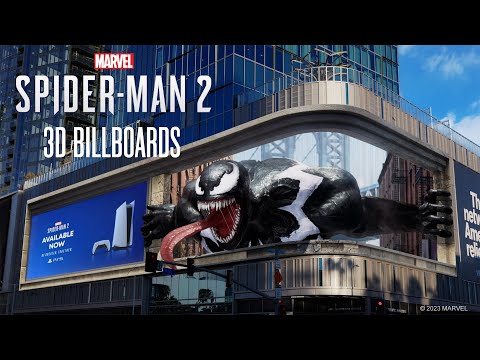
If you’re not acquainted with 3D billboards, they are a phenomenon in major urban centers where aggressive wall advertisements essentially comprise the local aesthetic (such as New York City’s Times Square). Using visual deception and forced-perspective graphics, they produce breathtaking visual effects, such as objects appearing to burst beyond the billboard and into the real world. This technique is referred to as anamorphic imagery. Here’s a brief Marvel highlight reel showcasing Spider-Man video game billboards to illustrate the concept:
Marvel’s Spider-Man 2 3D Billboards Worldwide
From a technical perspective, these displays are undeniably impressive. Aesthetically, they can be quite fascinating. And they are undoubtedly efficient—it’s tough to pass by a billboard that seems to be jumping out at you without being intrigued. Which makes the idea of placing them on moving vehicles sound like a truly terrible (and dangerous) concept.
Imagining ordinary roads resembling Mario Kart tracks with animated images whirling around is amusing. However, I cannot emphasize enough how much I dread the prospect of products being (virtually) launched at me while I’m navigating traffic.
I stumbled upon this news yesterday while scanning the web and ended up reading Sixteen Nine Powered By Invidis, a magazine focusing on digital signage. A company named LED Truck Media has outfitted a vehicle with curved screens and illuminated panels to bring that immersive anamorphic effect to the streets.
“We’ve outfitted this next-generation truck with ultra-high-definition LED panels that provide top-of-the-line brightness and color richness, ensuring 3D visuals remain vivid even in bright daylight,” Invidis quotes CEO Jonnathan Trilleras. “With a super-fine pixel pitch, rapid refresh rates, and a curved-screen configuration, we achieve a broader viewing angle that makes anamorphic content appear indistinguishable from reality.”
Seriously? Three-dimensional advertisements that seem like real objects on the road? None of these options is a wise idea. Someone, please put an end to this.
Have a different perspective on why these are a brilliant idea? You can reach out to me at [email protected], but I can’t guarantee I’ll read your message.
**Recent Development: Launch of ‘3D’ Animated Advertisements on Trucks in Traffic**
In a groundbreaking move for outdoor advertising, the rollout of ‘3D’ animated ads on trucks is poised to revolutionize how brands connect with consumers in city landscapes. This state-of-the-art technology merges augmented reality (AR) with sophisticated projection methods to generate dynamic, visually striking graphics that seize the attention of both pedestrians and drivers.
**The Concept**
The essence of the concept involves outfitting trucks with high-resolution projectors and screens capable of showcasing vibrant, animated visuals. These ads can appear three-dimensional, creating an immersive experience that stands out compared to conventional flat billboards. As trucks progress through bustling streets, the animations can alter in real time, facilitating an adaptive advertising strategy responsive to varied locations and audiences.
**Technological Innovations**
The innovation behind these 3D ads incorporates various advancements:
1. **Projection Mapping**: This method permits the projection of graphics onto irregular surfaces, enabling the creation of the illusion of depth and motion. By meticulously aligning the projections to the truck’s dimensions, advertisers can develop impressive visuals that seem to leap from the vehicle.
2. **Augmented Reality Integration**: Using AR, viewers can interact with the ads via their smartphones. Scanning a QR code or utilizing a designated app can reveal bonus content, including videos, games, or special offers, enhancing consumer involvement.
3. **Real-Time Content Management**: Advertisers can modify the content displayed on trucks remotely, allowing for timely promotions and localized messaging. This versatility ensures that ads remain relevant and can react to current events or trends.
**Benefits for Advertisers**
The rollout of 3D animated ads on trucks offers multiple advantages for brands:
– **Increased Visibility**: The attention-grabbing attributes of animated content are more likely to capture interest than conventional static advertisements, boosting brand recall and recognition.
– **Enhanced Engagement**: Interactive components urge consumers to connect with the advertisement, cultivating a stronger relationship with the brand.
– **Mobility and Reach**: Trucks are capable of traversing various neighborhoods and cities, providing brands with the opportunity to engage diverse audiences and enhance their advertising presence.
– **Cost-Effectiveness**: In contrast to permanent structures like billboards, mobile ads can be more economical, particularly for campaigns requiring flexibility and adaptability.
**Challenges and Considerations**
Despite the promising potential, several challenges must be addressed:
– **Regulatory Compliance**: Municipalities may impose restrictions regarding animated ads on vehicles, necessitating careful adherence to legal stipulations.
– **Safety Concerns**: It’s crucial to ensure that the advertisements do not distract drivers or create hazards on the road. Proper directives and safety protocols must be established.
– **Technical Limitations**: The success of the projections may be affected by environmental factors such as lighting conditions and weather, which could limit visibility in certain situations.
**Conclusion**
The debut of 3D animated ads on trucks signifies a notable evolution in the advertising realm. By fusing technology with mobility, brands can tell compelling stories that resonate uniquely and engagingly with consumers. As this trend continues to gain momentum, it will be intriguing to observe its development and influence on the future of outdoor advertising.