
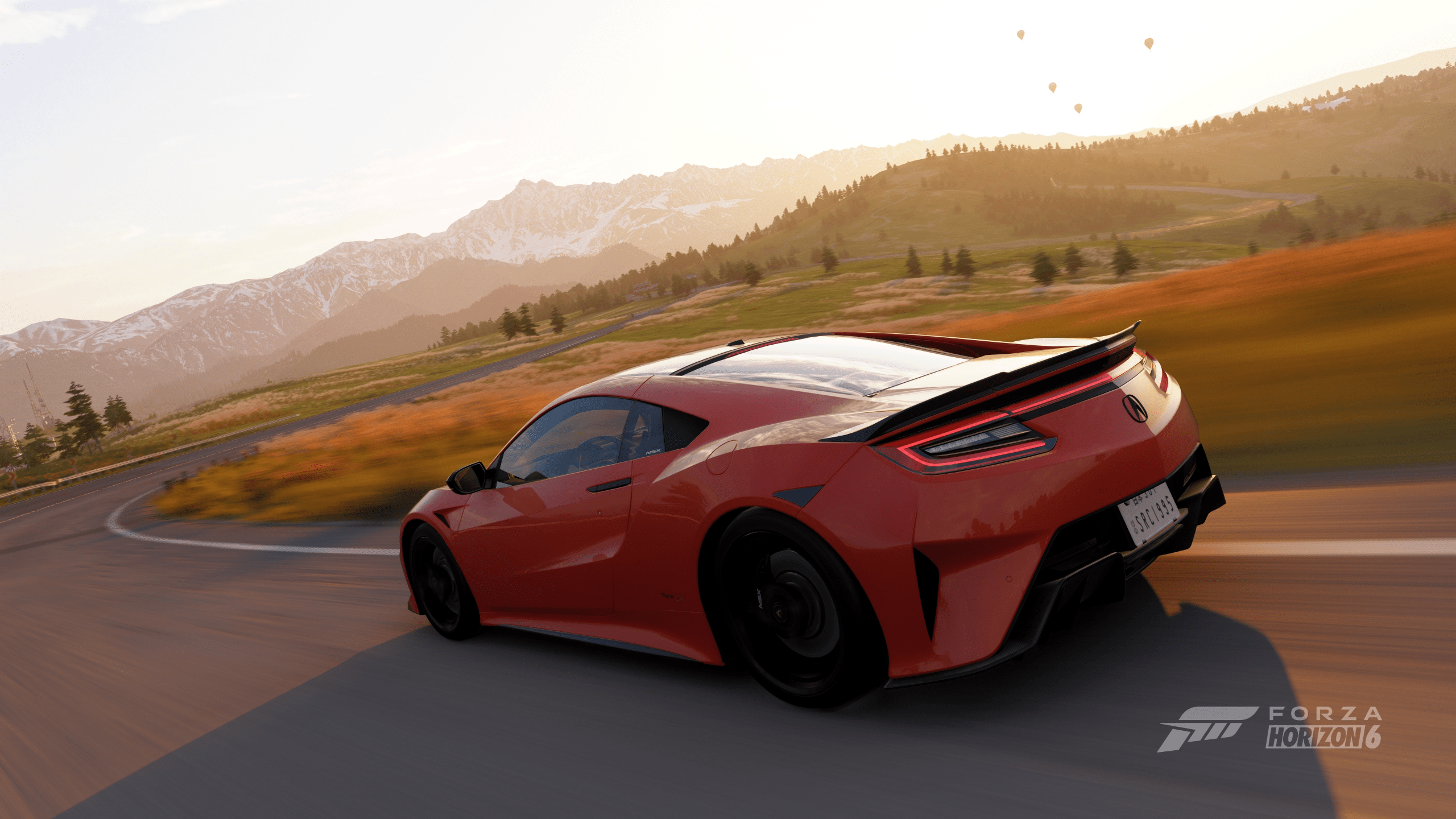
We all desire a getaway. For car enthusiasts and gamers alike, your escape has probably been the automotive playground of Forza Horizon. Believe it or not, it has been nearly fifteen years since a newly formed team of racing game veterans at Playground Games merged the physics powering the Forza Motorsport series with an expansive world. Back then, it was a bold experiment; authentic driving experiences were associated with traditional motorsports, confined to race tracks and closed circuits. What value does a simulation provide on regular roads?
Playground quickly addressed that, transforming Horizon from a quirky spinoff to, simply put, the most substantial racing game featuring licensed vehicles embraced by the broader audience. The mixture of exploration, automotive culture, and a handling model rooted in realism yet not overly punishing has proven to be a successful formula. Gamers continue to arrive, whether they come through Xbox Game Pass, Steam, or PlayStation. All Playground needs to do is change the gathering location. This time, it’s Japan.
This is Horizon’s largest and most intricate map ever, featuring a city that is five times larger than that in the previous iteration—but you likely already surmised this. It also debuts with 550 vehicles, many of which are returning favorites from Forza’s extensive car collection, along with some newcomers.
There have been some minor quality-of-life enhancements, alongside an entirely new method for the most inventive players to establish their presence in this universe. And all of this could have been anticipated by those who attended previous Horizon festivals in Australia, the U.K., and Mexico. If you ventured through those realms and pondered, “Where could they possibly go next?” the response FH6 offers isn’t inherently thrilling. However, if history has taught us anything, it’s that a slight change in scenery is enough to entice everyone back to the celebration.
A Wealth of Activities and Bountiful Rewards
Forza Horizon 6 has you entering the scene as a newcomer, someone who first needs to qualify for the music and motorsport festival before ascending through the ranks of events by earning wristbands. These wristbands grant access to races featuring progressively faster vehicles, marking a significant shift from the recent entries that allowed you to select any car for any race, where the AI opponents would bring competitive machinery. There remain “unsanctioned” street and touge races that operate that way, but primary campaign activities in FH6 will see you beginning with lower-powered vehicles—yes, even kei cars—before you’re unleashed in a Chiron.
As is customary with Horizon, many opportunities await to occupy your time outside of races. You can take on a part-time job as a food delivery driver, join a drifting crew, go on a guided tour of Japan with other tourists, and even help scout fantastic photo locations alongside none other than Larry Chen himself. And if you’re fond of collecting, FH6 will keep you busy for what feels like an eternity. There’s a relentless stream of progress tracking and checklists associated with road exploration, automotive photography, and, in true Horizon fashion, smashing XP boards and mascots.
Once again, barn finds are hidden to uncover, in addition to Treasure Cars, which are more commonplace vehicles seemingly abandoned in plain sight, relying on nothing but a postcard to guide you to them. Barn Finds are among my favorite innovations Horizon has contributed to open-world racing games, and similar to FH5, you can also leave a present for other players once you’ve made a discovery, which is a charming addition.
Additionally, there are now Aftermarket Cars—used cars sold at a lower price found on the world map, which may be stock or heavily modified. New cars rotate into these spots as you progress, and they’re always a pleasure to encounter.
Don’t assume that the more guided campaign structure has made FH6 overly grindy, though. Upon starting the game, you can select one of three vehicles for a drive (a Toyota Celica, Nissan Silvia, or K5 GMC Jimmy), but it really doesn’t matter which one you choose, as all three will end up in your garage. Within a few events, you’re gifted another trio of cars, and nearly every milestone you achieve leads to a cash reward, a prize vehicle, or a wheelspin, which offers a selection of prizes.
You’ll accumulate cars faster than you can manage, collecting “stamps” for accomplishing—at least from my perspective—things of little significance, and checking off activities on your way to the next wristband without needing to win them or even finish in the top three. This is nothing novel for the series, and those players who don’t want to spend ages laboring for a single vehicle, let alone a specific part, simply hoping to plop down on their couch and jump straight into a GR GT will appreciate this.
Yet the repercussions are similar. I feel no connection to the vehicles in my garage I never requested, yet they still occupy space. Moreover, the absence of challenge causes “big” moments—like racing against a real mecha in Japan—to fall flat. Sure, it’s thrilling to see this massive Gundam figure leap over me and boost slide through a tunnel Vanquish-style, but when it slows to a nonchalant jog 500 feet before the finish line to allow me to win, any admiration I had for what I witnessed previously is soon replaced by a profound sense of emptiness.
A New World Awaits
However, you’re not here for the challenge, and that’s something certain Horizon players (hello) have to continuously remind themselves of, while others naturally internalize it. It’s about the landscape and the unique opportunities it offers. Playground Games has consistently excelled in crafting these worlds, although it hasn’t always explored unique concepts or gameplay mechanics to differentiate the act of exploring, say, the Amalfi Coast from traversing Australia. Indeed, FH6 places you in a Honda Acty to deliver some ice cream across town, yet the result is essentially a time trial. In many instances, whatever exposition you’re offered usually reduces to a time trial.
Car Meets stand out as a notable exception. As previously mentioned, Tokyo features Horizon’s most expansive city to date. Much of that scale is achieved not just horizontally but vertically, thanks to a recreation of the famed Shuto Expressway that intertwines through and above the city. It certainly offers a richer environment than any of the previous games, with diverse districts, spanning from suburban peripheries to the financial sector, the narrow, neon-lit alleys of Shinjuku, and the dockyards where the legendary Daikoku Parking Area resides.
Daikoku serves as an ideal hub for Car Meets, a location where players can converge, showcase their vehicles, and browse those of others in their session. However, this experience heavily relies on enjoying FH6 in a social context. Throughout this review period, when only a tiny fraction of the launch player base has access to the game, those parking spots have largely been empty.
If you have a solid group, though, some of the most enjoyable moments in FH6 come from leading your convoy in a time attack. Simply enter one of the game’s fun grassroots-style circuits, and the timer initiates. The leaderboard in the upper-right corner will populate as more of you complete laps, presenting an effortlessly enjoyable way to pass time, whether it’s a few minutes, thirty, or an hour. It’s that captivating, and the minimal friction makes it one of my favorite new features of the game—provided you can join up with friends.
Together or solo, it’s delightful to drift down that winding concrete and arrive at Daikoku at the base, or round a corner on the expressway and spot Tokyo Tower or the Rainbow Bridge beautifully framed by the buildings, in a moment you just know the map creators designed for players to experience precisely that way.
From the rolling plains with wheat swaying and Mount Fuji in the distance, to the snowy northern regions emulating the ski paradise of Hokkaido with those incredible alleys piled with snow and ice, Playground’s portrayal of this nation is, once again, the game’s greatest strength. Moreover, FH6’s Japan clearly reflects its seasons much more than FH5’s Mexico, likely keeping the game feeling fresh week after week.
If it were my decision, I would slightly scale down the wide streets (though not to an overly constricting real-life scale) and ramp up traffic in the city to impart that true sense of dynamism and bustling energy Tokyo demands. On second thought, considering the impact this has on game performance, it might be wise that the developers opted for less crowding, but more on that later.
Driving Dynamics, Customization, and Performance
If you enjoyed the driving mechanics of Forza Horizon 5, you shouldn’t expect any issues with this new entry. As far as I can tell, it drives nearly the same as its predecessors: ample initial front-end grip, a lack of feedback once the tires start to slide, a rear axle that isn’t too communicative yet generally forgiving, and a strong emphasis on early braking. This combination of realistic and unrealistic behavior has never made the Forza series the most engaging experience for me personally.
Some vehicles do stand out, such as the new R Class time-attack machines with their monumental downforce. Additionally, the new hand-over-hand steering animations definitely enhance the feeling of driving from the in-car perspective if that’s your preferred viewpoint, and the drifting community will surely appreciate that.
One criticism I must make regarding the AI relates to the earlier mentioned street racing events. I can easily outpace competitors in most event types at higher difficulty levels, but the street races, which often emphasize faster routes at night, are a real challenge. Rival vehicles consistently seem to possess slightly more power and far greater grip than you do, meaning they can brake significantly less than required. Additionally, typical Drivatars will force themselves into nonexistent gaps, shoving you into barriers without any regard. I usually aim to avoid rewinding in Horizon, but for these events, it regrettably becomes somewhat necessary.
On a brighter note, significant enhancements have been made to the game’s customization options. There are countless new aftermarket wheel selections available, along with the ability to mix different rims on the front and rear axles. And the color picker—an age-old concern with Forza games, spanning from Motorsport to Horizon—has finally seen improvement, allowing you to select one of the standard colors and then choose your desired finish. It significantly reduces the time spent, especially for those of us who prefer not to tinker with a livery editor, particularly since Playground still doesn’t let players upload decals from external devices like Gran Turismo does.
Much has been said about the new default Forza-branded aerodynamic features available for all vehicles. They certainly represent an improvement from the clunky splitters and generic wings of the past, yet they still lack that custom feel, and FH6’s aftermarket parts offerings are regrettably meager beyond the wheels.
One of this franchise’s hallmarks in its early days was a wide variety of bumpers, skirts, hoods, and spoilers for every vehicle, yet Playground appears to have directed more attention toward extreme yet static Forza Edition cars than swappable cosmetics. At the very least, some previously poorly rendered models, like the S15 Nissan Silvia, R32 and R33 Nissan GT-R, and E30 BMW M3, have now received updated meshes, making them look substantially better than they ever have in Forza before.
If the operating-room like sterility of the standard garage space in these games disappoints you, especially creative players now have the opportunity to embellish their surroundings, Halo Forge-style, by placing props and rearranging their vehicles in the space. Honestly, this isn’t something that captivates me, but it’s sure to appeal to those who invest hundreds of hours into Horizon.
There’s also the new Estate area: an open field situated in the center of the map where you can design anything from a hidden motorsport compound nestled in the woods to a specially designed racetrack. The potential for this area is massive, and we’ll undoubtedly witness artists and the Roblox generation pushing the limits of what’s achievable. In true Forza fashion, all of these creations are shareable as well.
A final note on performance. I tested Forza Horizon 6 on PC via Steam. My system—a Ryzen 5800X3D CPU paired with a Radeon RX9070 GPU and 32GB of DDR4 RAM—is hardly state-of-the-art, yet I achieved frame rates ranging from 65 to 85 on mostly extreme settings, with ray-traced reflections and screen-space global illumination, at native 1440p resolution. More rural sections of the map favored the upper end of that range, while the city of Tokyo consistently drops the framerate by at least 10 fps or more, particularly when the rain starts.
If your hardware can handle the frames and you possess the equipment for it, I strongly recommend setting aside screen-space GI and opting for ray tracing there as well, so you can experience the breathtaking light reflections of the treetops onto sheet metal. FH6 undoubtedly appears its most impressive with that setting at a minimum of medium.
This performance is promising for relatively humble hardware and should guarantee that the game runs smoothly across various setups. The main issue I encountered was stuttering and sporadic lengthy pauses during the initial ten hours of gameplay as shaders compiled. The frequency and duration of these interruptions lessened as I explored more of the map, but any PC gamer is familiar with these issues. The only genuine solution is to play, and ideally, by the time FH6 becomes publicly available, this process will be a bit smoother for the day-one players. Naturally, console players won’t face any of these concerns.
The Conclusion
Playground Games has crafted yet another open-world driving paradise in Forza Horizon 6, further solidifying the series as a paragon of consistency in its genre. Any player who enjoyed the franchise’s previous adventures is bound to appreciate this installment as well, especially if they have a passion for Japanese car culture. This series has a clear formula, one that Playground seems to masterfully replicate wherever it chooses.
However, inherent in that observation are certain limitations. If it wasn’t evident before, Forza Horizon will never be a franchise that presents an old-school, solitary sense of challenge and achievement. Those side-story quests invariably provide distinct narrative embellishments on time trials. The characters and their backgrounds feel dispensable, almost like they exist solely to position you into the next vehicle, a realization supported by the fact that the camera in any cutscene is always focused on what you’re driving, not who’s speaking. Horizon established its physics language long ago and dares not to disrupt what has worked in the past. The cars in this series are designed to enable exploration of the world, rather than inherently contain a depth to delve into.
Forza Horizon 6 may not astound, but it does represent the largest and most opulent journey of its kind, taking place in a revered destination for enthusiasts. And, perhaps, that’s sufficient.
Quick Overview
It’s the most visually stunning and extensive Forza Horizon to date, as expected, but the series’ eagerly awaited journey to Japan seems content to embrace the familiar formula of its predecessors.
Forza Horizon 6 Specifications
| Price | $69.99 ($99.99 for Deluxe Edition, $119.99 for Premium Edition) |
| Release Date | May 19, 2026 (Premium Edition accessible May 15) |
| Platforms | Xbox Series X and S | PC via Xbox app and Steam | PS5 later in 2026 |
| Cars | ~550 available at launch |
| Multiplayer | Up to 64 players in a session | Up to 12 players in convoys | Cross-platform |
| Score | 8.5/10 |
Microsoft provided The Drive with an advance version of Forza Horizon 6 for the purpose of reviewing the game.
**Forza Horizon 6 Review: A Comprehensive Examination of the Beautiful and Familiar Racing Experience**
The Forza Horizon series has received acclaim for its lively open-world racing landscapes, varied vehicle lineup, and adrenaline-pumping gameplay. As Forza Horizon 6 releases, fans of the series are eager to discover how this new installment builds upon its predecessors while introducing fresh features and improvements. This review explores significant aspects of Forza Horizon 6, evaluating its visuals, gameplay dynamics, vehicle collection, and overall experience.
**Graphics and Setting**
One of the most impressive elements of Forza Horizon 6 is its remarkable graphics. The game utilizes the capabilities of next-gen consoles and PCs to provide stunning visuals that breathe life into the open world. From dense forests and vast cities to captivating coastlines, every environment is crafted with incredible attention to detail. Dynamic weather systems and a shifting day-night cycle enhance the immersion, making every race feel unique.
Set in an all-new location, the game features a combination of urban and rural scenery. Players can navigate vibrant cities brimming with life as well as peaceful countryside paths that offer a more leisurely driving experience. The expansive map encourages players to uncover hidden collectibles, challenges, and events scattered throughout the realm.
**Gameplay Features**
Forza Horizon 6 retains the foundational gameplay elements that fans adore while integrating various new features that elevate the racing experience. The driving mechanics have been improved, providing a more realistic feel while preserving the arcade-like accessibility that the series is famed for. Players can modify their vehicles using an extensive range of tuning options, allowing customization tailored to individual preferences.
The introduction of a new “Horizon Story” mode permits players to engage in narrative mission-driven tasks that contextualize the racing events. This mode adds depth to the gameplay, prompting players to immerse themselves in the world and its characters. Moreover, the multiplayer experience has expanded with fresh co-op events and competitive modes that foster community involvement.
**Vehicle Selection and Modification**
Forza Horizon 6 presents an impressive variety of cars, showcasing a mix of classic models, modern supercars, and off-road warriors. The game encompasses numerous manufacturers, ensuring players have access to their preferred brands. Each car can be extensively customized, featuring options for aesthetic enhancements, performance upgrades, and tuning settings. The detail involved in the customization process allows players to craft a distinctly personal driving journey.
New vehicle classes and events introduce diversity to the gameplay, inspiring players to experiment with various cars and racing styles. Whether players lean toward street racing, off-roading, or circuit challenges, Forza Horizon 6 offers something to suit every preference.
**Soundtrack and Audio Elements**
The soundtrack in Forza Horizon 6 remains as varied as ever, comprising a selection of music that complements the fast-paced racing atmosphere. Players can revel in a blend of genres, including electronic, hip-hop, rock, and pop, ensuring there’s something for everyone. The audio design goes beyond the music, featuring realistic engine sounds and ambient noise that enriches the overall experience.
**Final Thoughts**
Forza Horizon 6 successfully expands upon the groundwork laid by its predecessors, offering an impressive visual spectacle and an engaging racing experience. With refined gameplay mechanics, an extensive open world, and a broad array of vehicles, the game appeals to both veteran fans and newcomers alike. The inclusion of narrative elements and enhanced multiplayer features contributes to a deeper gameplay experience, making Forza Horizon 6 a must-play for racing aficionados. As the franchise continues to evolve, it remains a standard for open-world racing games, solidifying its reputation in gaming lore.
 admin
admin