
Japan has seen numerous iconic wheel designs evolve over time, yet few are as sought after as those from Racing Service Watanabe. RS Watanabes and a Hakosuka Skyline GT-R are as perfectly matched as sushi and wasabi, and the fact that these wheels continue to be handmade maintains a limited supply. Presently, there is a two-year waitlist for them.
Fortunately, a comprehensive video documenting the creation of these legendary wheels is now available. Created by the straightforwardly named Japanese Industry Process YouTube channel, it runs about 50 minutes and details each step in the process for both aluminum and magnesium wheels. In both cases, the method begins with melting the metal—including scrap pieces—to pour into molds for wheel casting. This is done in small furnaces located directly on the shop floor among various molds and tools. While Japan has several massive, advanced factories, this is not among them.
The aluminum reaches temperatures of 1,292 degrees Fahrenheit. It is subsequently scooped from the furnaces using buckets lined with graphite for heat protection. At this stage, the mold components are also heated, blown with air to eliminate dust, and sprayed with a release agent to prevent the substance from adhering to the mold. Each mold consists of two halves and a central core that mirrors the wheel’s hub and spokes. These components are clamped together before the molten aluminum is introduced and permitted to cool under pressure.
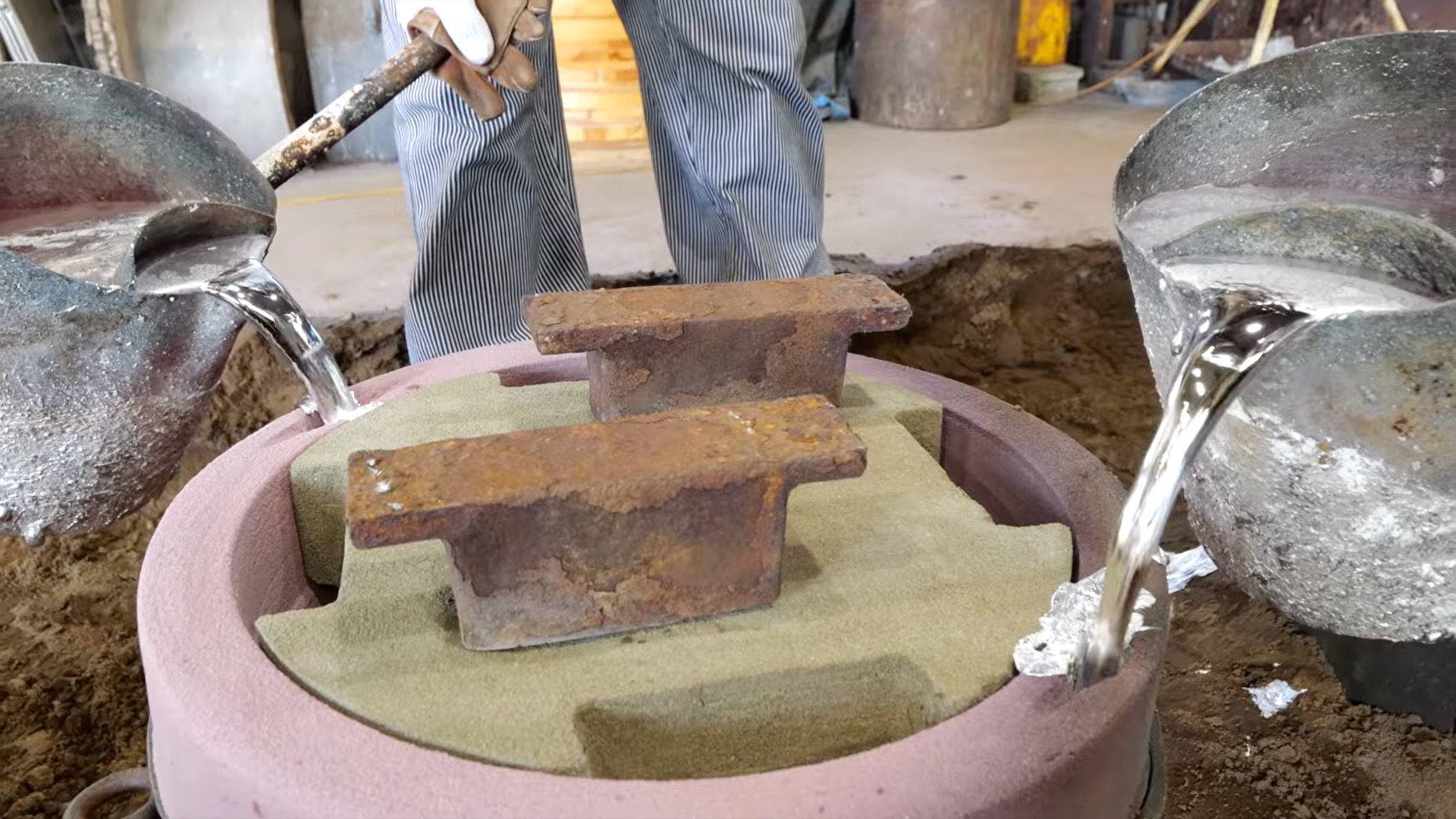
Watanabe produces magnesium wheels using an even more traditional sand casting method. Molds are created from compacted sand, which must be meticulously heated and dried to ensure maximum strength and eliminate moisture, as this could react dangerously with the magnesium. The molds are positioned in sand piles, the material is poured in, and afterward, the mold is chipped away to free the wheel.
レーシングホイールを製造。日本のモノづくり精神を体現する工場に密着。手作業での鋳造から加工、梱包まで。
When the wheels emerge from the mold, they are far from ready to be mounted on a vehicle. Excess aluminum is either hammered or sawed away, surfaces are sanded, and imperfections are corrected by adding more material with a TIG welder and then sanding it down to a smooth finish. Some finishing touches are performed using a CNC machine—which provides a stark contrast to the somewhat archaic appearance of the rest of the shop—but stud holes are still manually created by a person using a drill press. In the end, the wheels receive a coat of gray paint before being packaged and shipped.
It’s appropriate that such classic wheels are crafted using a traditional process. Moreover, it’s quite impressive to witness pieces of metal transformed into one of the most distinctive aftermarket wheel designs available.
**Artisanal Watanabe Wheels: Classical Japanese Craftsmanship Methods**
Watanabe Wheels, celebrated for their premier quality and craftsmanship, encapsulate the essence of classical Japanese manufacturing methods. Founded in the mid-20th century, Watanabe has become a name associated with performance wheels, particularly within the automotive enthusiast realm. The careful procedure involved in crafting these wheels mirrors a profound respect for artistry, tradition, and innovation.
**Contextual Background**
The creation of Watanabe Wheels finds its roots in Japan’s post-war period, during which the automotive industry began to thrive. The founder, Watanabe, aimed to produce wheels that not only improved vehicle performance but also exhibited the talent of Japanese craftsmanship. This dedication to quality has enabled Watanabe to cultivate a devoted following among automotive aficionados, especially those who value vintage and classic automobiles.
**Craftsmanship and Production Techniques**
The making of Watanabe Wheels encompasses several traditional Japanese practices that have evolved over time. Each wheel is constructed with precision, guaranteeing that it fulfills the highest criteria for performance and visual appeal.
1. **Choice of Materials**: Watanabe Wheels are generally crafted from premium aluminum alloy, selected for its lightweight characteristics and robustness. The selection process focuses on durability and performance, ensuring that the wheels endure the demands of driving.
2. **Forging Technique**: A pivotal technique employed in creating Watanabe Wheels is forging. This method involves shaping the aluminum alloy under substantial pressure, resulting in a denser and more resilient material than cast wheels. Forging bolsters the wheel’s structural strength, rendering it suitable for high-performance situations.
3. **Machining**: Once forged, the wheels undergo precise machining. Skilled craftsmen utilize advanced CNC (Computer Numerical Control) machinery to attain exact specifications. This phase is crucial in guaranteeing that each wheel is balanced and fits seamlessly on the vehicle.
4. **Final Touches**: The finishing phase involves polishing and anodizing, which not only heightens the visual allure of the wheels but also offers a protective coating against corrosion. The painstaking attention to detail in this stage symbolizes the traditional Japanese principle of aesthetics, termed “wabi-sabi,” which cherishes beauty in imperfection and natural aging.
5. **Quality Assurance**: Watanabe Wheels experience stringent quality control evaluations throughout all production stages. Each wheel is examined for strength, balance, and finish, ensuring that only top-quality products make it to market. This dedication to quality is a defining feature of traditional Japanese craftsmanship.
**Cultural Importance**
Watanabe Wheels are not merely performance enhancements; they embody a cultural legacy that prizes craftsmanship, meticulousness, and a connection to history. The brand has become an emblem of Japanese automotive culture, frequently linked to the drifting and racing communities. Enthusiasts appreciate not only the performance advantages but also the narrative and tradition encompassing each wheel.
**Closing Thoughts**
Artisanal Watanabe Wheels represent the blend of traditional Japanese manufacturing practices with contemporary automotive demands. The commitment to quality, craftsmanship, and cultural importance positions these wheels as a preferred choice for automotive enthusiasts globally. As the automotive sector continues to progress, Watanabe Wheels stand as a testament to the lasting heritage of Japanese artistry and innovation.