
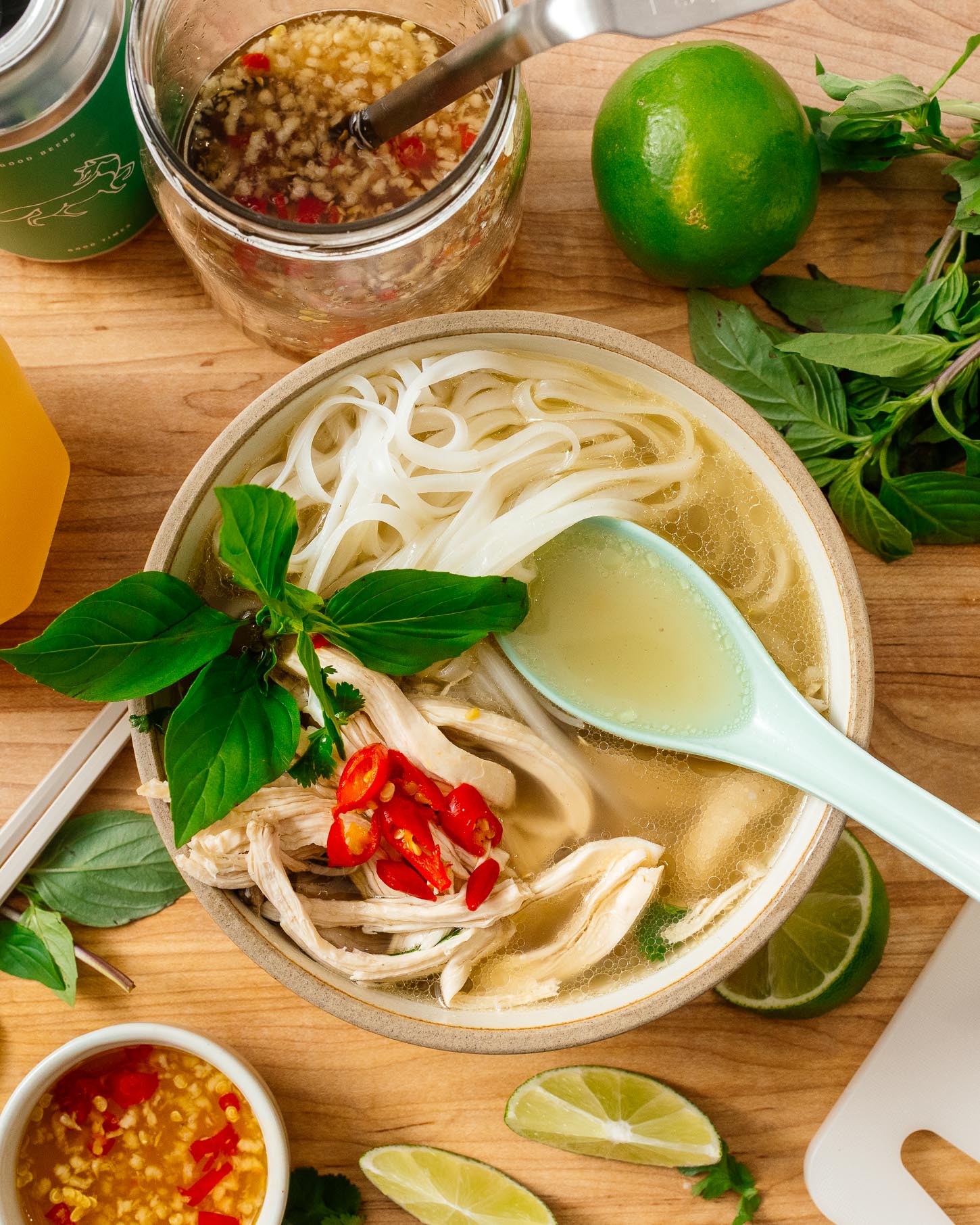
A super flavorful, very authentic chicken pho that takes about 3 hours to make and, dare I say it, might be better than traditional beef pho.
As a Vietnamese person, making the food of my people is deeply important to me. This is my personal chicken pho recipe that I’ve been refining for the past 10 years. It’s different (and less accessible) than the easier one in our cookbook. I’m finally putting it up because Steph wanted to be able to make it rather than ask me to do so every time she craved chicken pho.
It’s aromatic, refreshing, light, and deeply satisfying. It takes a little bit of effort but I think it’s worth it. You might even skip the restaurants after this one.
A personal recipe
This is going to be an old school blog post.
Back in the early 2010s when blogging was a bigger thing, before tiktok, everyone seemed to be doing over-the-top giant multi-hour project recipes. Blogging went from headlines like 72-hour Slow Roasted Beef Rib Pho with Homemade Rice Noodles to Easy Best 15 Minute Pho. Steph and I are no less guilty of this, but I feel like we lost something along the way. This post is definitely not designed to rank high on search. Instead, it’s the most delicious pho recipe that I know how to make.
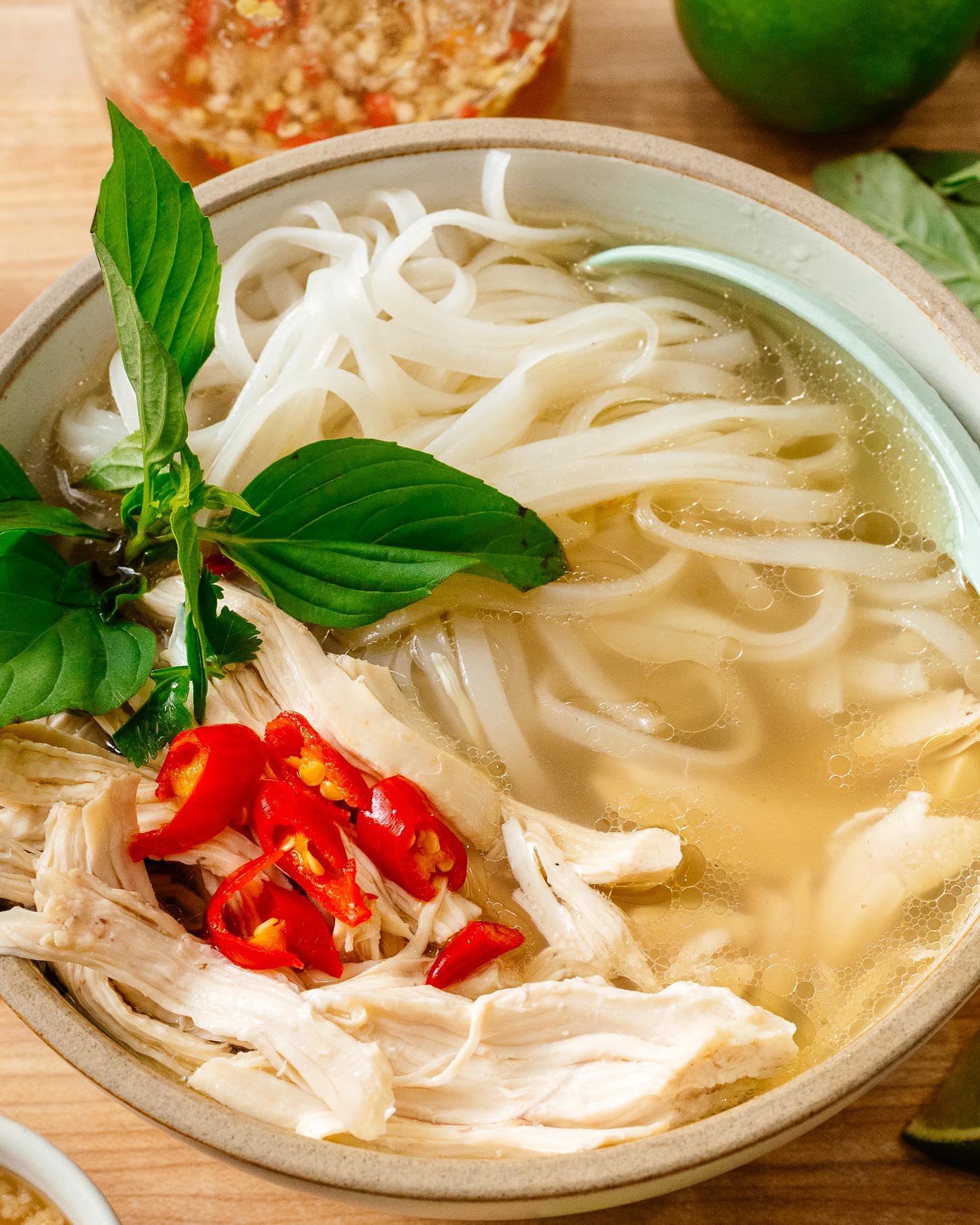
What is chicken pho (phở gà)
Chicken pho is a less well known though no less authentic version of pho. It has roughly the same flavor profile, but is lighter, healthier, and faster and cheaper to make. If you love pho, you owe it to yourself to try a great chicken pho. It’s like steak vs fried chicken, both are equally delicious.
Equipment
For this recipe the following equipment isn’t strictly needed but guarantees an easy experience:
- A large stockpot. You’ll need a pot that’s large enough to hold a whole broken down chicken plus an onion and ginger. Most of the stockpots that come in those 7 piece sets are just large enough, but the bigger the better.
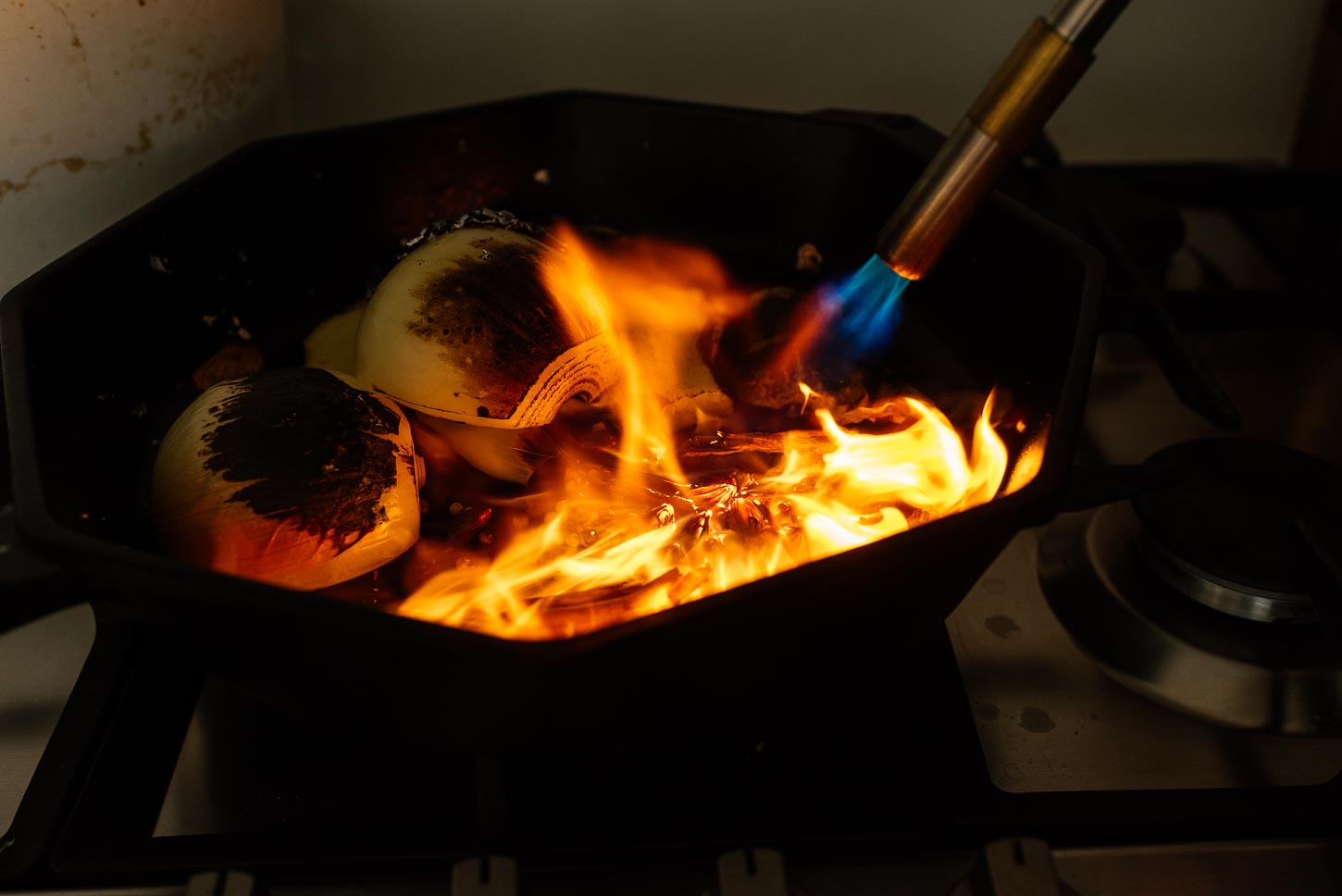
- A kitchen torch. I use a full-on blowtorch. You can toast the spices some other way (like in a cast iron pan) but it won’t be as smoky and delicious.
- Tongs. We’ll be moving a lot of chicken around, and tongs are the best cooking utensils for this. If you have metal tipped ones, you can use them to debone the chicken after it’s been cooked rather than a knife and fork.
- 2 large mixing bowls. I use these to transfer the chicken, debone the chicken, weigh the noodles, etc.
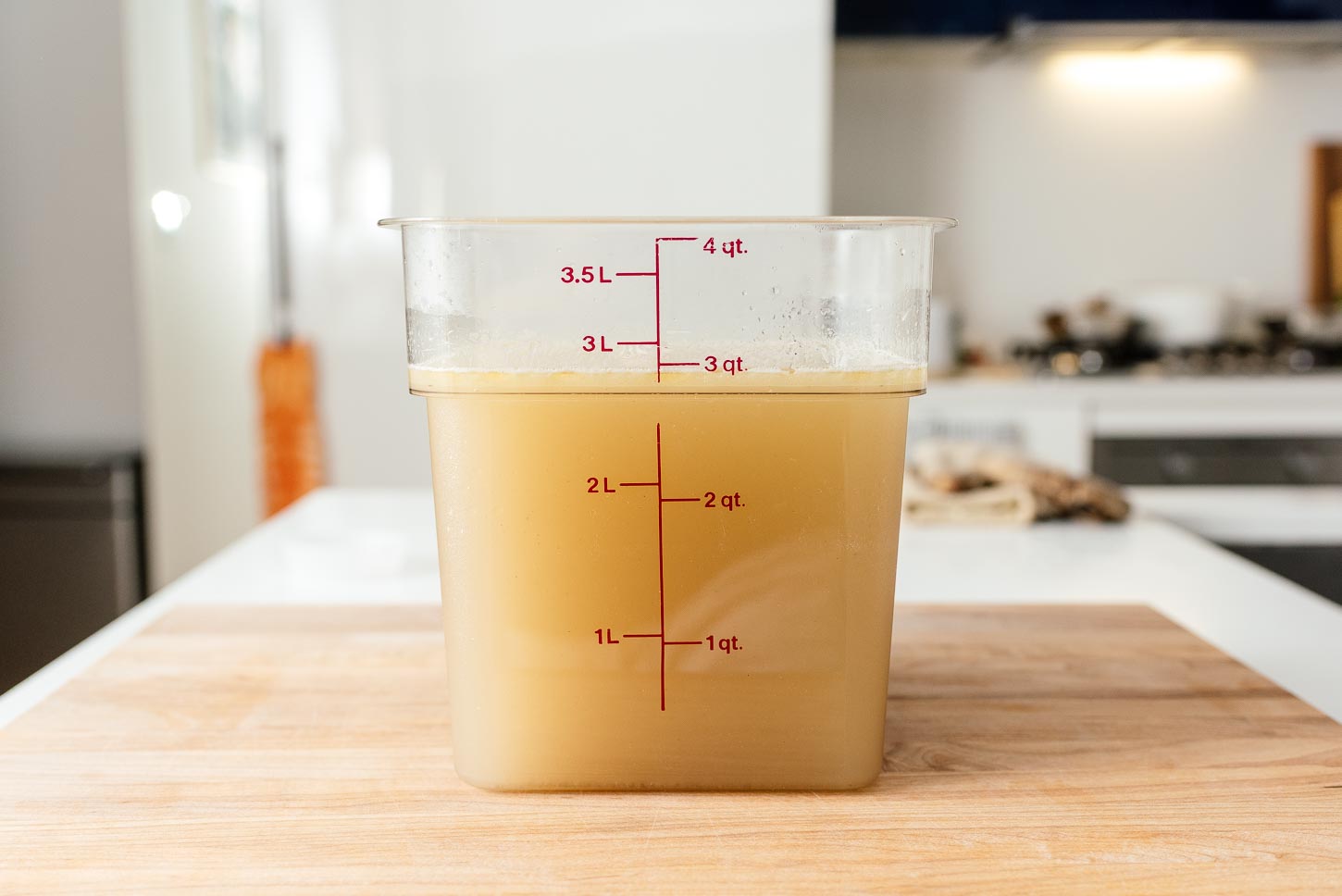
- Sieve and 4qt container. To strain the soup. We own and love these 4qt cambros (shown below) that you can get from any restaurant supply store or online. They’re useful for soup making, of course, but also storing large amounts of leftovers and general storage. Steph uses a larger 10qt one just for her instant noodle library.
- Noodle Bowls and Chopsticks. To serve and eat, more on that below.
How to make chicken pho
Although I’m talking up how difficult this recipe is, it’s not really that complicated. Here’s how you make chicken pho:
- Char your aromatics. Char your onion and ginger for about 10 seconds. I use a blowtorch, but a small kitchen torch will work too. Transfer to your large stockpot. Pro tip: leave the hood fan off because this process creates some ash and the hood fan sucks it right into the filter if you have it on.
- Briefly char your spices. Just about a second is enough. Then transfer to a tea bag if you have one and add to the stockpot
- Add chicken and cover with water. Bring to a boil. Note the time that the soup has come to a boil.
- Remove the chicken and cool. About 25 minutes after the soup boils, remove the chicken and allow to cool. Keep the soup at a low simmer and add water if needed.
- Debone the chicken. About 15 minutes later the chicken will have cooled enough to handle. Roughly remove the meat from the bones. You don’t need to work too hard on this, any meat left over just helps flavor the soup. Transfer the meat to a container, cover, and refrigerate.
- Simmer the soup. Add the bones back to the soup and simmer for 30 mins to 2 hours. The longer the better, obviously.
- Strain the soup. I’ve found that removing the bones and larger pieces makes straining easier.
- Season the soup. This is a pretty personal thing but I’ve included my suggestions in the recipe.
- Build your bowls and enjoy. Instructions below.
How to serve chicken pho
Serving any noodle soup so that everything is hot and ready at the same time (and not soggy) is an art form. Pho is one of the easiest noodles in this respect because the noodles are better the longer they sit out, and the soup goes in last. This is my method:
- Optional: warm the bowls
- Bring the soup to a low simmer in one pot and bring up a large amount of boiling water in another large pot.
- Blanch the noodles according to the instructions on the package. For fresh noodles you dip it in boiling water for 1-2 seconds and drain immediately. For dry noodles it can be as long as 5 minutes depending on the thickness of the noodles, but usually 1-2 minutes.
- Drain and rinse the noodles in a mesh sieve. Unlike pasta, rinsing the noodles removes the residual starch and gives you a cleaner end product.
- Divide the noodles. If you are making more than 2 bowls at a time, it’s worth it to weigh and divide the noodles in a (tared) large mixing bowl. Let the noodles rest in the bowls. They’ll dry out a bit and when you add the soup they absorb a little bit of the soup and become tastier.
- Warm the chicken in the soup and divide between the bowls.
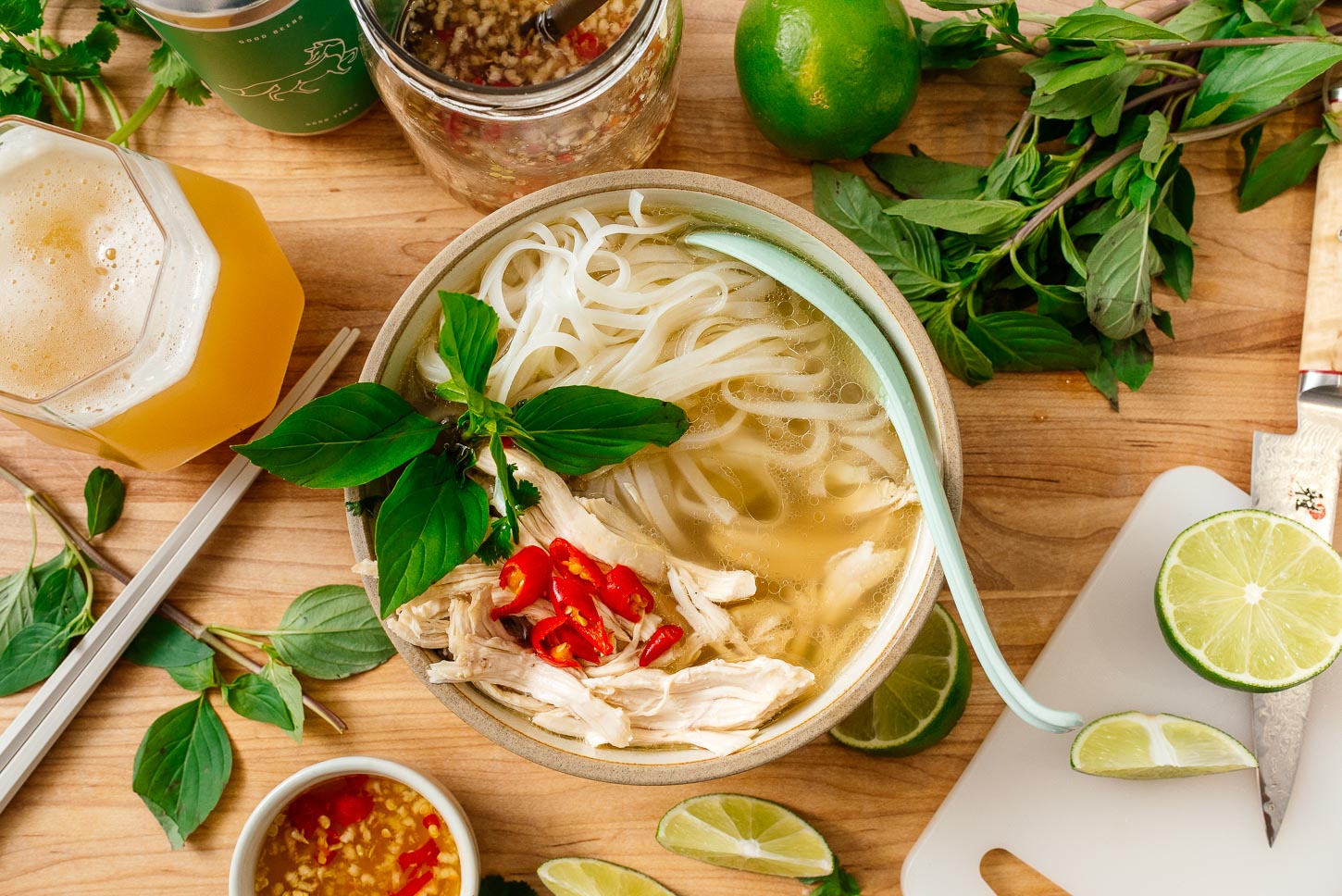
- Set up your garnishes, dips, chopsticks, spoons, drinks etc at the table.
- When everyone is ready to eat, add enough soup to the bowls to cover and carefully bring them to the table. You can optionally bring the whole pot to the table and ladle it there, which is useful in case extra soup is needed.
Chicken pho ingredients
- Chicken. This recipe was originally made to use up exactly one whole chicken. Back in the day, I would break down a whole chicken. These days, I’d rather spend a few extra dollars and buy chicken parts. My current perfect mix is 4 drumsticks, 4 thighs, and a bone-in skin-on chicken breast.
- Spices. You need about 6 spices to make this recipe, more on that below.
- Aromatics. I whittled the list down to just 1 onion and some ginger. A lot of other people will add shallots, the whites of green onions, even carrots and celery. I don’t personally feel like this is necessary but you could, if you like.
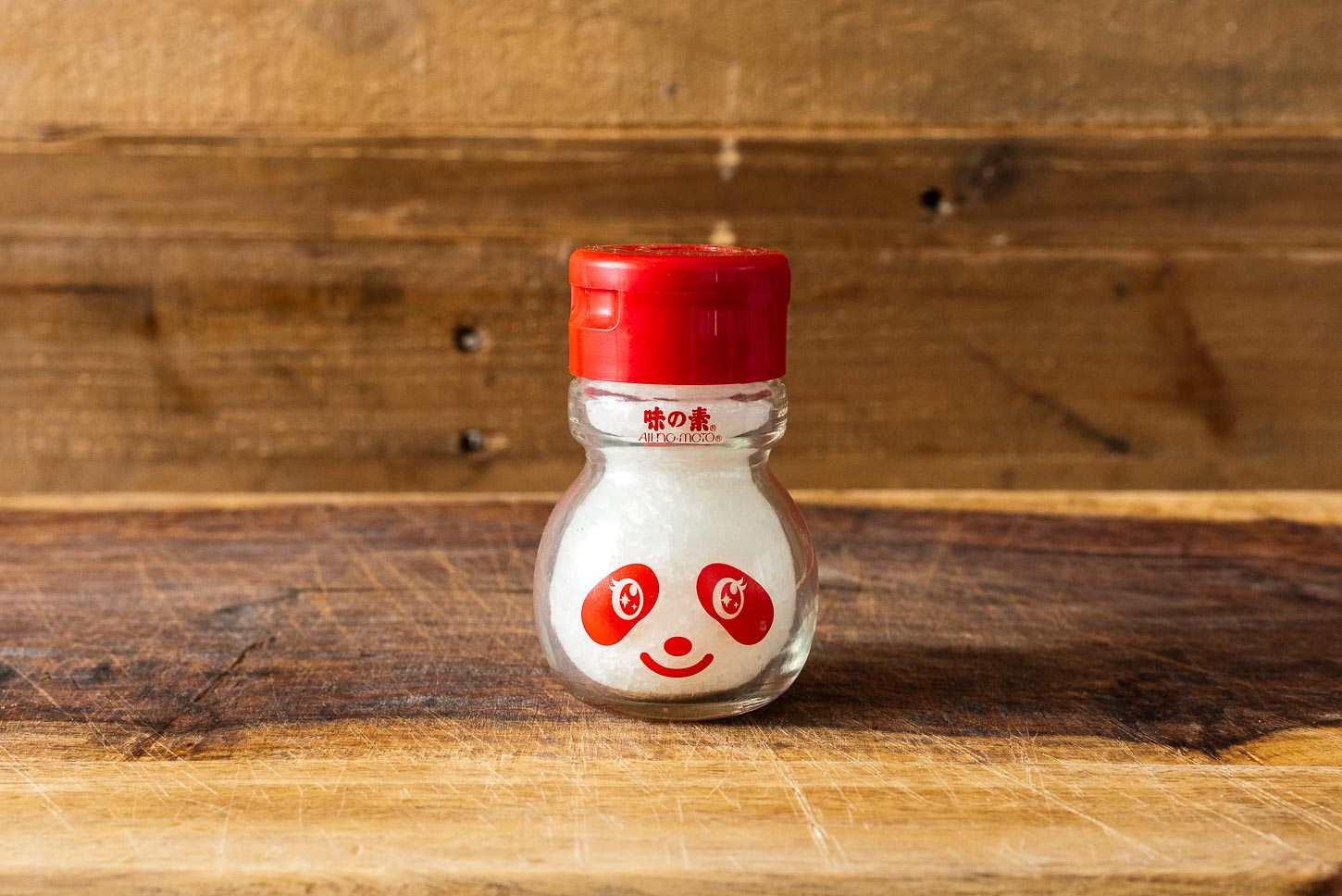
- Seasoning. For Vietnamese recipes, this is sugar, fish sauce, salt, and MSG. The MSG is optional but I personally love it for authenticity reasons. Much has been said lately about MSG and racism (all true) but I make the MSG is optional for another reason: if you don’t already use it, it’s hard to find it in a small amount. If you run into the cute MSG panda though, I’d recommend getting that.
- Noodles. More on pho noodles below.
- Garnishes. Skippable but recommended. You can omit the traditional sriracha and hoisin for this one as well.
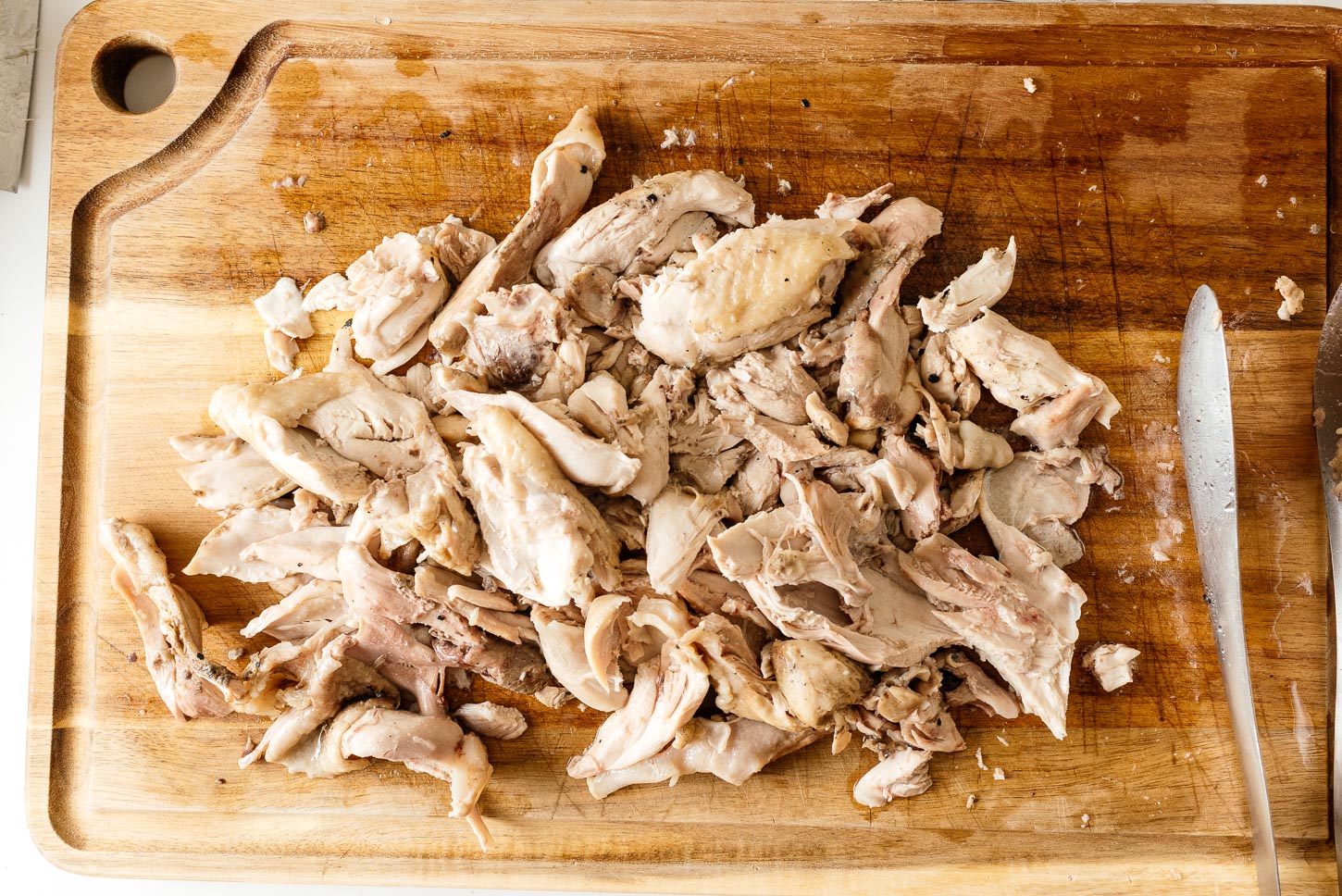
Discarding the chicken
This recipe specifies removing the chicken 30 minutes in, harvesting the meat, and then transferring the bones back in. This is admittedly a labor-intensive step.
If you are super lazy and rich, you could in theory just leave all the chicken in, and then in the last 30 minutes drop in a few boneless skinless chicken breasts for serving, and discard the rest. For me, that’s a bit too much of a waste to consider doing.
A good middle ground would be buying chicken carcasses, which you can sometimes get from an Asian grocery store and definitely from any decent butcher. Then afterwards, drop in the chicken breasts as above.
Some chefs like Thomas Keller and Ivan Ramen straight up tell you in their cookbooks to boil a whole chicken for a couple of hours and discard. My Vietnamese sensibilities could never, though.
The spice pack
Getting the spices are generally the hardest part of making pho at home. Pho spices are intensely personal. In some cities there are (or were) pho masters who went around to all the different pho restaurants selling custom spice mixes so that the restauranteurs could guarantee quality and uniqueness. The spices are what makes pho special for me. A lot of pho recipes online seem to skip the spices entirely, I wouldn’t trust those recipes.
On the other hand, many pho recipes can contain up to a dozen spices. Over the years I’ve whittled down my spice pack to just 6 spices: star anise, cinnamon, coriander, white pepper, cloves, and cardamom. All of these spices are ideally whole, not ground. Whole star anise in particular can be hard to find outside of Asian grocery stores and online.
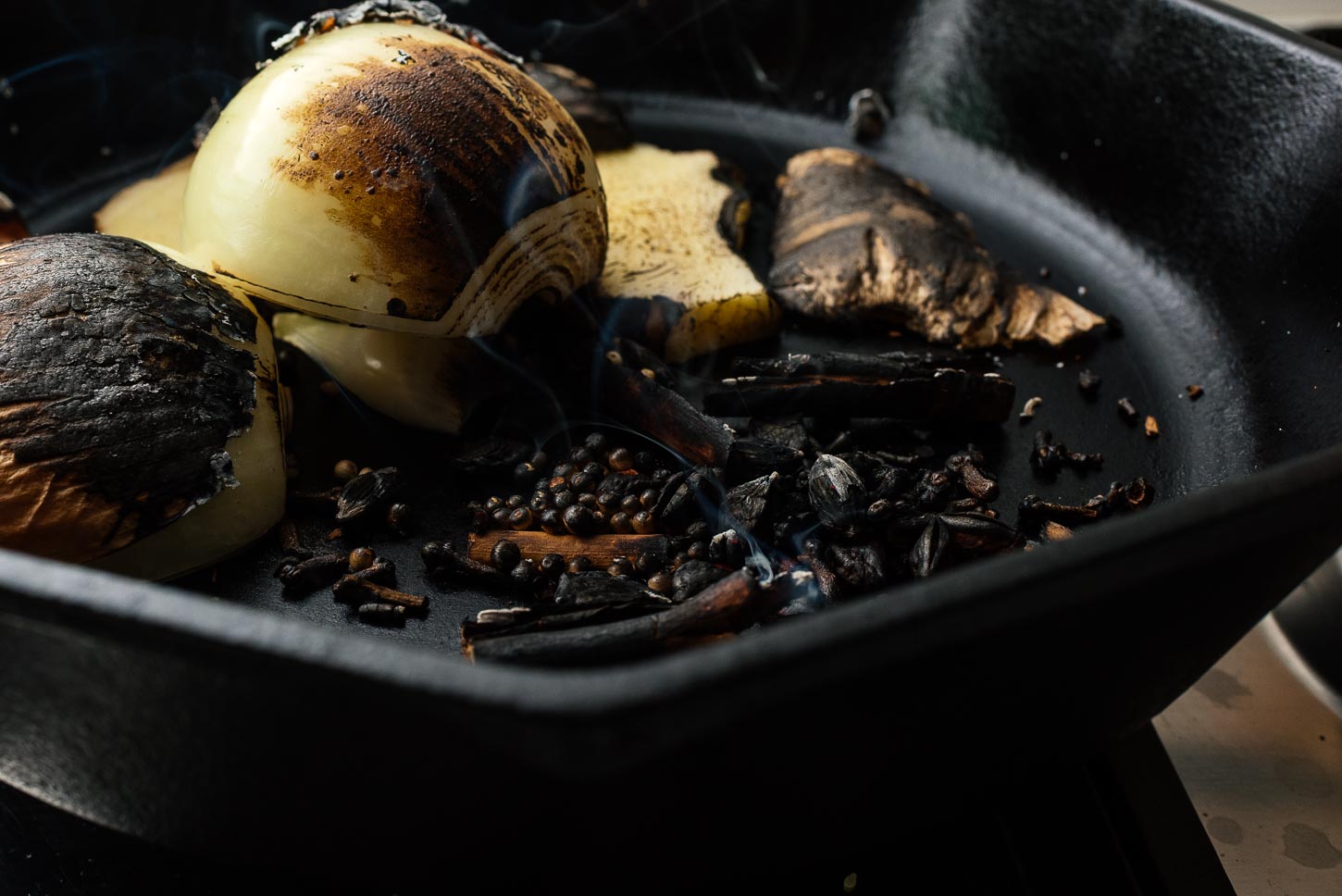
Charring
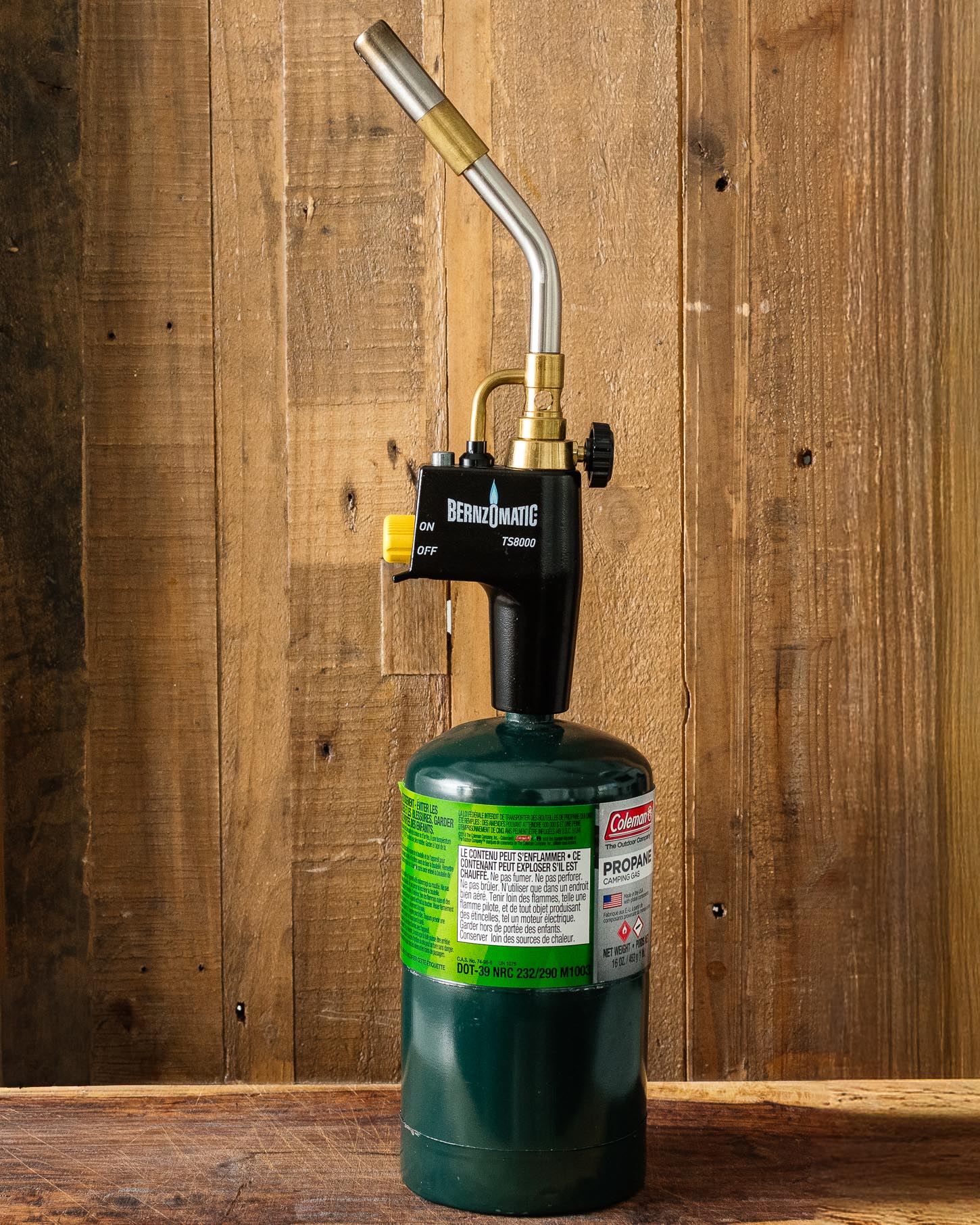
The word pho is often said to come from the French phrase pot au feu and the reason was the charring of the aromatics and spices. If you don’t have a flame source, you can skip this step but it worth chasing down at least a cheap kitchen torch. These butane toppers are also usually about $10 and the butane gas itself is about $1.50 a can.
For me, I pair the classic bernzomatic TS-8000 that’s found in restaurant kitchens across the world with a green coleman propane can for a less industrial/plumbing look. They don’t take up much room when stored separately. We use it more often than you’d think, including when camping to easily start a campfire. The bernzomatic brand is an industry standard and priced as such, but there are identical looking clones online for cheap, though I can’t vouch for how good they are.
Garnishes
Of anything in this recipe that you can skip, I’d say the garnishes are the most optional. Pho is traditionally served with lime, cilantro, thai basil, and chilies. It’s up to you if you want to go with these or not, when we’re lazy we often skip them all. The soup is great as is.
Fish sauce
If you don’t intend to make the dipping sauce and you don’t want to buy fish sauce, this recipe works without it. Fish sauce adds a depth of flavor that you can’t get with just salt. However, many a Vietnamese household makes pho with just salt for a cleaner, more chicken forward taste.
If you want to skip the fish sauce, just add the equivalent amount of salt to replace it (or as much/as little as your taste prefers).
For this recipe (and all seasoning purposes) I prefer a cheaper brand like Golden Boy over something like Red Boat. Unless you have it already, a high end fish sauce here would be a waste of money, like using high end olive oil to fry.
Dipping sauce
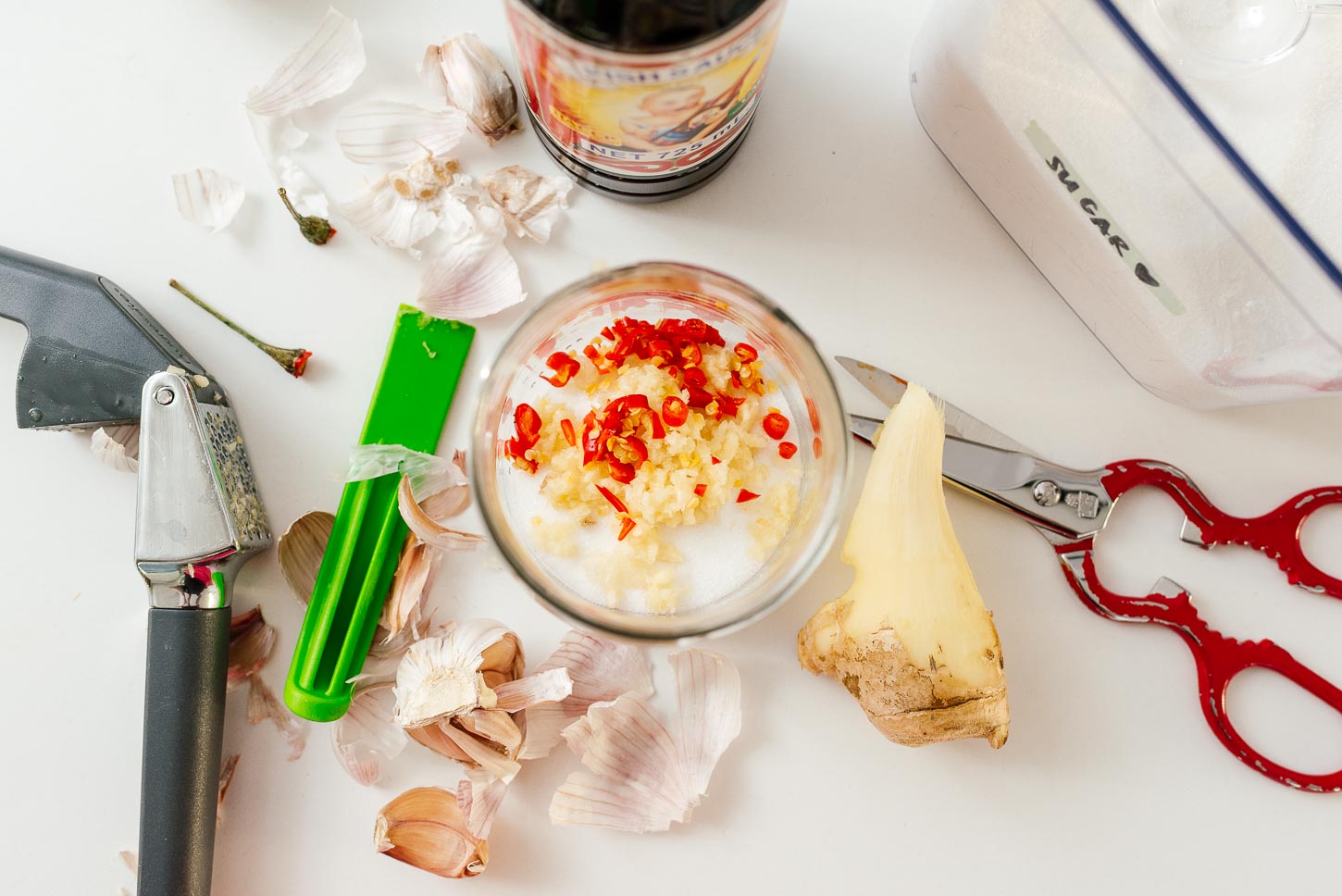
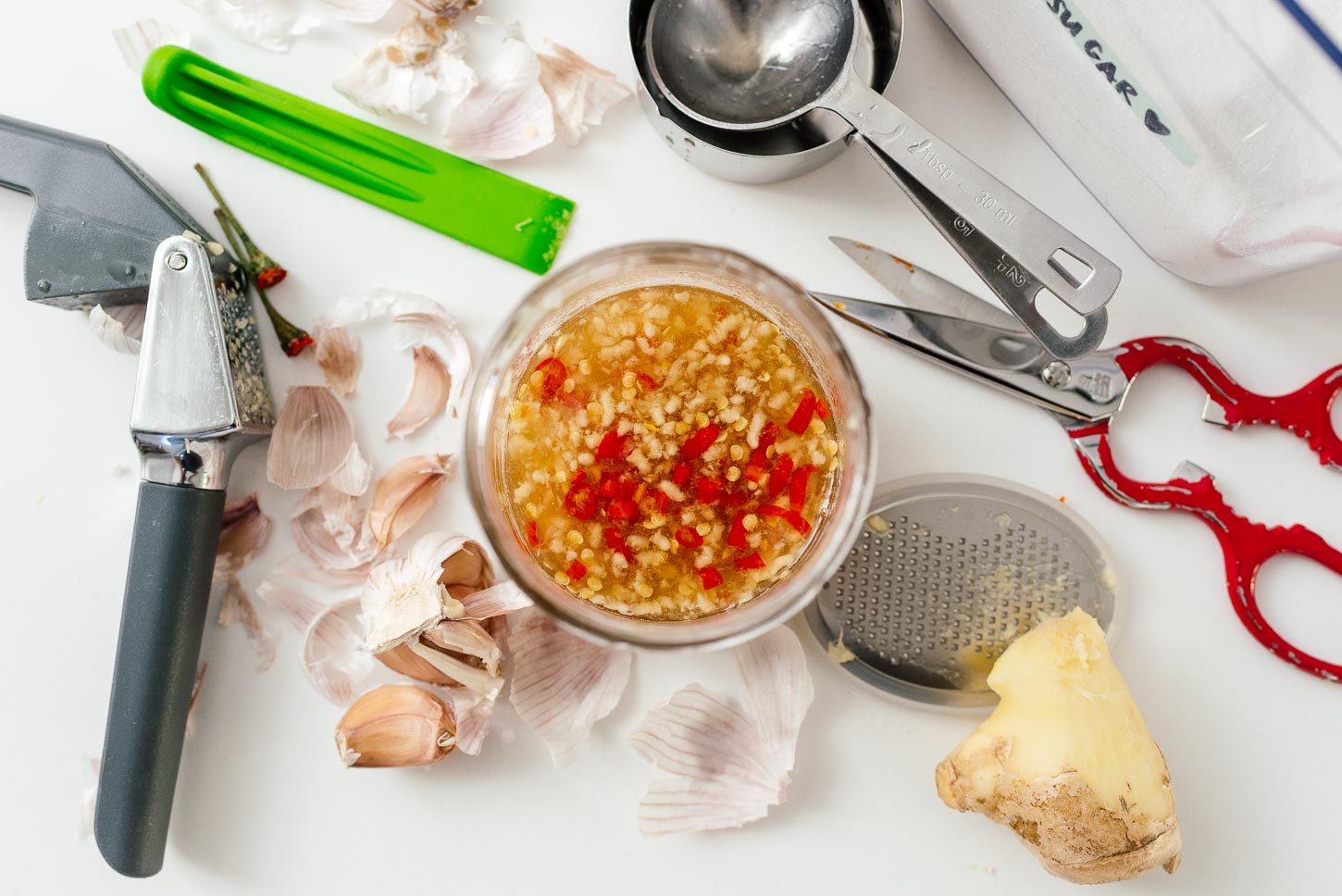
This recipe comes with a ginger fish sauce-based dipping sauce. I think it really makes the dish. Even though we traditionally only use ginger fish sauce with poultry, I love it so much we use it anywhere a fish sauce dipping sauce is called for.
The ginger isn’t an exact measurement because who weighs ginger? Generally speaking, err on the side of more ginger than you’d expect. How much I use is illustrated in these two before/after photos.
Pho noodles
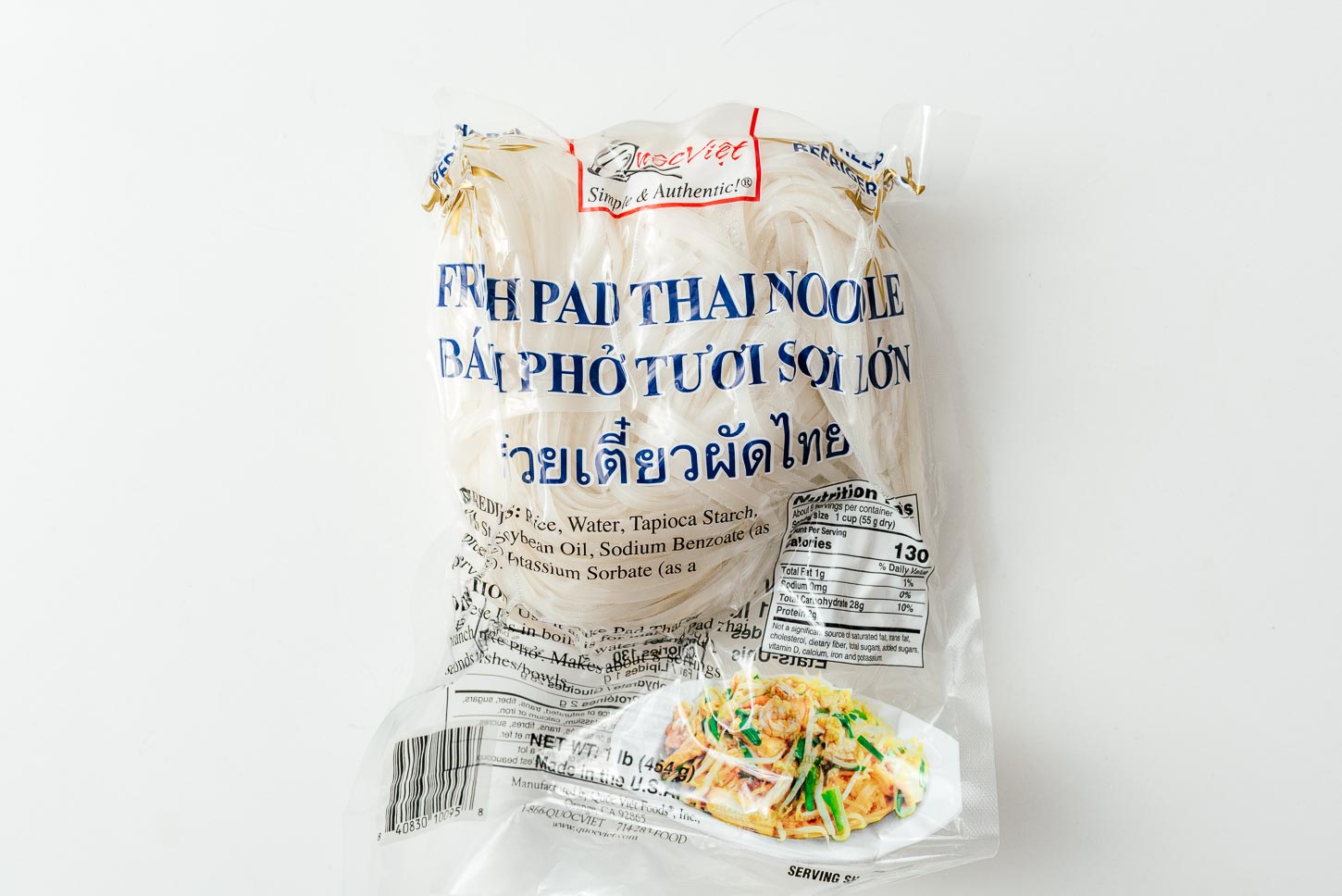
The best kind of pho noodles you can buy are fresh rice noodles. They’re usually stored in the fridge at your local Asian grocery store near the tofu. These noodles are what your local pho restaurant uses and their texture is great.
You can also get dried rice stick noodles in the Asian aisle at any major grocery store. Sometimes it’s called pad thai noodles. Their texture isn’t as good but it works. We’ve used fettuccine in a pinch before.
Noodle bowls
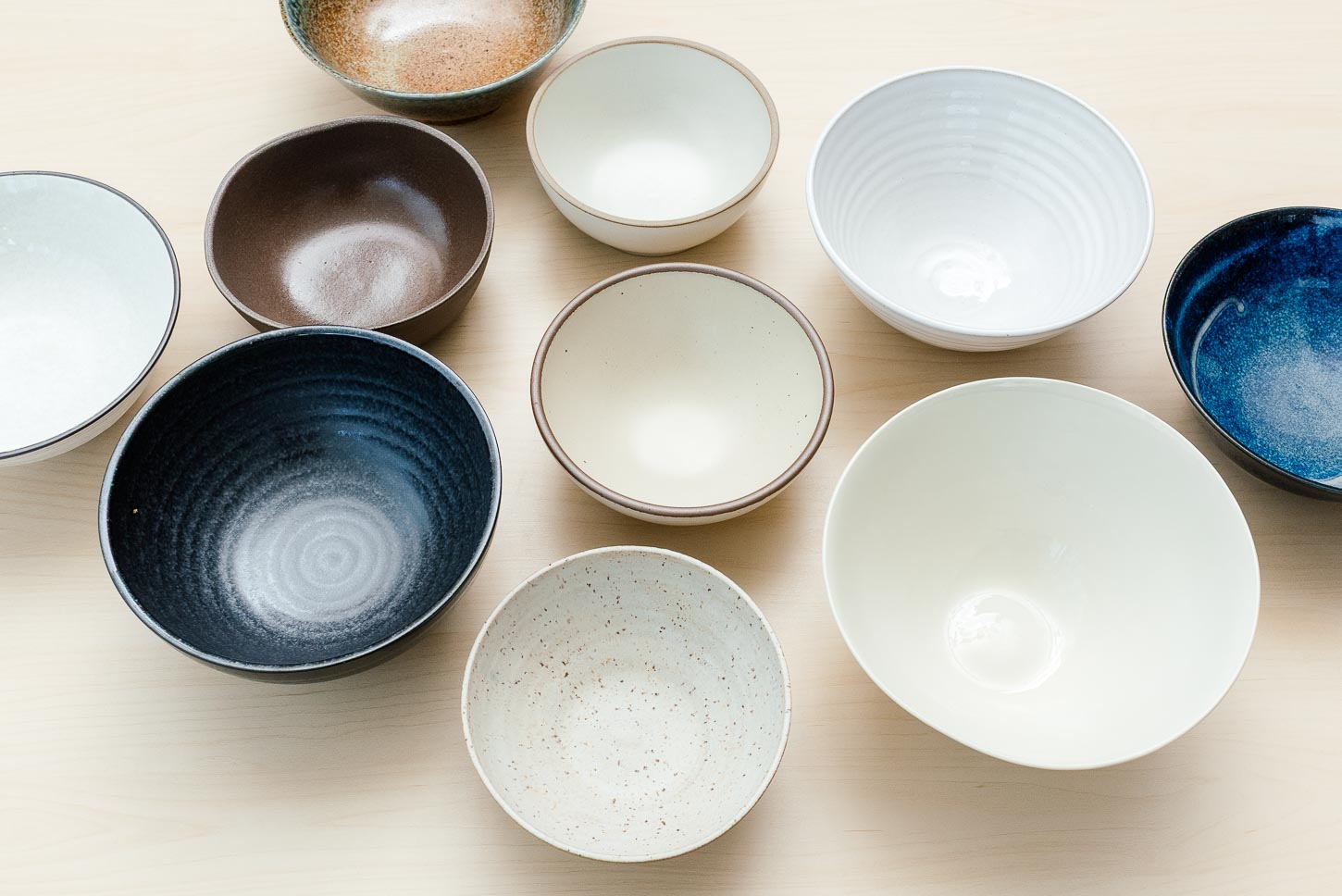
The hardest thing about making pho in a non Asian household/kitchen is that most people don’t have noodle bowls.
The ideal noodle bowl is at least 6″ wide and 5″ high. Our collection has bowls from East Fork, Kinto, and Farmhouse Pottery, as well as tons of other random ones we picked up over the years. You can also get some great basic bowls from your local Asian grocery store or online. Bonus, they make great cereal bowls (and are often what they’re marketed as).
When I was younger and couldn’t afford noodle bowls, I ate out of mixing bowls. That’s what we still do when we eat pho in airbnbs, and it works.
Asian supermarkets
Throughout this post I mentioned the Asian supermarket a lot, and that’s because the best place to stock up on supplies for pho is here. You’ll get cheaper meat, reasonably priced whole spices, a wider selection of fish sauce, and fresh noodles quickly and easily. You can still cobble this recipe together if the only place in your town is a Ralphs or Kroger. However, if you have a 99 ranch or T&T or similar near you, the experience is just so much better.
Other Vietnamese recipes to try
Enjoy and ăn đi!
-Mike
Authentic Chicken Pho
It takes 3 hours and a whole chicken and it’s 100% worth it.
Serves 6
- 1 onion halved
- 3″ ginger sliced
- 5 lbs chicken 4 drumsticks, 4 thighs, 1 whole breast, bone-in, skin on
- 2 lbs fresh pho noodles or dried
Spice Pack
- 1 stick cinnamon
- 2-3 whole star anise
- 1/2 tsp coriander
- 1/2 tsp white pepper
- 1/2 tsp cloves
- 1/2 tsp cardamom about 8 pods
Seasoning
- 1/4 cup sugar
- 2 tbsp coarse sea salt
- 1 tbsp fish sauce optional but replace with equivalent salt if omitting
- 1 tbsp msg optional
Garnishes (all optional)
- 1 lime
- 1 bunch Thai basil
- 1 bunch cilantro
- 2-3 Thai chilies sliced
Carefully char your aromatics with a blowtorch or over a gas hob. Set aside. In a small pan, char your spices and add to a tea bag if you have on. If you don’t have a blowtorch or flame source, you can toast your aromatics in a cast iron pan as well.
Add the chicken, onion, ginger, and spices, and cover with water. Bring up to a boil on high heat. Once boiling, reduce to a low boil and set a timer for 25 minutes.
At the end of the 25 minutes, transfer your chicken to a large bowl and let cool. Continue cooking the soup, adding water if needed. Once the chicken is cool enough to handle, roughly remove the meat from the bones, transfer to a container and refrigerate.
Add the bones back to soup and continue to simmer for another 30 minutes to 2 hours. More time will make a better soup.
Let the soup cool to a safe temperature (add 1qt water to help it cool), then strain (remember to put a container under your sieve). Ensure the soup has about 3 quarts of liquid, adding water if necessary.
Give the pot a quick rinse, then return the soup to the pot. Heat up the soup again, then season to your liking with sugar, fish sauce, salt, and msg as desired (my recommendations are up top).
To serve: quickly blanch your pho noodles according to the directions on the package, then transfer to large noodle soup bowls. Warm the chicken in the soup, then evenly divide the chicken between the bowls. Just before you’re ready to eat, top with soup, thai basil, chilies, and cilantro, if using. Serve with ginger fish sauce to dip. (see below)
Ginger Fish Sauce Recipe
2″ grated ginger
3 tbsp sugar
4 cloves garlic, crushed
2 tbsp fish sauce
1-2 thai chilis (optional)
1/2 cup water
Combine all ingredients in jar, cover, and refrigerate for 30 minutes before using.
Nutrition Facts
Authentic Chicken Pho
Amount Per Serving
Calories 515
Calories from Fat 26
% Daily Value*
Fat 2.9g4%
Saturated Fat 0.7g4%
Cholesterol 40mg13%
Sodium 789mg34%
Carbohydrates 100.4g33%
Fiber 4g17%
Sugar 8.4g9%
Protein 19.3g39%
* Percent Daily Values are based on a 2000 calorie diet.