
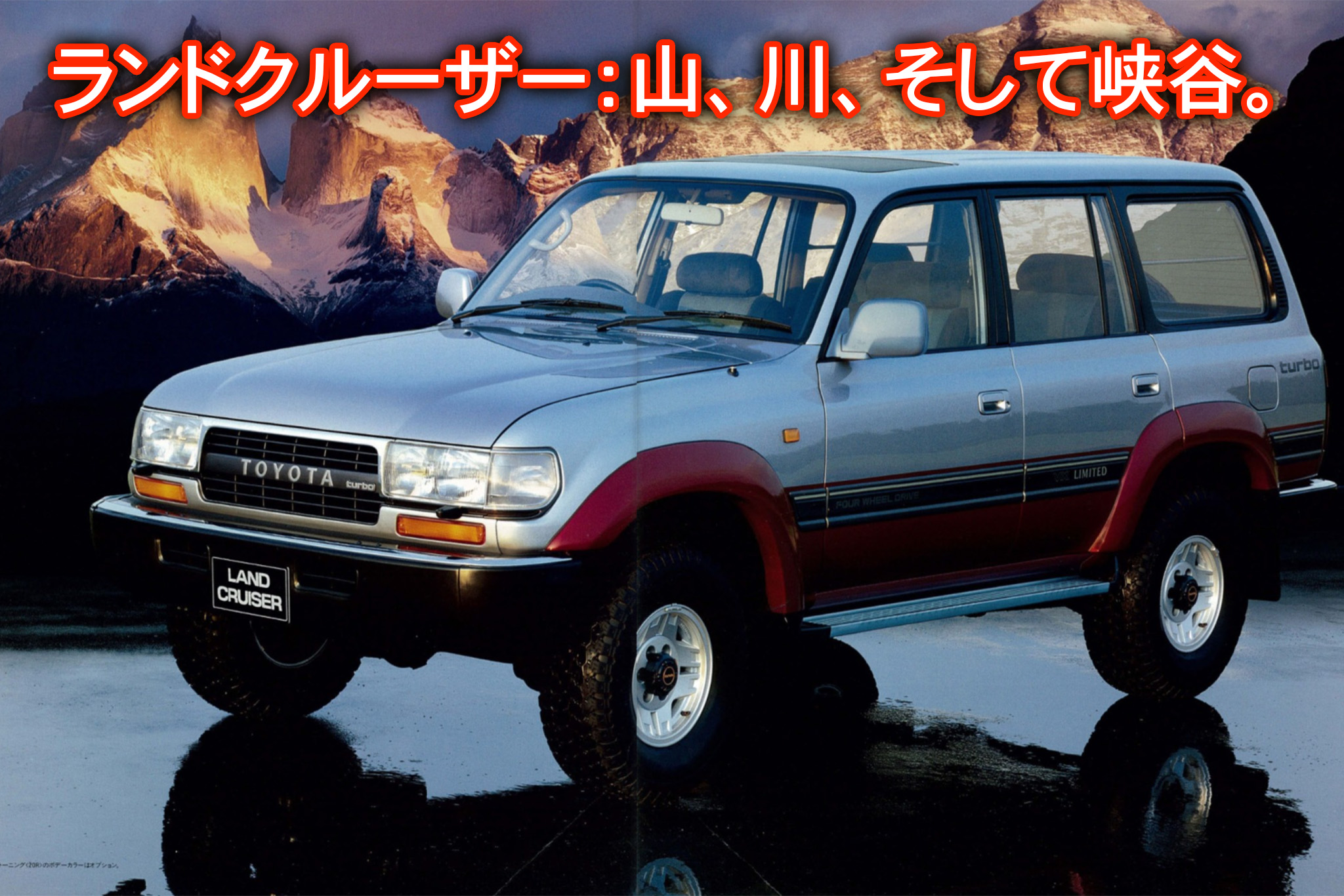
What a nation produces influences its culture and even its identity. This is evident, or we wouldn’t have global phenomena like K-Pop or Swiss chocolate. Conversely, a nation’s culture also dictates what it produces. I believe that, perhaps unexpectedly, the language of a people plays a more significant role in shaping their creative output than anything else.
This influence extends beyond art or cuisine. It’s manifest in all cultural exports of a nation, and automobiles certainly fall under that category. Take German cars, for instance; it’s no wonder that intricately designed Porsches and BMWs come from a place where the language has a term for everything. Similarly, Japan has provided car enthusiasts with countless creations to admire, be it Supras, GT-Rs, drift culture, or customization trends such as Bosozoku. The Japanese language is incredibly emotive, a quality that stands out even if you don’t speak it.
Language shapes everyone’s perception of reality. Therefore, it’s logical that Japan’s emotions and sentiments are largely molded by its vocabulary—both written and oral. These feelings find expression through creative endeavors. Concepts regarding ephemeral beauty, minimalism, suffering, and the natural world are captured in these meticulously designed cars that some individuals build their entire identities around.
I aspire to illustrate how the Japanese express their worldview, shaped by their native language, through the cars they construct.
Let’s take a brief moment to enter the classroom.
The Basics of Japanese
For newcomers, engaging with the language can be daunting. It consists of three distinct writing systems: hiragana, commonly used for native Japanese words; katakana, primarily reserved for loanwords from other languages; and kanji, which derives from Chinese characters. The first two are syllabaries, meaning they represent the 46 basic sounds of spoken Japanese. On the other hand, kanji can have multiple pronunciations; for instance, the kanji “生” yields an “i” sound in 生きる (ikiru, to live) but an “u” sound in 生まれる (umareru, to be born).
What you may notice about the 生 in those words is that it signifies life or birth. (It can also be connected to rawness, but that’s a topic for another lesson.) In this sense, kanji convey themes or ideas.
Here are a few additional examples that could help clarify my point:
- Mountain (山) representing a trio of peaks
- River (川) depicted as three flowing lines
- Fire (火) illustrated as sticks and flames
- Car (車) visualized as a box placed between two axles
Visualizing these symbols is essential for comprehending how language influences not just Japan’s creations but also the broader worldview of its speakers. When you write in Japanese about what surrounds you, whether with a fountain pen or a keyboard, the imagery is vivid throughout.
What Inspired Me
This narrative is the result of my personal explorations. Up until November 2025, I had never even attempted to learn another language—no high school Spanish classes, absolutely nothing. That changed after a series of events in my life, including discovering a book by Yoko Tawada entitled Exophony. Referring to this as an “event” doesn’t feel exaggerated to me.
Tawada was born and raised in Japan, though she has resided in Germany for many years. She mainly writes fiction, although the book I’m focusing on is a collection of essays. These essays delve into her encounters with exophony, defined as “the general experience of existing outside of one’s mother tongue.” I was blown away by Tawada’s storytelling, largely due to how it illustrates the new dimensions of existence that arise from stepping out of one’s linguistic safe zone.
Around the same time I discovered Exophony, I met my friend Toshi Hayama. Our paths first crossed in 2023 during a trip to Japan. It was my inaugural journey outside the United States, but Hayama divides his time between Tokyo and Los Angeles, where he leads Stage 10 Productions. That’s his creative agency involved in various projects, ranging from video production and consulting to interpreting and translation. (A fun fact: Toshi played a significant role in the production crew for Fast and Furious: Tokyo Drift.)
Hayama shared a story about seeing a Nissan S-chassis in Japan as a child. He was visiting family when he noticed a sticker on the rear window reading “1.8-liter turbo,” and out of curiosity, he went to 7-Eleven in search of car magazines. His fascination grew from that moment.
As an adult, Hayama played a role in bringing one of Japan’s key parts manufacturers—APEXi—to the United States. “I had to prepare all the instruction manuals and translate them into English,” Hayama recalled. “I needed to bring all the engineers from Japan and determine what products we wanted to develop, so I was already in the process of translating and interpreting.” He also hosted some of the first significant drifting events in SoCal during the 2000s.
Hayama has a wealth of incredible stories. Nowadays, he frequently collaborates with manufacturers like Toyota and Lexus, aiding with global media related to new vehicle launches. Instead of being merely an “interpreter,” he resembles a Swiss army knife. This is because his role involves grasping the thought processes, emotions, and sentiments of both Japanese and American individuals. He must convey nuances between languages, taking what an engineer or executive states in Japanese and articulating it eloquently in English, where terms and concepts can vary greatly.
That’s why I consulted Hayama prior to composing this narrative. His perspectives were instrumental in shaping it, and I am truly grateful to him.
Japan’s Sentiments: Their Influence on Your Favorite Cars
“Japanese individuals find beauty in minimalism and in the smallest details,” Hayama explained. “The last grain of rice is beautiful, as are the fleeting sakura cherry blossoms and the changing seasons.”
Consequently, nature significantly influences how Japanese car manufacturers design their vehicles. This is evident in a brief TV commercial for the environmentally conscious Prius or convertible Del Sol. It all derives from a mindset of mindfulness and awareness.
While some may criticize the new Honda Prelude’s gentle and friendly demeanor, the car’s development leader Tomoyuki Yamagami compared it to how an aircraft interacts with its environment:
“While grappling with the conceptual design and direction of the new Prelude, I suddenly remembered a time in childhood when my grandfather constructed a radio-controlled glider, and I saw the blue sky and white clouds when he took me to the riverbank. These memories, along with ideas about sky, blue, and glider, which resonate with carbon neutrality, electrification, and environmental consciousness, came to mind.”
To further investigate Yamagami’s personal story, one of the kanji used for “sky” is 天. It comprises the character for “person” (大) with a line (一) above it to symbolize the heavens over someone’s head.
That connection between nature and language is reflected in Japan’s traditional art forms as well as its industrial outputs. In their book, The Japanese Mind: Understanding Contemporary Japanese Culture, Osamu Ikeno and Roger J. Davies describe it this way:
“Not long ago, nearly all Japanese were engaged in farming; consequently, they were highly sensitive to the seasons, as climate was vital for their livelihood. Today, this sensitivity is the foundation of the Japanese perception of seasons, which has heavily influenced literature in Japan, especially regarding haiku, the 17-syllable Japanese poem that has gained global recognition.
“When poets create haiku, they frequently employ kigo, which are particular words that express the seasons, such as kachōfūgetsu (meaning ‘flowers, birds, winds, and moon’). For instance, an uguisu (bush warbler) sings in spring, asagao (morning glories) bloom in summer, a full moon appears most beautiful in autumn, and the wind turns frigid in winter. Although the moon and the wind remain fundamentally unchanged, their perception varies with each season: a hazy moon in spring contrasts with a clear moon in autumn, or a spring breeze compared to a chilly winter wind.”
Building on Ikeno and Davies’ insights about Japan’s agricultural past in their cultural exploration, Hayama explained how this has fostered a sense of quiet resolution during hardships. He highlighted the cultural notion of gaman, or enduring difficult times silently and with dignity. Emerging from famine and conflict, both civil and global, this mindset continues to influence Japanese thoughts and creativity.
This aligns with an article I came across in the Toyota Times titled, “The Pain and Humiliation Behind Ever-Better Car Making.” It recounts two stories of shame that shaped the automaker’s approach to creating the Lexus LFA successor and the GR GT. It’s worth reading in its entirety, but I’ll briefly summarize:
In 2011, during the Pebble Beach Concours, a show attendee commented to Akio Toyoda that “Lexus is boring.” That critique became a persistent thorn for the executive, driving him to declare, “No more boring cars.” A few years before that encounter, Toyoda was racing an aging Mk4 Supra at the Nürburgring under his covert “Morizo” identity. The brand had no sports car available at the time, and as prototype models with different badges sped by Toyoda, it was as if they were mocking him.
These two moments of embarrassment, which might have prompted an American auto executive to lash out, instead compelled Toyoda to reassess his company’s practices. Rather than leading to a flurry of negative social media posts, these experiences resulted in the development of two impressive supercars. And these supercars not only look striking in a showroom and on the road but also on the racetrack.
These are just a few examples of how the cultural influence on Japanese automakers is the key to how they craft the cars we cherish. I hope you can perceive how culture and language are intrinsically intertwined, beautifully articulating those sentiments into language. Terms like gaman—composed of the kanji 我 (ego, I, selfish, our, oneself) and 慢 (ridicule, laziness)—illustrate this, as do the kigo terms that capture the feelings associated with changing seasons, such as kachōfūgetsu—made up of the kanji 花 (flower), 鳥 (bird), 風 (wind), and月(moon). All these aspects and many more are deeply embedded in Japanese life, clearly reflected in the country’s vehicles.
Vehicles in Japanese Culture
This narrative would be lacking if we ended with corporate terminology and marketing language. It’s well-known that Japanese language and culture shape the companies producing the vehicles, but their effect on drivers and customizers is even more profound. This becomes apparent when considering Japan’s deep-seated love for cars.
For many car enthusiasts, both in Japan and abroad, the infatuation begins with manga (written as 漫画, where the characters denote “cartoon” and “brush-stroke” or “picture”). Initial D is by far the most well-known and accessible, as it is also an anime that has been dubbed in English. Numerous other car-focused manga exist as well—such as Wangan Midnight (湾岸ミッドナイト), Shakotan Boogie (シャコタン★ブギ), and Capeta (カペタ).
These binge-worthy consumables contain a written language component, but it’s their ability to maximize the emotional impact of the medium that captivates me. There are reportedly around 4,500 instances of Japanese onomatopoeia, providing manga artists ample resources to express emotion and automotive drama during midnight touge scenes. The visceral sounds of gyaaaaaaa (ギャアアアアア) depict screeching tires, while turbo blow-off valves emit a sweet doa (ドア).
Domestic printed and digital entertainment tends to immerse enthusiasts in a niche, be it drifting or stance culture. Some savor kyusha (旧車, or classic cars) featuring 13-inch rims, while others go all out with dramatic silhouette-style chibaragi (チバラギ, a variant of kaido racers). Interestingly, these groups represent the extremes of the spectrum, from more subdued and traditional Japanese characteristics to bold expressionist designs that contrast with the country’s collectivist ideals.
In this manner, one could draw a parallel between car customization trends and regional dialects, as both exhibit considerable variety in Japan. Speakers from the western regions, like Osaka and Kyoto, utilize different intonation and verb stylistics than those in the eastern Tokyo area. Meanwhile, preferences in car modifications can vary drastically, influenced by numerous factors, geography being a significant one.
Regardless of which community Japanese drivers identify with, vehicles represent more than mere transportation, just as language transcends functioning solely as a communication tool. Both serve as forms of expression.
Language Acquisition and the Path to New Perspectives
Although this narrative is restricted by its length and my own admitted naivety, I hope to instill at least some enthusiasm for acquiring a new language (or two, or three). Nevertheless, I suspect some, like Yoko Tawada, might scoff at the notion of learning a language as if it’s something tangible to grasp. Spoken languages continuously evolve, shaping the speakers while also being shaped by them in return.
I share this not as an authority, but as a learner. Nothing I’ve penned here is intended to be the definitive commentary on Japanese language, culture, or thought. This narrative is far from comprehensive, and Japanese readers or those well-versed in the culture may notice that I’ve omitted much. I’ve opted not to broaden the scope of this discussion further, and I don’t see this as the arena to address the pressing matters of Japanese life. Not everything is idyllic across the Pacific, no matter how romantically we Americans portray it.
I merely aim to communicate what I’m discovering, as I believe it’s a topic worth discussing. There is immense depth in the world, and a new language could be the most effective way for you to uncover that. As someone undergoing this experience as I write, I highly recommend it.
Do you have a tip or question for the writer? Reach out to them directly: [email protected]
**The Impact of Language on Japan’s Distinct Automotive Culture**
Japan’s automotive culture is celebrated globally for its creativity, precision craftsmanship, and an exceptional mixture of tradition and modernity. This culture is shaped not just by technological progress and manufacturing practices but also greatly influenced by the subtleties of the Japanese language. The interaction between language and automotive culture in Japan reveals insights into consumer behavior, marketing approaches, and the overall character of the automotive sector within the country.
**1. Linguistic Subtleties and Automotive Vocabulary**
The Japanese language is rich with subtleties and context, which plays an essential role in how automotive concepts are expressed. Terms like “kaizen” (改善), meaning continuous enhancement, and “monozukuri” (ものづくり), translating to craftsmanship or creating things, embody the cultural focus on quality and perfection in automotive manufacturing. These concepts transcend mere technical jargon; they reflect the underlying philosophy propelling Japan’s automotive industry, impacting everything from design to production techniques.
**2. Consumer Identity and Brand Image**
Language shapes consumer identity and brand perception in Japan. The manner in which automotive brands convey their values and messages in Japanese significantly impacts consumer loyalty and trust. For example, employing honorifics and polite phrasing in advertising can foster a sense of respect and connection with potential buyers. Brands that adeptly navigate these linguistic nuances often achieve greater acceptance in the market. Furthermore, localized slogans and catchphrases resonate more profoundly with consumers, nurturing a stronger emotional attachment to the brand.
**3. The Influence of Subcultures and Jargon**
Japan’s automotive culture is characterized by various subcultures, such as “kawaii” (cute) car modifications and “bosozoku” (biker gang) aesthetics. The language utilized within these subcultures often incorporates slang and local expressions that signify a unique identity. This specialized vocabulary not only cultivates belonging among enthusiasts but also shapes trends in car customization and modifications. The clever and imaginative use of language in these communities enhances the overall vibrancy of Japan’s automotive culture.
**4. Communication in the Digital Era**
With the advent of social media and online forums, the language surrounding Japan’s automotive culture has transformed. Enthusiasts now share their experiences, modifications, and thoughts across blogs, forums, and social media, frequently blending Japanese and English. This bilingual strategy opens up a wider audience while preserving cultural specificity. The digital landscape has also introduced new terminologies and memes reflecting contemporary automotive trends, further influencing the culture.
**5. Educational Impact on the Automotive Workforce**
The terms used in education and training within Japan’s automotive sector also shape the culture. Technical schools and universities often highlight the significance of grasping both the technical language and the cultural context of automotive engineering. This education creates a workforce that is not only adept in engineering but is also sensitive to the cultural values inherent in the industry. Consequently, professionals in the automotive field are more equipped to innovate and respond to changing consumer demands.
**6. Globalization and Language Adaptation**
As Japanese automotive manufacturers expand globally, the significance of language becomes even more evident. Brands like Toyota, Honda, and Nissan must tailor their messaging to connect with diverse markets while retaining their Japanese identity. This balancing act often requires translating not just words but also cultural meanings and values. The capability to communicate effectively across languages and cultures is essential for sustaining brand integrity and consumer trust in international markets.
**Conclusion**
The impact of language on Japan’s distinctive automotive culture is deep and complex. From the terminology that represents the industry’s philosophy to the methods brands use to engage consumers, language influences every facet of this lively culture. As Japan continues to innovate and evolve in the global automotive arena, the interplay between language and culture will remain vital in defining its identity and success. Understanding this relationship provides valuable insights not only into Japan’s automotive sector but also into the broader role of language in shaping cultural practices around the globe.