
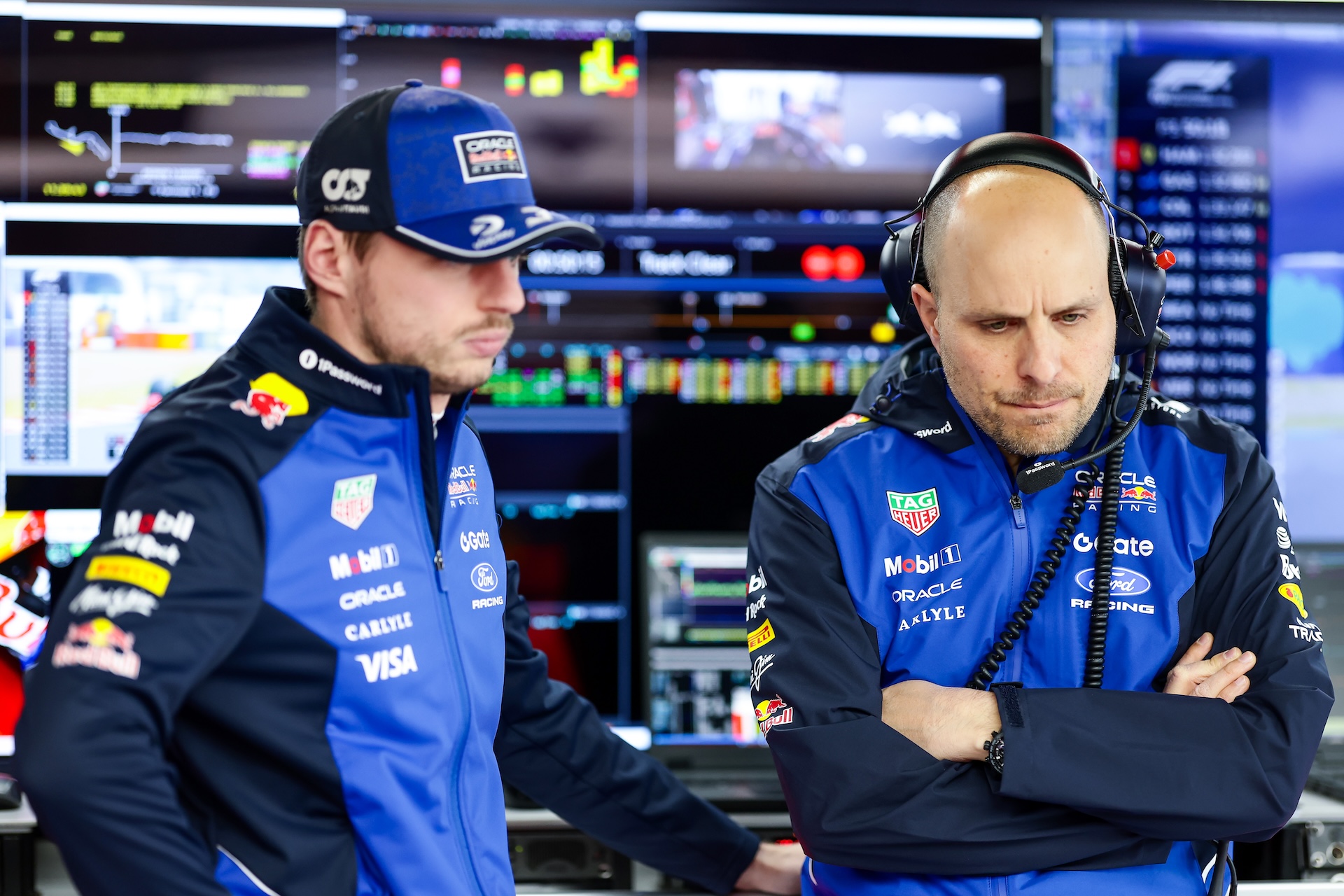
Dutch reporter Jacky Martens appeared on Formula 1 photographer Kym Illman’s podcast Thursday morning to confirm a sensational rumor that has been circulating for months: Gianpiero Lambiase, widely recognized as Max Verstappen‘s engineer, will depart Red Bull at the conclusion of 2027 to join McLaren.
Similar to Mercedes’ “Bono,” Lambiase has attained Superstar Engineer status over time owing to his successful collaboration with Verstappen. This has positioned him as a target for recruitment by multiple teams in the paddock, including Aston Martin, Williams, McLaren, and even Ferrari. As I was writing this, McLaren released a statement affirming Lambiase’s onboarding with the team in the role of Chief Racing Officer. He will report directly to team principal Andrea Stella.
While that may be beneficial for the Italian’s career and finances, the pressing question remains: what will this mean for Super Max?
It’s clear that all is not well at Red Bull at the moment. Verstappen seems displeased, which is understandable for a four-time F1 champion. Is his frustration strong enough to consider leaving? I believe it is. However, the ultimate decision will hinge on the car’s performance from Miami through the mandated summer break. If conditions don’t improve substantially by then, I foresee Verstappen facing a tough choice regarding his future at Red Bull during the shutdown. The pressure now lies on Laurent Mekies to deliver results.
However, to assume that the Milton Keynes outfit won’t turn things around would be a major oversight. It’s more about how swiftly they can achieve it. Surely, they are currently in the process of reorganizing, adjusting, and enhancing as I write this—especially considering the unanticipated month-long hiatus due to the canceled Middle Eastern races.
Verstappen has numerous options available if he decides to continue racing in F1. In fact, nearly every team along the pit lane would trade every asset they possess—and more—to entice him. I believe Mercedes poses the most significant threat to Red Bull. Toto Wolff has openly expressed his desire to sign Verstappen. Who would suffer the most from such a decision? George Russell, naturally. The Brit has experienced an unstable tenure at Brackley, with management often making him wait until the last moment regarding his contract. Now that he is being overshadowed by his teammate and rising star, the very impressive Kimi Antonelli, who, at 19, represents the team’s future, there’s increased likelihood that Wolff will mobilize to secure Verstappen’s signature.
What about Aston Martin? Will Lawrence Stroll finally recognize that one of his two drivers needs to vacate their place to allow for someone who can advance the organization? Will that driver be his own son, who is about to start racing GT cars, or could it be new-dad Fernando Alonso? Regardless, it would require significant persuasion and a staggering salary to convince Verstappen and his management, especially considering its present struggles with Honda. But can Daddy Stroll accomplish anything impossible?
What do you believe Lambiase’s departure implies for Verstappen’s future?
**Consequences of Lambiase’s Departure from Red Bull on Verstappen’s Formula 1 Prospects**
The recent exit of Gianpiero Lambiase from Red Bull Racing has created waves throughout the Formula 1 community, especially concerning the future of reigning world champion Max Verstappen. Lambiase, who has been Verstappen’s race engineer since 2019, was instrumental in the Dutch driver’s ascent to stardom and his subsequent championship successes. His departure brings forth questions regarding the internal dynamics within the team and its potential influence on Verstappen’s performance and career path.
**1. The Significance of a Race Engineer**
A race engineer plays a vital role in converting a driver’s input into actionable tactics during a race. Lambiase’s profound understanding of Verstappen’s driving style and preferences enabled finely tuned setups and strategies that optimized on-track performance. The rapport between a driver and their engineer significantly affects race results, and Lambiase’s exit may disrupt this established harmony.
**2. Effects on Team Dynamics**
Red Bull Racing has fostered a culture emphasizing high performance and innovation. Lambiase’s departure could shift the internal dynamics of the team, especially regarding how strategies are formulated and implemented. A new race engineer will require time to establish rapport with Verstappen and grasp his distinctive racing style. This adjustment phase may result in miscommunications and strategic inconsistencies, potentially hindering Verstappen’s performance temporarily.
**3. Verstappen’s Flexibility**
Max Verstappen is recognized for his adaptability and tenacity. Having encountered various obstacles during his career, including changes in team personnel and car evolution, he has shown the capacity to perform under pressure consistently. However, the rapport with a new race engineer will be crucial. If Verstappen can swiftly forge a strong partnership, the implications of Lambiase’s exit may be diminished.
**4. Future Championship Aspirations**
With the 2024 season approaching, Verstappen’s attention will undoubtedly be on safeguarding his title. The proficiency of the new race engineer in grasping and implementing race strategies will be essential. If the transition is seamless, Red Bull could sustain its competitive advantage. Conversely, any disruptions might enable rival teams to narrow the gap, making the championship contest more unpredictable.
**5. Long-term Consequences for Verstappen’s Career**
Verstappen’s future in Formula 1 is closely linked to his performance and the support from his team. If the new race engineer fails to replicate Lambiase’s accomplishments, it could lead to dissatisfaction for Verstappen, possibly affecting his long-term allegiance to Red Bull. The driver has expressed loyalty to the team, but the fiercely competitive nature of F1 ensures he will constantly seek the best conditions for success.
**Conclusion**
Gianpiero Lambiase’s exit from Red Bull Racing represents a pivotal moment for Max Verstappen. While the immediate repercussions may be felt in the 2024 season, the long-term effects will rely on how effectively the team adapts to this shift. Verstappen’s ability to navigate this transition will be vital in determining his future success in Formula 1, as he strives to cement his legacy as one of the sport’s legends.