
If you’re going to Tokyo, I’m sure ramen is on your radar.
A steaming bowl of noodles in savory, umami rich broth, topped with tender chashu, and a golden yolked egg is pretty much a must eat. There are literally thousands of ramen shops in Tokyo, and if you’re anything like me, it leads to choice paralysis.
Mike and I have been going to Tokyo to eat ramen since forever. From back in the early 2000s when a bowl of basic ramen was only 500 yen to the more modern era of ultra-refined Michelin-starred 2000 yen bowls. I think we’ve been to over 300 ramen shops in Tokyo, no joke. We love noodles (see: our cookbook) so, we love love ramen.
If you’re looking to go on a search for the best ramen in Tokyo, you’ve come to the right place. Click here to jump to the first entry if you want to skip our ramen bonafides.
My long love affair with Tokyo ramen
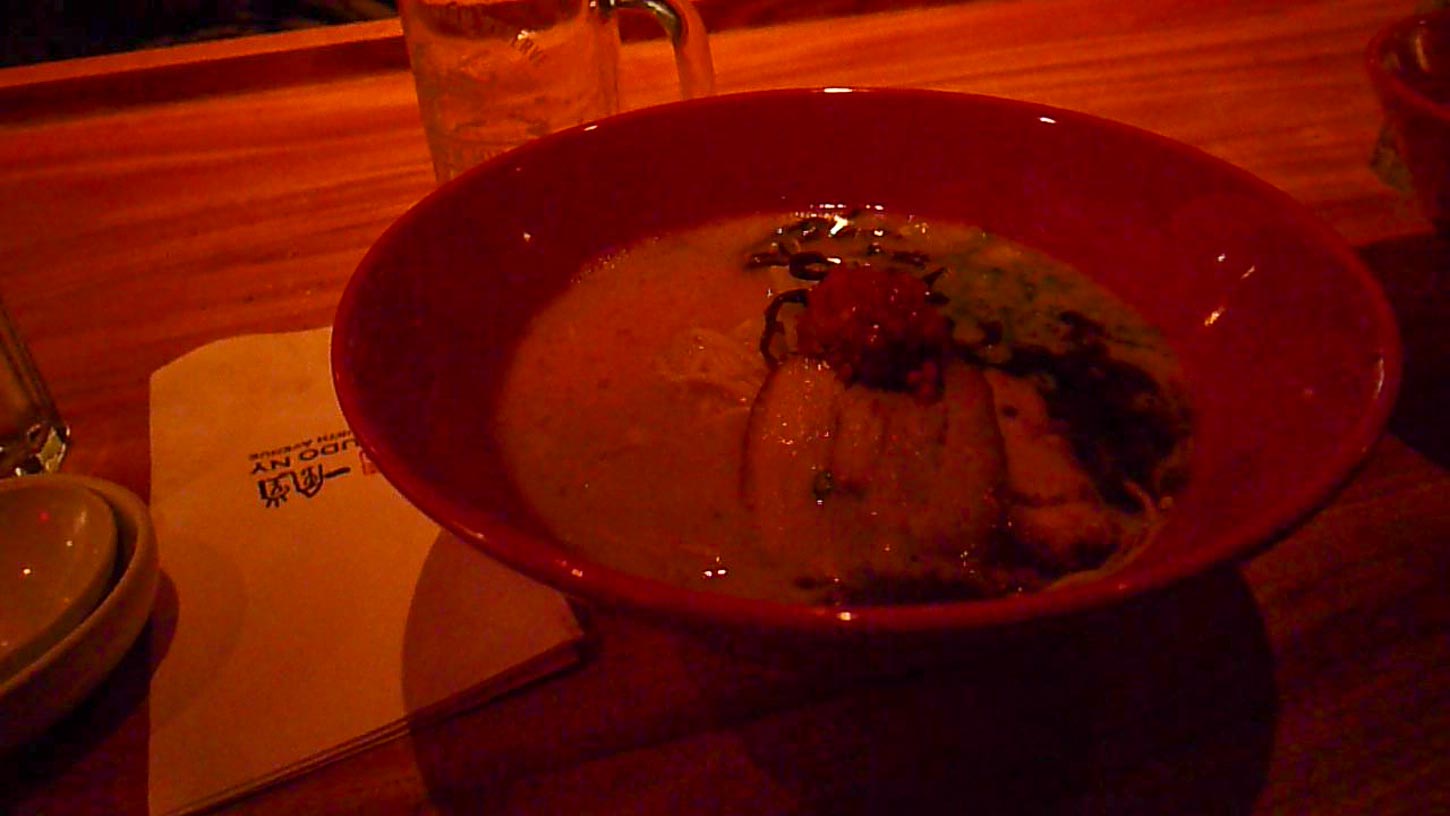
In the early 2000s ramen wasn’t part of the cultural zeitgeist like it is now. One of the very first pop culture moments of ramen was at David Chang’s Momofuku Bar way back in the mid 2000s. Mike and I had our first bowls there. The next day we went to the newly opened Ippudo NY (peep that early 2000s phone camera quality) and that sealed the deal. We were obsessed. The early 00’s were a heady time for ramen lovers.
We went to every single instance of ramen that could be found on this side of the Pacific ocean, we did extensive research, we scoured the internet for recipes, we made our own noodles, 12 hour ramen broths and caramelized bone tare. We thought we had it down, but then we went to Tokyo. Our very first bowl blew us away and we were hooked.
A few years later, when we were firmly established in Tokyo and had been to anything remotely well known in the English speaking world, we bought our first ever TRY Magazine (Tokyo Ramen of the Year). We faithfully tried (haha) to go to every single winner. TRY comes out with a new magazine every year and Tabelog also has its awards for ramen, so it was a losing battle, but we tried and still try to hit up the new top ramen shops every year.
My top 10 Tokyo ramen shops
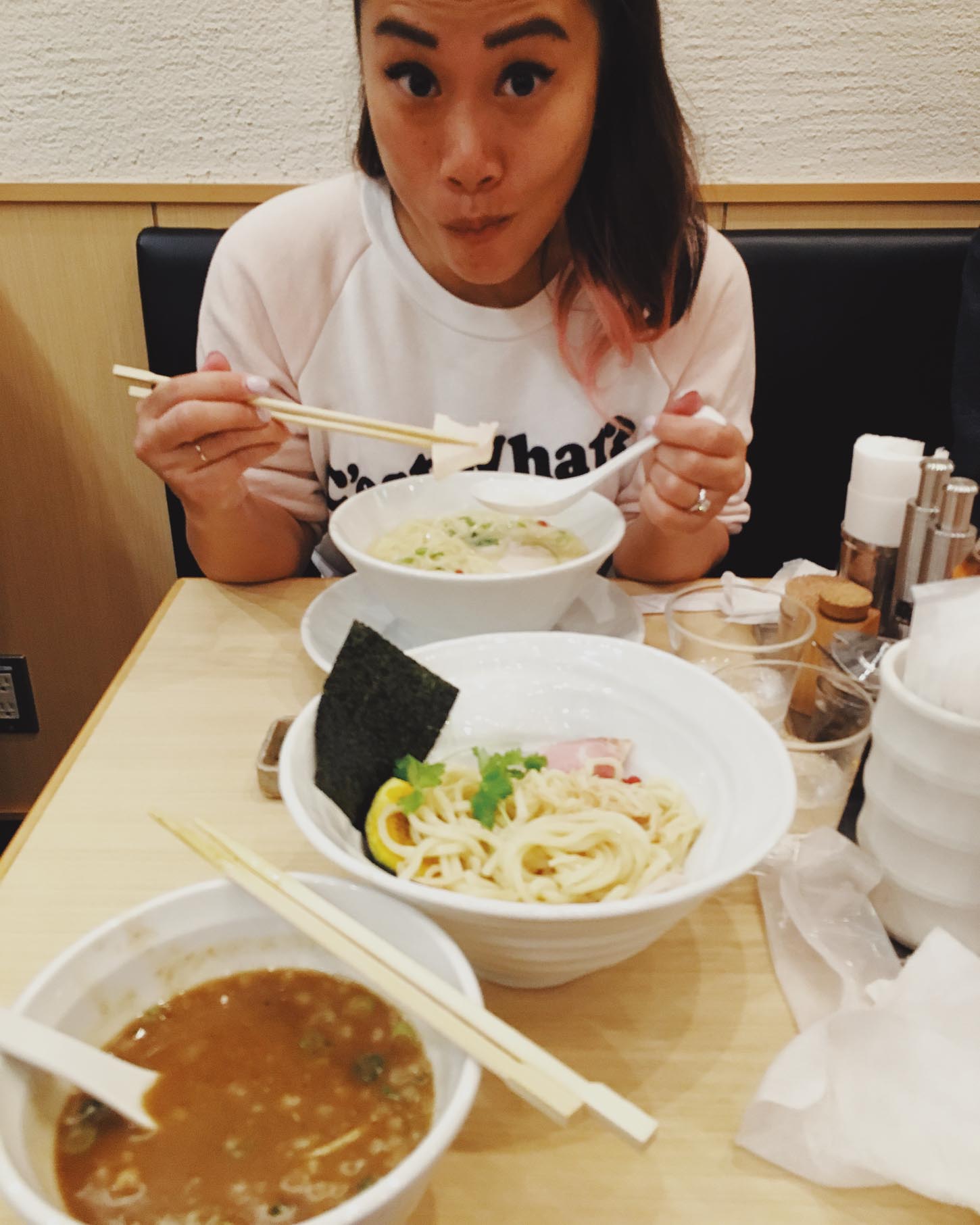
All that’s to say that we love ramen a lot. Even now, I can faithfully recall my favorite bowls and wax poetic about the broth, the toppings, and the noodles. We were in Tokyo recently and still went on hours long treks for ramen. Out of the hundreds of bowls that we’ve bad, these are the top 10 in Tokyo that stuck with me.
These are just mine, not Mike’s, whose ramen palate tends more towards the extra: extra niboshi, extra fatty, extra everything. The ones on this list are more accessible, cleaner tasting, and more refined, for lack of a better term. Not all of these are on trendy lists these days (some are) but all are amazing and many have stood the test of time.
Not all of these photos are of the current shop. In a lot of cases, we had photos of the original honten before they blew up. I kinda prefer those photos (and places?) so you can see the original charm before they sold out to the corporate machine. Be warned if you are using these photos to find the shop, though.
In no particular order, here we go:
1. Ginza Hachigo
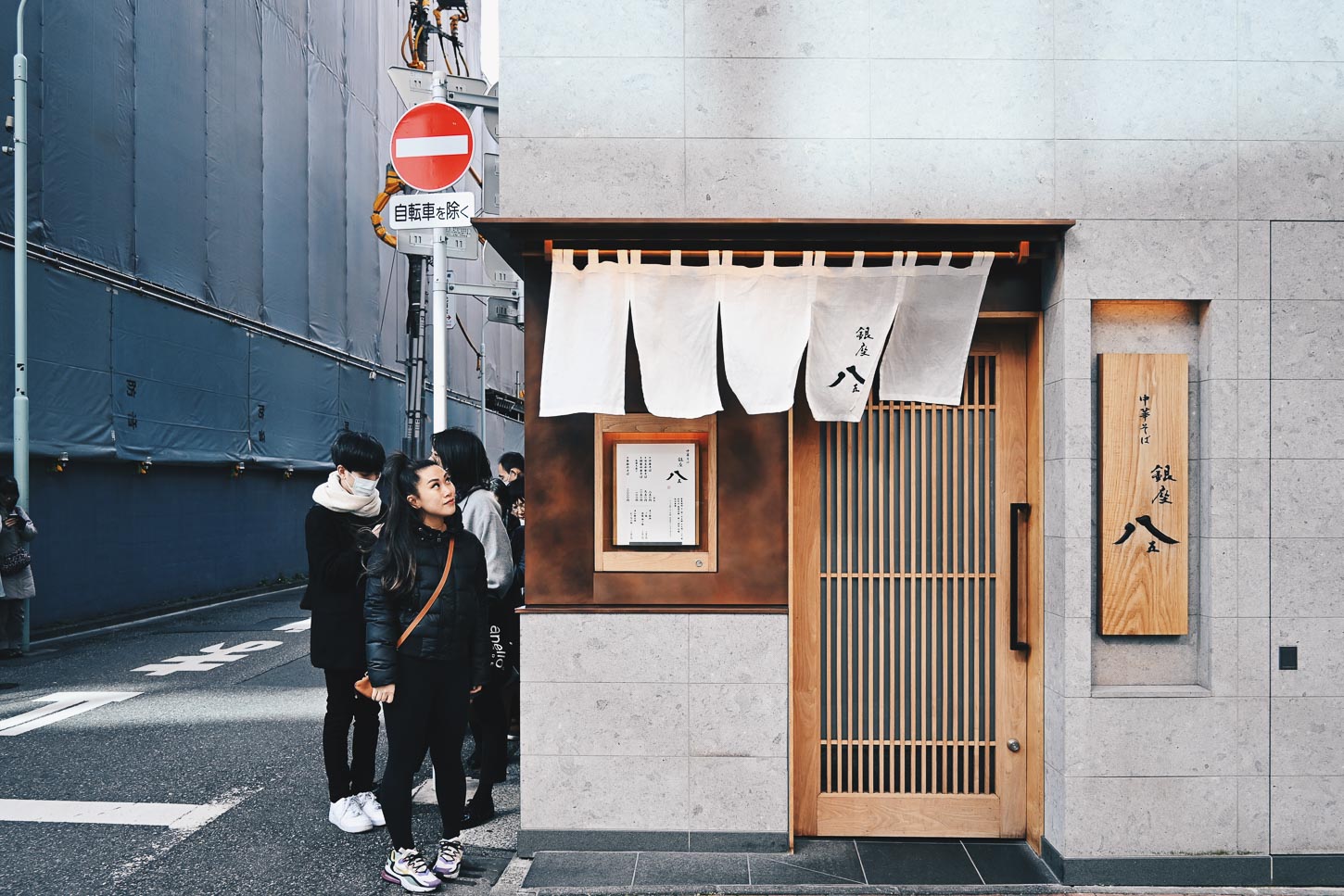
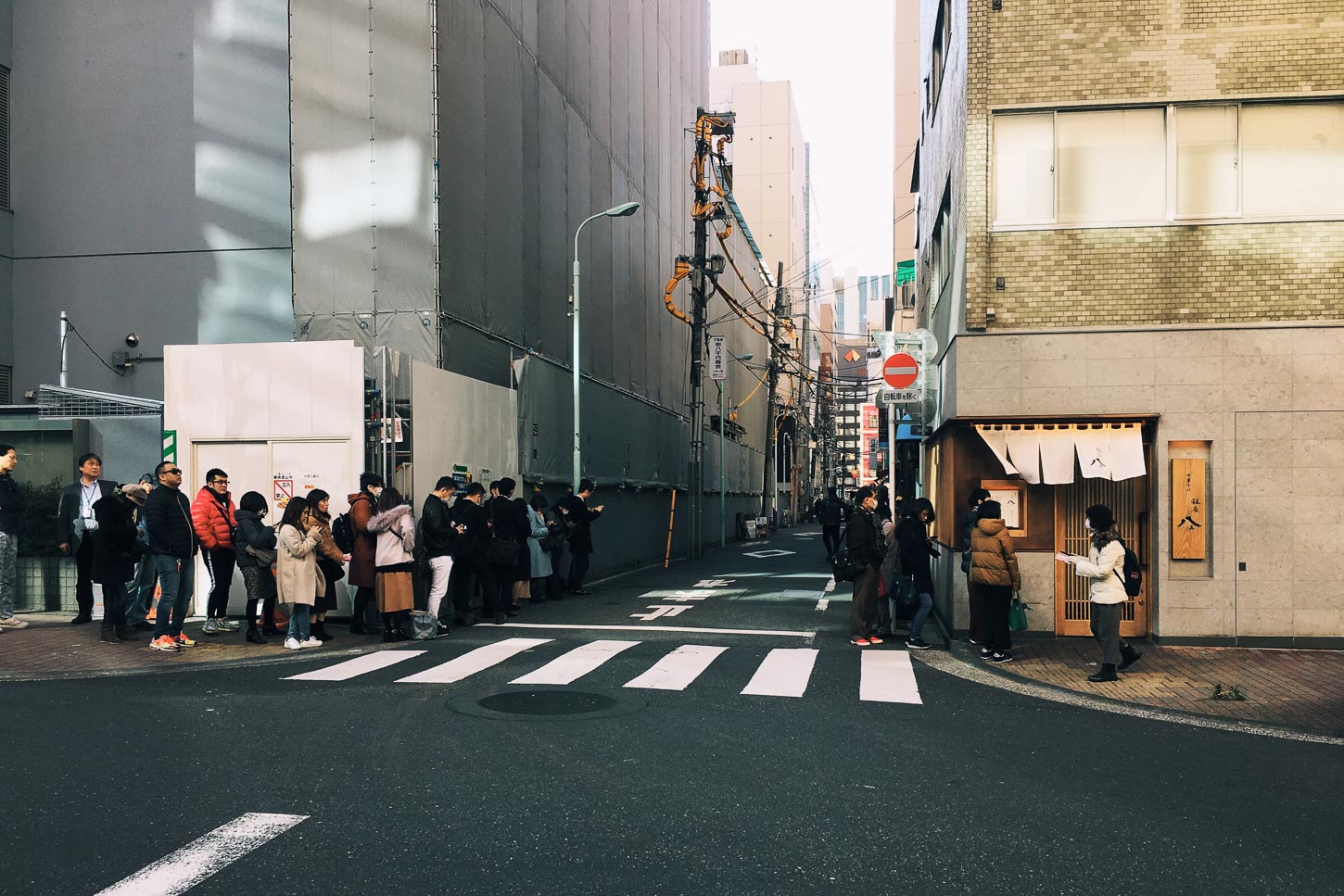
There are only 6 seats at this ramen restaurant and truly, it’s like no other you’ll ever go to, partially because, yes, it has a Michelin star. Currently, they use a ticketed system where you line up (as early as possible, I’m talking about before 8 am) and they give you a timed ticket which lets you know when you come back to line up at the appropriate time. When we went, there wasn’t a ticketing system and we tried three times before we actually got to eat there. The worst is when you wait forever and then they come out to tell you they’ve ran out.
Thankfully that doesn’t happen anymore. And now, you can make reservations! This is an absolutely unheard of thing in Japan for a ramen restaurant. They’re only blocking off a certain time frame for reservations, so if you don’t want to make them, you can still get the lining up experience.
How to make reservations at Ginza Hachigou
Reservations can be made through TableCheck. The reservations are on a rolling system, meaning they open for the following week every Saturday at 9am. Reservations costs 500 yen and the fee doesn’t go towards your meal, it’s just to secure the seat. The maximum party size is 6 and there are only 5 lunch seating times: 12:30, 1:00, 1:30, 2:00, and 2:30. You get 30 minutes to enjoy your noodles, then it’s time to leave.
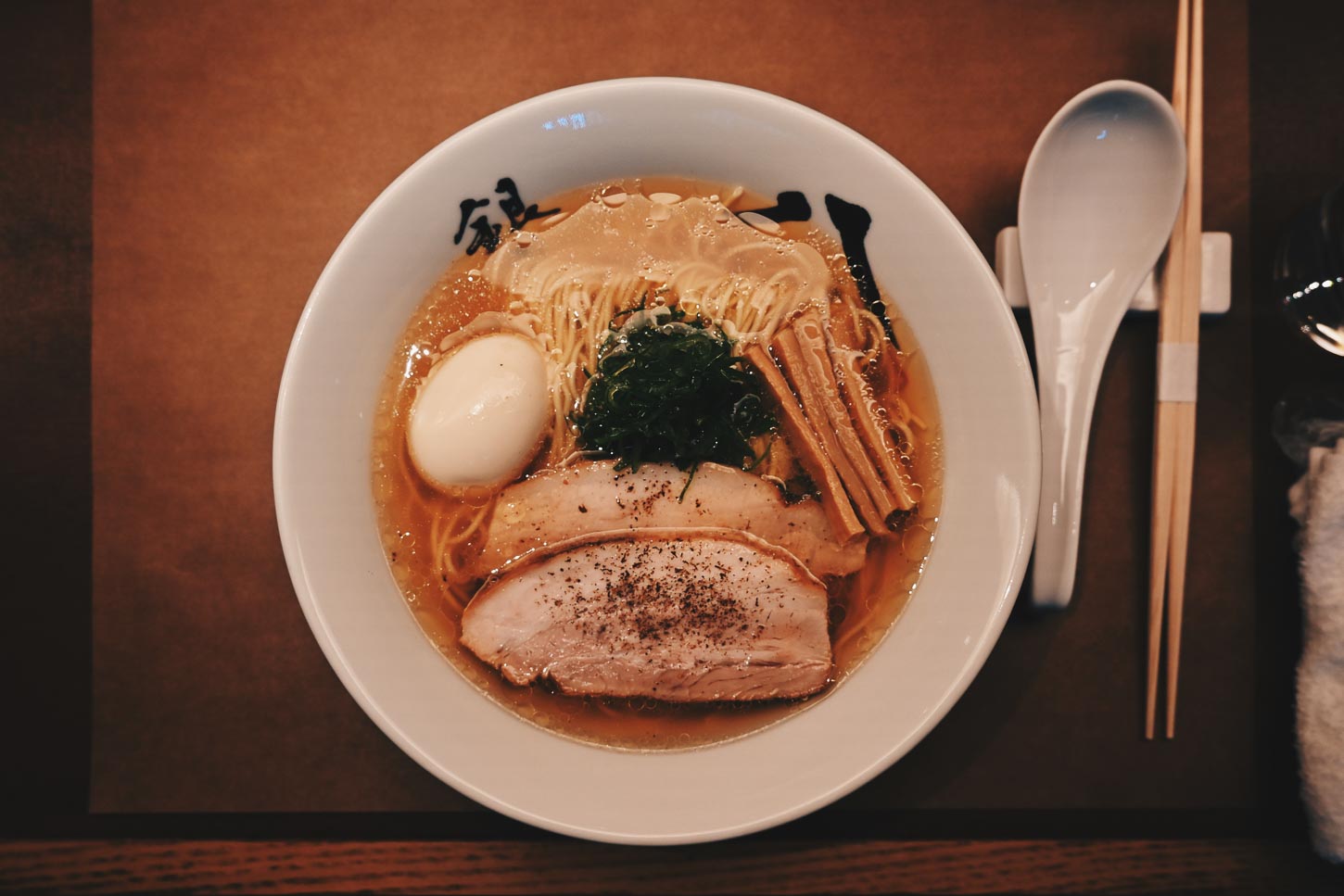
- The broth: A clear, consommé made from duck, free range chicken, scallops, dried tomatoes, dried matsutake, kombu, prosciutto, and French sea salt.
- The noodles: Thin, bouncy, and springy, made with durum wheat. A snappy yet chewy texture that contrasts with the overall bowl. Good flavor with a slight hint of nutty oat.
- The toppings: Kujo negi (heirloom Kyoto green onions), bamboo shoots, thick cut chashu, and freshly cracked black pepper. A slick of chiyu (chicken oil) keeps everything glossy and helps the flavors of the broth cling to the noodles. Add a ajitama (ramen egg) for a bit extra; the yolks are luxurious.
- The style: Chuka soba aka Chinese style ramen. Ramen in Japan is inspired by lamian from China and chuka soba, literally translates to Chinese noodles–implying wheat noodles instead of buckwheat noodles. Chuka soba broths tend to be clear (unlike miso or tonkotsu) and seasoned with either shio (salt) or tare (a seasoning sauce consisting of different kinds of soy sauce and other aromatics).
- The vibe: Elegant and gorgeous. A wooden counter, an open kitchen, and beautiful recessed lighting.
Ginza Hachigo
3 Chome−14−2 Ginza, Chuo City, Tokyo
Hours: Tuesday-Sunday, 11am until the soup runs out
2. Motenashi Kuroki
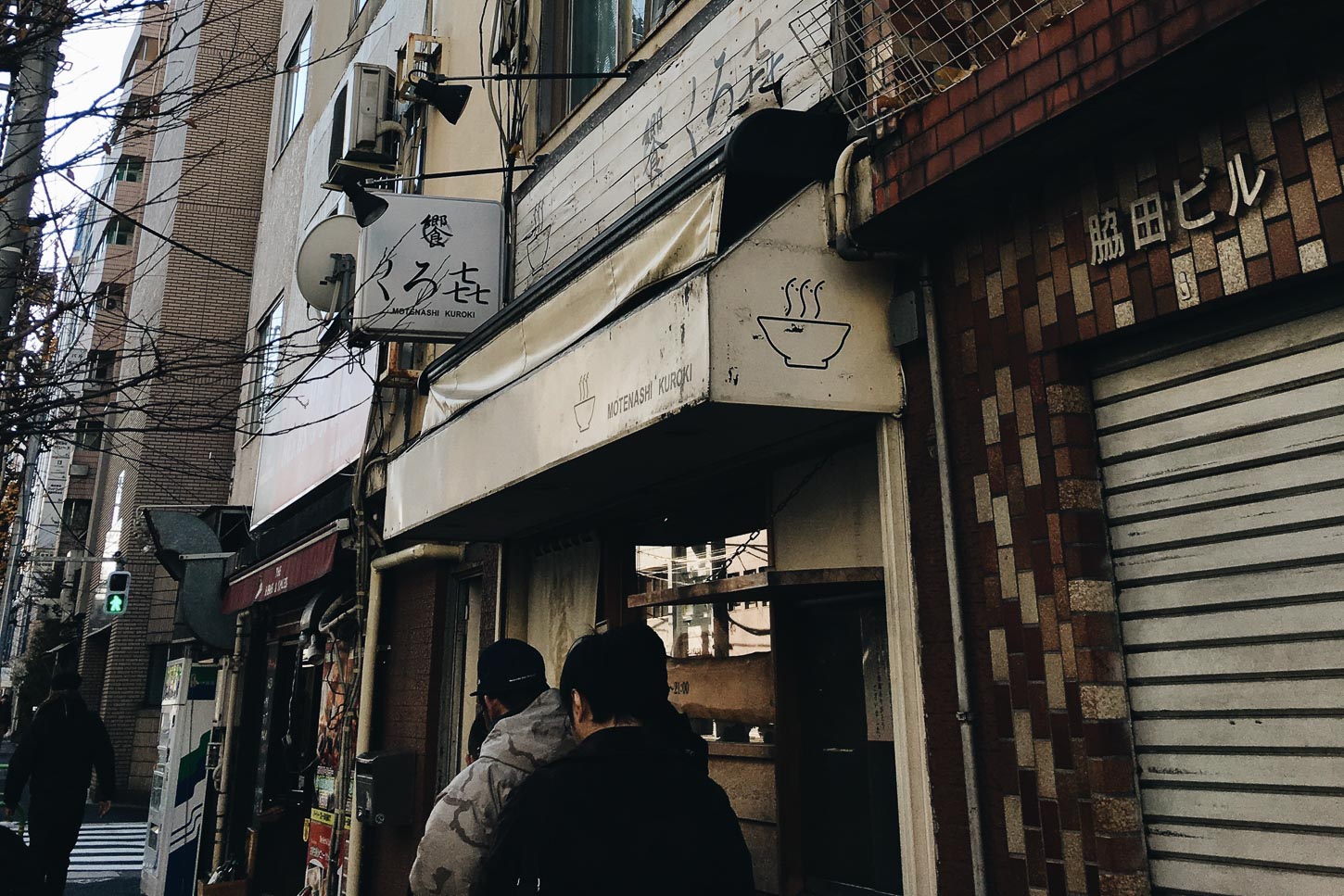
Motenashi Kuroki was one of the first ramen places we ever went to way way back in the day and it’s one we always come back to. Every new years when we are in town (which is most years) we get their special new years bowl. One year it was a super creative ramen take on Hainanese chicken rice. It’s a bowl I still dream of today.
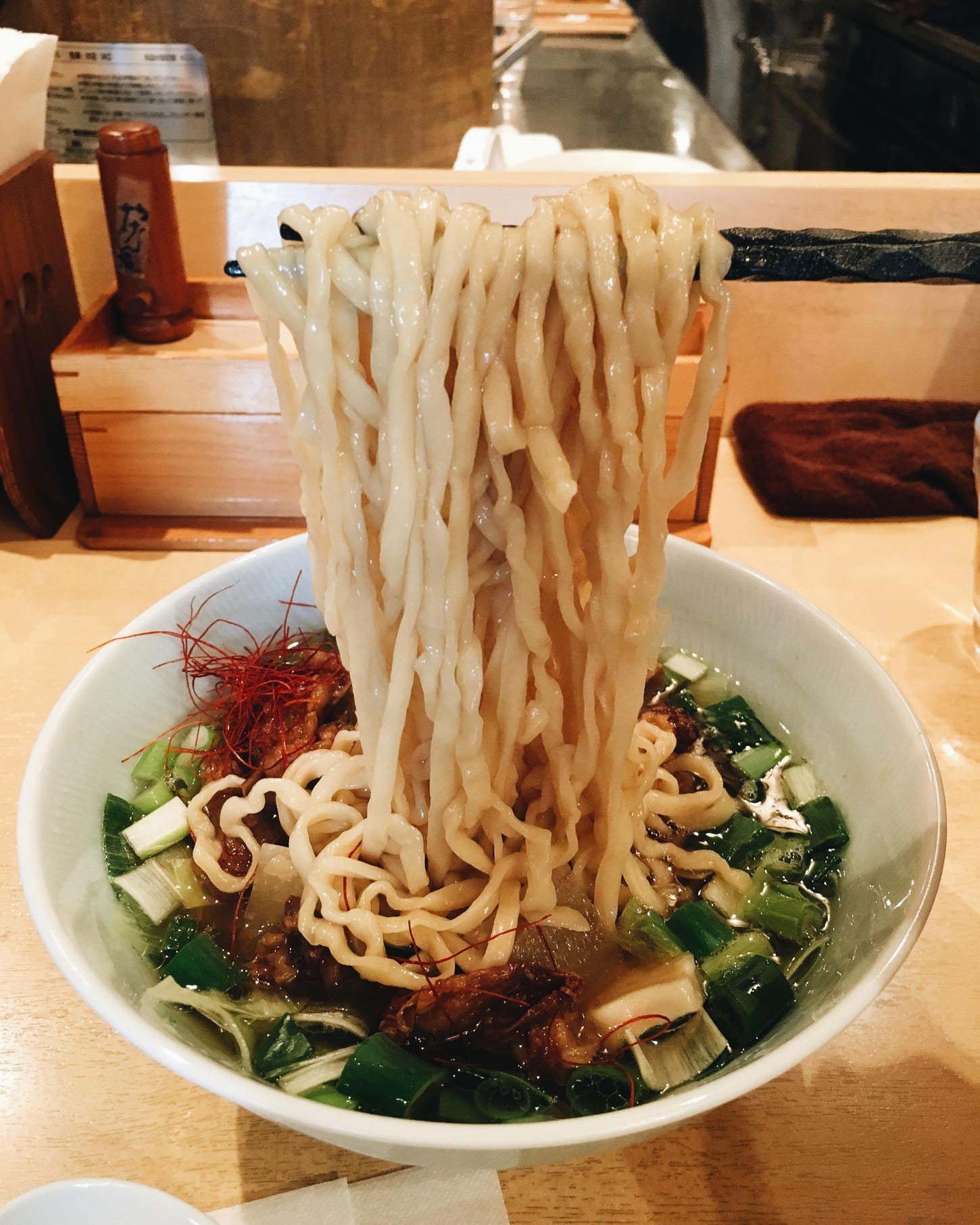
Motenashi Kuroki has moved
Now newly moved to a new space in Asakusa, Motenashi Kuroki is a beloved favorite with both ramen heads and all the ramen award committees. They’re super creative but most known for their bowl of shio ramen, which has won multiple awards.
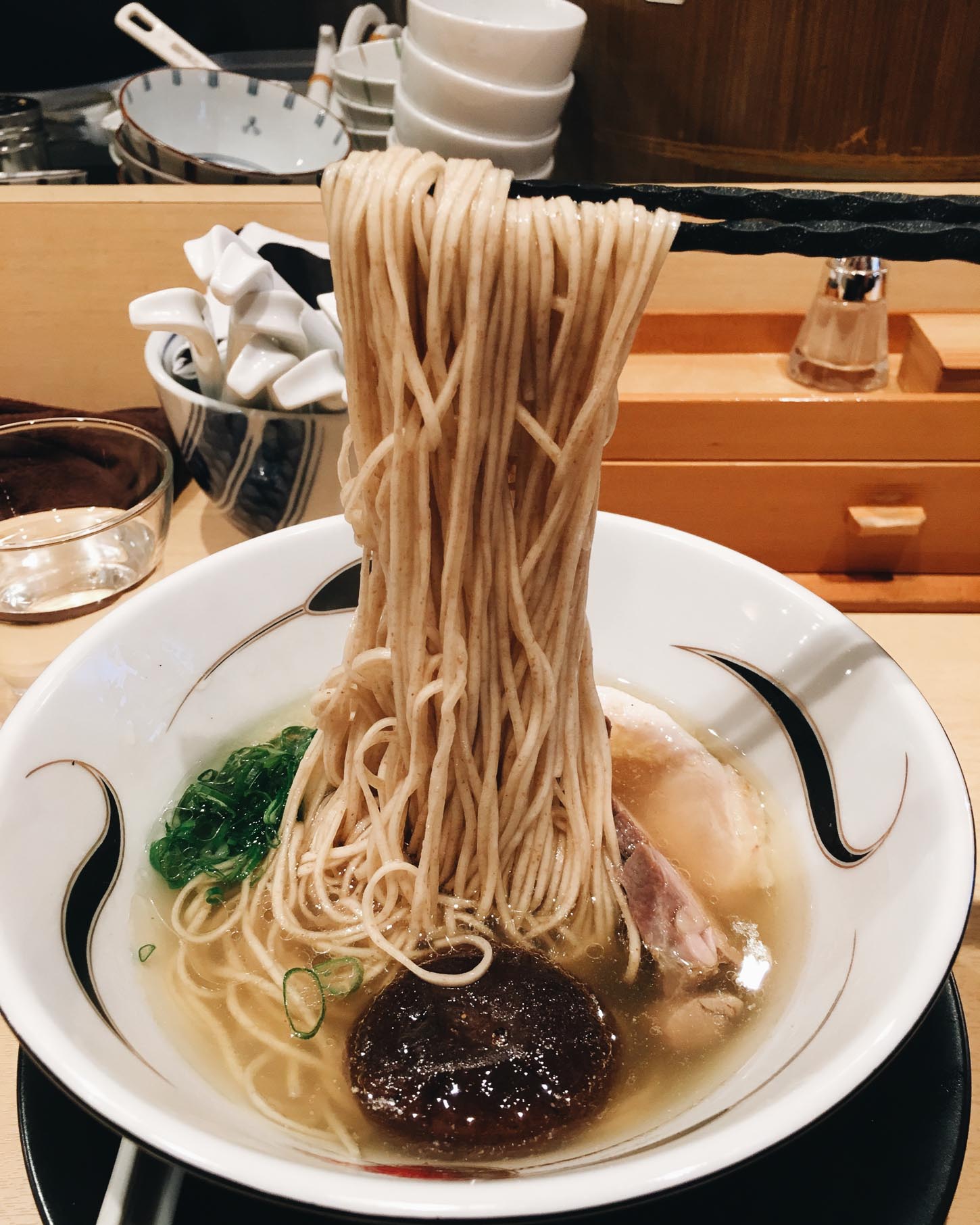
- The broth: The shio (salt broth) contains two types of chicken, duck, pork, niboshi, and kombu. It’s clear and golden, full of flavor, yet clean and light. Five types of salt and combined to create a balance of umami.
- The noodles: There’s a choice between thin, straight noodles or hand-scrunched thick curly noodles. Both have a nice bouncy chewy texture, so go for what kind you prefer.
- The toppings: The tokusei (signature, which really means extra toppings or with everything) has a soft boiled egg, shredded crisp green onions, menma, chicken meatballs, and chicken chashu, and a dried tomato. That being said, the toppings can change based on season!
- The style: Both shio and shoyu aka salt and soy sauce ramen. Their classic bowl and the one they’ve perfected is shio, or salt. The tokusei shio ramen is the one that’s the top left button on the ramen machine (iykyk and if you don’t, the top left button is the bowl that ramen shops are most proud of/known for) and what you should order if it’s your first time.
- The vibe: Their new space is gorgeous, modern, and new. There’s a fancy window display of ramen bowls, a spacious wooden counter with high backed stools, and a spotless, stainless steel and tile kitchen.
Motenashi Kuroki
1 Chome-28-9 Asakusabashi, Taito City, Tokyo
Hours: M-S 11am-3pm, 6pm-8pm
3. Konjiki Hototogisu
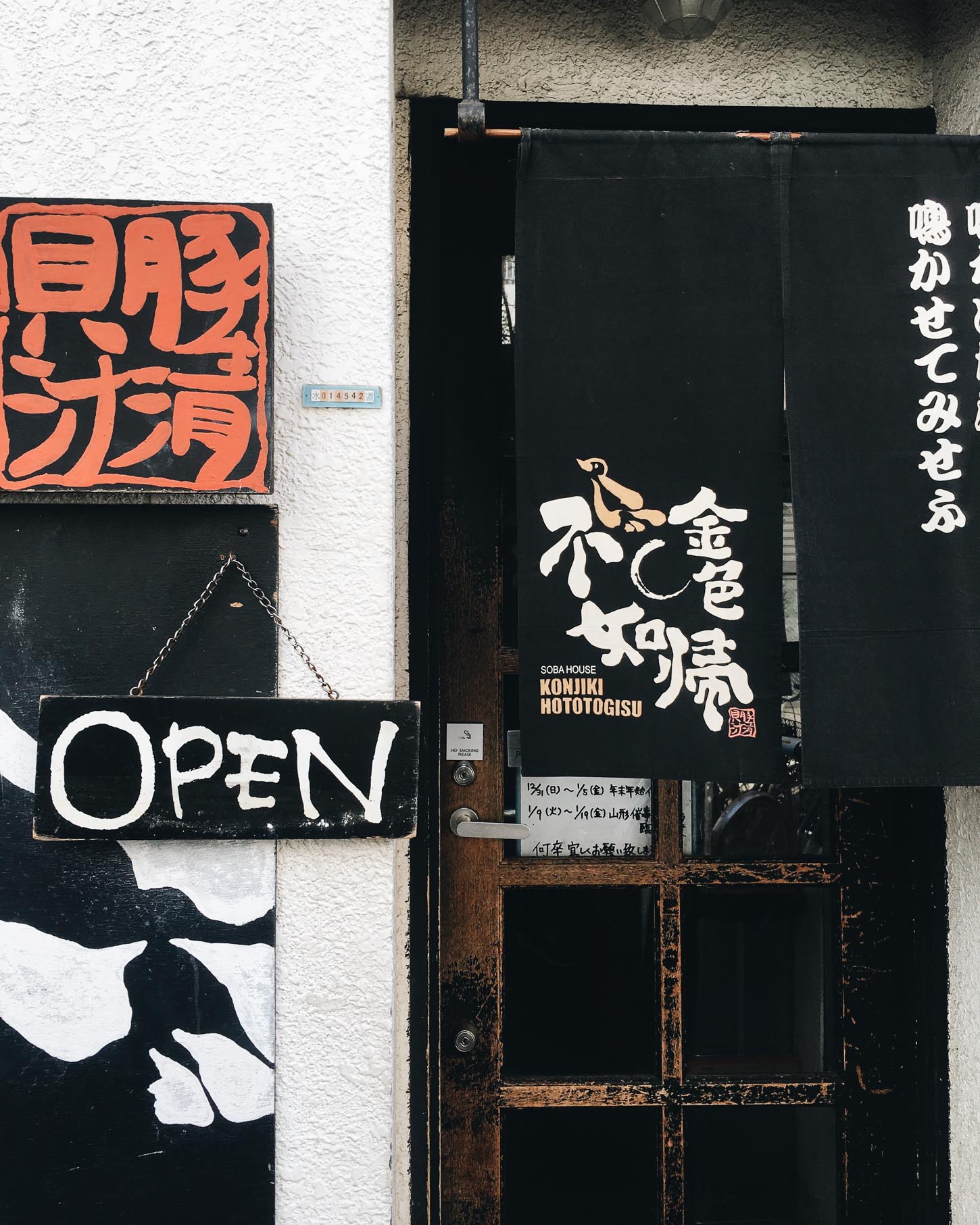
Hototogisu is a beloved ramen shop (yes, it has a Michelin star) with a delicious bowl that has a signature truffle sauce finish. Due to the popularity, you have to do the ticket system. Tickets for lunch are handed out at 9:30 am and dinner tickets are handed out at 5:30 pm. People line up well beforehand. It’s now much fancier than in the photo above.
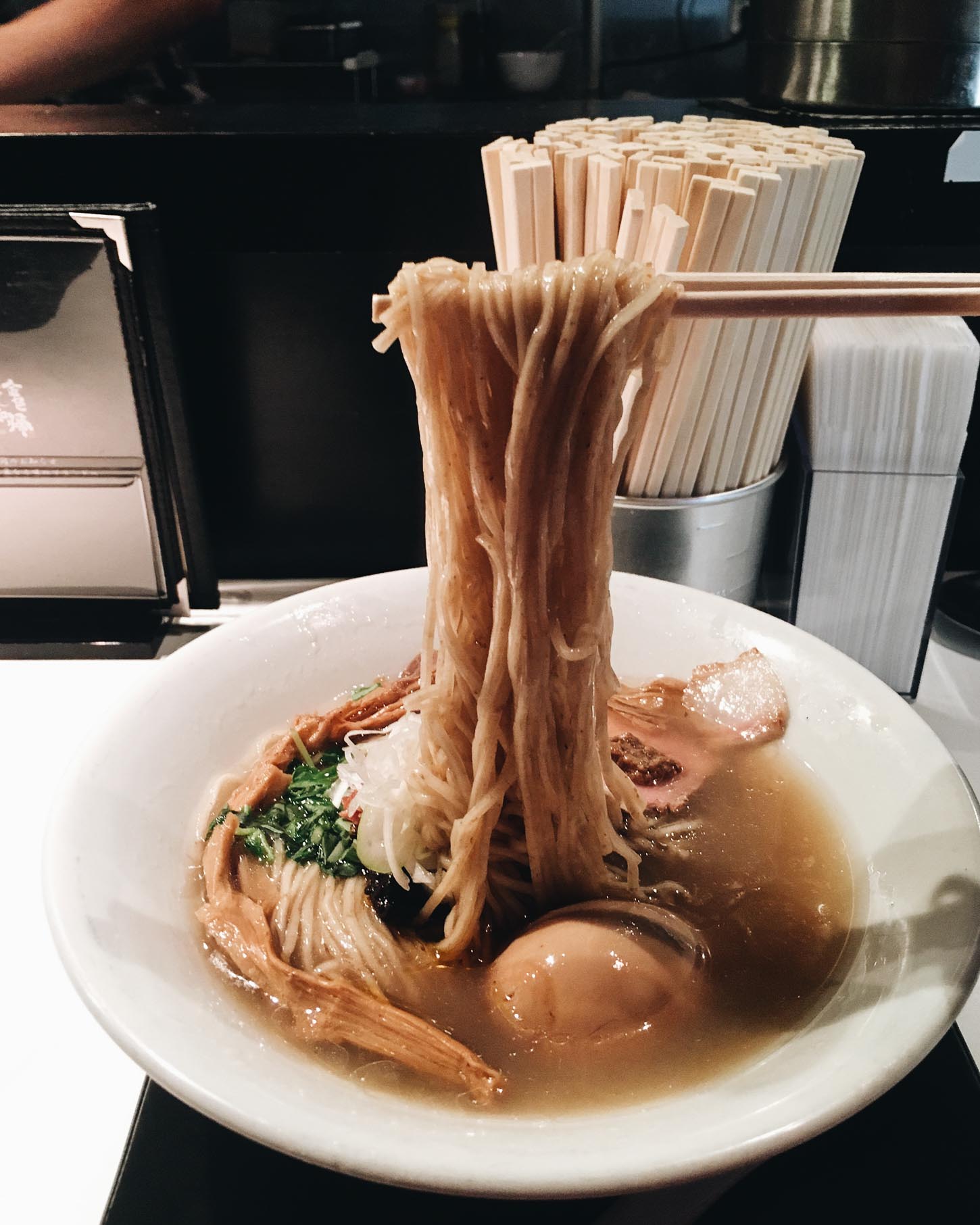
- The broth: A dashi, clam, fish, and chicken broth that’s seasoned with either shio or shoyu. Delicate and full of flavor, with a burst of gentle sweet clam umami at the front. The shoyu tare, which makes the broth a deep golden, is a blend of four different soy sauces. The shio tare has both Mongolian rock salt and Okinawa sea salt.
- The noodles: Straight, medium-thin, chewy, and pleasantly snappy noodles made with a blend of flours including Hokkaido wheat.
- The toppings: Roast pork shoulder chashu, menma, green onions, and their signature black truffle sauce, porcini oil and porcini flakes.
- The style: Shoyu and shio. The shoyu is the most well known bowl. They also do tsukemen (dipping noodles).
- The vibe: Ramen counter with seven seats and a couple of small tables. Lots of warm wood and lighting.
Konjiki Hototogisu
2 Chome−4−1 Shinjuku City, Shinjuku, Tokyo
Hours: M-F 11am-2:30pm, 6:30-8:30pm
4. Jun Teuchi Men to Mirai
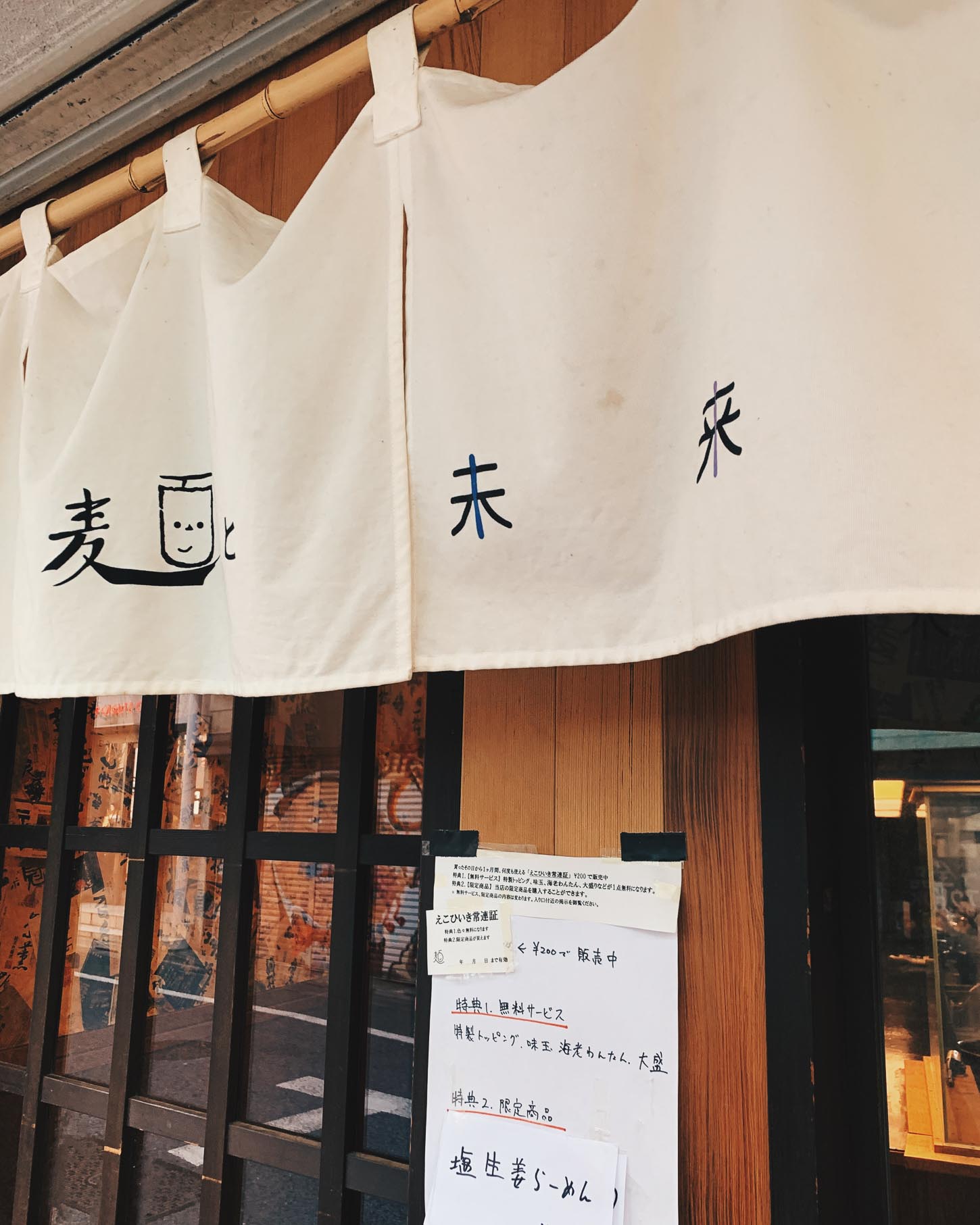
This is the kind of place where you look at a photo of their bowl and ask yourself, is this even ramen? “Mirai” means future and if the future of noodles are these super thick, hand-made mochi mochi monsters, then I’m all for it. It’s one of those shops that’s beloved by locals, but not really highlighted all that often. If you’re in Shimokitazawa doing Shimokitazawa things (iykyk), grab a bowl here and you won’t be disappointed.
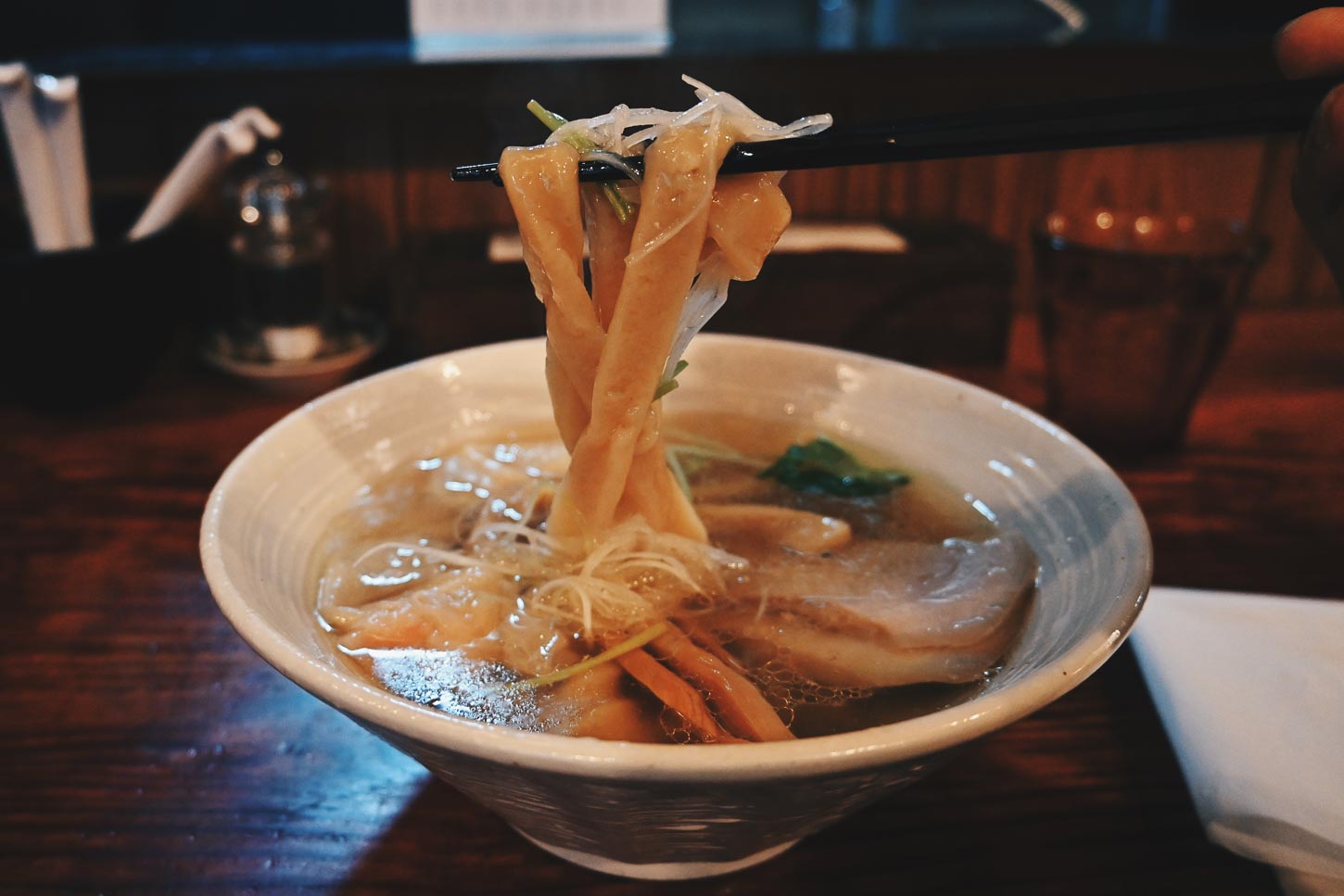
- The broth: Chicken, specifically chicken wings, bonito, dried niboshi, kombu, and clams come together into a light, clean soup with lots of flavor. There’s a hint of yuzu too.
- The noodles: Super thick ramen noodles. Thicker than you’ve ever seen because they’re handmade. They’re handmade in-house, as the name of the shop implies (teuchi means handmade). Since they’re handmade, the hydration is adjusted daily due to the weather and humidity. Thick, chewy, and doughy the noodles are reminiscent of udon, but with a completely different flavor – more wheaty.
- The toppings: Shrimp wonton, pork belly chasu, thinly sliced negi, cilantro, and thick cut menma.
- The style: Shio and Shoyu, their main focus being shio with a seafood forward broth.
- The vibe: Old school ramen room with a corner counter facing the open kitchen.
Jun Teuchi Men to Mirai
3 Chome-25-1 Kitazawa, Setagaya City, Tokyo
Hours: M-F 11:30am – 2:30pm, 5:30-9pm
Sat- Sun 11:30am-5pm
5. Kagari
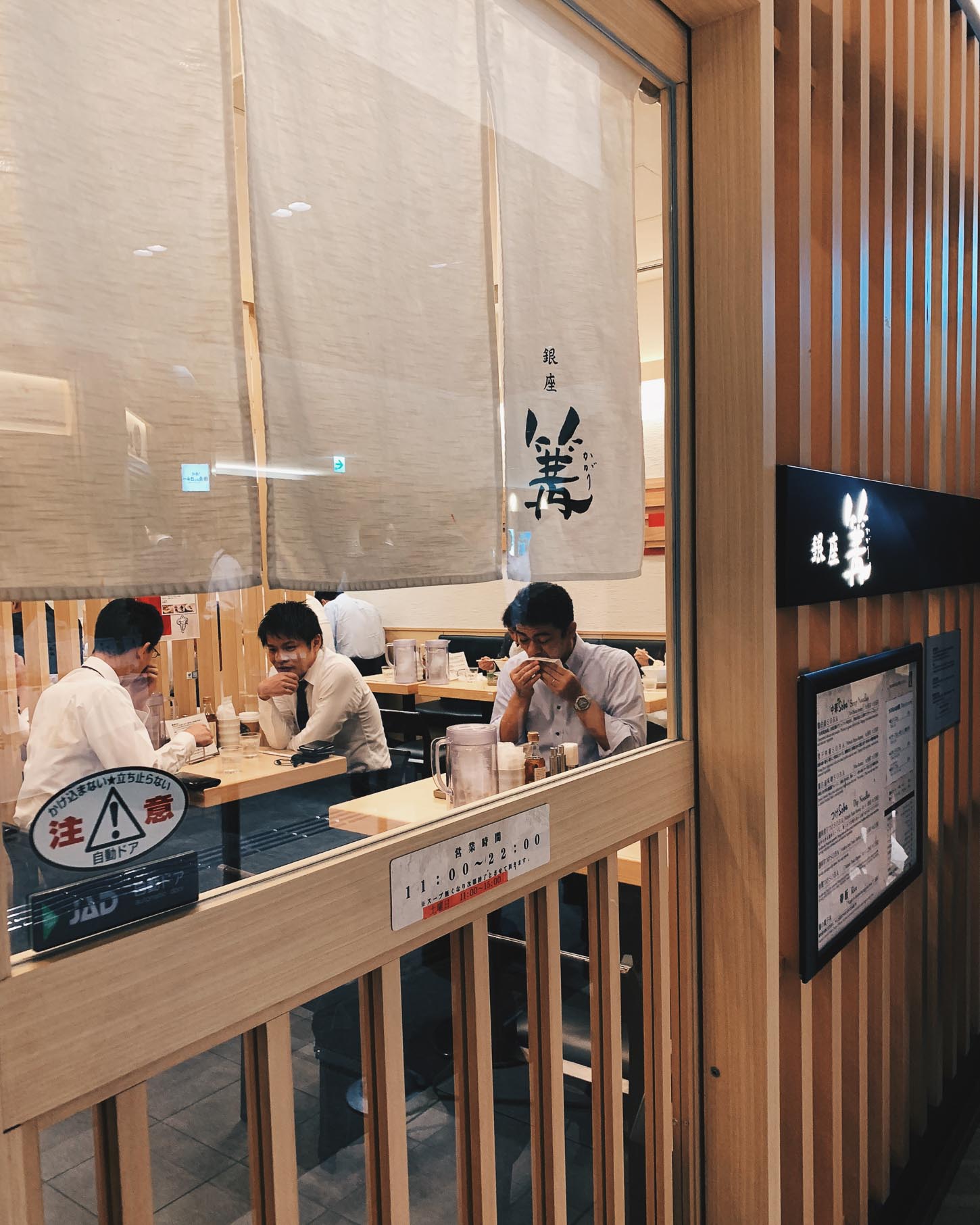
Kagari has long been a local favorite, and now that it has received international acclaim, it’s one of the most well known ramen shops in Tokyo. They specialize in toripaitan, which is a riff off of the standard pork tonkotsu.
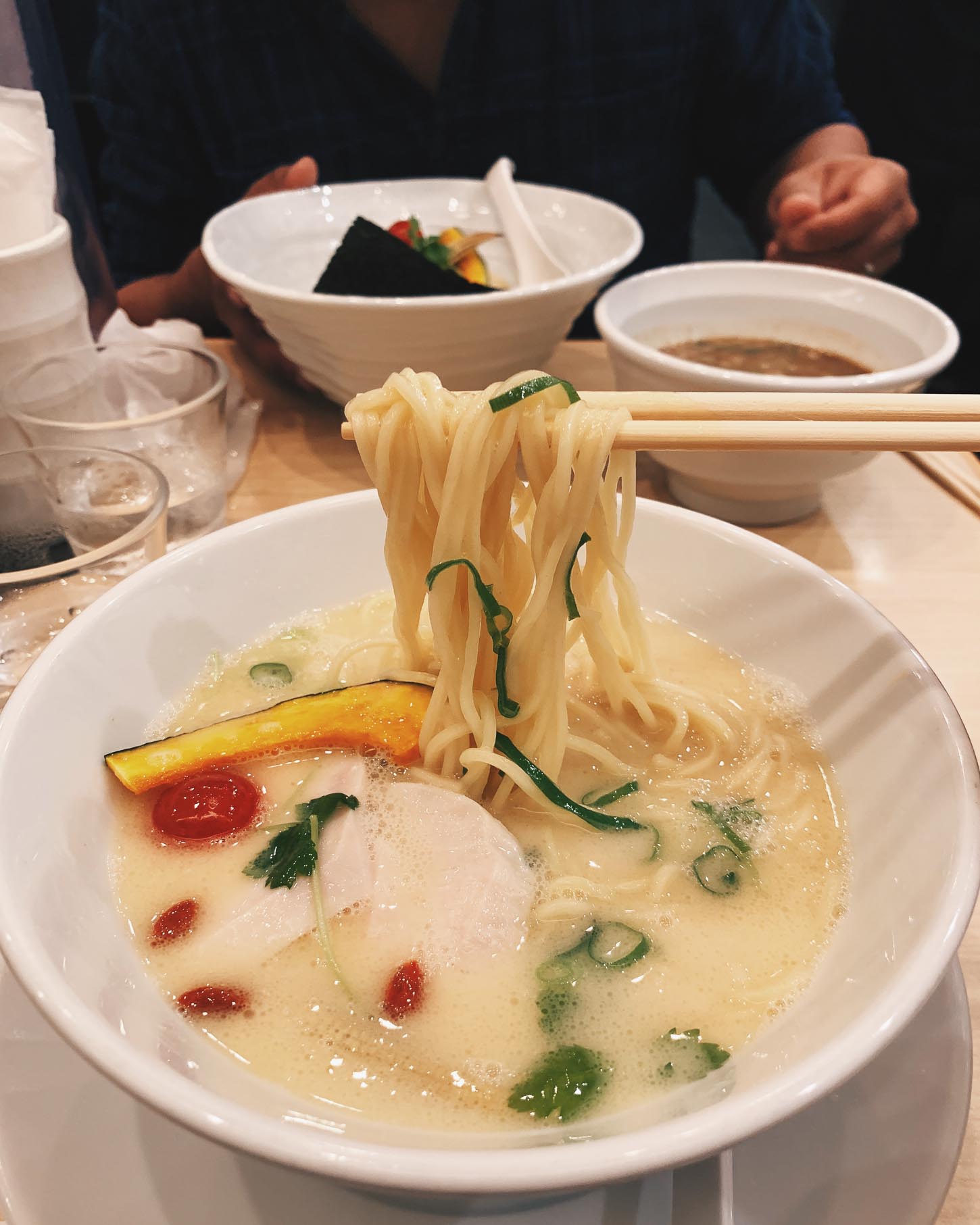
- The broth: Creamy, thick, and the palest yellow, thanks to all the Japanese chickens they use to make their toripaitan, aka chicken ramen. Chicken is cooked until all the flavor, collagen, and fat is released, then is hard boiled to emulsify everything together into a creamy, rich broth. The tare is shio with a mix of salts.
- The noodles: Thin, straight, firm and chewy noodles that pair well with the creaminess of the chicken broth.
- The toppings: Cuts of tender, sous vide chicken breast that’s juicy and melt in your mouth. There’s also a vegetable garnish that changes with the seasons, but is always a complimentary texture and flavor to the noodles and soup.
- The style: Toripaitan soba aka chicken ramen with a shio focus. They also do a niboshi shoyu soba.
- The vibe:
- It might be tucked away in a hidden Ginza alley, but Kagari is just as elegant as its neighborhood. A u-shaped counter faces the open kitchen with wood accents. Small, intimate, and cozy.
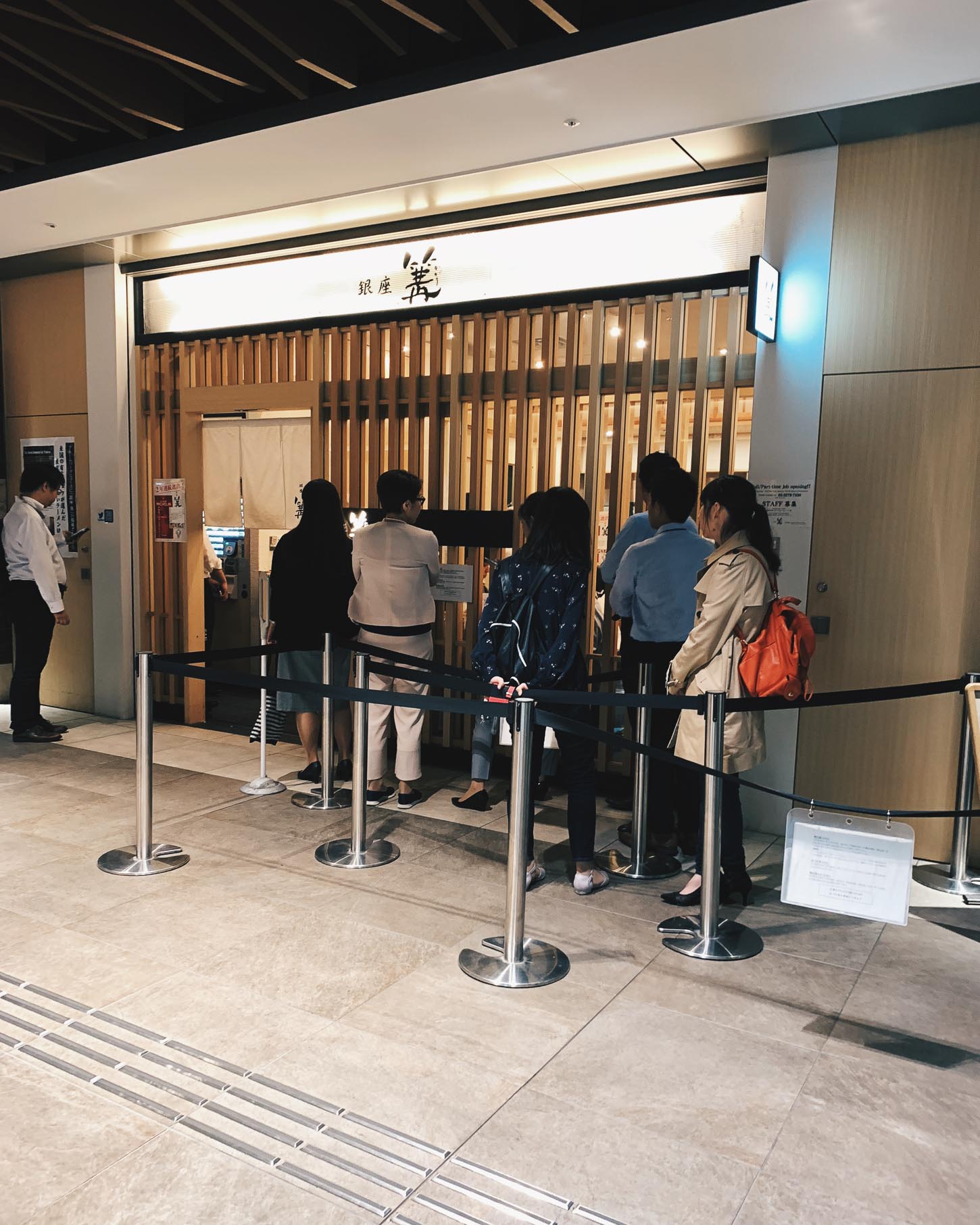
Sometimes great ramen gets poor reviews
I can see that there are a bunch of negative reviews on the Ginza branch, probably because a lot of tourists go there and aren’t used to the ramen queuing culture and expect everything to be just as it is where they live. There’s another branch in Roppongi Hills (in a very nice mall in Roppongi) that is almost an exact recreation of the u-shaped counter in Ginza. Since it’s indoors, the wait is much more bearable and not exposed to the elements. There’s also a location in Otemachi Grand Cube (shown above) but it’s a little more difficult to find if you’re not used to the massive Japanese underground malls.
Kagari Ginza Honten Main Branch
6 Chome-4-12 Ginza, Chuo City, Tokyo
Hours: 11am-9:30pm
6. Yamaguchi
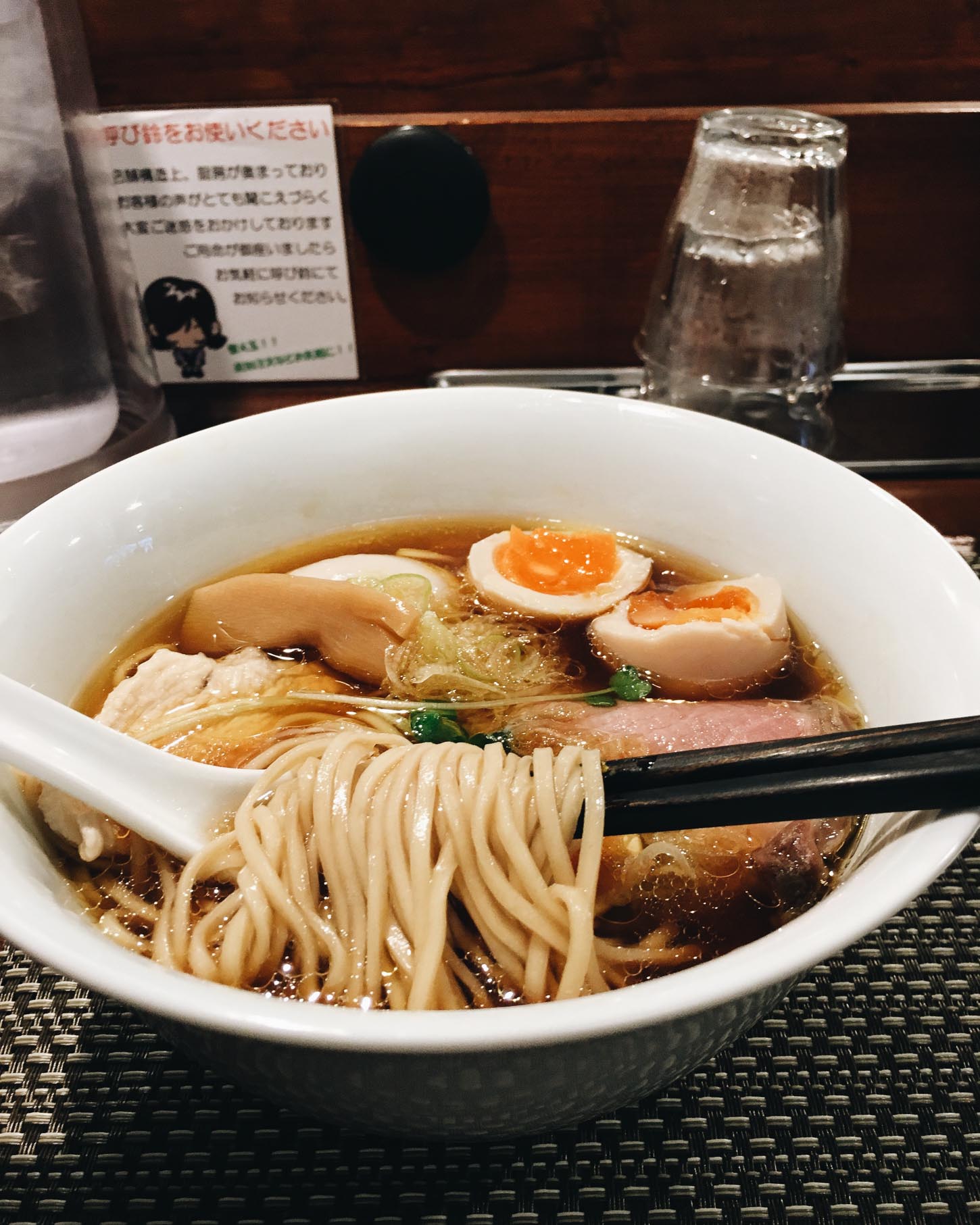
Yes, another chicken ramen, but this time, it’s a 100% chicken stock made with 3 different chicken breeds. Most ramen broths have pork bones for the fat content, but Yamaguchi’s shoyu tori soba is chicken only. The chicken wonton here are an excellent addition to a delicious, unique bowl.
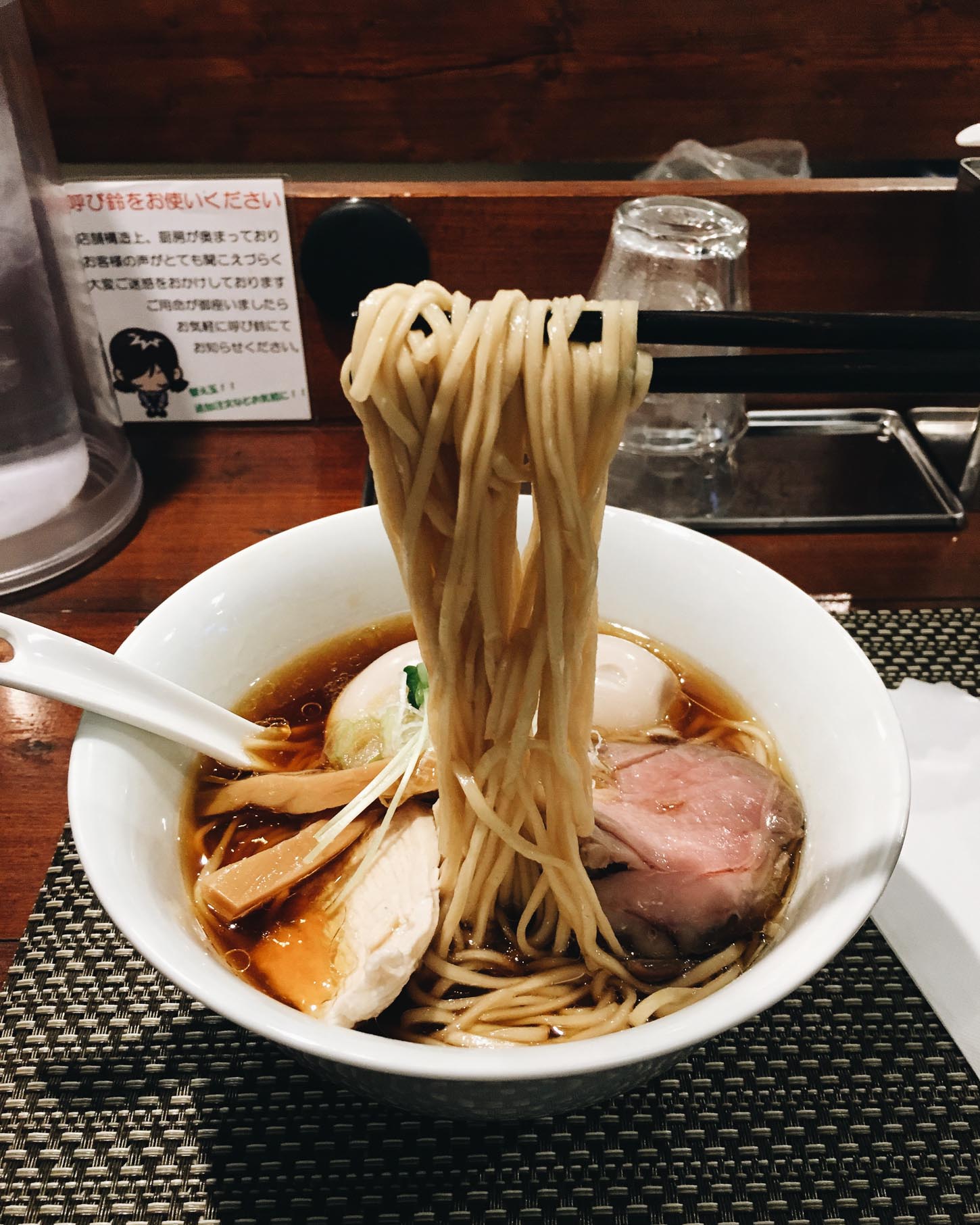
- The broth: A 100% chicken based broth that’s subtle and light, while still packing a huge hit of umami. The broth is seasoned with a shoyu tare that’s made with a blend of soy sauces.
- The noodles: Chewy, medium-thin, straight noodles.
- The toppings: For the special, you get super tender slices of salt brined chicken breast, braised pork shoulder chashu, supple chicken wonton, menma, and a jammy egg.
- The style: Tori soba and tsuke soba aka chicken shoyu ramen and dipping ramen. Their main bowl is the tori soba. The Tsuke soba can be either regular or spicy.
- The vibe: Modern ramen counter facing a spotless stainless steel open kitchen.
Yamaguchi
3 Chome-13-4 Nishiwaseda, Shinjuku City, Tokyo
Hours: Daily, 11am – 9:30pm, or until sold out
7. Mensho Gotokuji
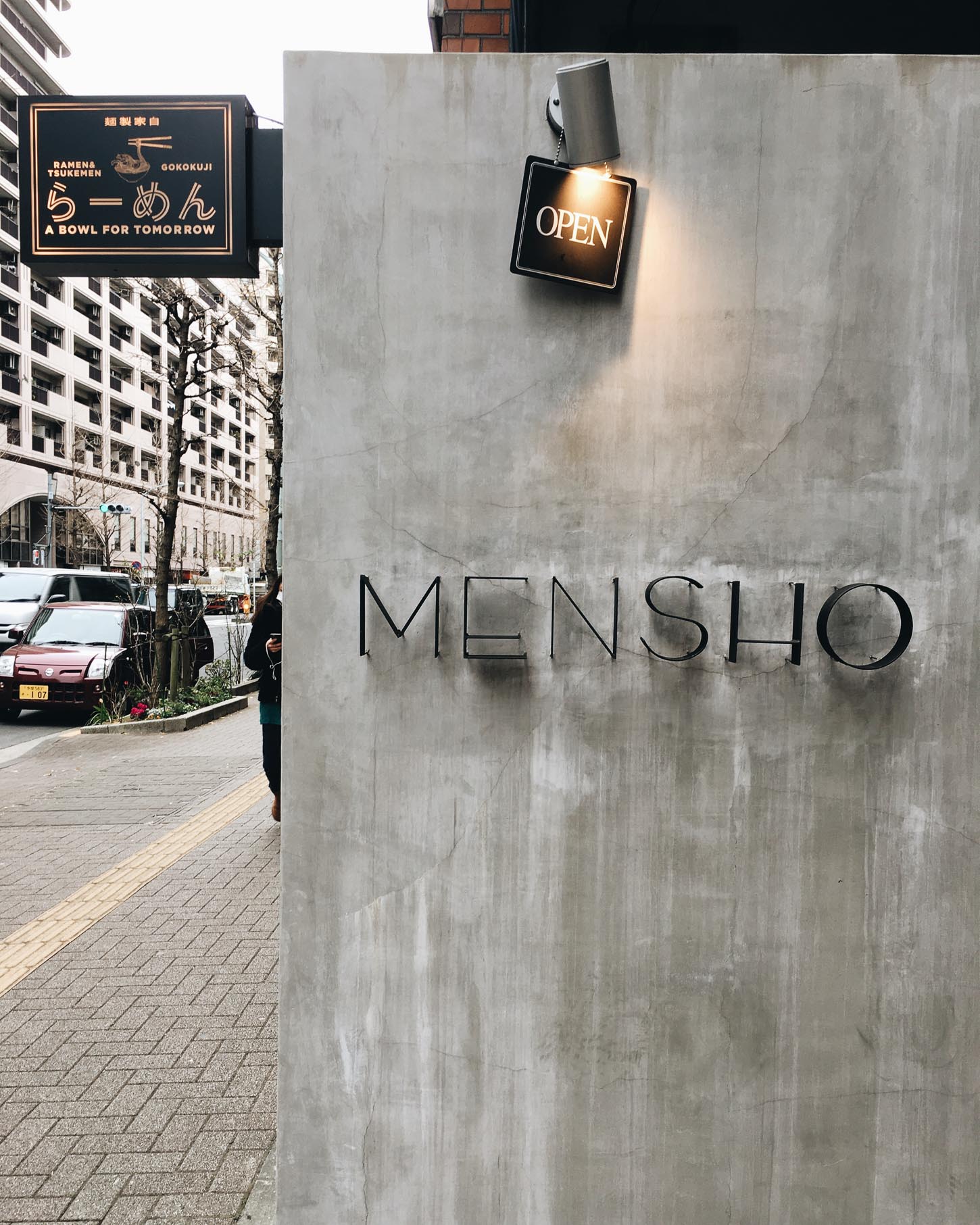
The Mensho ramen group is amazing. They have multiple shops with different concepts, but their shining star is Mensho Gotokuji. The exterior is understated and the interior is what you would expect at a high-end sushi bar. The Mensho Gotokuji branch is farm-to-bol and everything is made in house. Many ramen shops outsource their noodle making, focusing on the broth, but here, they focus on EVERYTHING.
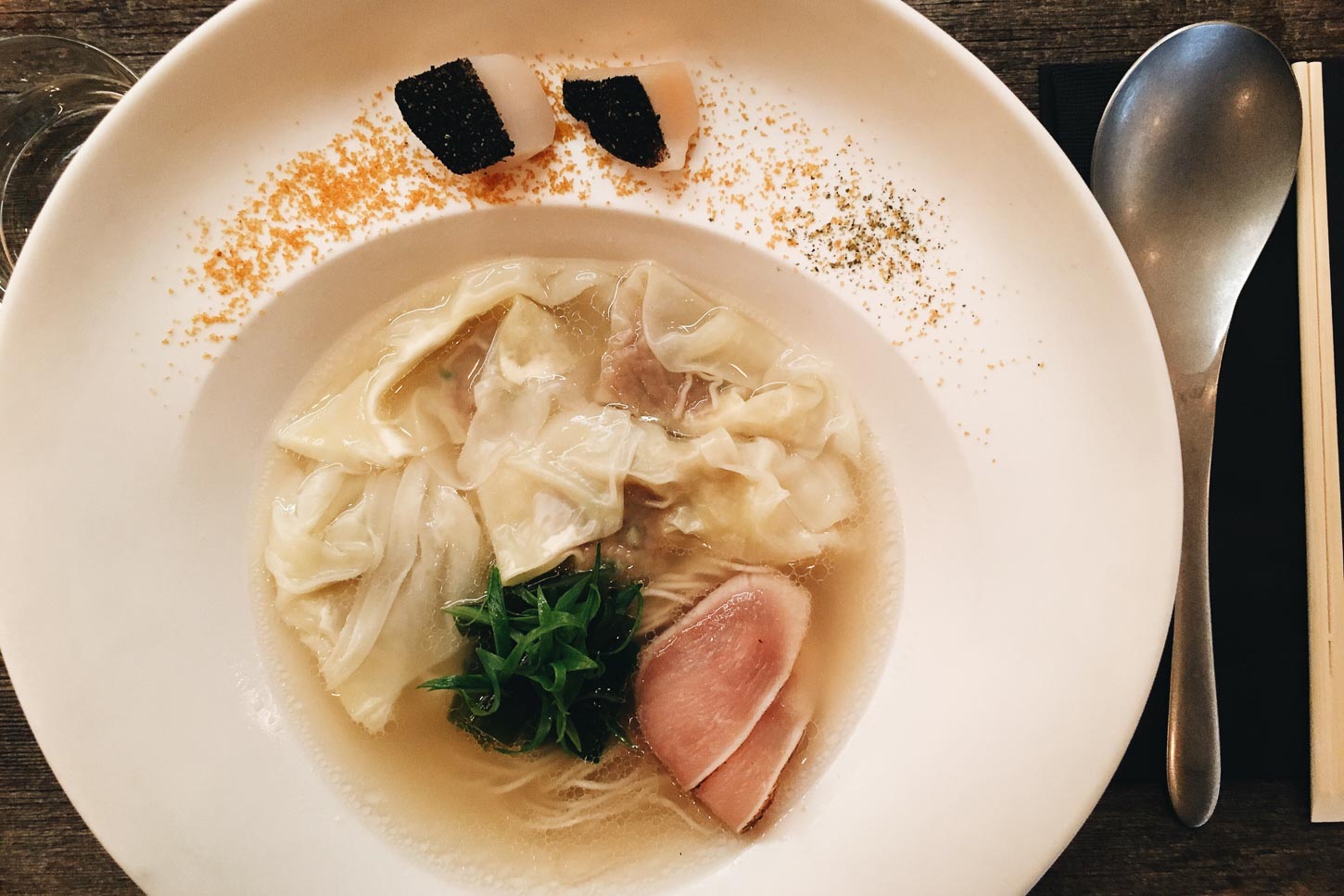
- The broth: Both shio and shoyu. I’ll talk about the shio, which is their signature. It’s made solely with snapper and scallop, which is pretty rare for a ramen broth. Most are supplemented with pork or chicken bones. It’s supremely clean, clear, and flavorful. The broth is gentle, delicate and tastes like the sea.
- The noodles: Thin, straight, flat noodles with flecks of whole wheat made in house. They also have a wheat grinder so they can blend their own flour blends.
- The toppings: The shio bowl comes with slices of rare chicken, wonton, menma, green onions, a cured scallop, and a sprinkle of dried fish roe.
- The style: Shoyu, shio, and tsukemen with seasonal bowls that change.
- The vibe: Truly beautiful with a view into the kitchen, which is behind glass. You can take a peek at their noodle making and the walls are covered with design-y illustrations and words about their ramen philosophy. There’s a u-shaped counter, modern bar stools, hanging lights, and custom bowls.
Mensho Gotokuji
1 Chome-17-16 Otowa, Bunkyo City, Tokyo
Hours: Daily, 11am-8:30pm
8. Yakumo
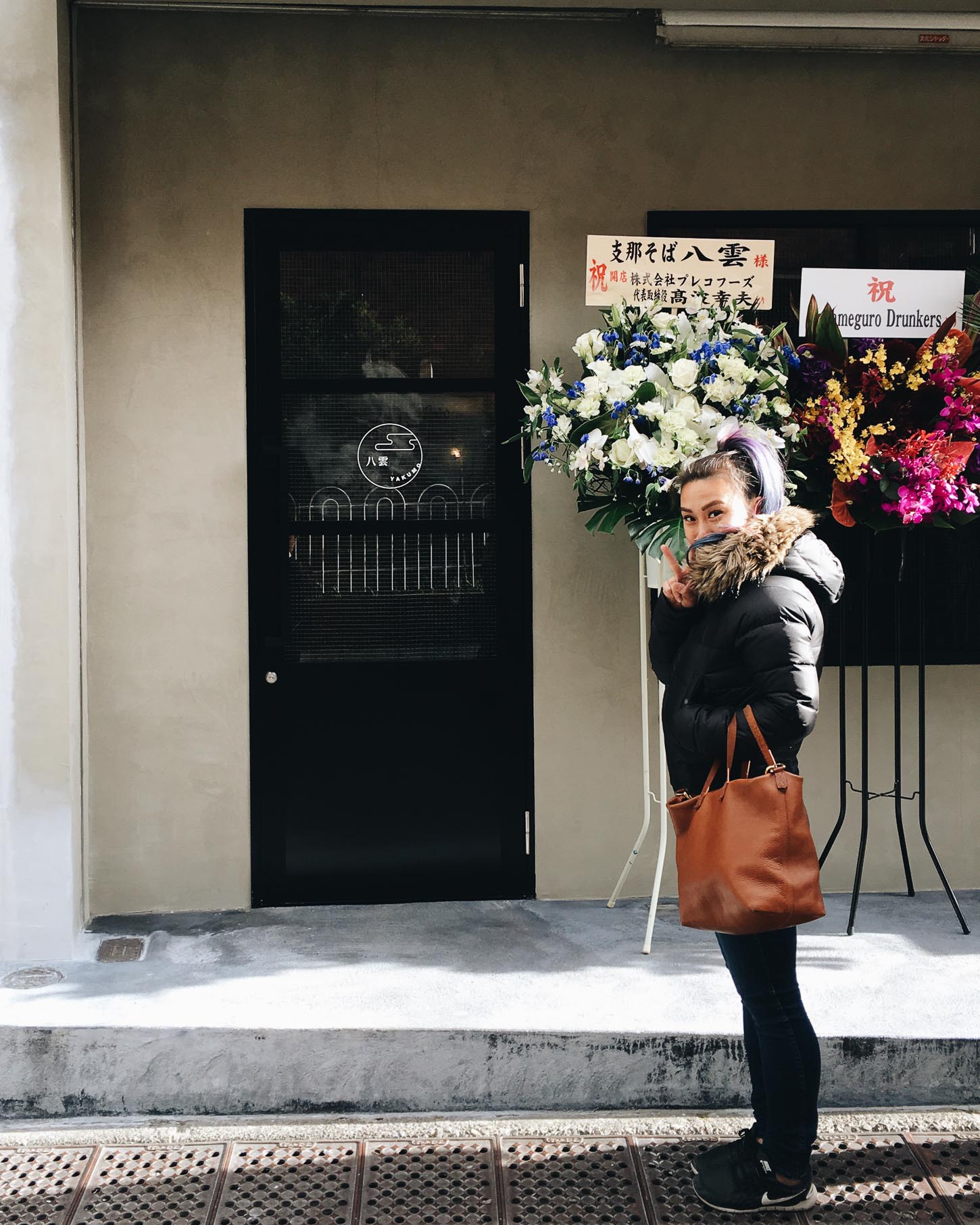
Wantanmen is one of my favorite types of ramen and when they offer it as a topping, it’s always a must add. Yakumo specializes in wantanmen and their wonton are some of the best! We loved Yakumo so much we followed them when they closed their original shop and reopened in a new space a few blocks away. That photo above is from opening day of their new shop.
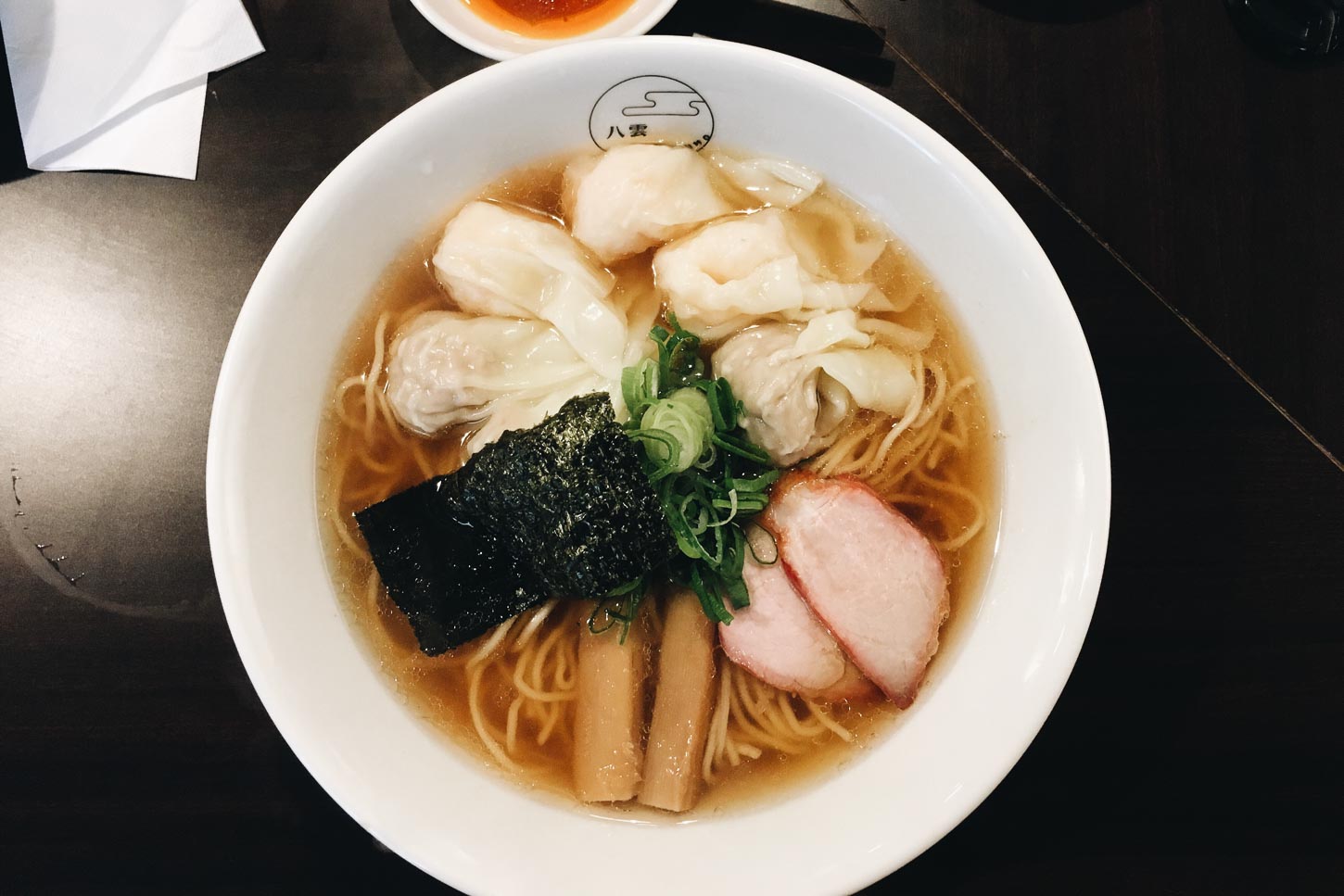
- The broth: A light, full flavored clear broth made with pork, chicken, dried shrimp, mackerel, and kombu. They season their bowls two ways, with two types of shoyu, which they whimsically refer to as “white” or “black.” The white has a white soy sauce tare and the black has a black soy sauce tare. White is more delicate, mellow, and rich without that classic soy sauce flavor while black has a more standard seasoning profile.
- The noodles: Slippery, thin, straight wheat noodles that pair well with the broth and toppings.
- The toppings: The wonton here are amazing: juicy, tender, and wrapped in a slippery thin wrapper. They have a longer tail than most wonton you see in Japan and the longer wrappers are part of what makes these wontons so charming. You can choose from pork, shrimp, or both pork and shrimp. Their bowls also feature chashu, more in the vein of Chinese char siu, menma, green onions, and a sheet of roasted seaweed.
- The style: Shoyu ramen, specifically, wantanmen aka wonton ramen
- The vibe: Modern, long u-shaped counter in a design forward room with an open kitchen at the far end of the u.
Yakumo
3 Chome−6−15 Higashiyama, Meguro City Tokyo
Hours: Daily, 11:30am- 3:30pm, closed Tuesdays
9. Toripota Ramen THANK
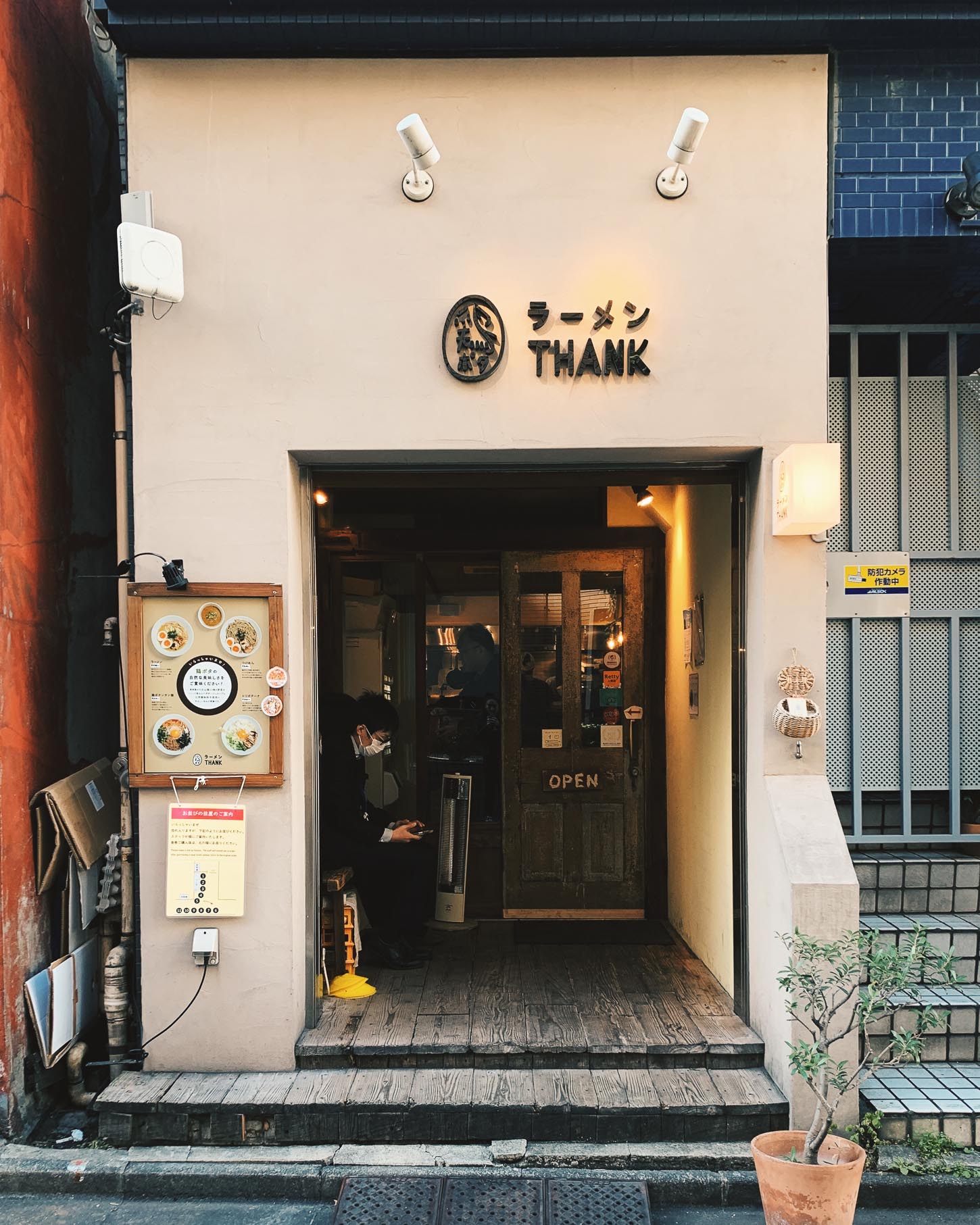
THANK makes chicken ramen right. Yes, chicken ramen aka toripaitan. Toripaitan is a creamy, thick, chicken broth that is incredibly flavorful. At THANK they go a step further and use a potage as their broth. It’s extra thick thanks to vegetables adding starch to the broth. Think of the best, creamiest (but made without cream or dairy) chicken soup you’ve ever had and this will blow it out of the water. The crispy grilled tare brushed deboned wings are chef’s kiss and complement the bowl perfectly.
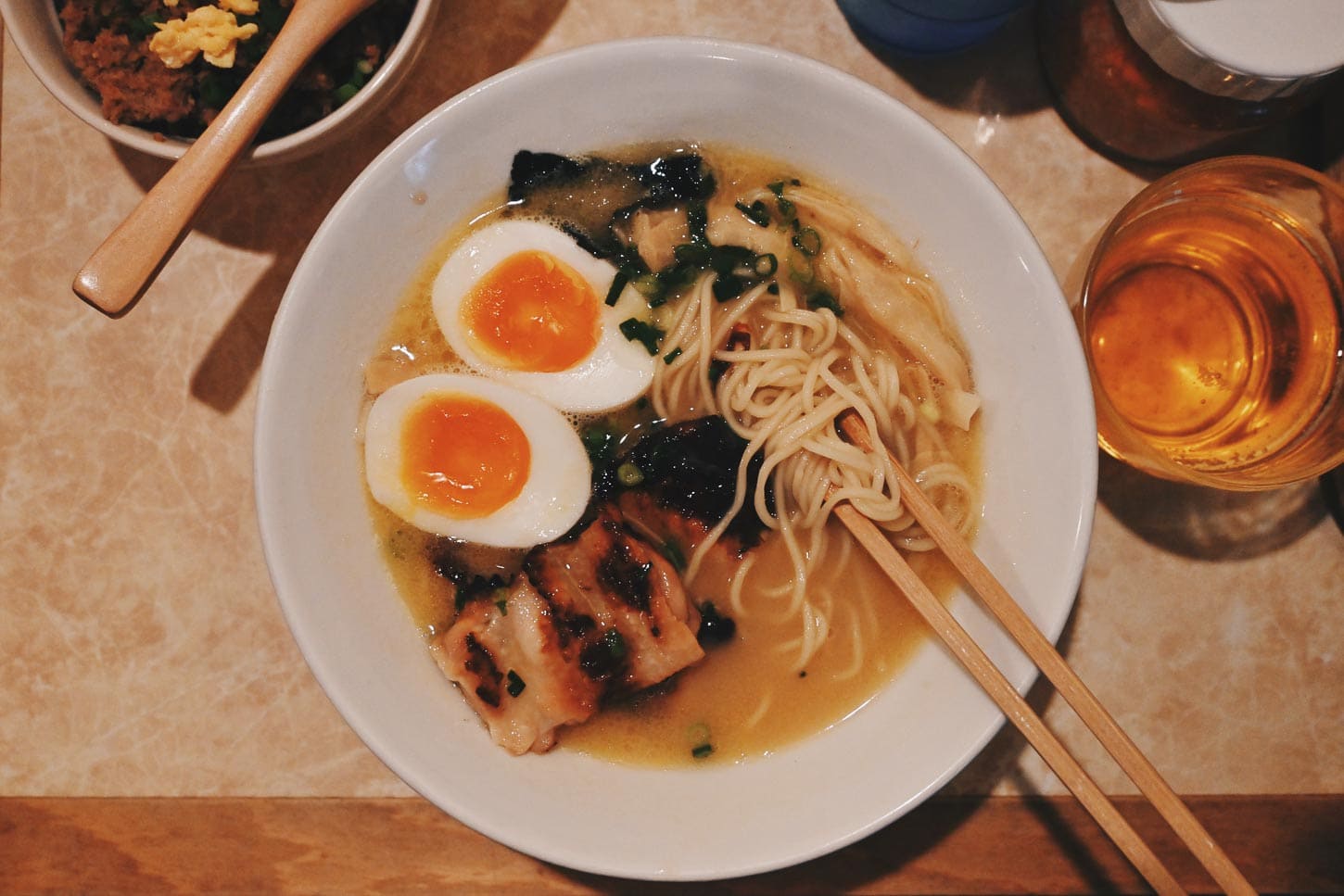
- The broth: A new free-style ramen with a potage (thick soup) toripaitan made with chicken, potatoes, onions, carrots, leeks, daikon, cabbage, garlic, and ginger. You can choose between 3 different broth thicknesses, from thin to thick: sarari, torori, poteri.
- The noodles: Thin, straight, and bouncy, chewy noodles made with roasted wheat from Hokkaido.
- The toppings: Daisen tori wings, wings from a specialty premium chicken from Tottori prefecture, are deboned and grilled to smoky, crispy, fatty, perfection. The special (comes with all the toppings) includes menma/bamboo shoots, green onions, and a jammy egg.
- The style: Toripaitan, a creamy chicken based ramen. It’s a newer style based on tonkotsu but made with chicken. Toripaitan is typically seasoned with shio (salt) but can also be seasoned with tare or miso.
- The vibe: Casual, with both counter seats and tables.
THANK
Shiba Otomo Building 1F, 2-1-13 Shiba Daimon, Minato-ku, Tokyo
Hours: M-F 11:30am-3pm, 6-10pm
Sat-Sun 11:30am-3pm
10. Ramen Jazzy Beats
Nakameguro is the home of the third shop from the Ramen Break Beats group (yes, the chef, Takuro Yanase did DJ in his youth). The bowls are works of art: ramen elevated. Jazzy Beats is a new wave of ramen, one where customers don’t shy away from a bowl costing upwards of ¥2000 for the premiums. High-end ingredients, innovative cooking methods, and a young chef make for a must visit for ramen heads.
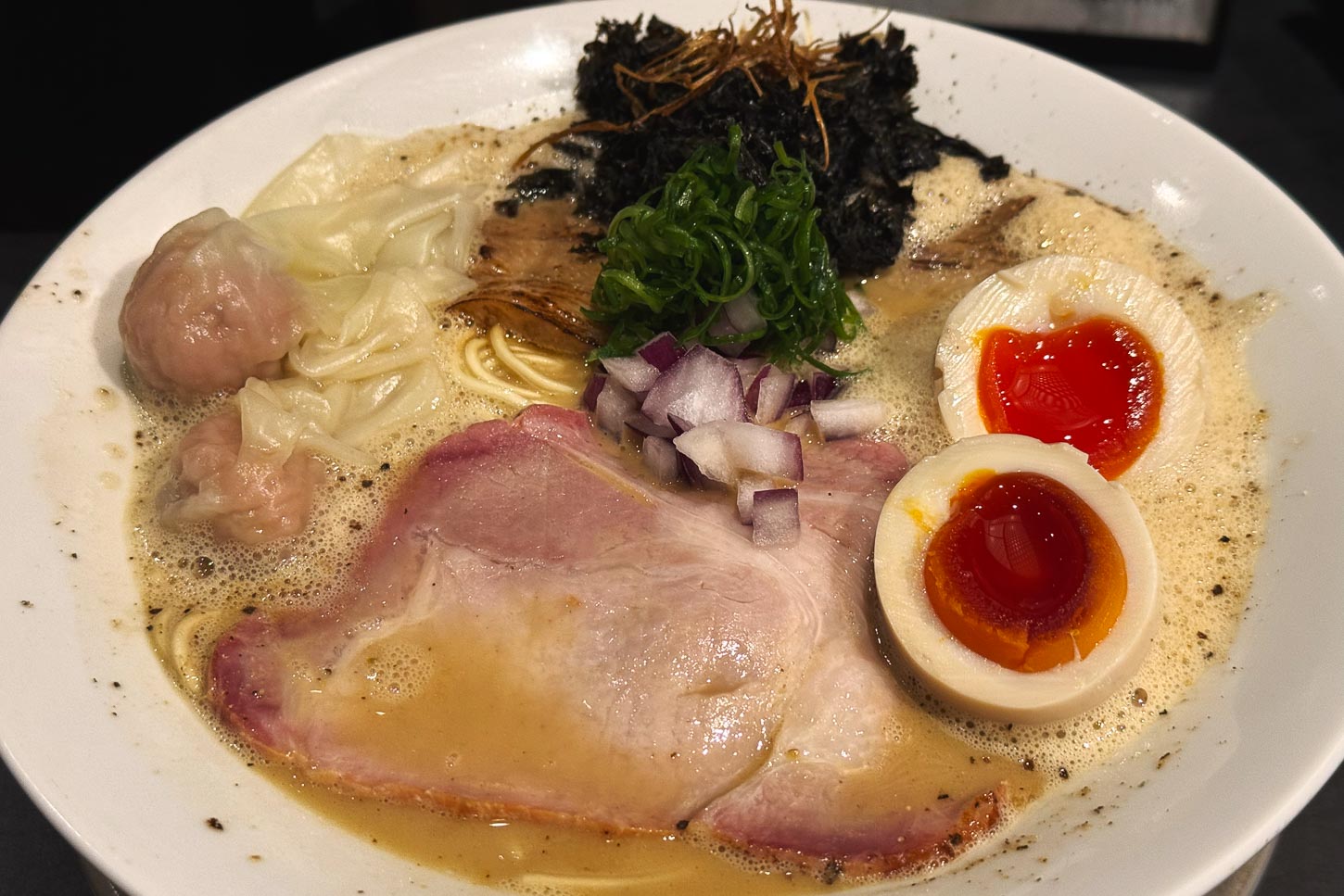
- The broth: Creamy, frothy, and chicken flavor with a side of umami from sardines. The broth is made with a specialty heirloom chicken breed from Kumamoto and several kinds of dried niboshi. You can get it in either shio or shoyu.
- The noodles: There are two types of noodles, made by long-time artisanal noodle producer Mikawaya Seimen. They’re straight, and medium-thick, with a nice chew. But, really, you’re not here for the noodles, you’re here for the broth and toppings.
- The toppings: The toppings really shine, with two plump and juicy wonton with long thin tails, a lightly marinated egg with a molten fire-y red yolk, green onion, diced red onions, chopped rock nori, and sous-vide, then smoked chashu, both shoulder and loin.
- The style: The milky tori-nibo is the signature at Jazzy Beats, they also do a clear shio and shoyu bowls.
- The vibe: Under the tracks in Nakameguro, with a grey and black interior, L-shaped counter seating facing the open kitchen in the middle.
Ramen Jazzy Beats
3 Chome−5−25 Kamimeguro, Meguro City, Tokyo
Hours: Daily 11:30am-2:30pm, 5:30-10pm
Bonus: Ramen Afro Beats
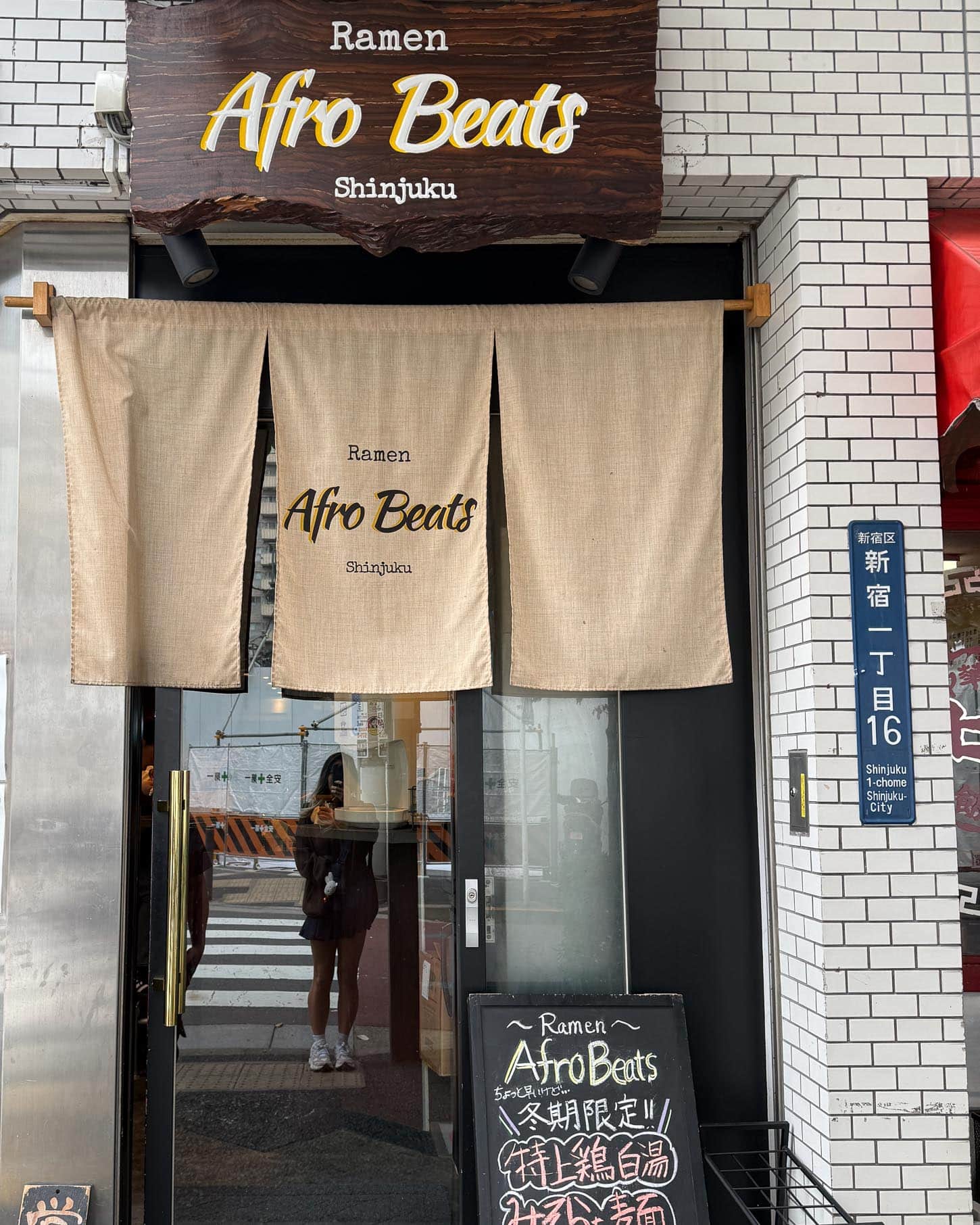
Ramen Afro Beats is DJ Takuro’s 2nd ramen shop. Afro Beats is home to a super creamy tori paitan, aka chicken ramen. Afro Beats won the 2023 TRY (Tokyo Ramen of the Year) New Shop Award and it’s easy to see why. You don’t think of foam or paprika when you think of ramen, but considering this bowl, maybe we all should.
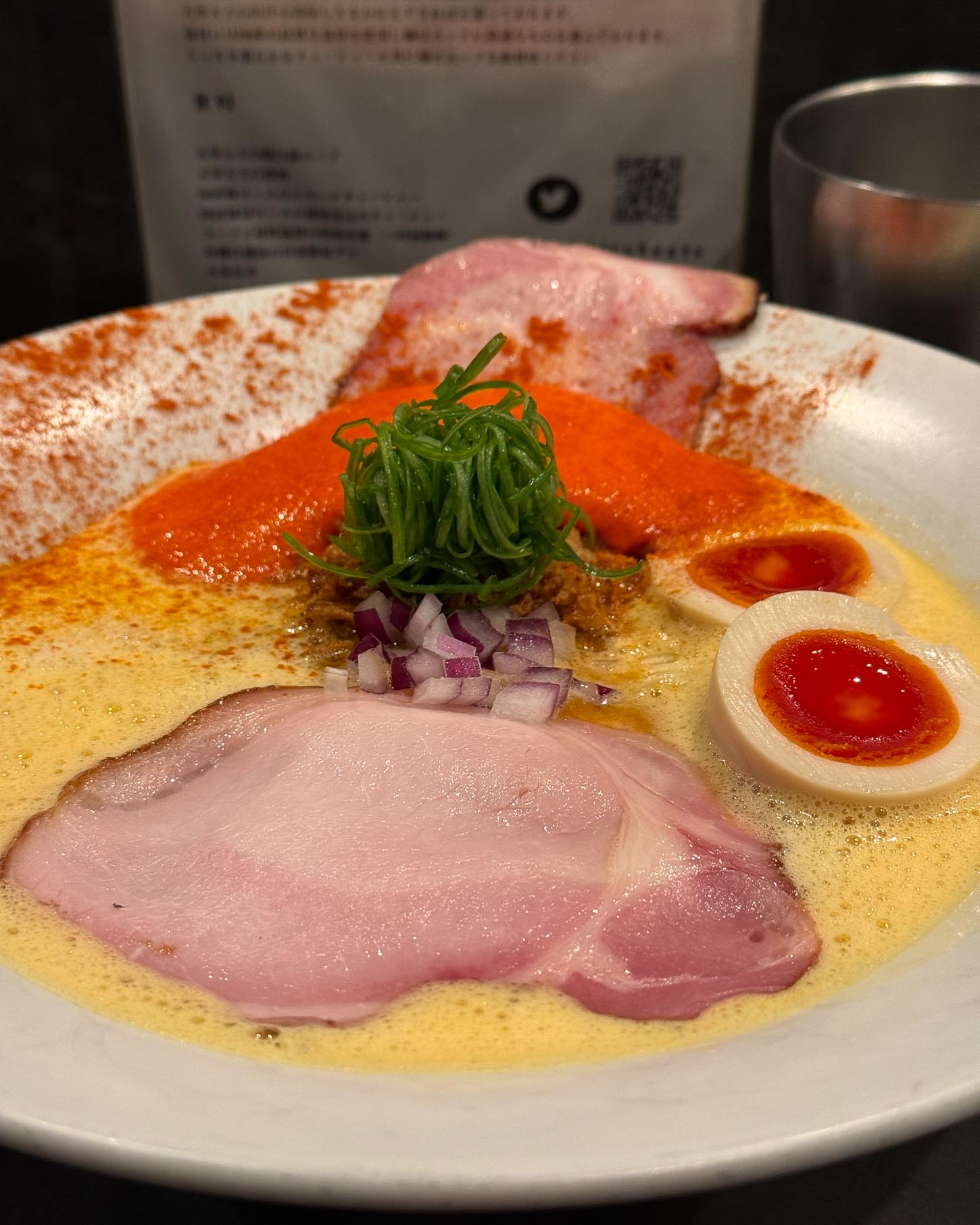
- The broth: All three branches of the Beats Ramen group use three breeds of chicken (Amakusa Daio, Shingen, and Oyama) to create a full-bodied, umami-filled broth. The broth at Afro Beats is a creamy, frothy tori-paitan, rich yet light at the same time with a delightful paprika foam that clings to the noodles as you pull them through.
- The noodles: Medium, straight noodles sourced from Mikawaya Seimen, a longtime Tokyo producer of custom artisanal ramen noodles. The soup clings well while you’re pulling the noodles up through the soup and paprika foam.
- The toppings: Green onions, diced red onions, thin slices of sous-vide and smoked pork chashu shoulder and loin, ajitama egg with the most vibrant red-orange yolks, and a seasonal foam, typically paprika.
- The style: All paitan, all the time. Chicken and only chicken ramen here. The signature bowl is called “tokujo.”
- The vibe: Low, hip-hop beats play in the background with spotlights over a long grey counter. Not the most eye catching room, but we’re not here for the vibes, were here for the ramen.
Ramen Afro Beats
4 Chome−21−19 アイビーハイツ 1階 Meguro City, Meguro, Tokyo
Hours: Wed-Sat 11:30am – 3pm
Special Mention: Tokyo Ramen Street
If you’re on a time crunch — most people are when visiting because there are just so many things to eat and do — visit Tokyo Ramen Street. Conveniently located in Tokyo Station, right near the Yaesu Underground Central Exit, Tokyo Ramen Street is the home to 8 of Tokyo’s best known ramen shops. Currently the shops are:
- Ramen Gyoku (niboshi broth)
- Soranoiro (new style Tokyo ramen, one of our faves when it was the original shop/honten and we tried to go to every single new concept they opened until he sold the store)
- Rokurinsha (tsukemen, dipping ramen, the lineups here are still pretty cray so feel free to check out the easily accessed SKYTREE location to skip the lines)
- Hirugao (shio aka salt broth)
- Oreshiki-Jun (tonkotsu aka a rich, thick pork broth)
- Hanamichian (miso)
- Kakushinka (iekei romane aka toknotsu shoyu)
- Ikaruga (tonkotsu seafood aka pork and seafood broth)
- Tsugaruniboshi Hirakoya (Aomori specialty shop with sardine broth)
They do switch up the shops sometimes though, so if you’re set on something, make sure to double check.
Whew, that’s it for now. If you love wantanmen in particular, be sure to check out our guide for that.
Happy slurping!
xoxo steph
 admin
admin