
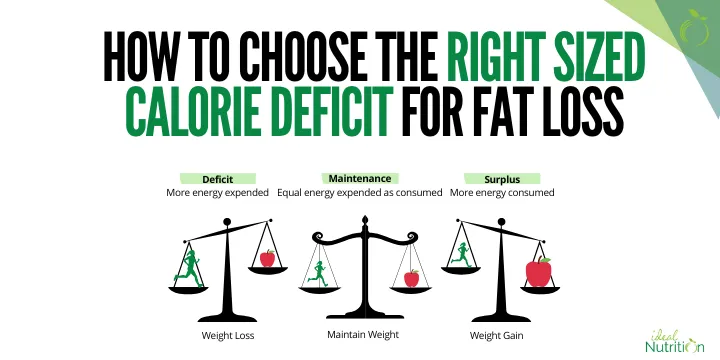
Choosing the right sized calorie deficit to aim for can help improve many aspects of a fat loss phase. In particular, it has the potential to make it more efficient and more enjoyable.
Going too high causes issues and going too low does too. The goal of this post is to summarise how to find the sweet spot for you and your goals.
Fat Loss Fundamentals
Going into this blog post, it is helpful to have a good foundational knowledge of how fat loss works. I’ve put together a comprehensive guide to this that is likely worth reading too if you are reading this post.
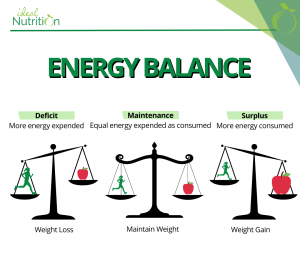
At a basic level, calories in and calories out matter for fat loss. There’s no way around it. If you have seen people saying it is “outdated” or “oversimplified” then I encourage reading my post addressing common criticisms of the model.
To achieve fat loss, a calorie deficit is almost always required.
The big question is HOW MUCH of a deficit should YOU personally aim for.
To unpack that, the first step is figuring out the pros and cons of each approach.
What Happens if You Go Too High?
If your calorie intake is too high, then you simply either don’t lose fat, or you don’t lose it at the rate you want.
That’s really simple.
If you have more calories coming in than you are burning, they have to be stored somewhere. Calories are simply a unit of energy, and that energy cannot just disappear if not utilised.
What Happens if You Go Too Low?
The first misconception that I want to rule out is that “going too low causes your body to go into starvation mode and makes it so your body holds onto fat.”
While metabolic adaptation exists and is a real thing, technically the lower calorie you go, the faster you lose body fat.
Note: I also have a post about what to do if you feel like you are on low calories and not losing weight.
But although going too low calorie isn’t directly a bad thing for fat loss it obviously isn’t a good idea in many cases.
Going too low can lead to the following issues:
- Excessive hunger
- Fatigue
- Restriction
- More metabolic adaptation
- Low micronutrient intake
- Potential for more muscle loss
And many more.
What’s the First Step?
The first step is to pick a number and then aim for that. HOW you aim for that is separate to this post. But for context it doesn’t necessarily even need to involve tracking calories. Just using one example, you could have a nutrition plan that has a certain amount of calories in it without you actually tracking.
If you do not have historical data for yourself as an individual, what I recommend you do is to use a calorie calculator to give you an estimate of what you should aim for.
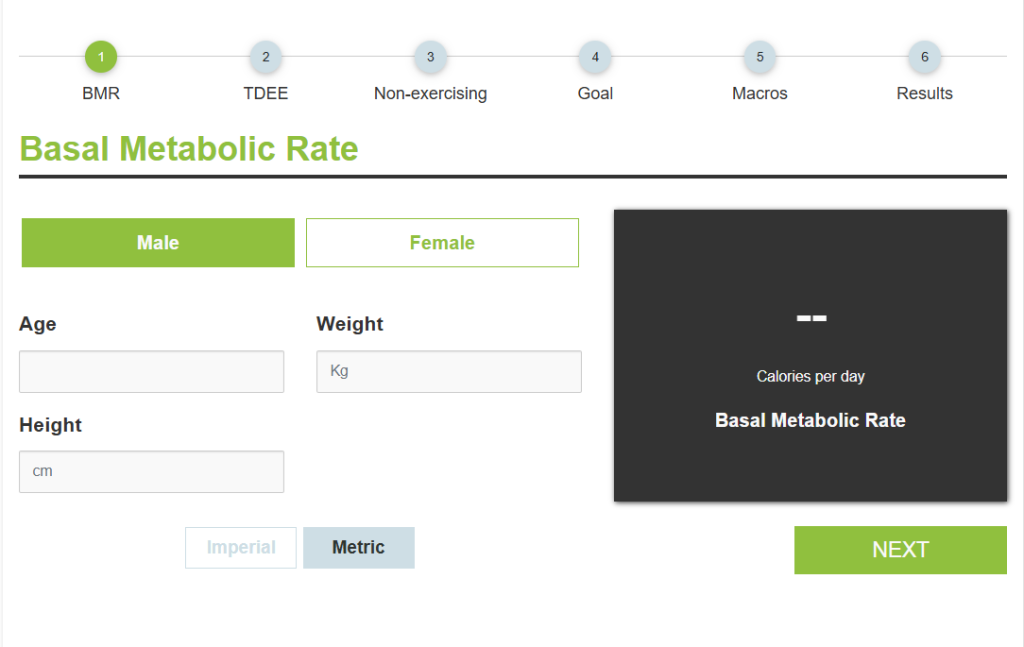
This will give you a solid starting point, particularly because you can also adjust things based on the rate of fat loss you want.
As a big note though, this will just be an estimate. The magic comes from how you adjust things, which I’ll go through in a bit.
A Rule Worth Knowing
I’ve got a rule that is kind of good to learn and then unlearn.
Oversimplified rule:
- 250kcal deficit = ~1/4kg fat loss per week
- A 500kcal deficit per day = ~1/2kg fat loss per week
- 1000kcal deficit per day = ~1kg fat loss per week.
This is based on the fact that 1kg of body fat contains roughly 7,700 calories on average.
If you took away 1000 calories per day from the calories you normally eat to maintain your weight, there would be a 1000 calorie deficit. If you did that for 7 days, that is 7,000 calories, which is near how much is in 1kg of body fat.
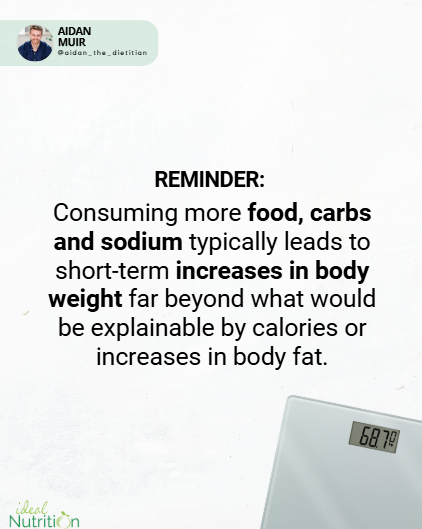
As a big note though, this is massively oversimplified. It completely ignores that our energy expenditure changes based on our intake. It assumes that 100% of the loss will come from fat too, which likely is not true either. In terms of scale weight, it ignores fluctuations due to glycogen, food volume and other variables.
The reason I prefer people learn this rule and then unlearn it is because it helps with expectation setting.
For example, if somebody had maintenance calories of 2,000 calories and had a goal of losing 1kg of body fat per week, we’d see that they’d need to eat around 1,000 calories per day. When you account for the energy expenditure changes, they’d actually need to go even lower than that. In almost all cases that is too low, so either the goal would need to change, or energy expenditure would need to be increased through more exercise or incidental movement.
Simplified Estimates of How Things Often Work
Everyone has an individual response. So, what I’m putting here is a bit of a solid guide. I am also going to use percentages, since that will scale better for people with different calorie requirements.
Percentage Deficits and Their Typical Outcomes
- 10% deficit (e.g. a 250kcal deficit for somebody who maintains on 2,500kcal) = a calorie deficit that has minimal negative impact. It is slower than other options, but often feels better.
- 20% calorie deficit = a calorie deficit that is often the best sweet spot for most people. It is relatively efficient. You likely notice some symptoms like hunger. But it is often a good trade off.
- 40%+ calorie deficit = quite aggressive. You likely are suffering a lot of the downsides, but you are also losing fat relatively quickly in comparison to other options.
I have laid this out because there is no right or wrong here. There are scenarios where it can make sense to choose any of those options. And then when you factor in individual variation, it can make sense to adjust the size of the deficit based on how you actually feel.
Adjusting Things to Find the Right Deficit
Now comes the fun part.
Where you start doesn’t really matter. The adjustments are key.
We know the downside of the calories being too high. Fat loss is either too slow or non-existent.
If calories are too low, you will encounter downsides that are not ideal.
So that guides how you adjust things.
If you are not losing fat at the rate you want, take some more calories away.
There’s no specific guide here, but I’d partly base it on that oversimplified rule above. If you were not losing fat at ALL and wanted to lose 1/2kg per week, it could make sense to take away 500kcal straight away. Or you could make slower more consistent adjustments.
If you are quite hungry, restricted and/or fatigued, it makes sense to increase your calories.
One big tip though is to not change too much too often.
Weight fluctuates all the time. Some weeks you have crushed it and are in the perfect sized deficit and the scales won’t reflect it. You need to focus on averages over time and also look at other metrics like measurements, eye test, or tools like DEXA scans.
If you NEVER make changes though, that is just as silly. If it is clear that the calorie intake is too high or too low, it makes sense to make these adjustments.
Other Things to Factor In
To round things out, I also wanted to highlight that because calories are simply one part of the equation, there can be times that other variables are influencing the symptoms/outcomes I have mentioned.
For example, if you ate a low volume of food in comparison to your calorie intake it would be unsurprising if you were hungry. You could be on the perfect amount of calories for your goals, and all you would need to do is tweak this variable.
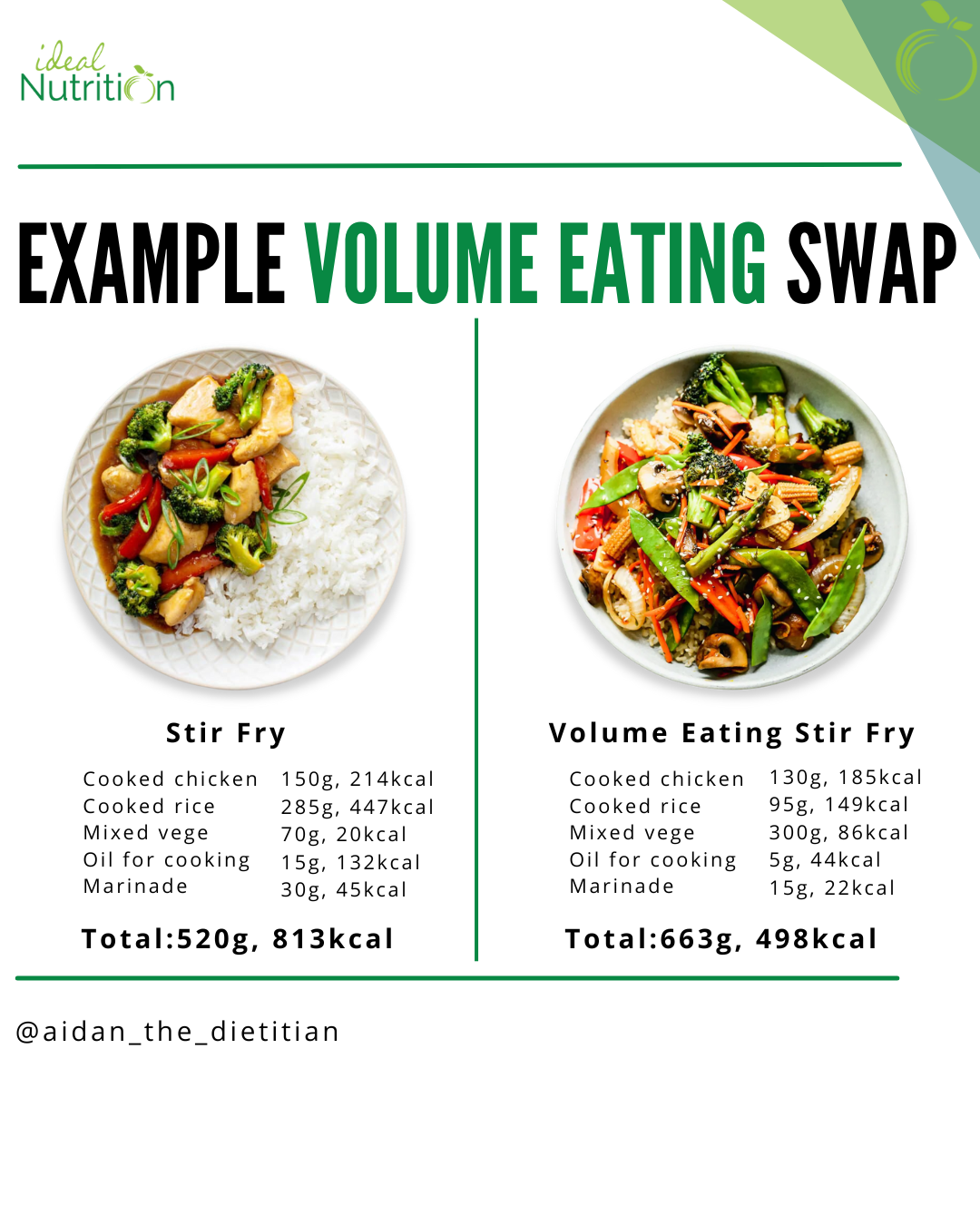
Playing around with meal timing and finding a frequency of eating that fits best for you can help as well.
If you feel restricted, maybe it’s not the calorie intake, but maybe it is how you have set up your approach in general?
And if you feel fatigued, maybe it’s not the calorie intake, but it’s because you haven’t had enough sleep. Or your micronutrient intake is poor or because you are constantly stressed.
Technically the system that I’ve laid out above has the flaw that it’s possible for you to not be losing weight while ALSO feeling hungry, restricted and fatigued. But my response to that would be:
- Statistically that is rare if you are following the plan consistently and making those logical adjustments AND giving it enough time.
- In the majority of those cases, there will be easy wins unrelated to calories that will help address those symptoms, such as what I’ve mentioned above.
- Fat loss is not an even playing field. Some people will naturally have it easier than others. The trickiest bit though is what do you do next? We’ve still got to do the best we can with the situation we are given. It’s worth factoring in that the difference between a small deficit and maintenance calories is only a small adjustment and shouldn’t dramatically change how you feel. I’d just focus on smaller deficits rather than larger ones if needed.
Summary
As somebody who has been working with people on this for around a decade, I have a simple solution for how to find the right sized calorie deficit for you.
The steps are:
- Use a tool like a calorie calculator to give you a rough estimate and starting point.
- Follow a plan based on that. See what happens.
- Are you losing fat efficiently? If yes, awesome. Keep doing that. If no, either decrease calorie intake or increase exercise or incidental movement.
- Are the feelings of hunger, restriction and fatigue more than you are okay with? If no, awesome. Keep doing what you are doing if you are losing fat efficiently. If yes, increase your calorie intake and/or play around with the other variables influencing those things.
 admin
admin