
Eating is about more than just nutrition—it’s deeply connected to our emotions, stress levels, and mental well-being. Many people find themselves eating in response to feelings rather than hunger, which can be confusing when trying to build a healthier relationship with food.
Two common patterns that arise are binge eating and emotional eating. While they share similarities, understanding the differences is crucial for choosing the right management strategies.
What is Emotional Eating?
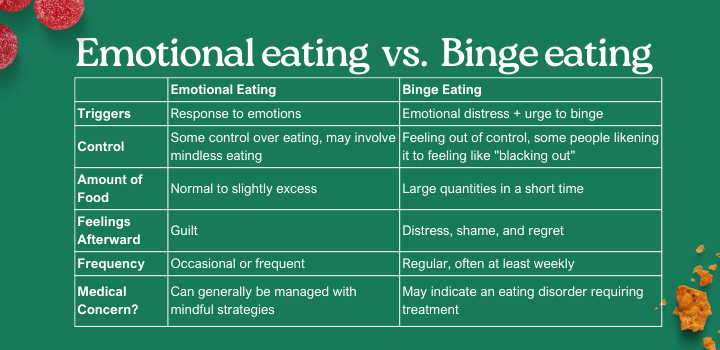
Emotional eating occurs when food is used as a way to cope with feelings—whether it’s stress, boredom, sadness, or even happiness. It’s a temporary distraction or comfort, rather than a response to physical hunger.
Signs of Emotional Eating:
- Eating when stressed, anxious, lonely, or bored.
- Craving specific comfort foods (often high in sugar, fat, or carbs).
- Eating past fullness but stopping once emotions settle.
- Feeling guilty afterward but still in control.
Occasional emotional eating is normal, but when it becomes a frequent habit, it can interfere with health and well-being.
What is Binge Eating?
Binge eating is more than just eating for comfort—it’s a loss of control around food, leading to feelings of intense guilt and distress. It involves consuming large amounts of food in a short period of time, usually in secret, and feeling unable to stop.
Signs of Binge Eating Disorder (BED):
- Eating much more than normal in a short time.
- Feeling out of control while eating.
- Eating past fullness to the point of discomfort.
- Experiencing intense guilt, shame, or distress afterward.
- Binge episodes occurring at least once a week for three months (a key diagnostic criterion for BED).
Binge eating is classified as an eating disorder under the DSM-5 criteria and may require professional support for recovery.
Management Strategies for Emotional Eating and Binge Eating
Whether you struggle with emotional eating or binge eating, compassionate, evidence-based strategies can help.
For Emotional Eating:
✅ Identify Triggers – Keep a food and mood journal to recognise patterns.
✅ Practice Mindful Eating – Slow down, chew food well, remove distractions while eating and try to tune into hunger cues.
✅ Find Alternative Coping Tools – Try journaling, meditation, deep breathing, or calling a friend to manage emotions.
✅ Balanced Nutrition – Restrictive diets can often lead to emotional eating; aim for regular, satisfying meals and snacks.
For Binge Eating:
✅ Seek Professional Support – Your doctor, dietitian and psychologist can provide structured and individualised guidance – Those struggling with Binge Eating Disorder are also eligible to receive up to 20 Medicare-rebated dietitian and psychologist sessions per year under an Eating Disorder Care Plan (arranged by your GP).
✅ Avoid Dieting – Skipping meals, restricting calories and/or cutting out food groups greatly increases the risk of binging.
✅ Build a Regular Eating Pattern – Eating balanced meals at regular intervals reduces the urge to binge.
✅ Work on Emotional Regulation – Therapy techniques like CBT (Cognitive Behavioural Therapy) can help manage triggers. Engaging with a psychologist can be a valuable tool in overcoming binge eating disorder.
When to Seek Help
If eating patterns are affecting your mental health, body image, or daily life, professional support can make a difference. Regardless of whether or not you meet criteria for an eating disorder, you ALWAYS deserve help and support. Nipping disordered eating habits in the bud early can make a drastic difference in the amount of time taken to recover and return to a healthy relationship with food. A dietitian and/or psychologist specialising in eating disorders can support you in rebuilding a healthy relationship with food, without guilt or shame.
If you’re struggling with emotional or binge eating, reaching out to a professional is a brave first step toward recovery. You don’t have to go through it alone.
Food is meant to nourish both the body and mind, and occasional emotional eating is part of life. However, if food feels like your only coping mechanism, or if binge eating is taking over, know that support is available. You deserve a balanced, guilt-free relationship with food.
For personalised guidance, consider working with a qualified eating disorder dietitian to develop a tailored plan for recovery.
Looking for support? Reach out for a consultation to take the next step in healing your relationship with food.
 admin
admin