
It’s often stated that cycles are a part of life, and this is equally applicable to the automotive sector. Following the Great Recession, U.S. car manufacturers vowed to respond to consumer demands for more compact vehicles and sedans. The Big Three maintained this façade for about five or six years before unceremoniously phasing them out once more to favor more lucrative SUVs. Fast forward to today, and with the soaring prices of new vehicles and various goods, it’s hardly surprising that Detroit is once again considering sedans. For the time being.
General Motors President Mark Reuss recently declared that he “would kill to have a hybrid-electric sedan,” and that GM is “working on how to do that.” It really shouldn’t be a difficult task. Credit goes to Ford CEO Jim Farley, who acknowledges that other manufacturers figured that out quite some time ago; it seems American companies are the ones who struggle with the solution.
“The sedan market is very vibrant,” Farley stated at the Detroit Auto Show, according to the Wall Street Journal. “It’s not that there isn’t a market there. It’s just we couldn’t find a way to compete and be profitable.”
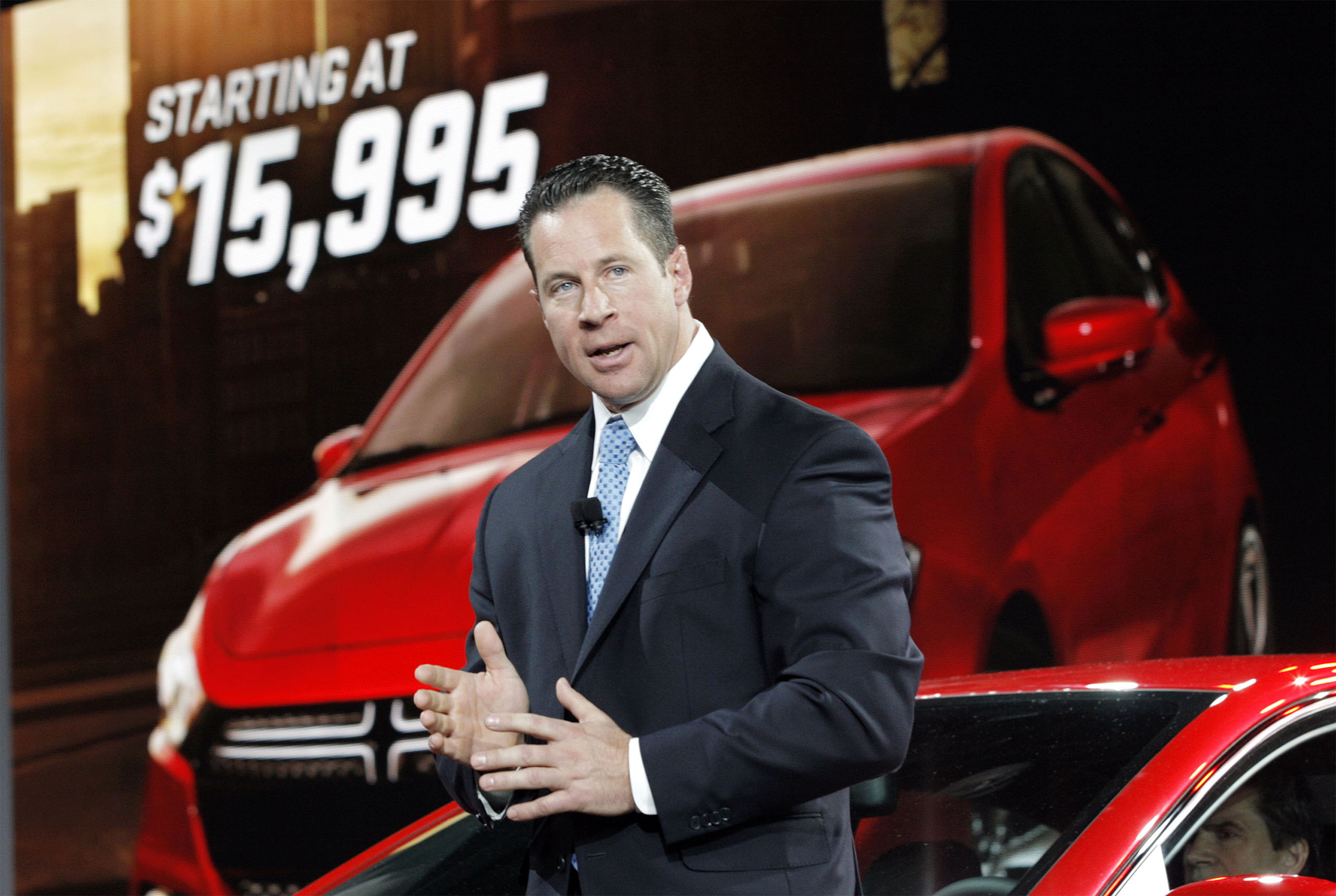
Stellantis is also seemingly actively probing this segment. Nearly a decade since the Chrysler 200— a sedan that shared a platform with the ill-fated Dodge Dart—Chrysler CEO Chris Feuell hinted at a small car under $30,000 that will be “beautiful, fun to drive, and aspirational” last year.
Until now, Detroit has suggested that the slim profit margins of sedans render them impractical for business. Many units must be sold to make the venture worthwhile, like Honda, Toyota, Hyundai, and Kia manage to do. Take Kia’s last month’s performance—a record January for the brand. Its second-best-selling model, behind the Sportage, was the K4, which rolled in with leftover Forte stock. The same scenario is true for Honda—the Civic and Accord ranked just behind the CR-V in sales for January.
Commit to providing what consumers desire—even if the margins aren’t as profitable as a King Ranch pickup truck—and profitability is still achievable. Those compact car manufacturers wouldn’t bother if they weren’t earning money.
Robby DeGraff, who manages product and consumer insights analysis at AutoPacific, reported that over a third of approximately 18,000 consumers surveyed who plan to buy or lease a new vehicle in the next three years expressed interest in sedans, particularly midsize and large ones. In a marketplace awash with identical crossovers, he believes sedans have a genuine chance to differentiate themselves.
“The demand is there, and even if an automaker needs to swallow the cost and invest in the less lucrative sedan segments again, they should,” DeGraff commented. “I commend the Korean and Japanese brands for retaining a strong presence in the sedan market, as a brief glance at year-over-year sales figures for models like Kia’s K4 and K5, Toyota’s Corolla and Camry, and the Hyundai Elantra, all indicated gains in 2025. Even others—Nissan’s revamped Sentra and Honda’s Civic, both offering excellent value—were popular last year.”
Reviewing that recent piece from the Journal, two particular quotes caught my attention. One is a dealer group owner in New Orleans who remarked, “There were many individuals who bought Ford Focuses and Escorts that eventually switched to Explorers and Expeditions and F-Series trucks. It was an entry-level product, a gateway into the brand.”
For some, that may have been accurate—especially for consumers who possibly purchased a Focus in their twenties, then started a family and felt the need to upgrade in size. However, there will still be consumers who desire the car they want, as evidenced by a Ford dealer technician in Ohio who, according to the publication, is “holding on to his own Fusion as long as he can, since Ford no longer offers a new one.”
Thus, Detroit appears to be considering conventional cars once more, which is great. As a previous owner of a Focus, Fiesta, and (reluctantly) Dart at different points, I can confirm that American small cars, hatchbacks, and sedans have possessed commendable features, even when they weren’t the finest. However, if they fail to sell this time around—and matching Civic and Corolla figures won’t be a simple task—history gives us every reason to suspect this will be just another brief dalliance, and we can anticipate the Big Three’s next small car boom in 2045. This seems to be merely a trend for them.
Have a tip? Contact [email protected]
**Detroit Automakers Consider Bringing Back Sedans: The Potential for Their Future**
In recent times, the automotive scene has transformed significantly, with consumer inclinations strongly favoring SUVs and trucks. This trend has prompted many Detroit automakers to phase out sedans in favor of larger models that promise greater profitability. Nevertheless, a significant turn of events is occurring as some manufacturers are reevaluating their strategies and planning to reintroduce sedans into their offerings. This article discusses the potential for the endurance of sedans in today’s market.
**Market Trends and Consumer Behavior**
The decline of sedans started in the mid-2010s, as American consumers increasingly opted for the flexibility and perceived safety of SUVs and crossovers. As per industry reports, SUV sales have consistently surpassed those of sedans, leading to a considerable decline in the production of traditional passenger cars. However, recent statistics indicate a subtle resurgence of interest for sedans, especially among younger buyers seeking affordability and fuel efficiency.
**Strategic Directions of Automakers**
In response to evolving consumer preferences, several Detroit automakers are revisiting their sedan offerings. For instance, Ford has revealed plans to bring back the Ford Fusion, concentrating on hybrid and electric models to attract environmentally aware consumers. General Motors is also exploring innovative sedan designs, mainly through its Chevrolet brand, targeting a market segment that values compact and efficient vehicles.
**Future Viability**
1. **Fuel Efficiency and Electrification**: As gas prices fluctuate and environmental issues become more pressing, sedans can leverage their fuel efficiency. The inclusion of electric powertrains in sedan models can further increase their attractiveness, offering consumers eco-friendly options without sacrificing performance.
2. **Cost-Effectiveness**: With vehicle prices on the rise, sedans often serve as a more economical option. Automakers can present sedans as affordable alternatives for first-time buyers or those wanting to downsize from larger cars, potentially rekindling interest in this segment.
3. **Urban Expansion**: As urban areas continue to develop, there will likely be an increased demand for smaller, more agile vehicles. Sedans are ideally suited for city driving, where parking is scarce and fuel efficiency is crucial. This trend could lead to a renewed popularity for sedans, especially in metropolitan zones.
4. **Technological Innovations**: Contemporary sedans can incorporate advanced technological features that attract tech-oriented consumers. Improved safety features, infotainment systems, and connectivity settings can make sedans more appealing than their larger counterparts.
5. **Emotional Tie and Legacy**: Numerous consumers share strong emotional connections to particular sedan models, especially those with a significant history in the American automotive industry. Manufacturers can utilize this nostalgia to reconnect with customers and foster brand loyalty.
**Obstacles Ahead**
Despite these favorable prospects, numerous challenges remain for the survival of sedans. The sustained popularity of SUVs and trucks means that automakers will face stiff competition for consumer interest. Additionally, the shift toward electric vehicles demands hefty investments, which may redirect funds from sedan innovation.
Furthermore, the perception of sedans as less desirable compared to larger vehicles may take time to alter. Manufacturers must effectively market their reintroduced sedan offerings to showcase their advantages and counter existing consumer biases.
**Final Thoughts**
The reintroduction of sedans by Detroit automakers signifies a strategic adjustment in response to shifting market conditions. Although challenges endure, the potential for sedans to succeed resides in their affordability, fuel efficiency, and adaptability to emerging technologies. As consumer inclinations continue to evolve, the future of sedans may be more promising than previously thought, presenting a viable option in a market dominated by larger vehicles.